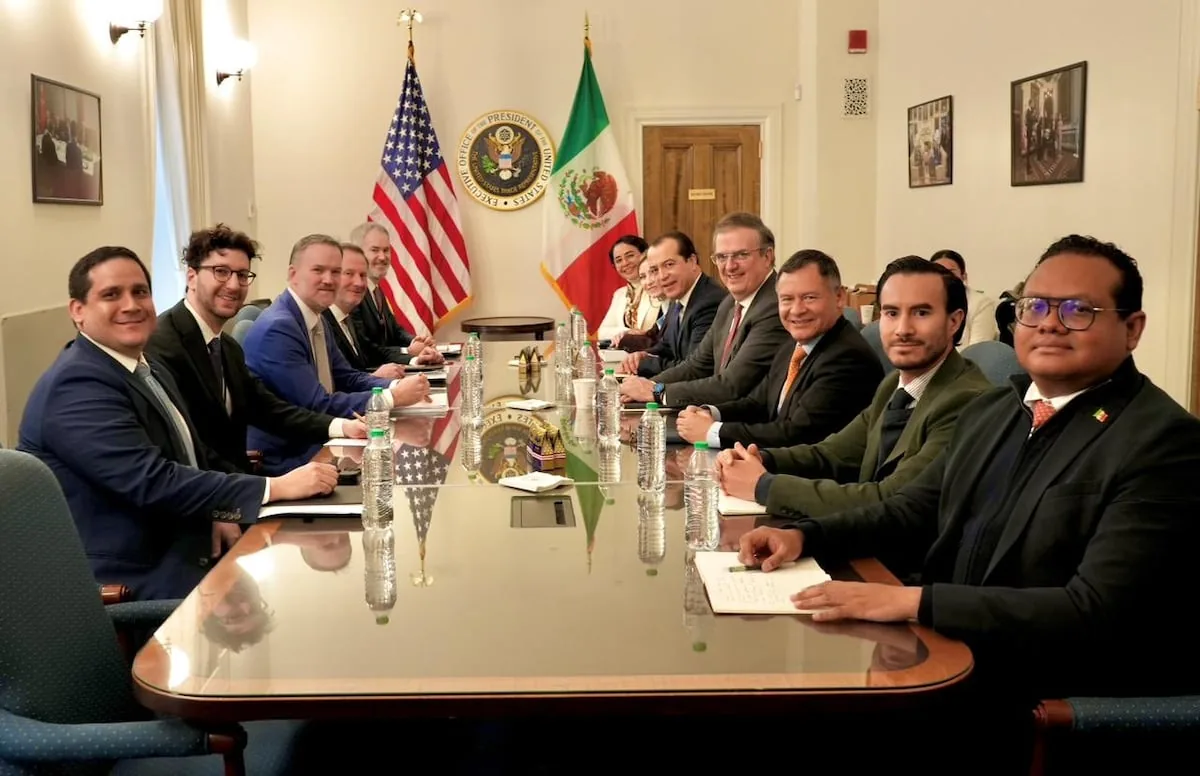









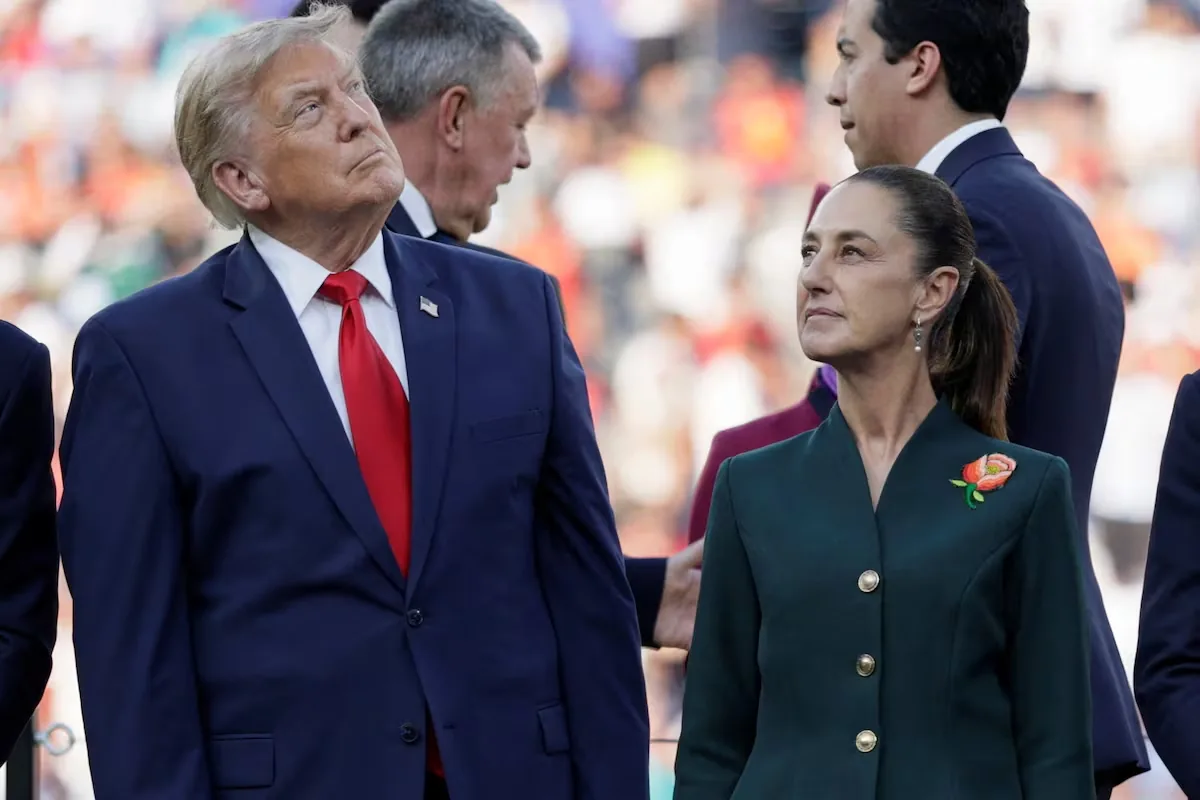
The president of the United States, Donald Trump, shows no let-up in his trade crusade against the world. The new tariffs imposed on dozens of countries, including Mexico —its southern neighbor and main trade partner—, pose a new economic and diplomatic challenge for the Government of Claudia Sheinbaum. The Trump Administration determined that more than 60 nations must pay tariffs of 10% to 12.5% for not having adopted sufficient measures to control imports of goods produced through forced labor. The announcement this Thursday broke in the middle of a day between Mexico and the US on the future of the USMCA. In Mexico’s case, although exports that comply with the USMCA are excluded from the 10% levy, this decision represents a blow amidst the annual review of the North American trade agreement.
Read more Video analysis | The cancellation of elections in Nicaragua consolidates Daniel Ortega’s regime
Against the free trade spirit of the USMCA, the US included both Mexico and Canada in its tariff escalation. The Latin American country has tried to minimize the impact, assuring that this tariff leaves the country at the same level as the universal 10% levy imposed last February and that only 15% of shipments, which do not comply with the treaty, will be subject to this measure. However, President Sheinbaum acknowledged that it is “complex” to negotiate from Trump’s protectionist perspective. “What we are looking for are better conditions for Mexico and that there will not be a new tariff, that there will be no surprises of new tariffs in this new framework that exists to provide guarantees to investors,” the president declared this Friday in her usual morning conference.
Sheinbaum admitted, as her economic cabinet had already mentioned, that one of the main points of debate with the US concerns the rules of origin for key sectors, such as automotive. The United States seeks to raise the American content of cars assembled in the region. Currently, this requirement stands at 75%, but the Government of Mexico seeks to implement a “regional rule of origin” that also benefits assemblers located in Mexican territory. “What we are looking for is for these rules of origin to be regional, so that not only what is manufactured in the US is discounted, but also what is manufactured in Mexico,” she commented.
In a report on the measure, BBVA points out that, thanks to the USMCA, the impacts of these tariffs will be limited. However, it warned that this new action by the US confirms that its trade policy will continue to be characterized by the intensive use of tariffs. “Section 301 offers a more solid legal basis because it expressly contemplates the possibility of imposing tariffs in response to foreign practices that affect US trade. An application of this magnitude more closely resembles a general tariff policy than a specific retaliatory action against particular practices,” it comments.
For Mexico, BBVA adds, the USMCA’s exception allows the country to maintain a better relative position compared to its competitors. “The treaty continues to function as the main mechanism for protecting Mexico’s preferential access to the US market and, furthermore, it is a new action that reveals the US’s intention to continue with the USMCA. On balance, the resolution is favorable for Mexico in relative terms, but negative for the predictability of global trade, which will cause inefficiencies in various economies, including that of the United States,” it concludes.
In its 2026 Trade Policy agenda, the Trump Administration warns that the United States’ trade deficits with Mexico and Canada are on the rise, despite the USMCA. Last year, the US trade imbalance with Mexico exceeded 196 billion dollars, an increase of 14.8% compared to 2024. In its annual diagnosis, the USTR points out that Mexico has weakened its investment climate and has inadequate labor laws, to the detriment of American workers. “Mexico has adopted a series of preferential measures to benefit national companies in the energy and mining sectors, particularly in oil, gas, and electricity, to the detriment of American investors,” the document states.
After a week of bilateral work in Mexico City, the next face-to-face meeting to continue the USMCA review will take place next September. For now, both governments assured that in the most recent review in Mexico City, progress was made on key issues such as economic security, labor standards, electronic payments, and trade rules in key industries such as automotive, steel, and agriculture. Washington expects to reach provisional agreements with Mexico and Canada before the end of this year, leaving the more complicated issues for 2027.
In less than a month, Mexico went from the US’s rejection of renewing the USMCA for another 16 years to a Trump tariff offensive under Section 301 of the Trade Act. Despite the imposition of tariffs on goods outside the treaty, on cars, steel, and raw materials like copper, Mexican exports continue to break records month after month. In the first five months of the year alone, shipments of goods and products across the Rio Grande exceeded 242 billion dollars. Experts and analysts agree that Trump’s tariff pressure, far from concluding, will intensify, and for this reason, the survival of the USMCA, its main shield to weather the Republican’s tariff storm, is a priority for Mexico.