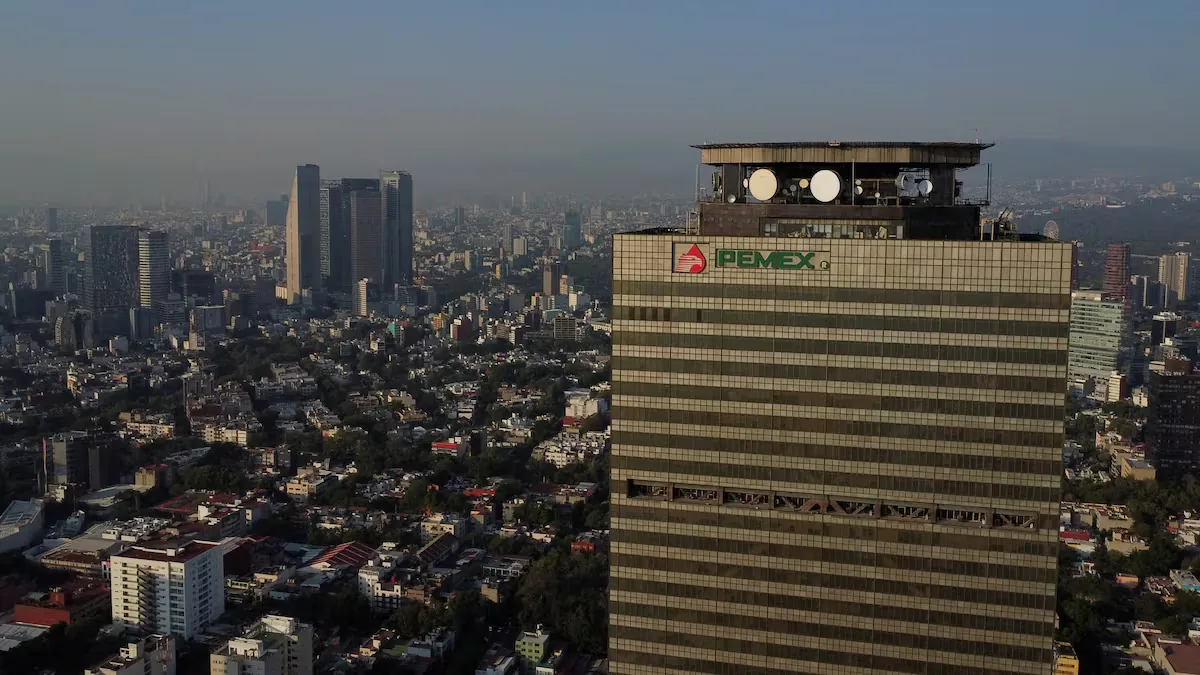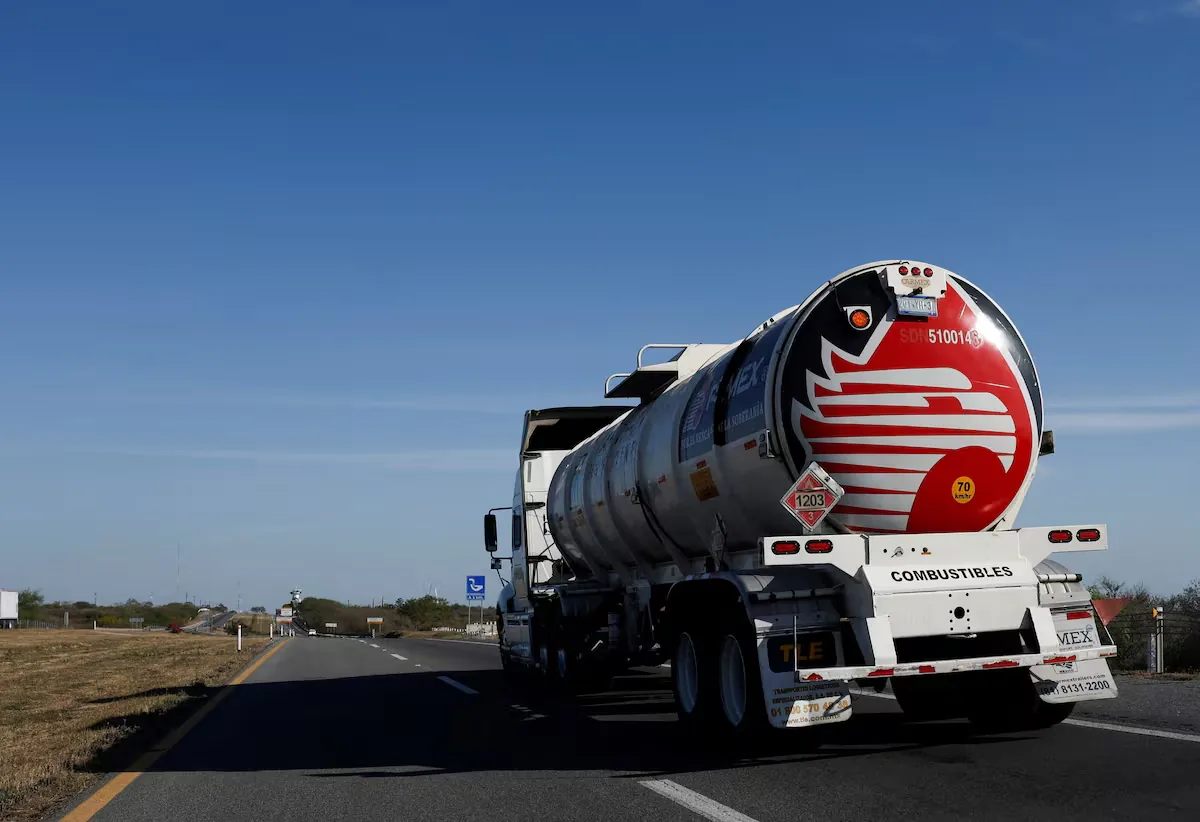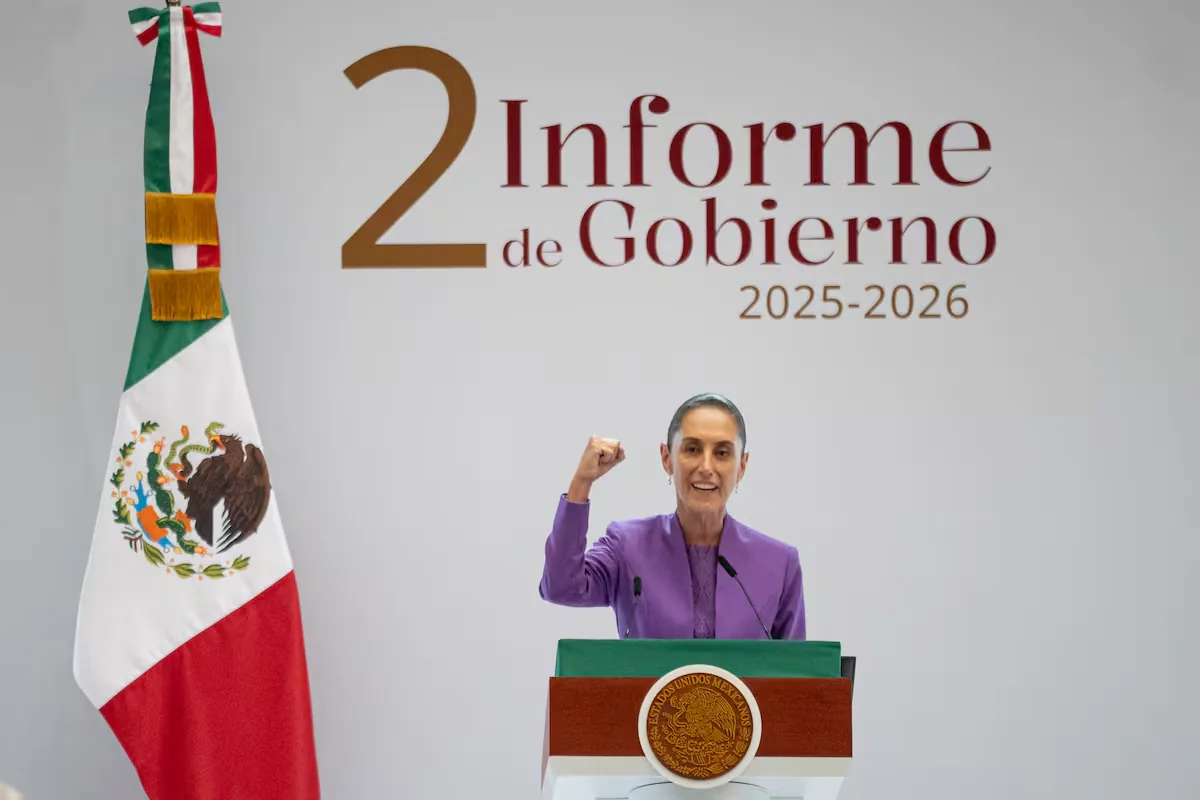
Pemex remains the elephant in the room of Mexico’s public finances. President Claudia Sheinbaum barely dedicated a few words to the state oil company in her accountability report this Tuesday, but she has offered signals indicating that her Administration will maintain financial support for the indebted state oil company, even in a context of reduced fiscal maneuvering room. The original strategy, with a scenario towards financial self-sufficiency in 2027, seems increasingly distant.
While the market’s attention focuses on the 2027 Economic Package with which the Government will present its forecast of revenues and expenditures for the next fiscal year, the big question is how far federal support for the oil company will go, whose heavy debt continues to condition public accounts. The company’s production has also not shown substantial improvements that would allow for an imminent recovery of revenues. Pumping remains close to 1.7 million barrels per day, with a national refining system that processes about 1.5 million barrels per day, almost all for domestic gasoline consumption, the president enumerated.
In her first two years in office, Sheinbaum has authorized operations for about 25.8 billion dollars to amortize Pemex’s debt, in addition to creating a fund of 250 billion pesos — equivalent to another 14 billion dollars — intended for strategic projects. However, the support has not managed to change the company’s course. Financial debt has barely been reduced by about 20 billion dollars.
“We modified the Constitution to recover Pemex and the Federal Electricity Commission (CFE) as public companies,” the president said in her speech, where she embraced the economic and social achievements of her administration, without delving into the modest economic growth or the complex situation of the oil company’s financial statements. At the close of June 2026, Pemex reported financial debt of 77.5 billion dollars, a decrease of 9.1% compared to the close of 2025. At the same time, it obtained a net profit of 1 billion dollars between April and June, partly driven by the rebound in international oil prices, which partially favored its exports.
“For decades, a model prevailed that reduced the State’s participation in the economy and transferred strategic decisions to the private sector, through privatizations and concessions. We all know that this model failed to provide well-being,” Sheinbaum concluded. However, she also sought to send a reassuring signal to investors and credit rating agencies by reiterating her Government’s commitment to a “gradual fiscal consolidation.”
The president also announced that two coking plants are in the process of being completed to increase gasoline and diesel production at the Tula and Salina Cruz refineries. The first will be finished this year and the second in the first half of 2027. Also, that they will inject more resources into Pemex’s fertilizer production, which reached 38% more in 2026 than in 2024.
Read more Milei seeks to secure the backing of the United States at the start of the electoral race
The cost on the credit rating
In this environment, the challenge for the Administration is not only to financially sustain Pemex but to do so without further deteriorating the country’s credit position. In May, Moody’s and S&P made decisions that weakened the credit rating of Mexican sovereign debt and Pemex, considering that the country’s fiscal weaknesses have deepened due to a combination of higher debt, lower revenues, and sustained support for the oil company. In Moody’s case, Mexican debt was left just one notch above speculative grade, known as “junk bond.”
The international context has also added greater tension to the scenario, given the increase in sovereign debt yields globally, which has raised Governments’ financing costs and tightened scrutiny on economies with greater fiscal fragility. In this environment, Mexican bonds have at times traded as if they had already lost investment grade, a behavior that, in its symbiotic relationship, has also transferred to Pemex’s securities.
“What global investors fear, and Pemex investors fear, is if we reach that crossroads where we have to decide whether to withdraw support from Pemex to save the country’s credit rating. And eventually, that could happen,” explains Luis Gonzali, Investment Director at asset manager Franklin Templeton. “At least, the investor does not see it as far off. The budget is increasingly tight,” he adds.
The budget deficit reached 578.9 billion pesos during the first half of the year, an increase of 19.5% compared to the same period in 2025. Meanwhile, net spending grew 2.1%, revenues practically stagnated, with a marginal advance of just 0.1%, affected by lower tax collection and moderate economic growth.
And while the president will have at least 18 months to balance the budgets before the next rating agencies’ decision, the oil company adds additional pressure on the treasury at a time when the Government is also seeking to balance its public spending on social programs with fiscal discipline. The content of the Economic Package — which must be presented to Congress on September 8 — will offer more clarity on the details of the support.
Read more Milei’s wealth grows 43% in one year and his sister Karina’s triples