









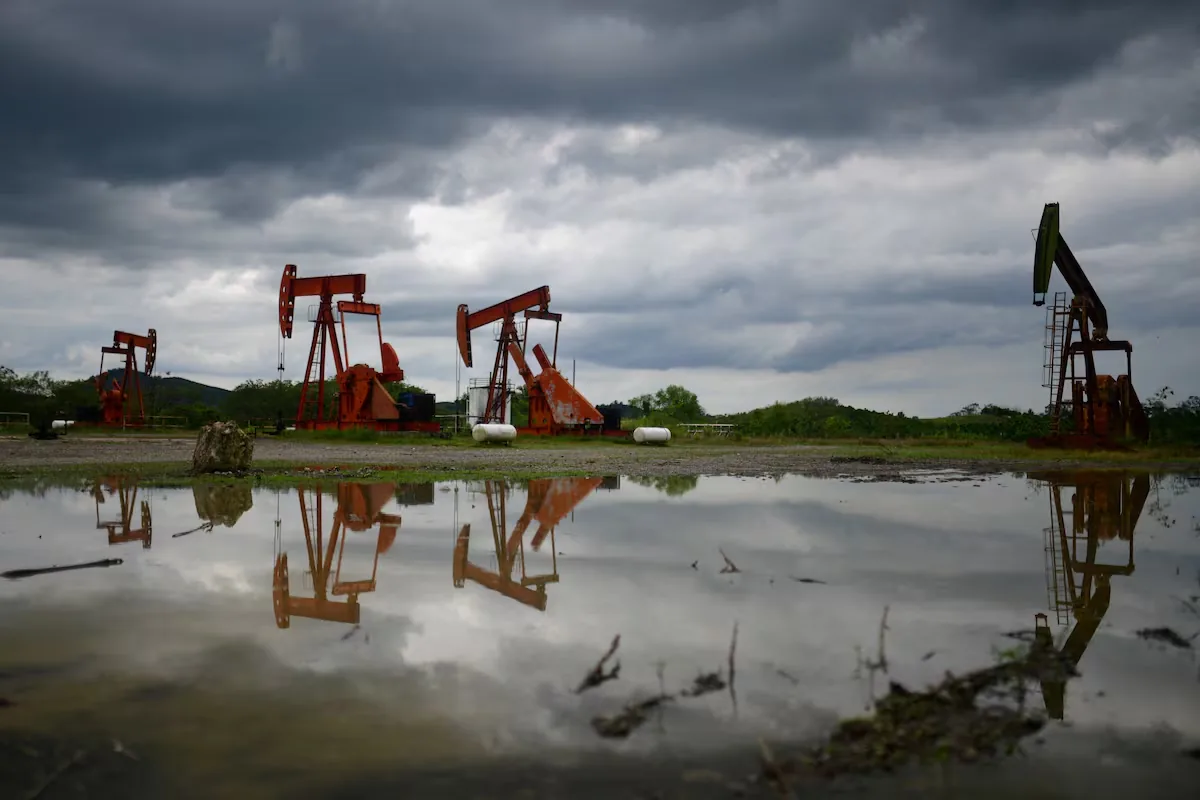
The Mexican government has finally put in writing this week one of the central pieces of its energy policy: the Hydrocarbons Sector Development Plan 2025-2039. The document aims to set the course for the oil industry in Mexico, a country where the state-owned Pemex is a national symbol almost on par with the flag. Its analysis shows how President Claudia Sheinbaum moves away from the framework established by her mentor and predecessor, Andrés Manuel López Obrador, during his term. It promotes some proposals that were previously anathema: a conservative production target, highlighting the potential of gas in unconventional reservoirs that must be extracted (no matter what) through hydraulic fracturing, and formalizing the opening for Pemex to partner with private companies.
Read more Galápagos, the paradise under criminal siege
Published in the Official Gazette of the Federation, it is carried out under the new 2025 Planning and Energy Transition Law and has a binding nature, with the capacity to condition the sector. A central part is the hydrocarbon production targets. In the case of oil extraction, Mexico abandons the previous administration’s idea of reversing “the historical decline in crude oil production” and increasing from 1.8 to 2.4 million barrels per day, setting as a goal to maintain that minimum until 2039. This figure is slightly higher than the current level of 1.6 million. For natural gas, the goal is to reach a production peak by 2038 of 6,600 million cubic feet per day, almost double that of 2025. For this, the plan projects incorporating new fields and developments, all from conventional reservoirs.
For a year now, one of the major debates in energy policy has been around hydraulic fracturing or fracking, a series of hydrocarbon extraction techniques from rocks, heavily criticized for their environmental impact, which López Obrador refused to use. In August 2025, Víctor Rodríguez Padilla, then director of Pemex, spoke for the first time about returning to this technique and said that the only way to obtain new reserves for the country is through unconventional reservoirs, resources that, to be extracted, require hydraulic fracturing no matter what. Finally, this August, the committee of specialists that Sheinbaum commissioned to decide if Mexico should return to fracking delivered a report with a series of recommendations that, if all are met, make its economic viability almost impossible.
This new plan explains that the vast majority of the Nation’s Prospective Resources, which are the estimated volumes of hydrocarbons yet to be discovered but whose existence is inferred from geological and geophysical studies, are found in unconventional reservoirs, both for crude oil and natural gas. These data did not appear in López Obrador’s plan, who in fact canceled a bidding round that had nine areas with this type of resources.
Another difference is Pemex’s partnership with private companies. While López Obrador canceled the oil rounds and spoke of strengthening Pemex’s autonomy, Sheinbaum’s new plan contemplates 21 mixed development projects. In these, although the oil company retains ownership, it grants exclusive rights to a company that “complements its operational, financial, or execution techniques” to “accelerate project execution, incorporate advanced technologies, optimize costs, and improve risk management.” Seven of these are already awarded, another seven approved, and the remaining seven are still in preparation.
For Mariana Escalante, a researcher at the think tank Fundar specializing in energy and climate transition, it is interesting that this plan states that energy is a right, not a commodity, and points out that one of the most significant regulatory novelties “is the replacement of the previous Social Impact Assessment with the Social Impact Manifestation of the Energy Sector.” This new instrument has a mandatory and binding legal authorization character and shares characteristics with the Environmental Impact Manifestation. But, she accuses, “it is all justification to continue doing more extractivism.”
Read more Julia Holter and earthly love in her album ‘Materia’: “I feel like a child inside”
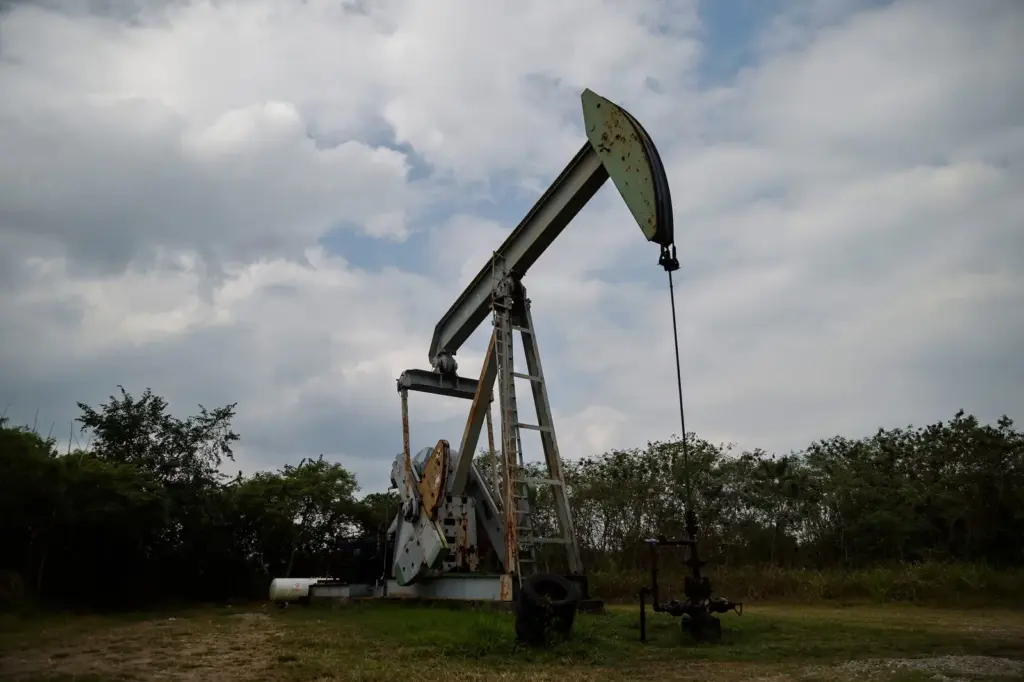
The new plan projects the construction of new infrastructure, including almost 1,500 kilometers of gas pipelines and three new combined cycle power plants. “This is called lock-in,” a term used to describe long-term dependence on fossil fuel technologies, infrastructures, or systems that hinder the transition to clean energy, “and although the document talks a lot about best practices, sustainability, and efficiency, having this infrastructure for the next 50 years means your climate adaptation plans like the Nationally Determined Contribution will not happen.” Mexico has committed to not emitting more greenhouse gases into the atmosphere by 2050.
This plan also includes a portfolio of sustainable projects for Pemex that should occur before 2031 and include a charging network for electric vehicles at Pemex gas stations, photovoltaic systems, and installing wind turbines on decommissioned offshore platforms. It even talks about exploiting lithium, which in Mexico is handled by LitioMx, a state company without budget or technology for its extraction. Another aspect Escalante finds interesting is that it describes the decline of oil production in Mexico and the actions to compensate for it by 2039. It basically involves promoting marine activities, both in shallow and deep and ultra-deep waters, “but it does not tell us what will happen when it becomes more expensive to extract oil than the energy it provides”.
“From the perspective of a hydrocarbon operator, the document is solid, consistent with the discourse in the country since the 2024 sector reform and, if compared with what López Obrador proposed, it aligns much more with the reality of the industry,” says Santiago Arroyo, director of Ursus Energy, where he develops energy infrastructure. “That said, it is a macro context, and it will have to be detailed with current legislation and secondary regulations.”
Arroyo highlights that “although it decreases hydrocarbon production targets, natural gas targets increase significantly, and this is an indication of Sheinbaum’s inclination towards energy transition.” This, he points out, evidences Sheinbaum’s training as an environmental scientist. “The bet on the transition is through natural gas; we cannot make a quantum leap without going through it,” he assures. “Mexico is a gas country,” but he warns: “We will only be able to export it with fracking.”