









When the Migration Police opened the backpacks of three Thai passengers at Guayaquil airport, they found something that should not have reached there: 12 black marine iguanas from Galápagos, named Amblyrhynchus cristatus. They had traveled from Seymour Island with their front legs tied to their bodies and their hind legs tied together. They were completely immobilized, weak, some on the verge of death. There were 12, and in the Asian and European markets, they would pay between 25,000 and 500,000 dollars for each one.
Read more Julia Holter and earthly love in her album ‘Materia’: “I feel like a child inside”
Three months later, another suitcase revealed the same route again. This time it was at Quito airport. A Russian citizen was carrying 32 young marine iguanas distributed in eight small containers. The authorities found them weak and dehydrated. The woman was arrested and received preventive detention.
For Christian Sevilla, director of Ecosystems of the Galápagos National Park, these cases are just the visible part of a bigger problem. “The illicit trafficking of species is one of the strongest threats we are experiencing in Galápagos,” he says. The business moves money, he explains, and those who carry it out adapt their methods every time the authorities modify their controls.
It is not just about getting an animal and hiding it in a suitcase. The chain starts much earlier in capture, storage, internal movement, maritime or air transport, exit from the archipelago, and finally, national or international commercialization.
Organized network
Park rangers have identified storage places in remote and sparsely populated areas of the islands, some difficult to access. There, according to Sevilla, specimens can be concentrated until the amount requested by buyers abroad is gathered. Officials have found sacks and animals in places where they should not be. In San Cristóbal, for example, they have found land iguanas, a species that does not naturally exist on that island.
The mechanism seems simple and, at the same time, difficult to dismantle: someone captures the animals, others gather them in remote sites on the island, and then someone else finds a way to take them out. “It is clear that there is an internal network within Galápagos,” Sevilla acknowledges. That network, he explains, would be the one that supplies the animals that are then commercialized and transported to the mainland and abroad.
At the hearing for the filing of charges against the three Thai citizens, a trafficking network was mentioned that would include island inhabitants and public officials who allegedly participated in the capture and transfer of the 12 iguanas. The Galápagos National Park, however, has not been able to determine who makes up that structure nor establish if public officials are part of it. That task has been left to the Prosecutor’s Office and the specialized Police units investigating the cases.
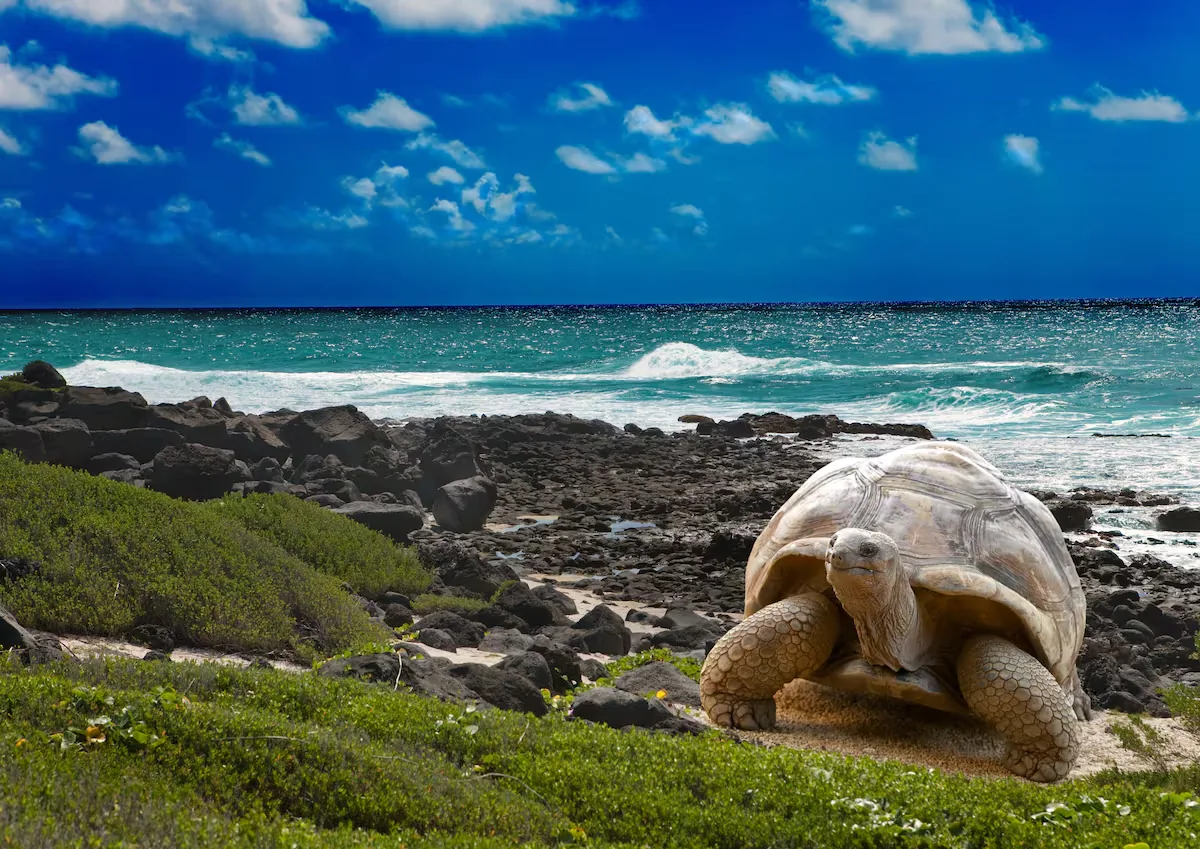
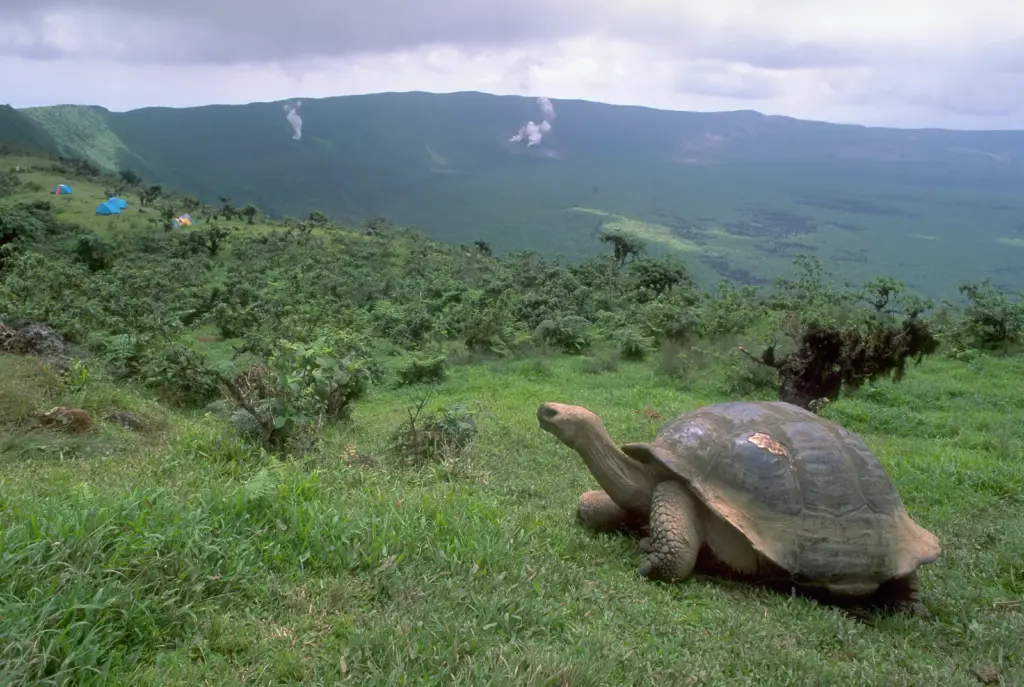
In 2021, police officer Nixon Polo was sentenced to three years in prison for trying to take 185 giant tortoise hatchlings hidden in a suitcase out of the islands. Seven months later he was released. A year later, the tourist boat Xavier III was intercepted with 84 tortoises and five golden iguanas on board. The three convicted in that case received the minimum sentence: one year in prison. In total, four cases have been investigated for crimes against fauna and flora, in which they tried to traffic 324 specimens including iguanas and tortoises.
For security analyst Michelle Maffei, one of the problems lies in how Ecuador has treated this crime. The sanctions, she argues, do not correspond to the money this market moves nor to the structures that may be behind it.
According to the Comprehensive Organic Penal Code, crimes against flora and fauna can be punished with sentences of one to three years in prison, depending on the case. “Just like white-collar crimes, species trafficking is not punished with a sentence similar to drug trafficking, even though they are equally serious crimes and equally beneficial to the criminal structure,” Maffei states.
It is a criminal platform that has operated for decades, taking advantage of maritime routes around the islands for fuel trafficking, drugs, illegal fishing, and now an international demand that turns its unique animals into merchandise.
The economic incentive is enormous. A marine iguana can reach about 25,000 dollars in the international market. A pink iguana, whose habitat is restricted to an area of the Wolf volcano, can reach between 25,000 and 500,000 dollars, according to the Traffic report cited in an investigation by La Barra Espaciadora and Mongabay Latam. A juvenile giant tortoise can be sold for between 5,000 and 7,000 dollars, and an adult can reach 60,000.
“There is a black market that sells them as food, pets, or for exhibition by collectors who pay a lot of money to have unique species,” explains Maffei, who also says it is a market within organized crime that has consolidated and helps finance criminal groups.
The islands have another particularity: they are the last bastion of peace left in a country crossed by growing violence among drug trafficking gangs. While complaints for crimes against people do not reach even one percent, there are more than 300 complaints for crimes against fauna and flora. Most are for run-overs of tortoises, iguanas, pelicans, attacks on sea lions, or theft of endemic animals and plants.
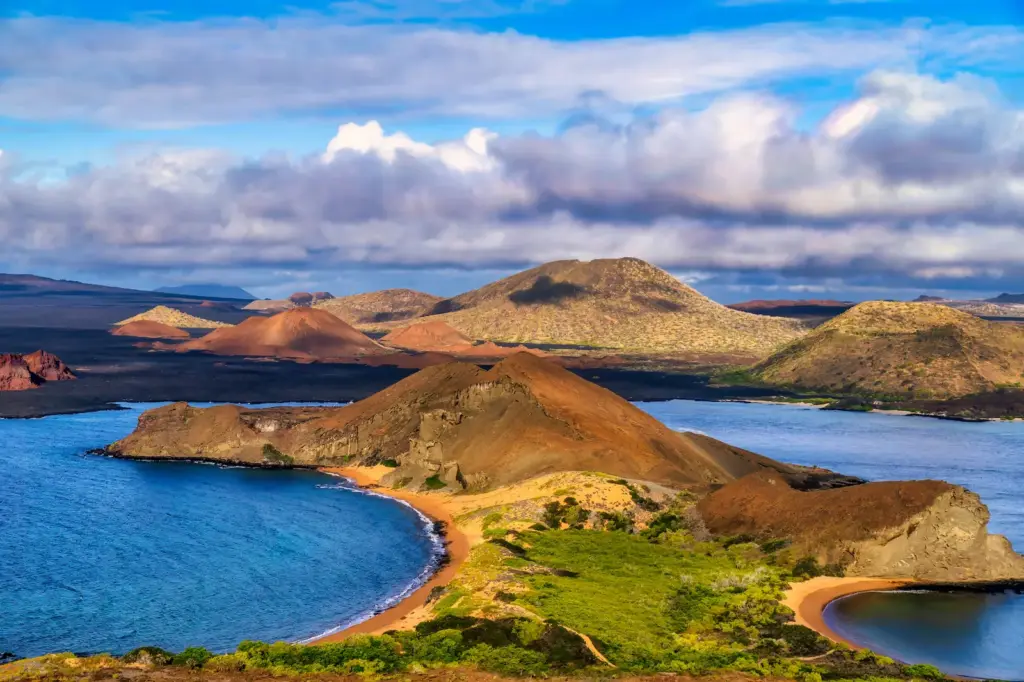
Galápagos also has a condition that makes controlling this business especially difficult: it is an archipelago. Its 324 islands and islets add up to about 1,660 kilometers of coastline. For a marine iguana, that means there is no single exit door. It can be captured practically at any point and then transported by sea or land to one of the connection points with the mainland.
San Cristóbal is especially sensitive. It is the last island on the route before leaving for the mainland and, therefore, Sevilla considers it a point that requires special surveillance.
But the park has limited resources, currently has 289 officials. And they have been affected by the latest cuts made by the Executive. About 150 work in the field and barely about 40 are specifically assigned to control tasks. Sevilla estimates that they would need at least 30 additional people to carry out more efficient surveillance.
They are unique animals on the planet
The marine iguana, in particular, also has an importance that goes beyond its commercial value. Sevilla explains that these reptiles are part of the ecological chain of the archipelago: land iguanas are herbivores and contribute to the functioning of the vegetation, while marine iguanas help maintain the trophic chain of the coasts.
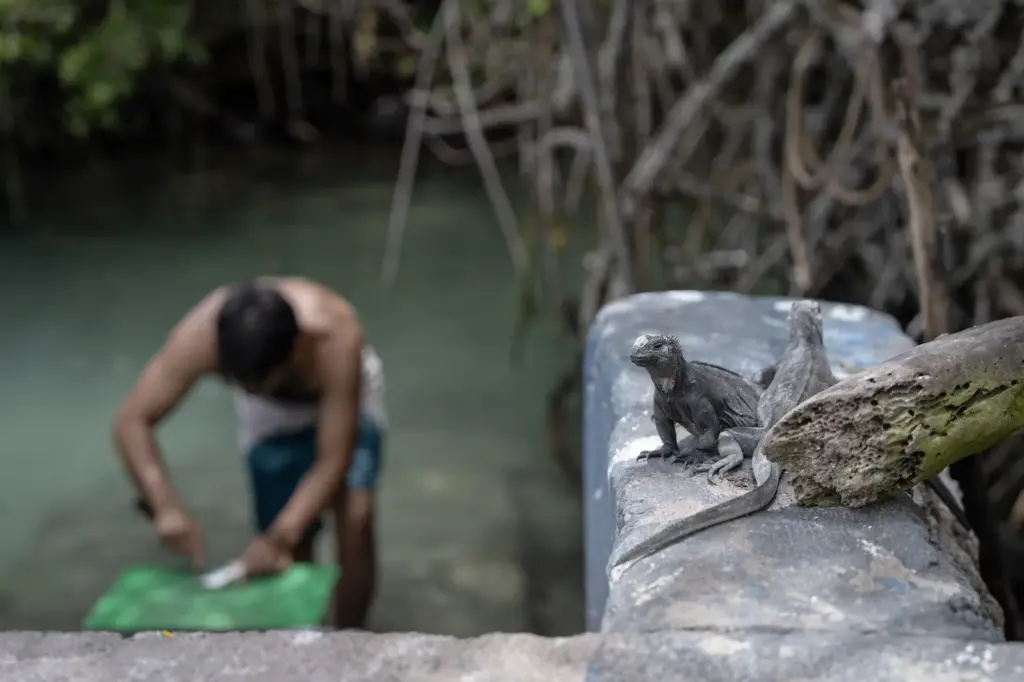
There are three species of land iguanas and one species of marine iguana, the latter with 11 subspecies recognized by the park. They have a unique ability: they can be on land but are also capable of swimming to feed on marine algae.
International pressure on them increased in December 2025, when CITES member countries approved moving the Galápagos marine iguana from Appendix II to Appendix I. The measure came into effect on March 5, 2026. This implies a much stricter international protection regime and that the international trade of wild specimens is subject to exceptional conditions.
The decision came at the same time as the first signs of a more active international route appeared.
A study cited by La Barra Espaciadora and Mongabay documented that at least 60 Galápagos iguanas had circulated internationally with fraudulent CITES permits to collectors in Asia and Europe. CITES had also warned about specimens of land and marine iguanas from Galápagos declared as captive-bred and exported from Switzerland to Uganda, even though their origin required greater scrutiny.
Galápagos is the beginning of a chain that connects a coast with international airports and buyers willing to pay thousands of dollars for a species they cannot find anywhere else.
The authorities have managed to recover some animals, but returning them to the islands is not easy. The 12 iguanas from the first case underwent health analyses before their return; ten finally returned to Galápagos but remain in captivity until their evolution is seen and whether they pose a risk to other species. The 32 found in Quito remain under observation while it is determined if they can be repatriated.
Sevilla warns that returning an animal without knowing its health status could introduce diseases into a population that has evolved isolated for thousands of years. In certain cases, he adds, they might be forced to keep the specimens on the mainland or consider euthanasia under a precautionary principle.
Read more Why Polo? Poloboya