







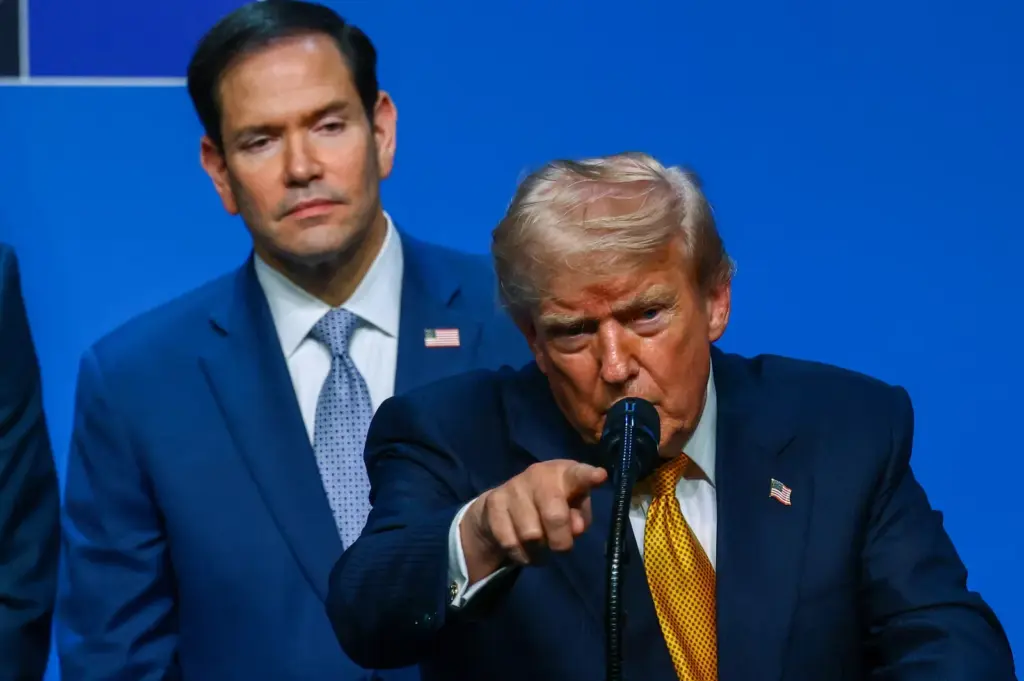
“The United States never accepted a world court that could prevail over our own courts and Constitution,” wrote Marco Rubio, U.S. Secretary of State, on July 13 in The Wall Street Journal. He was referring to the International Criminal Court (ICC), of which the U.S. is not a member but which it has proposed to “dismantle.”
Read more France becomes the first European country to ban social media access for children under 15
“This is just the beginning. Using all the tools at our Government’s disposal, working hand in hand with every ally with whom we can join forces, we will dismantle the ICC, brick by brick if necessary,” Rubio added in that article. Jurists consulted by EL PAÍS interpret that Washington’s true objective is none other than to guarantee itself “impunity” for its own policy, based on force.
The ICC, created in 2002 by the Rome Statute with global reach and 125 signatory countries, is the body that prosecutes those most responsible for crimes of genocide, war crimes, crimes against humanity, and military aggression. Although both the court and its Prosecutor’s Office decline to comment on the contempt and threats from the Donald Trump Administration, Tomoko Akane, president of the ICC, took advantage of the celebration of International Criminal Justice Day on July 17 to send a couple of reminders. She emphasized that this court was created “to end the impunity of perpetrators of the worst crimes” and added that the pursuit of justice “is a shared responsibility.”
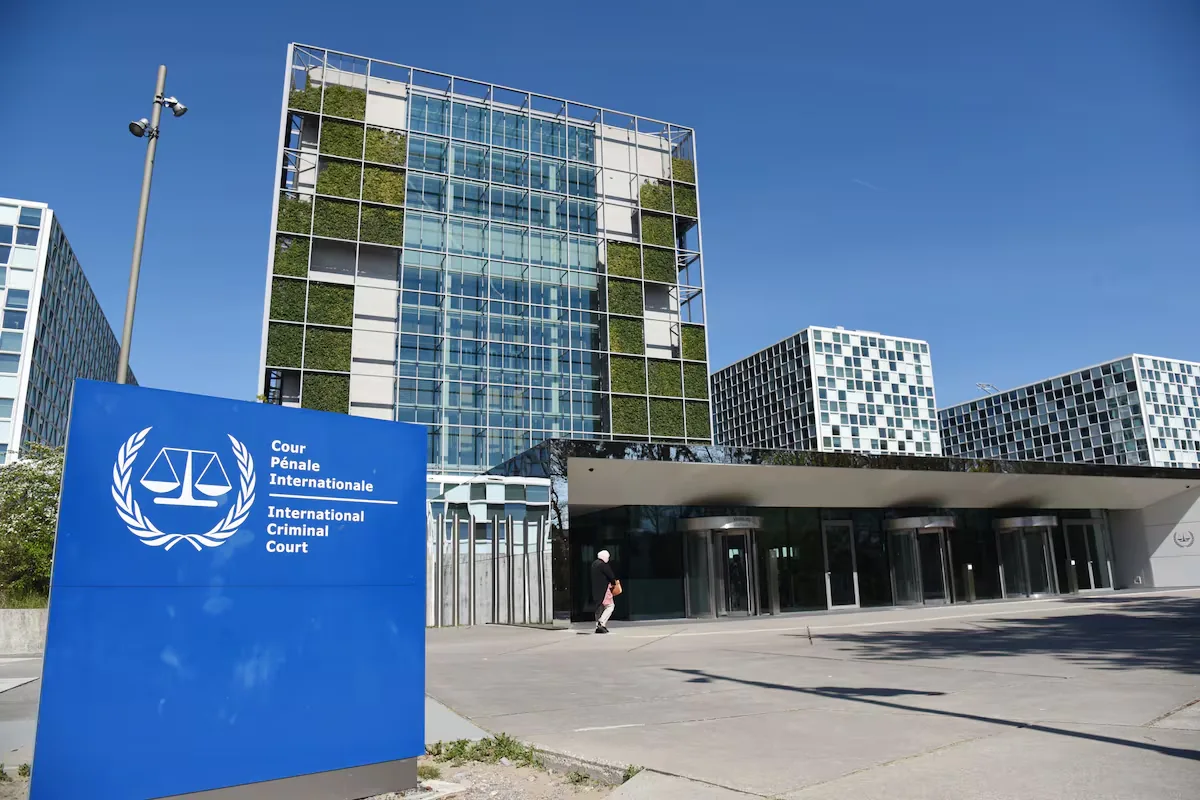
Despite the difficulties, the work continues in an institution that operates from The Hague (Netherlands) and has eight of its 18 judges and its three prosecutors financially sanctioned by Washington since last year.
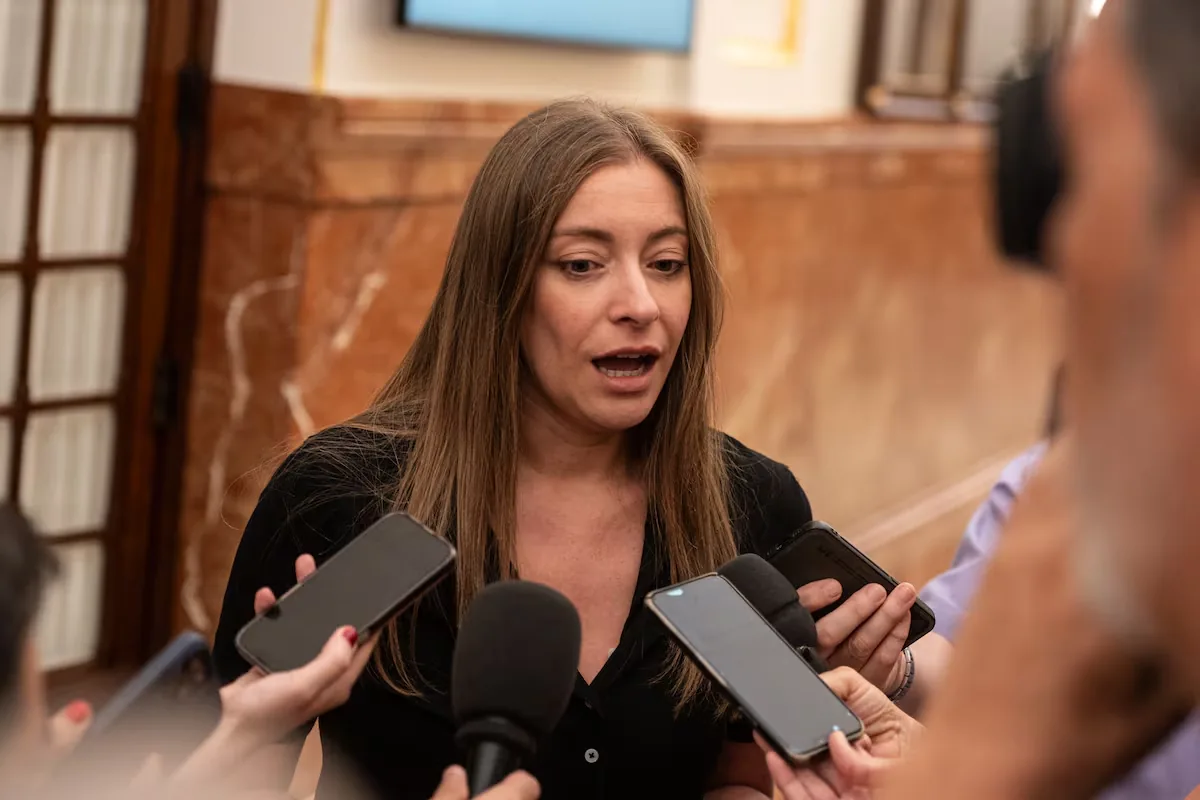
“The propaganda [of Marco Rubio] is not based on the coherence of arguments but on power,” explains Asier Garrido Muñoz, who was a lawyer for the ICC, in a telephone conversation with EL PAÍS. Hence, in his opinion, “the dissonance between what they criticize the court for [the international scope of its investigations] and what they do by force and unilaterally in other countries.” For example, the kidnapping of the then president of Venezuela, Nicolás Maduro, last January 3 to try him in the United States.
For the Spanish jurist, Washington’s censorship of the ICC is based “on the fallacy that only a national judge can judge their own citizen.” And he gives a simple example to show that this is not the case: “It’s like claiming that an American has the right to walk with impunity through the streets of Pamplona, committing crimes, during the Sanfermines.” He believes that Rubio uses “the entire rhetorical arsenal of populism to assert that this court is waging a war against the American people, based not on weapons but on statutes and norms.”
Reed Brody, an American lawyer specializing in war crimes, is blunt when describing Washington’s new campaign against the ICC. “Let no one be fooled. It’s not about [defending its] sovereignty, it’s about impunity,” he writes via WhatsApp.
According to him, Marco Rubio knows perfectly well “that bombing Iran was an act of aggression and that attacking vessels in the Caribbean and killing their occupants without trial constitutes murder.” Therefore, he continues, the Secretary of State’s broadside against the ICC is actually intended to be “an insurance policy” to avoid future “accountability for crimes that the Trump Administration is committing in broad daylight.” Rubio also knows, Brody adds, that “sanctioning judges and prosecutors for doing their job is, in itself, obstruction of justice.”
The sanctions imposed in 2025 by Trump on 11 ICC legal professionals not only prevent them from leading a normal life —from paying with a credit card to booking a hotel—. It also extends to all entities that collaborate with them. And in Rubio’s renewed challenge, more entry bans to the United States for court personnel, including visa suspensions, are being considered, as the State Department noted in a statement on that same July 13. It also proposes pressing the 125 ICC member states to withdraw from the institution.
“It is an act of propaganda and part of the cultural war that President Trump’s Administration, and the far right, have declared against everything that smacks of international cooperation,” states former lawyer Garrido Muñoz. He responds to Rubio’s image of dismantling the ICC “brick by brick” with another of resistance: “Fortunately, the building is made of cement, metal, and glass,” he jokes.
Paradoxically, Washington contributed in the nineties to the creation of international criminal tribunals for the former Yugoslavia and Rwanda, where genocides occurred. The experience was then transferred to the ICC for the prosecution of international crimes, and the 125 States that are part of the Rome Statute have delegated the competence to investigate these crimes to that institution. But the U.S. does not recognize the authority of the ICC.
The U.S. stance has always been conflictive, though with moments of certain calm. The administration of Democrat Bill Clinton (1993-2001) participated in the drafting of the Rome Statute, although it did not ratify it, and during the period of fellow Democrat Joe Biden (2021-2025), work was done with the court without making it public, even in the financial aspect.
“The ICC symbolizes the attribution of a power traditionally linked to national sovereignty, which is that of prosecuting,” notes Garrido Muñoz. He indicates that this is “a power of the liberal order that the Trump Administration attacks, considering it detrimental to its national interests, which include acting with impunity anywhere on the planet.” And he concludes by asserting that the ICC “is a big game trophy for this Administration.”
The ICC, the only permanent institution to judge genocide, war crimes, crimes against humanity, and the crime of aggression understood as the use of armed force against a sovereign country, only comes into operation when a State cannot or does not want to do so itself. But it is empowered to prosecute citizens of countries that are not part of the court when they have committed crimes in the territory of a country that is.
Thus, for example, the court has an arrest warrant issued against the Prime Minister of Israel, Benjamin Netanyahu, for alleged war crimes and crimes against humanity committed in Gaza —since Palestine has been a member of the ICC since 2015, three years after being designated an Observer State by the UN—; and another against the Russian Vladimir Putin for crimes against humanity in the deportation of Ukrainian children to Russia.
“That’s why Rubio’s reasoning is absurd,” says Garrido Muñoz. “Jurisdiction in International Law is not only that of a State over its own citizens, but also territorial.” That is why, “if the subject we were talking about earlier commits a crime in Pamplona, he can be judged in Spain for his actions.” And if the crime he commits is genocide, war crimes, or military aggression, Spain can delegate jurisdiction to the ICC.
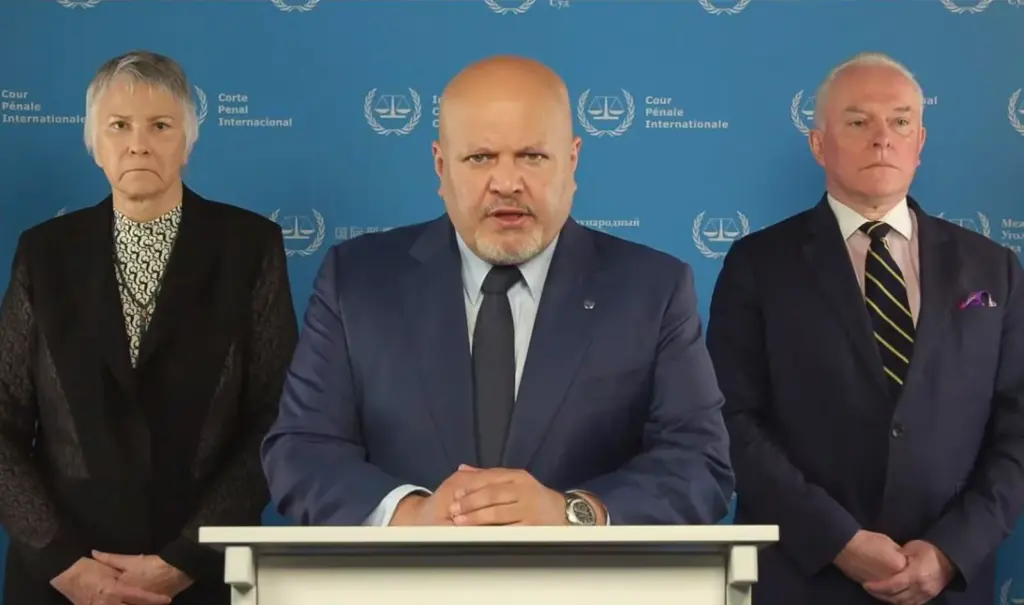
Despite the sanctions and new challenges, the work of the ICC continues its course, and last Thursday the judges unanimously confirmed the 17 charges of war crimes and crimes against humanity presented by the Prosecutor’s Office against Khaled Mohamed Ali El Hishri, a former member of the Libyan Al Radaa militia (Special Deterrence Force). He is accused of having supervised or committed the crimes in Mitiga prison, in Libya, between 2014 and 2020. The opening of the trial against former Philippine President Rodrigo Duterte, for alleged crimes against humanity committed in his fight against drugs, is also expected in November.
More than ever in its 24 years of existence, the future of the court depends on the degree of commitment of the countries that support it. Because, in addition to those caused by the U.S., there are other tremors: three African Sahelian countries —Niger, Mali, and Burkina Faso—, all marked by terrorist violence and serious human rights abuses, have initiated a procedure to withdraw from the Rome Statute. There may be other withdrawals. It is possible that, depending on their dependence on the U.S., some States may consider reducing contributions to the budget that keeps the court open.
“Until 2024, the ICC almost exclusively prosecuted Africans and enemies of the West, such as Russian President Vladimir Putin. And the West applauded,” recalls Reed Brody. “When the same law was applied to a U.S. ally [referring to Netanyahu], Washington decided to strangle the court,” he emphasizes. The ICC, he declares, “is not punished for its failures but for its impartiality.”
At the end of her International Criminal Justice Day message, President Akane affirmed: “The ICC stands firm in its mission to deliver justice to victims of the gravest crimes, even in the most challenging times.”
Read more Trump is willing to talk with Hezbollah