






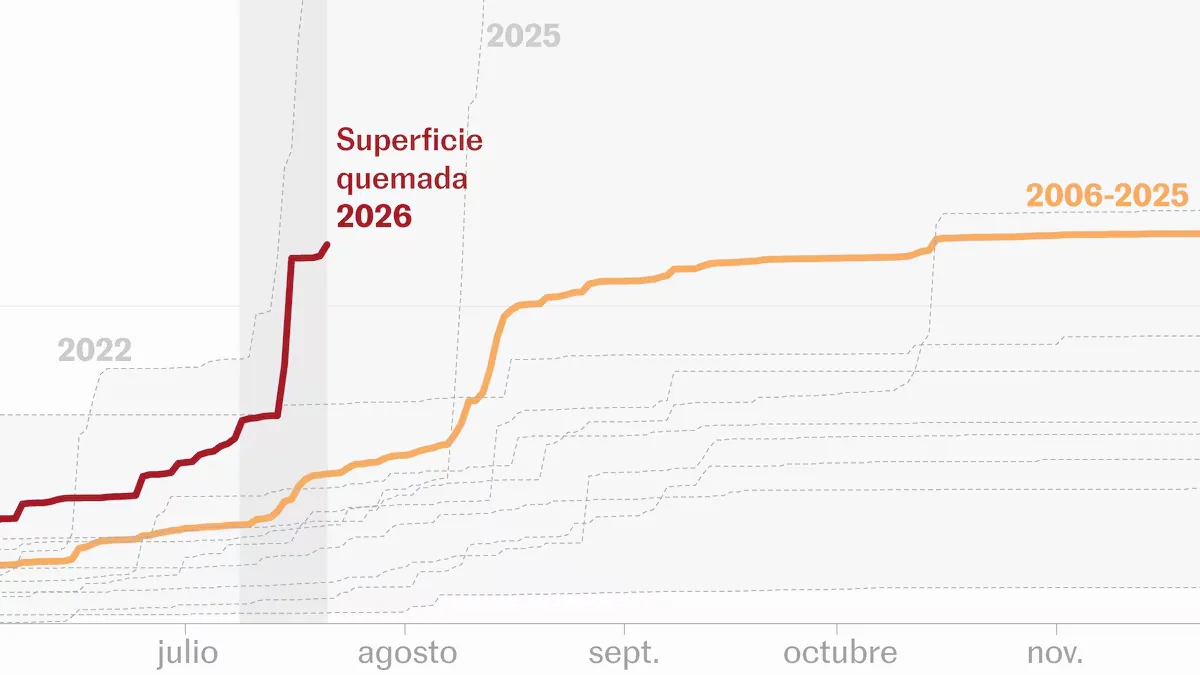
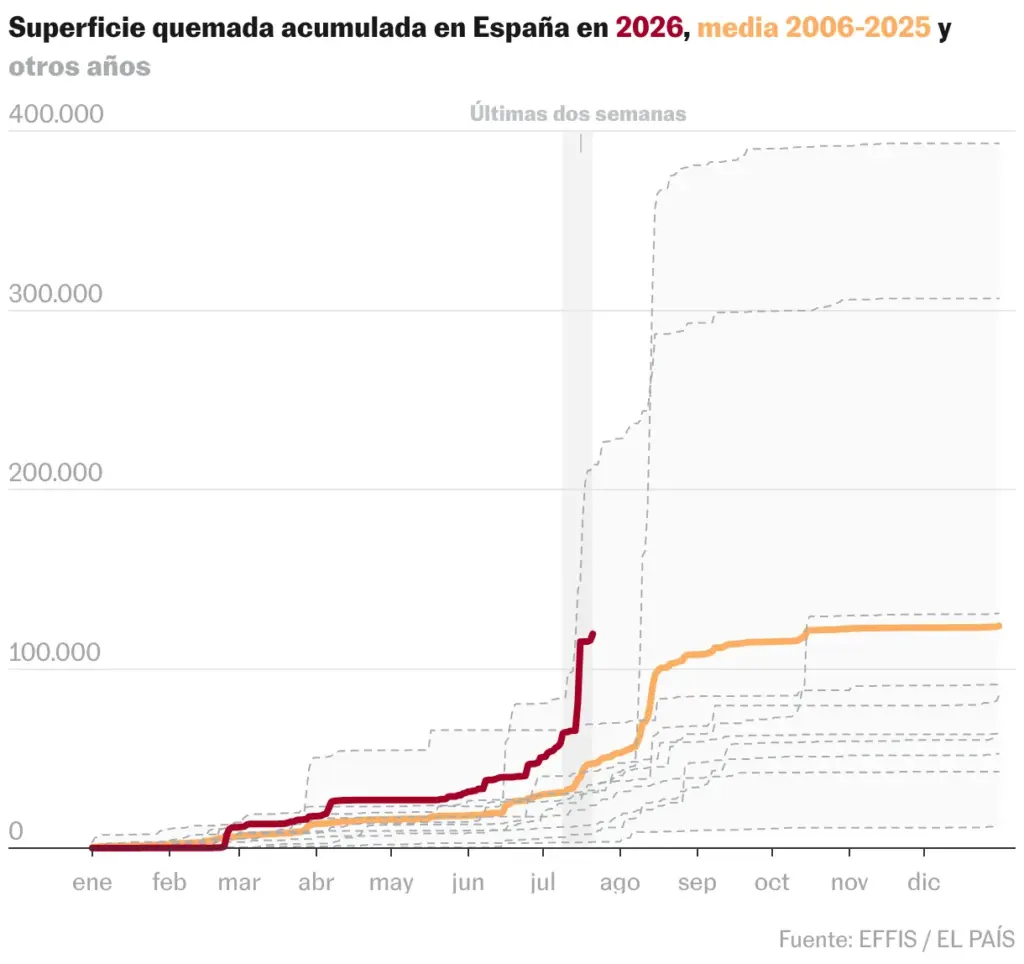
If last year the flames raged in August, devastating the northwest of the Peninsula, coinciding with an extensive and intense heatwave, this summer the problems have arrived earlier in Spain, the European country with the most damaged area at the moment. After an already complicated June, in July the area affected by fire has soared to an annual accumulated total of 119,458 hectares. These are the provisional data offered this Tuesday by the European monitoring service Copernicus, which uses its satellite network to estimate the perimeter and surface area of fires. But what stands out most is that two-thirds —79,000 hectares— of that total have burned in just the first 20 days of July.
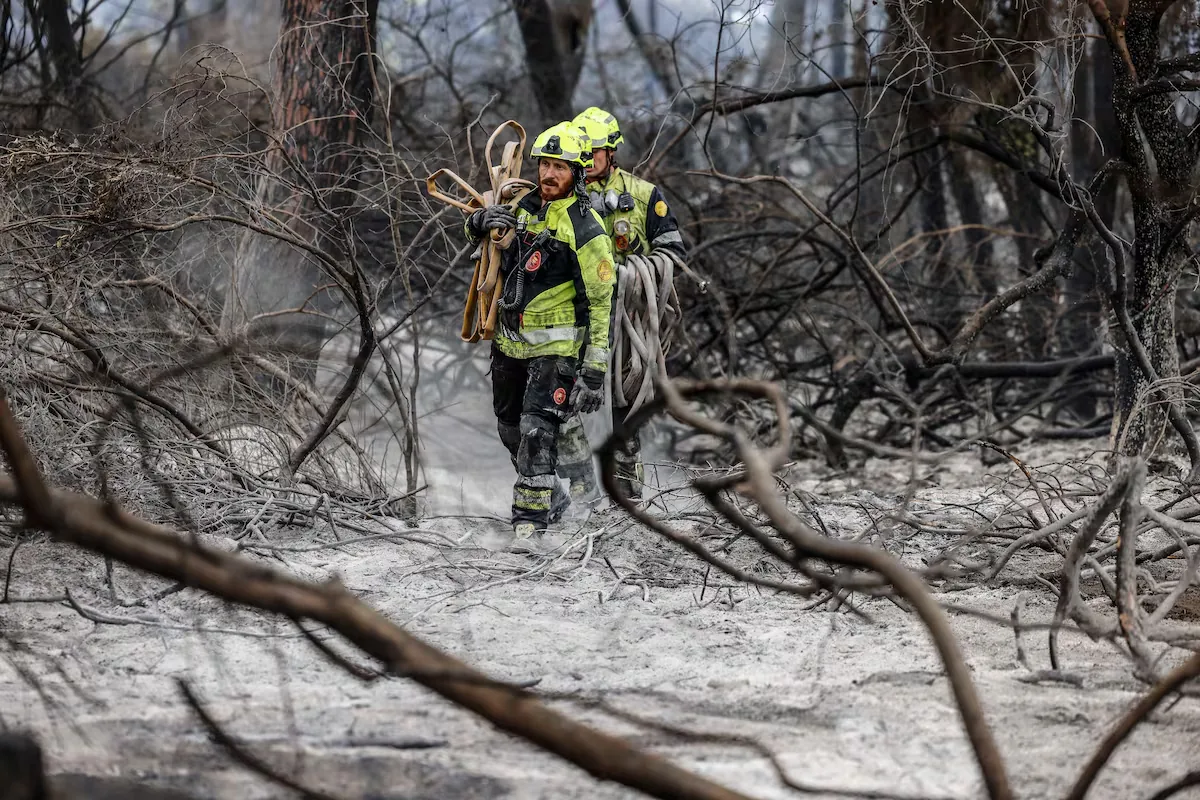
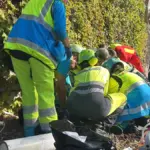
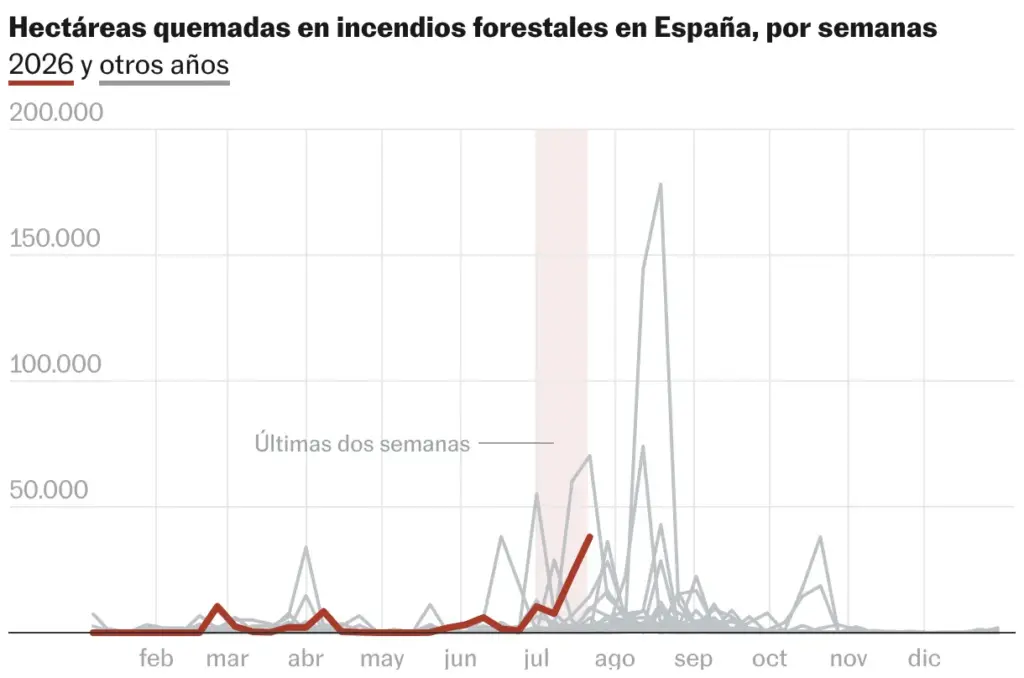
The first two weeks of the month had already been bad, and not only because of the damage to ecosystems: a tragic fire also occurred in Levante Almeriense in which 13 people died. But what is causing the accumulated damage to skyrocket is the La Mierla fire, in the Sierra Norte de Guadalajara, which started on Thursday the 16th and has forced the evacuation of about thirty municipalities. The provisional data released this Tuesday by the competent Administrations and Copernicus pointed to a fire of about 30,000 hectares.
Sara Aagesen, third vice-president and Minister for Ecological Transition, explained this Tuesday from the post coordinating extinction efforts that this fire is already the most extensive in Spain this year. “And, possibly, one of the largest in our country’s recent history.”
Indeed, those 30,000 hectares would place it as one of the most extensive. The largest recorded since 1968, according to data from the Ministry for Ecological Transition, was last August’s fire that started in Laurouco, which spread over more than 37,000 hectares in Ourense, Lugo, and León. It is followed by the Minas de Riotinto fire, which damaged almost 30,000 hectares in the provinces of Seville and Huelva in the summer of 2004.
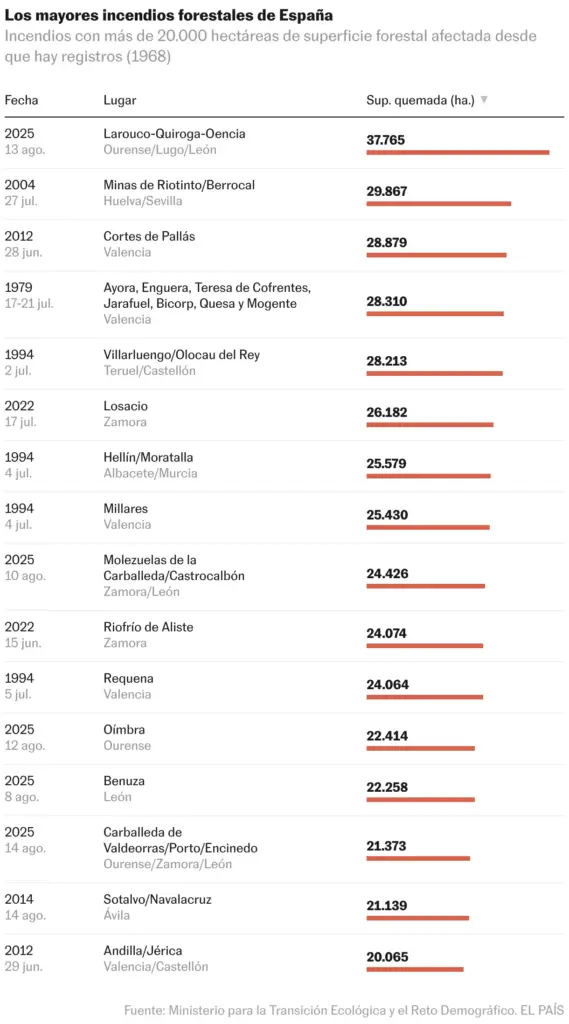
But it is still too early to precisely place the La Mierla fire on this list of major disasters. Because Copernicus’ satellite estimates set a perimeter, but within the area of a large fire there may be zones that have not been reached by the flames. The delimitation of the burned area corresponds to the communities once the flames are extinguished, which takes time.
In any case, Aagesen warned of the “extraordinarily complicated” weather conditions being experienced. This Tuesday marked the start of the third heatwave of this summer, which is expected to last until Thursday. The first was recorded between June 21 and 24, inclusive. And the second extended between July 5 and 9. Heatwaves —which climate change is making fiercer and more frequent— contribute decisively to forest fires by reducing humidity and increasing vegetation stress.
Read more France becomes the first European country to ban social media access for children under 15
In Copernicus’ historical series, which starts in 2006, there is only one year in which Spain accumulated more burned hectares at this point in the year: 2022. The summer four years ago was when the country experienced the most days in a heatwave. And by this point, two episodes of extreme temperatures had been declared: one that started on June 12 and lasted seven days, and another that began on July 9 and lasted 18 days. During those two waves, the burned area soared. The same happened last year during the August heatwave. 2025 and 2022 were the worst years for fires since the 90s.
In addition to extreme heat, the country has experienced very rainy winter and spring seasons, which have left reservoirs at record levels, but also much vegetation in forest areas that can turn into fuel when temperatures rise and a spark ignites. Added to this are the wind conditions, which in many cases are complicating fires this summer.
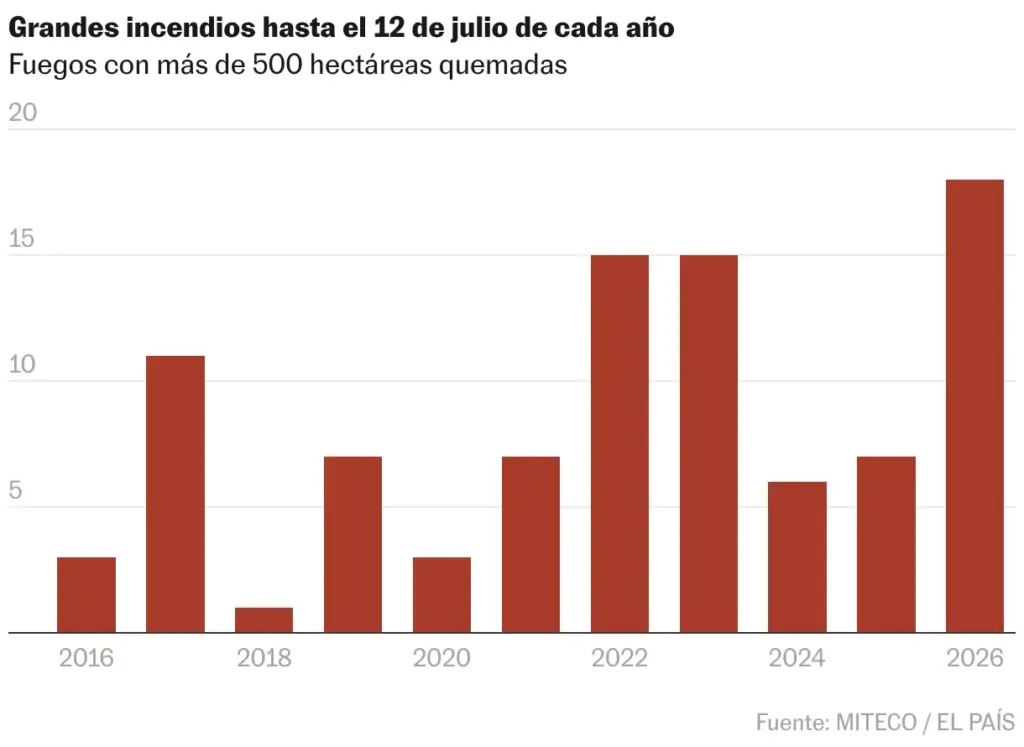
Large fires, such as the one in Guadalajara, are what make the difference when the final damage count is made. For example, 90% of the 350,000 hectares of vegetation damaged by fire in Spain throughout 2025 were burned in just 63 major events, which are those exceeding 500 hectares. By July 12, the country had suffered 18 of these disasters, the highest number in at least a decade for that time of year according to data compiled by the ministry of the communities. This data collection work is usually slow. But Aagesen reported that this Tuesday, the number of large fires recorded in Spain this 2026 had already risen to 21.
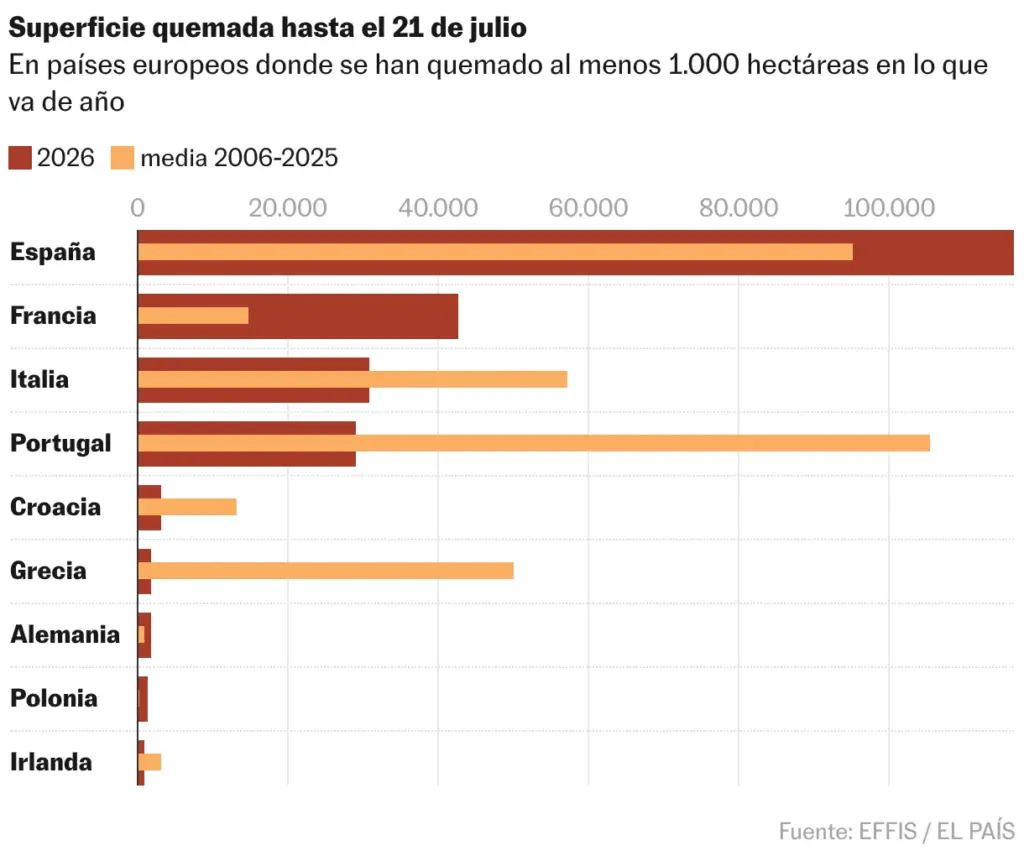
Currently, Spain is the European country with the most surface area damaged by flames in absolute numbers (in percentage, it is Portugal, with 0.3% of its surface burned compared to Spain’s 0.2%). But what is most striking is who occupies second place: France, where almost 43,000 hectares have burned, almost three times more than normal at this time of year (taking the period 2006-2025 as a reference). However, this is also one of the consequences of the unusual succession of heatwaves that has hit Western Europe this summer and, very especially, the neighboring country.