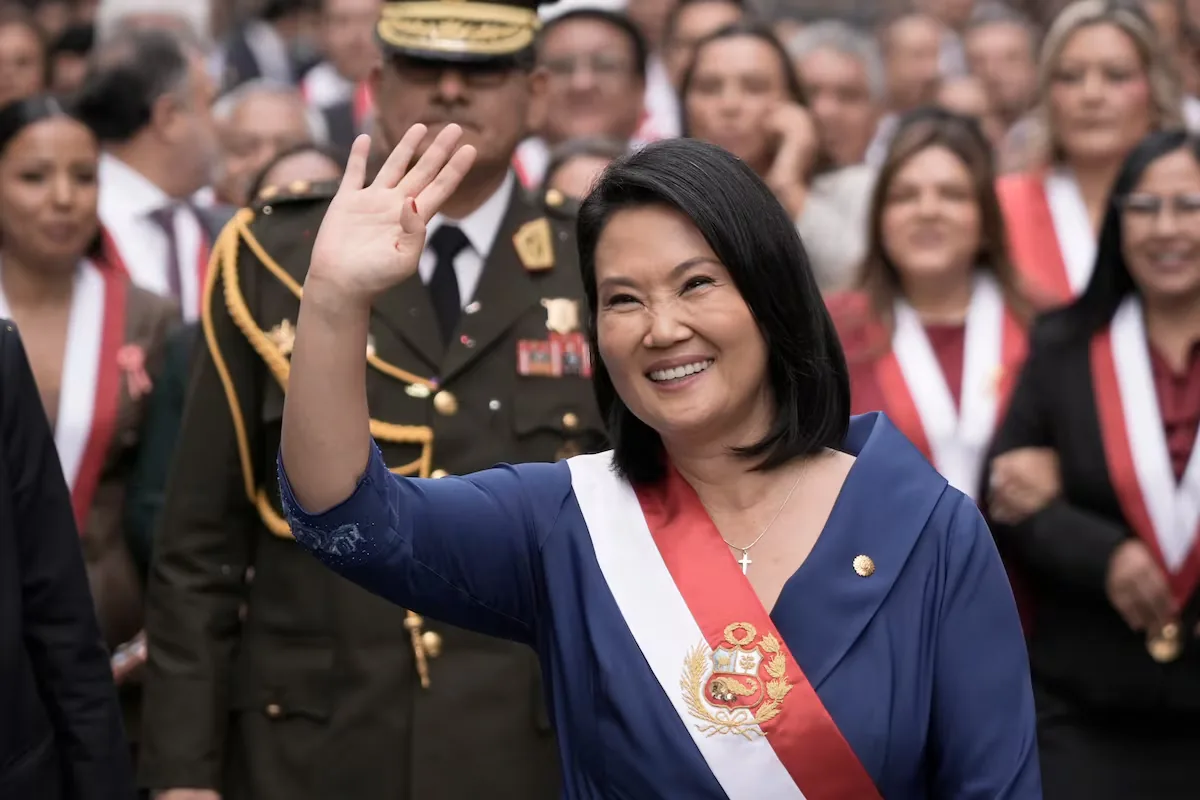
The candidates to preside over Peru who face each other at the polls this Sunday do so embracing the shadows of previous political projects that seem to look at two different countries. Right-winger Keiko Fujimori, 51, reclaims the divisive figure of her father, the autocrat Alberto Fujimori, who was eventually sentenced to 25 years in prison for crimes against humanity and corruption and was pardoned at the end of his life for humanitarian reasons. Left-winger Roberto Sánchez, 57, embodies the vision of Pedro Castillo, the peasant who became president as a hope for social justice for rural areas. He was barely able to fulfill any of his promises, staged a failed self-coup in 2022 and is in jail, although his supporters see him as a victim of a right-wing plot in Congress to get rid of him after relentlessly torpedoing his government’s actions.
Read more Uruguay regulated the law on endometriosis: “I am hospitalized 15 days a month”
It is the fourth consecutive time that Keiko Fujimori has reached the second round, with a neoliberal economic ideology, tough-on-crime proposals that involve the army on the streets, and initiatives such as prisoners working for their food, and bringing basic services like water to the poorest regions.
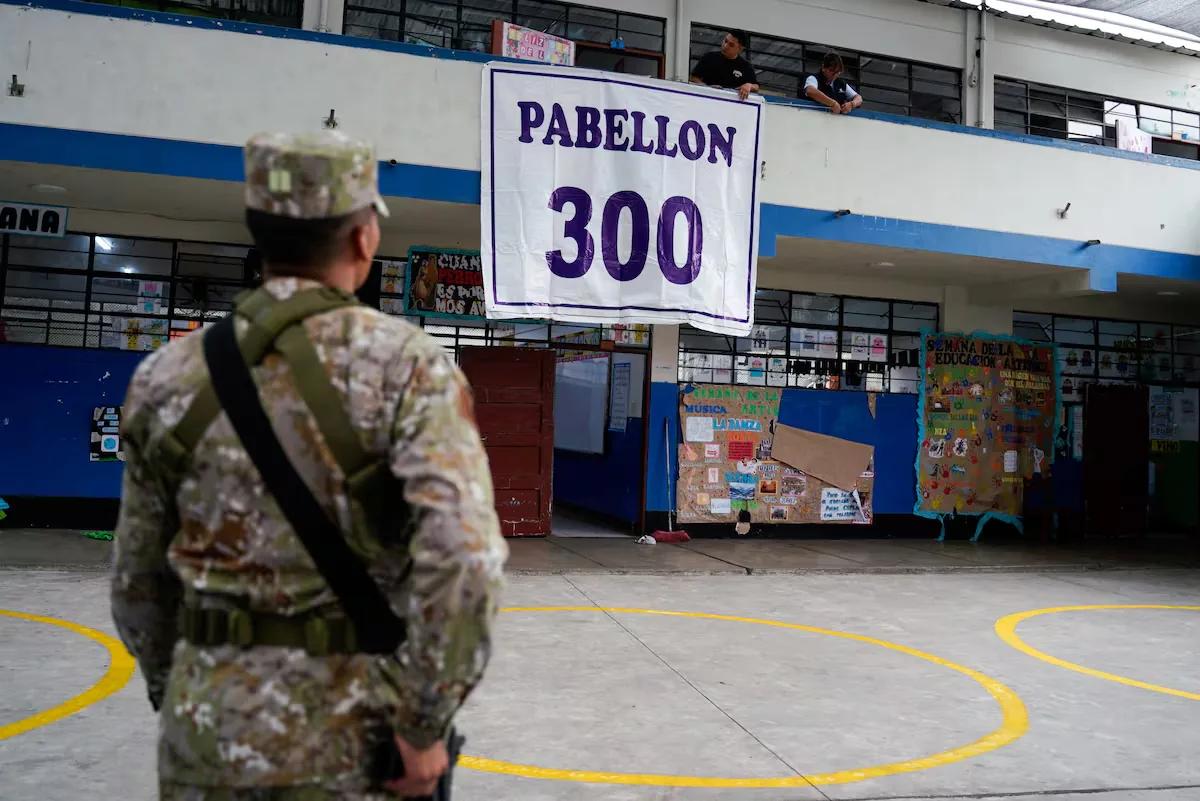
In the polls, she has had a slight advantage over Roberto Sánchez, and the latest survey, from this Saturday and conducted by Ipsos, places both in a technical tie, with a voting intention for Fujimori of 44.1% and 43.7%. This very close and polarized potential scenario comes after a chaotic vote count due to logistical problems and marred by fraud allegations in the first round, whose definitive results took a month to be known. Electoral authorities have already warned that this time the count could take another month.
Sánchez’s government plan involves reforming and training the police to combat crime, a greater state presence in the economy, health, and education, and a political reform that returns to citizens the option of a referendum to launch a constituent assembly, in addition to seeking a pardon for Pedro Castillo. In the last week, he has been moderating his discourse to allay fears in the economic sector of one of the world’s main copper producers, assuring that he will respect the autonomy of the central bank and the legal environment that facilitates investments, and an industrialization plan so that the raw materials the country exports generate added value.
Whoever wins can consider it an achievement to complete their term, something not seen in the last decade, during which Peruvians have had eight presidents. In a country plunged into instability and political crisis, many blame Congress, perceived as a nest of corrupt individuals with the ability to overthrow the Executive with a formula designed for exceptional situations, “permanent moral incapacity,” which gives it broad discretion and much power to obstruct presidential action.
On the street, distrust of politicians seeps into conversations, where there is a widespread feeling that these elections are more of the same. On an avenue in Lima’s affluent Miraflores neighborhood, two engineers in their thirties will vote this Sunday with apathy. “No candidate interests me; in the first round, I voted for a centrist who didn’t make it to the second. In the end, I’ll choose Keiko, but reluctantly, because I don’t like the presence of Antauro Humala [a ultranationalist who spent 18 years in prison for rebellion] in Sánchez’s candidacy,” says Ángel Cahuana. His colleague César Lapa, on the other hand, will go for Sánchez “because Keiko is the same as her father, she has a lot of power through Congress, which is corrupt, and it’s a way to prevent her from having control of everything.”
“During the campaign, candidates have primarily sought to speak to their bases. People are less combative, there’s a certain weariness with polarization, and the atmosphere is less tense, although there’s also less interest,” explains political scientist Eduardo Dargent. “There are always undecided voters in Peru, but Fujimorism hasn’t gone after their votes, perhaps thinking that economic stability is enough. Fujimorism arouses fear and carries an old authoritarian baggage that adds to its actions in Congress; there’s a lot of truth in the idea that they have limited the power of those they considered enemies,” he asserts.
Far from that tumultuous politics, in a Lima shopping mall cafeteria on one of its gray mornings with the smell of ocean salt, Héctor Vargas, 67, talks about the crisis that most worries Peruvians and that has marked the electoral campaign: citizen insecurity, and above all, the widespread extortions targeting small and medium businesses, merchants, and especially urban transport drivers, dozens of whom have been murdered in the last two years.
“The country’s very viability of democracy is at stake in the insecurity crisis,” says Julio Corcuera, a security expert analyst who was Deputy Minister of Interior. “There’s an enormous sense of impunity; the justice system is slow and bureaucratic, and the problem is viewed from a perspective of military personnel and patrols on the street, but it’s necessary to dismantle the structure; extortions happen via social media and phones,” he explains.
Vargas owns a bus company and has received threats to pay gangs “the fee.” Otherwise, things like these happen: “At my company, they burned a vehicle, a regular bus that was already returning to the depot. They got on, doused it with gasoline, and set it on fire. Another night, they shot at several buses in the garage and chased the security guard at gunpoint,” says the person who has received “calls telling you that if you don’t pay, they’ll kill you, that they know your schedule, they insult you…” he recounts. What worries him most, however, is that they have also called his family, his children.
The most serious incident at Vargas’s company occurred six months ago. “They shot a driver and hit him in the lung. He is still recovering,” he says. “All this grows due to state inaction, because there is corruption and the police, prosecutor’s office, and judges do not work in an articulated manner. You file a complaint, and five minutes later, the criminal already knows,” he says. Many of his colleagues, out of fear, end up paying. “Insecurity is driving the sector into bankruptcy. In the last two years, our drivers, fearing for their lives, have started migrating to other countries and other professions. This means that formal companies operate at 30% or 40% of our fleet’s capacity.” Around according to data from the National Institute of Statistics, which means that workers have no pension, social benefits, or pay taxes.
They have protested, presented plans to the various governments that have come and gone in the last two years, but have seen no results. “We made a legislative proposal, but it’s not applied because of Congress, which is the one that regulates,” he explains. And he continues to receive threats; in companies like his, there are “police day and night” as a way to mitigate the situation. He hopes the situation will be resolved and to be able to speak with the next government after years of frustration.
The burden of the political and institutional crisis the country is experiencing has curbed its economic potential. “Inflation has remained controlled, growth is over 3%, we have one of the lowest public debts in the region, but how much would we have grown without this political problem?” asks Jorge Carrillo, a finance expert at Pacífico Business School. “The fear is that instability and polarization will persist, because no matter who wins the elections, there’s a fear that social conflict and protests will erupt, and that does a disservice to private investment, which is what generates quality jobs in Peru. The challenge for whoever takes office is to remain for five years and generate political stability to execute medium-term plans,” he explains.