







To learn the history of countries, it is enough to go to libraries, consult books, look at Wikipedia. However, the history of families often remains in a strange silence, scattered in memories, secrets, unnoticed gestures, hidden conflicts. It is not written anywhere, it is contained in different brains: knowing it requires some investigation, asking perhaps inconvenient questions, because many times silence and oblivion are the framework that keeps the family standing. Would we love our family if we knew the whole truth?
Read more John Travolta debuts as director in Cannes: “I am exhausted from so much vital cynicism”
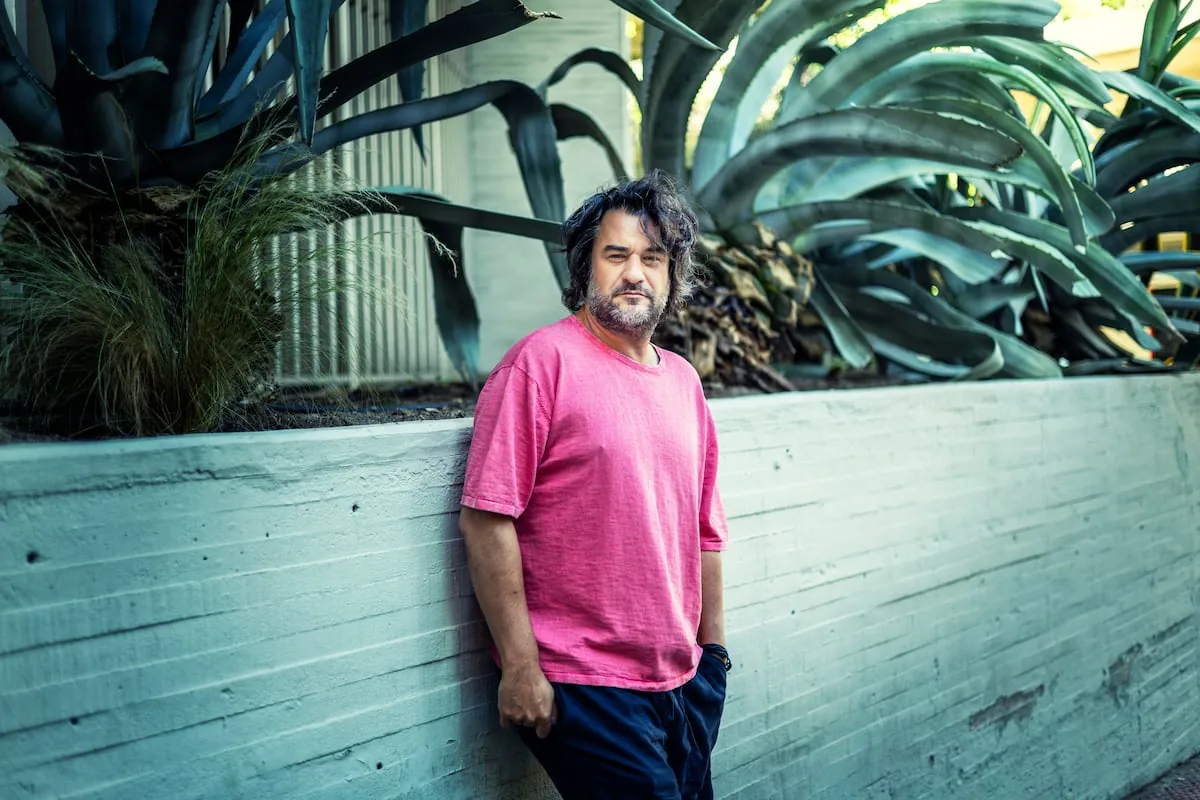
Manuel Jabois (Sanxenxo, 48 years old), writer and journalist for EL PAÍS, tries to understand these matters in his new novel La víspera (Alfaguara). “Although maybe,” he says, “you don’t have to understand anything about this novel. Maybe this trend of wanting to understand everything should be abolished.”
Question. But one of its characteristics, also in your columns, is the reflection on the emotional world, on communication, on the relationship between people.
A. Maybe I’m just tired of trying to catch things (laughs). In my previous novel, Mirafiori, this was discussed in the supernatural order: why we have to look for an explanation for everything.
Q. One of your reflections is about lying.
A. I am fascinated by that moment when children discover lying, when they know they can deceive. It is a foundational moment of the human being. There are several: one is when we stop pointing at things to name them, another is when we articulate words, and another when we know — we are complex because of this — that we can deceive. And that we can create another reality to make others believe.
Q. That is literature.
A. That deception is at the origin of storytelling. The danger of lies is that, if they are too beautiful, or if they justify us, no one challenges them.
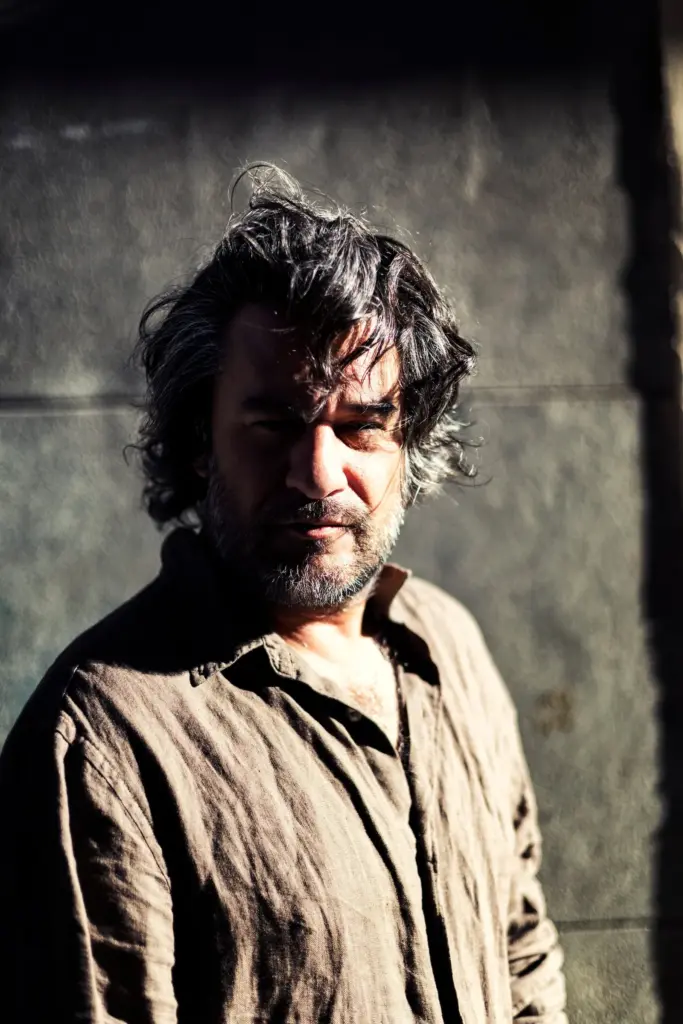
La víspera tells the story, of course, of a family. All in one day. Chami, a torrential son, a retired football star wrapped in a whirlwind of drugs and scandals, returns to the family home in Galicia (Jabois has a fondness for the settings of his native land), for his mother Amalia’s birthday, who turns 65 and is busy skinning a rabbit for the celebration. Some very metaphorical rats make noise in the attic.
At that moment, the town remains paralyzed, between police and journalists, due to the mysterious disappearance of two children that coincides with the also disappearance of Chami’s brother, a former alcoholic now missing. They say he went to Vigo. A book that, the author says, does not resemble much the initial idea: “Books degenerate in two ways: one is when you start writing them and the other when you start talking about them, as we are doing now,” he jokes.
Q. The character Amalia portrays that all-powerful housewife, attentive to everything, who “never sits down.”
A. That was my grandfather, and my mother came out identical, she can’t sit down, because something she doesn’t control might be happening. My grandfather, by the way, one day sat down and had a stroke. Amalia discovers at a certain age that she is tired of being loved: in reality, she wants to be admired.
Q. You describe with astonishing accuracy Chami’s Attention Deficit Hyperactivity Disorder (ADHD).
A. I don’t have a diagnosis, because my therapist told me that whether I have ADHD or not, she won’t medicate me. So it doesn’t matter. But I have many symptoms, I am quite archetypal. I get out of the shower and forget to dry myself. But the character you mention also has a great need for dopamine.
Q. Something very current.
A. Yes, that constant need for stimuli, the reward circuit. Look, yesterday I walked 22 kilometers. I put on my headphones and don’t stop, although I’m embarrassed to call it sport. But I tried not to seek the reward later by indulging or going out with someone. And Chami’s character is in that, after knowing sporting splendor.
Q. We are very interested in stories of rise and fall. Why?
A. It’s not that people like to see others fall, it’s that the way back is interesting. I don’t know exactly why. But when we publish stories like that, people go crazy.

Jabois cites the story of footballer Paul Gascoigne, very alcoholic and very intense, on whom Chami is loosely based. The author is interested in matters of fame, at a time when fame is so desired, and also so sectorial: there are very famous people whom no one knows. It goes by niches, by neighborhoods. “Now you can be famous simply by showing your life,” he says.
La víspera comes after a kind of trilogy of novels that start with the letter M: Malaherba (2019), Miss Marte (2021) and Mirafiori (2023). It begins as a reflective text, focused on family relationships and the psychology of the characters, without much anchoring in the plot, but ends up accelerating to become a thriller where unexpected twists happen, where different layers of reading are given and the author places us on paths that do not lead where we expect. In the end, in life, everything is more normal than we might think.
Q. Sometimes traces of Javier Marías are detected in your style.
A. It is very likely, because I have read him a lot, perhaps the Spanish author I have read the most, although you have to be careful because he has a very sticky style. Then I recurrently read Scott Fitzgerald, Hemingway and Patricia Highsmith. When I read the latter I always long to get into the heads of the characters like she does.
Q. Why are you so interested in the psychology of the characters?
A. I suppose because that way literature solves a question that is not so important in journalism: Why? This is very complex for journalists, but the novelist can go further and try to find out.
Q. Is that why you write fiction?
A. Yes, and for the freedom when telling a story. I associate it with my free time, I write very early, around six in the morning, because at this age you don’t sleep much anymore. And it is a stimulus to which I am not tied, because I have a steady profession, which is journalism. There is no pressure for the books to do well. Although, of course, if this one did badly, it would bother me.