





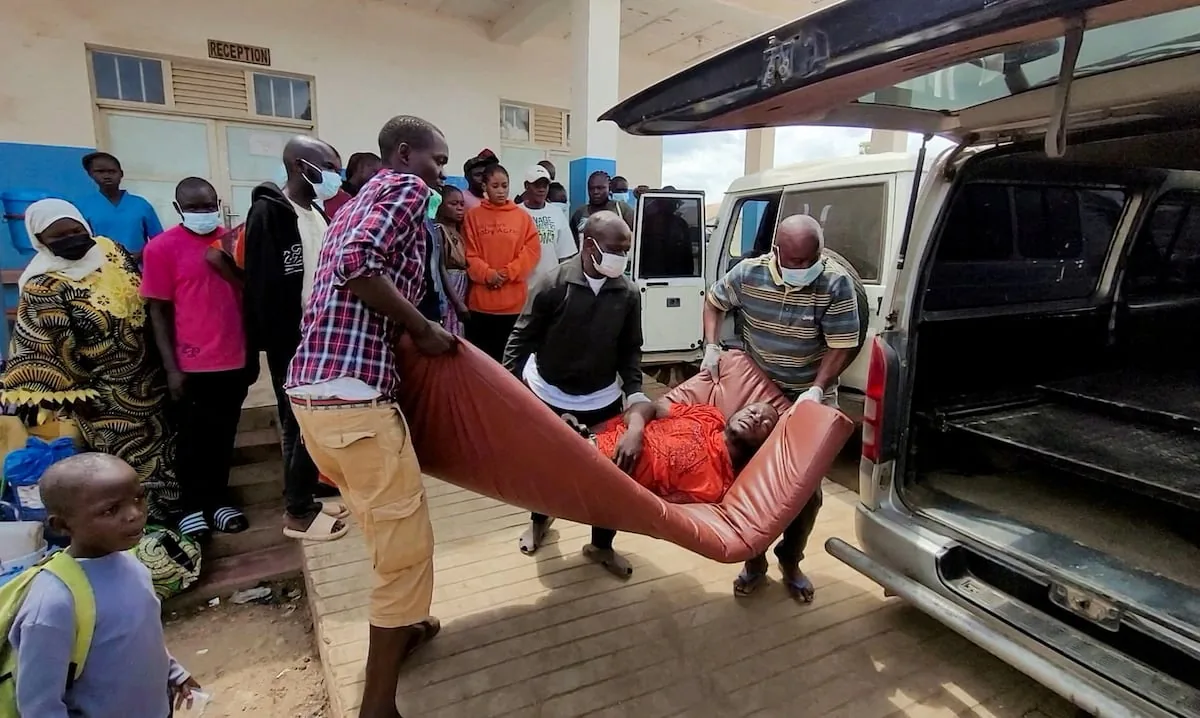
The planet is on the edge of an abyss: the risk of a new pandemic, even more devastating than previous public health emergencies, has skyrocketed; but investment and measures to address a threat of this magnitude have stalled or diminished. According to a group of experts from the World Health Organization (WHO), who analyzed the level of anticipation and response to epidemic outbreaks after the Ebola crisis a decade ago, “global preparedness is not commensurate with the pandemic risk.” The situation is “alarming,” they conclude: the pandemic risk is worsening, public trust is eroding, and inequality is becoming entrenched. “The world is not safer,” they warn. Their warnings come precisely 24 hours after the WHO once again declared a global emergency due to a new Ebola outbreak in the Democratic Republic of Congo and Uganda.
Read more Bodies of the four missing Italian divers found in the Maldives
The Global Preparedness Monitoring Board (GPMB), the WHO group that authored the report, was created eight years ago to “help ensure that the world never again experiences a devastating crisis like the Ebola epidemic in West Africa,” they say. That health emergency exposed deficiencies in epidemic outbreak preparedness and spurred reforms to address potential pandemics. But the investment and measures deployed in these years have been insufficient. Since the 2016 Ebola crisis, the planet has suffered five major public health emergencies, including COVID-19, the largest pandemic of this century.
In these years, initiatives and mechanisms have emerged to respond to new health challenges, such as the Pandemic Fund or the WHO Pandemic Agreement, but the world is “more volatile, uncertain, complex, and ambiguous” than a decade ago, the experts acknowledge. And there are “alarming signs” that despite recent investments, “resilience may be weakening rather than strengthening.”
Scientists observe that infectious disease outbreaks are becoming more frequent and impactful (more cases and deaths), the short- and long-term economic impact of health emergencies is growing, and, moreover, equity in access to health measures to respond to epidemics is diminishing. “A worrying ‘equity fatigue’ is emerging, marked not only by reduced political and financial engagement but also by a decline in actions to maintain equitable access as a global priority,” they point out.
The global coalition to tackle the COVID-19 pandemic, which boosted funding to develop a vaccine in record time, for example, was only a mirage of long-term unity. In fact, according to experts, development aid for health has returned to 2009 levels. “Investments in preparedness have strengthened since the COVID-19 pandemic, but the shift in geopolitical priorities threatens to undermine this progress,” the authors emphasize.
In the experts’ view, current trends paint “a future in which pandemics and other public health emergencies could become more frequent, more disruptive, and harder to manage, in a more vulnerable, more uncertain world marked by growing distrust and increasing inequalities.” Scientists believe that if there is no radical change in the capacity of health professionals to address the drivers of pandemics and no real commitment to equity, “the world risks entering a cycle of increasingly accelerated health crises, where each new impact further erodes resilience and deepens existing fractures.”
The authors remind that the One Health approach, which recognizes that environmental, animal, and human health are interconnected, is being neglected. They insist that trust and equity, which are the foundation of disease prevention and control, are eroding. Therefore, they advocate for immediate action to “foster broad and lasting trust,” defend “sustainable equity,” and even confront misinformation.
Read more Trump fights in Kentucky the penultimate battle against the rebellious Republicans
How to do all this? The authors propose creating “an independent pandemic risk monitoring system,” ensuring equitable access to health measures against emerging health crises, establishing a “sustained and unwavering political commitment” to pandemic preparedness, and sustainable funding for the so-called “day zero,” referring to the first day a new health emergency appears.
A growing threat
The hantavirus outbreak unleashed a couple of weeks ago on a cruise crossing the Atlantic put the whole globe on alert and awakened the specter of a new pandemic. The infectious episode, which is apparently contained today, served as a reminder of a threat increasingly looming over humanity: zoonotic infectious diseases, which are transmitted from animals to people, have surged in recent decades, largely fueled by climate change and human pressure on animal ecosystems.
The scientific community estimates that, like hantavirus, there are 10,000 viruses, the vast majority still unknown and silently circulating among wild mammals, that have the capacity to infect humans. Not all will have pandemic potential, but just one minimally efficient, as happened with SARS-CoV-2, the cause of COVID-19, is enough to put the entire planet in check.
The WHO has about a dozen viruses in its sights, either because of their pandemic potential or the lack of measures to combat them: there is COVID-19, the cause of Crimean-Congo hemorrhagic fever, Ebola, Marburg virus, the one that causes Lassa fever, the Middle East respiratory syndrome coronavirus (MERS-CoV), severe acute respiratory syndrome (SARS), Nipah, henipavirus, Rift Valley fever, and Zika. The last spot on the list is reserved for “disease X,” referring to the potential scenario where a still unknown pathogen causes a severe international epidemic.
“Viruses need a host to live in. And they mutate, evolve. It can happen that one jumps to humans and causes disease or that it causes no symptoms. There can also be a jump from an agent we do not know. That can happen, but we have to live with it without being scared. The crucial thing is to maintain surveillance and response systems,” reassures María Paz Sánchez Seco, a researcher at Ciberinfec at the National Microbiology Center of the Carlos III Health Institute.
Read more One year imprisoned in Bukele’s dungeons: the cost of dissent for activist Ruth López