









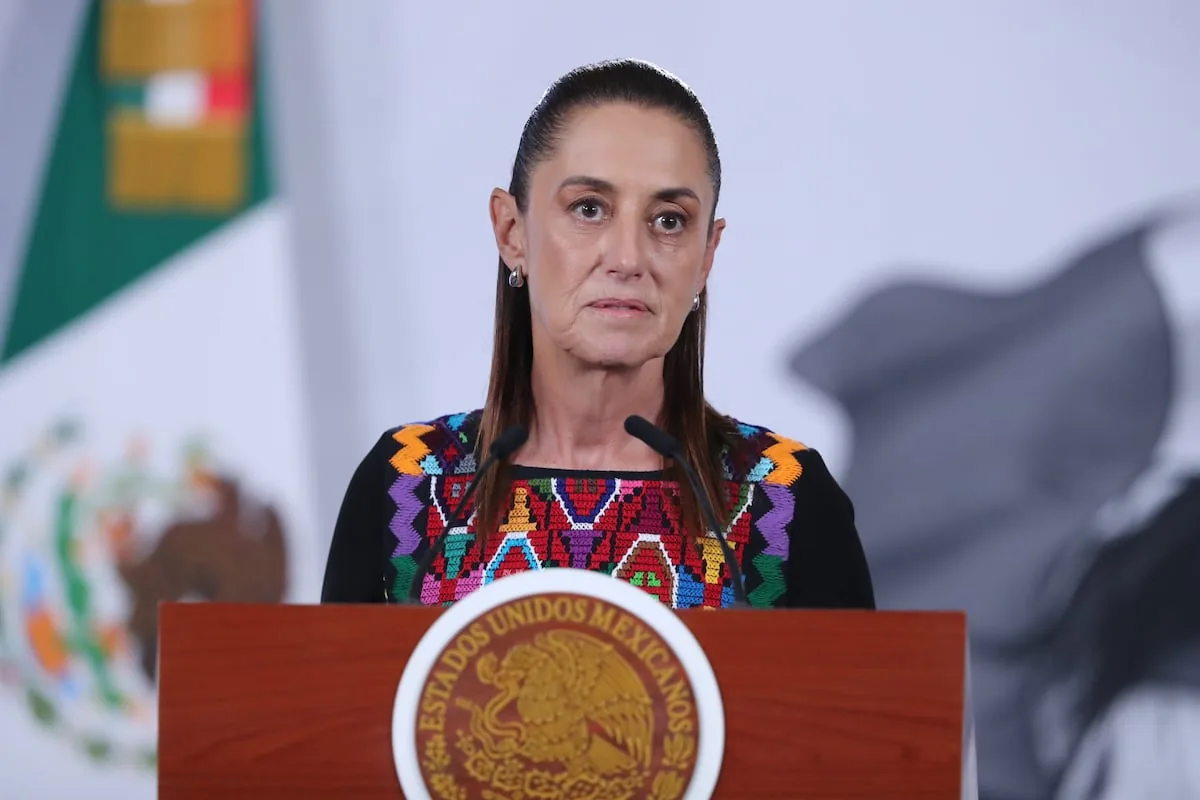
Amid a handful of street protests and threats of blockades during the World Cup, starting June 11, the Government of Mexico closed a long-awaited production and marketing agreement with white corn farmers. The pact signed this Wednesday at the National Palace guarantees that the harvests of local producers will be prioritized over imports. Advance contracts for the grain have also been promised, without intermediaries and at fair prices. Mexico’s president, Claudia Sheinbaum, stated that this set of commitments aims to strengthen the production of native corn. “It is a very good and voluntary agreement to guarantee food sovereignty and ensure that producers live well,” she declared.
The president acknowledged that the country’s corn producers are going through a perfect storm. On one hand, they face rising costs of some basic inputs such as energy and fertilizers, and on the other hand, they must cope with falling grain prices in international markets, which has led many companies to fill their inventories with imports. In response to the crisis, she added, the Government launched an emergency plan that disbursed about 5 billion pesos. With this new strategy, a scheme of advance purchases of corn and discounts on fertilizers, seeds, and pesticides will be implemented.
The Secretary of Agriculture, Columba López, detailed that more than 80 companies will be part of the planning schemes to promote orderly marketing. “The agreement will involve the main flour mills, nixtamalization marketers, and some livestock industries that represent more than 80% of the formal marketing of white corn,” she indicated. The pact involved 61,000 producers, mainly from the states of Guanajuato, Michoacán, Sinaloa, Querétaro, Jalisco, Tlaxcala, and Campeche.
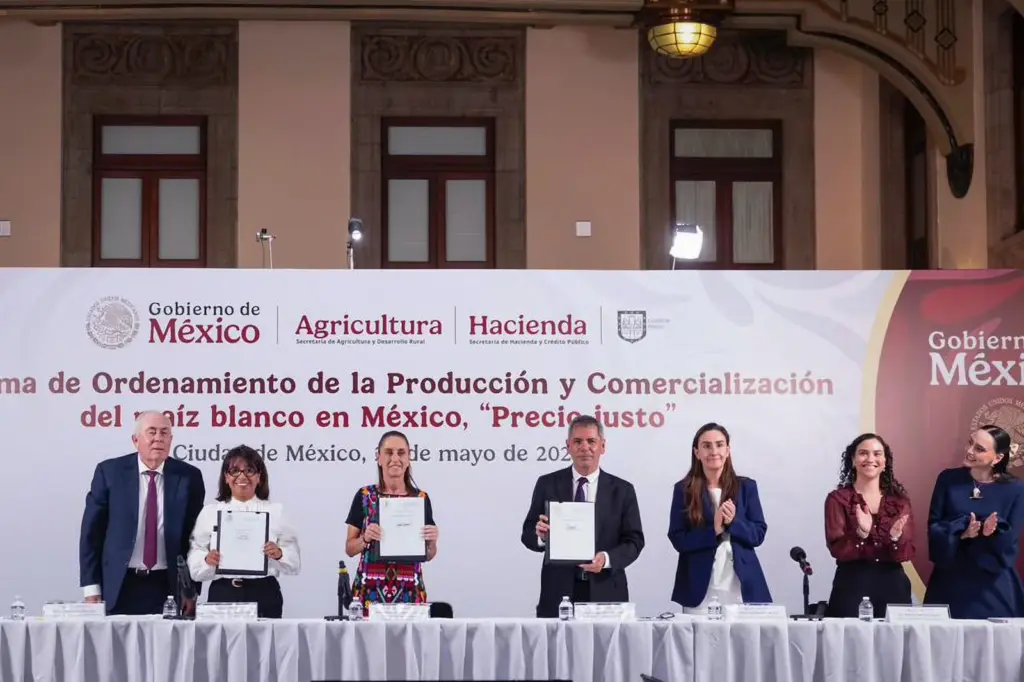
The agreement covers 705,000 hectares of crops and about seven million tons of corn. The Secretary of Finance, Édgar Amador Zamadora, assured that, given the uphill battle posed by the volatility of international prices and ongoing droughts, it was necessary to strengthen the Mexican countryside. “Our ultimate goal is to provide stability to producers as part of a comprehensive vision to give them certainty in their crops; it also seeks to strengthen tortilla production,” he concluded.
At the same forum, Altagracia Gómez Sierra, the liaison between Sheinbaum’s Government and chairwoman of the Board of Directors of Grupo Minsa — one of the country’s main flour mills — detailed that agrochemical and fertilizer producers will offer inputs with a 13% discount, despite the global price increase of over 50%. “In Mexico, 92% of Mexicans eat tortillas and like to consume corn, in one way or another, and we all have the duty to solve major problems when times are tough, and we know these have been tough times for producers,” she stated in front of a dozen producers.
Hours before the signing of the agreement at the National Palace, a series of protests by farmers were recorded in different parts of the country to demand more guarantees from the Government. The leader of the United Farmers of Sinaloa, Baltazar Valdez, threatened to block the World Cup matches to be held in Mexico City, Guadalajara, and Monterrey if basic grains are not removed from the USMCA. “If the import policy is not changed, basic grains must be excluded from the Free Trade Agreement, because that does not allow the Government to regulate imports,” he said.
On the eve of the 2026 World Cup celebration, the agricultural and transport sectors have intensified their pressure against the Government in the streets. Earlier this year, agricultural producers and transporters blocked roads and toll booths to demand guaranteed prices for their crops, a halt to imports of basic grains, and greater security on routes.