






Speaks

A few meters from the Chamartín-Clara Campoamor station, the railway connection point between Madrid and northern Spain, the country’s largest urban transformation and one of the most ambitious in Europe is taking shape. The Madrid Nuevo Norte project, definitively approved by the Community of Madrid in 2020 and under construction since the beginning of this year, brings a unique shift in urban planning: the current trend is that large cities do not expand but regenerate urban spaces within them that have fallen into disuse. It is a deliberate bet to rethink how large metropolises should grow and face the challenges of the 21st century with a focus on sustainability, mobility, and neighborhood cohesion.
The project extends over 5.6 kilometers from Plaza de Castilla, in the north of the city, to the M-40 highway, connecting the capital with the El Pardo mountain and covering more than 2.3 million square meters of land that will be regenerated to maximize its potential.
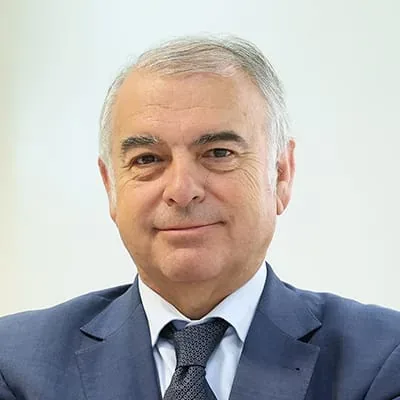
Transforming that area is the main goal of the largest collaboration initiative between public and private institutions projected for the capital. “It is much more than an urban or real estate development,” explains José Ignacio Morales, CEO of Crea Madrid Nuevo Norte, the company leading this proposal from the private sector. “We are not simply talking about building new buildings, but about creating a new centrality for the city capable of generating economic activity, opportunities, and quality of life.”

The next urban revolution of Madrid
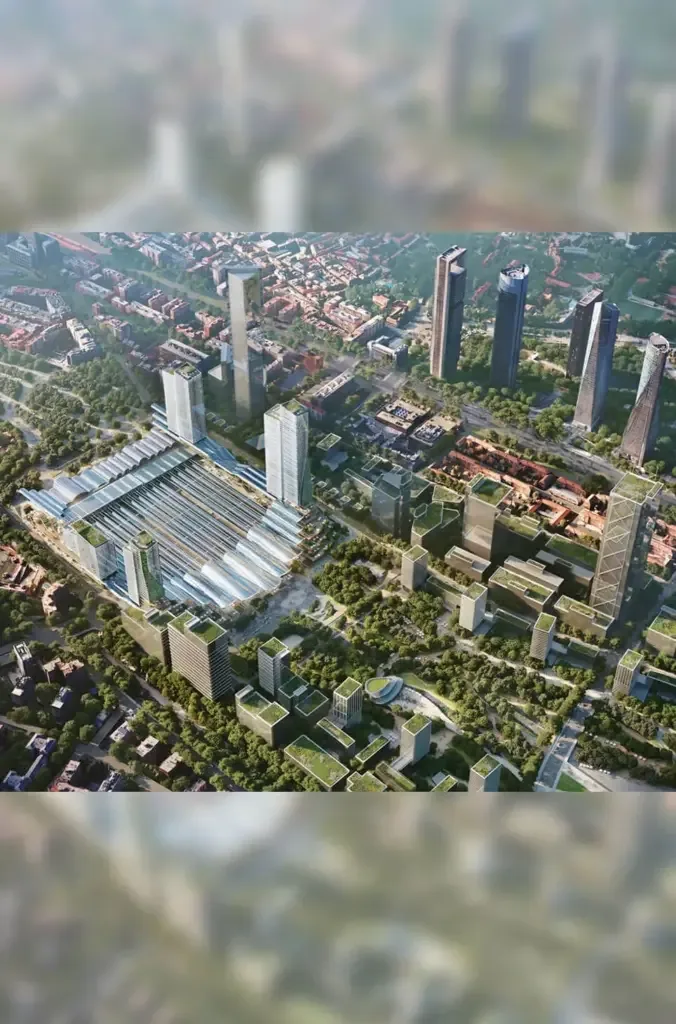
A multi-billion euro impact
According to studies conducted by the Autonomous University of Madrid, commissioned by Crea Madrid Nuevo Norte, the project will contribute 15 billion euros to the national gross domestic product (GDP) throughout its development and will generate 350,000 jobs.
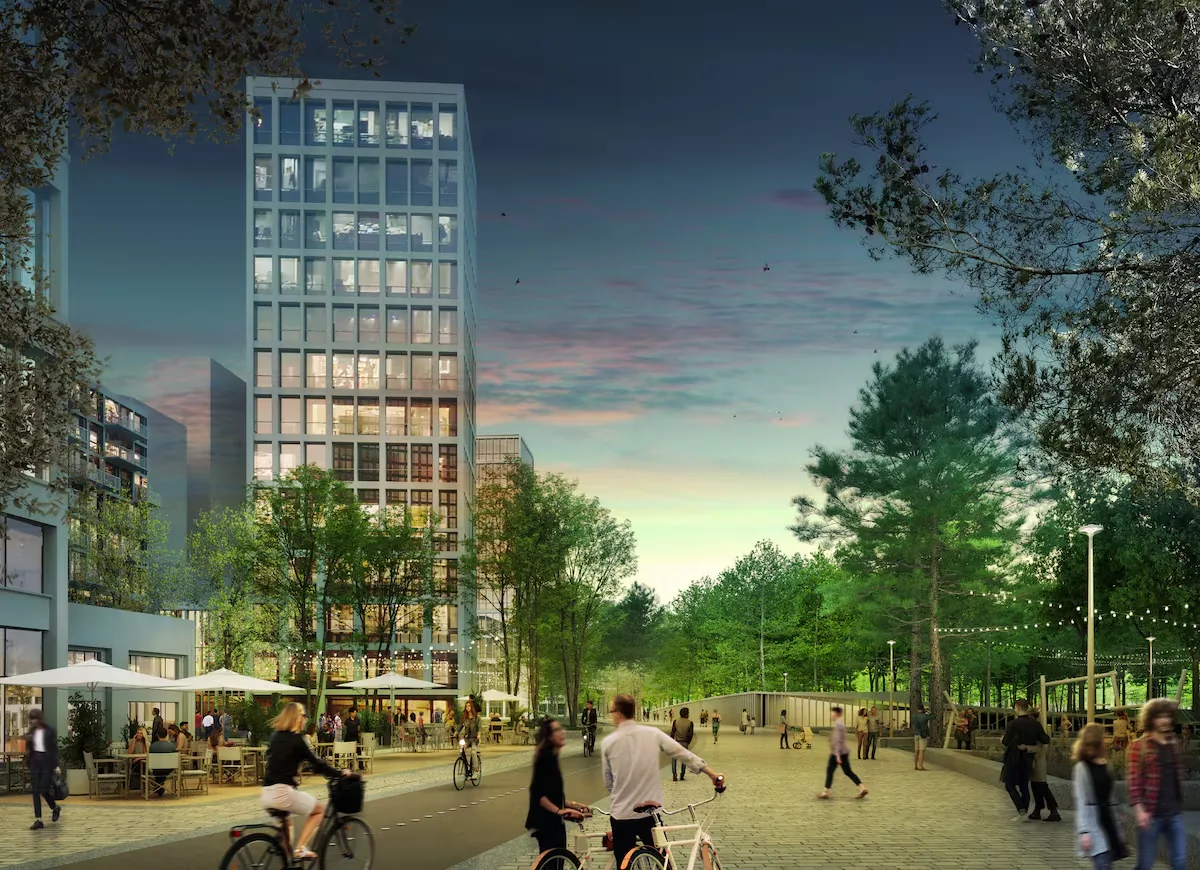
Photos: Simulations provided by Crea Madrid Nuevo Norte.
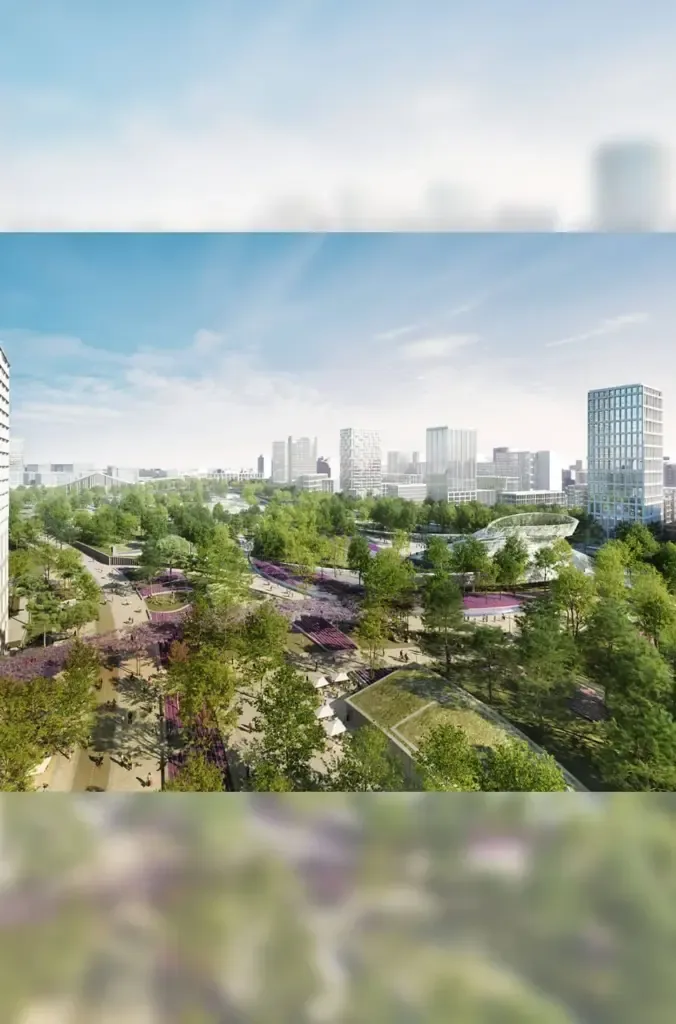
A garden with its own microclimate
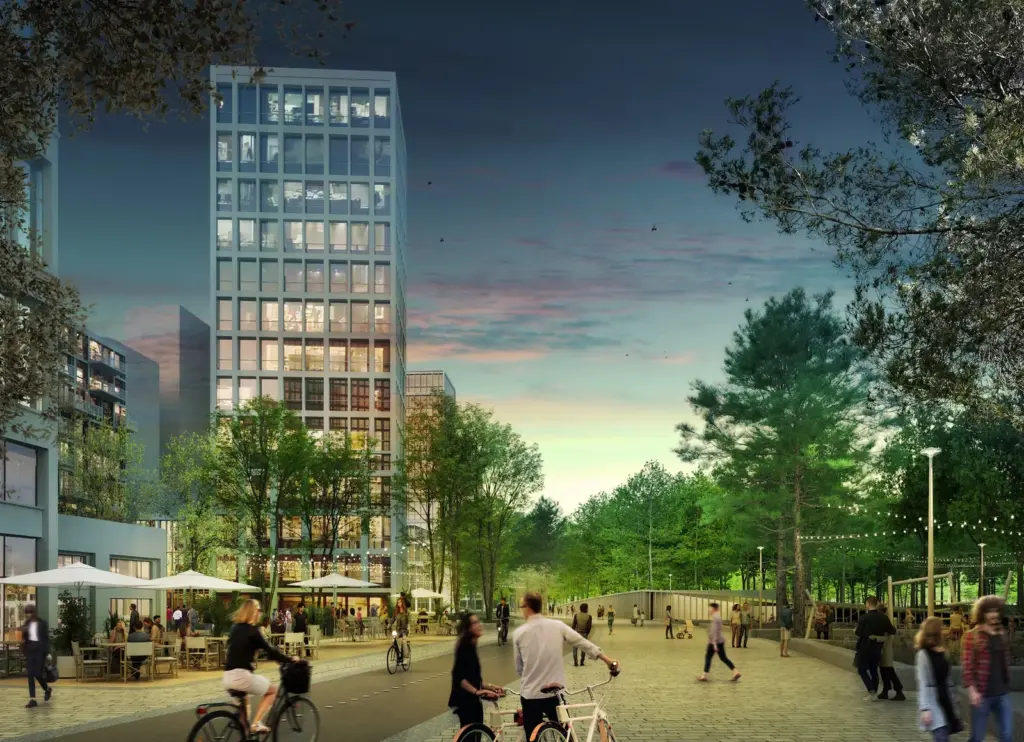
400,000 square meters of green areas will be created. Among them, the so-called Wind Garden (in the image), a spiral-shaped structure that will be erected in one of the parks and covered with vegetation, circulating the wind and adding humidity to the environment, which will help produce its own microclimate and reduce temperatures in summer.
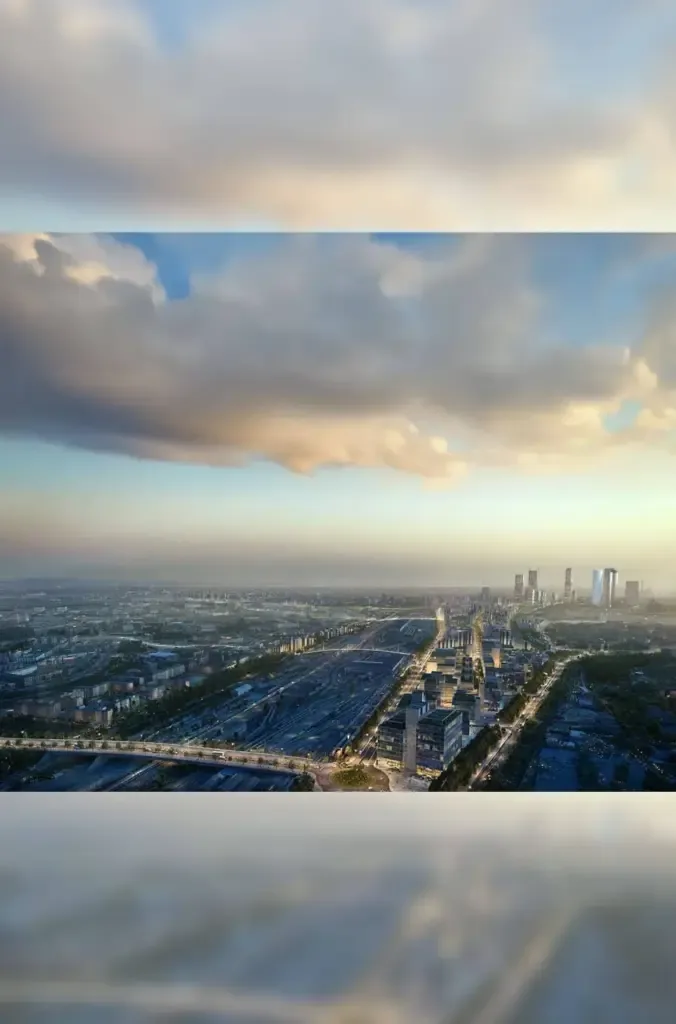
Bridges to connect the ‘shores’
The project will address one of the main neighborhood demands: connecting the two shores separated by the train tracks of the Chamartín and Fuencarral stations. To do this, a large park will be created south of the M-30 that will cover the track area of the Chamartín-Clara Campoamor station, and to the north, in Fuencarral-El Pardo, five bridges, a tunnel, and a pedestrian walkway will be built.
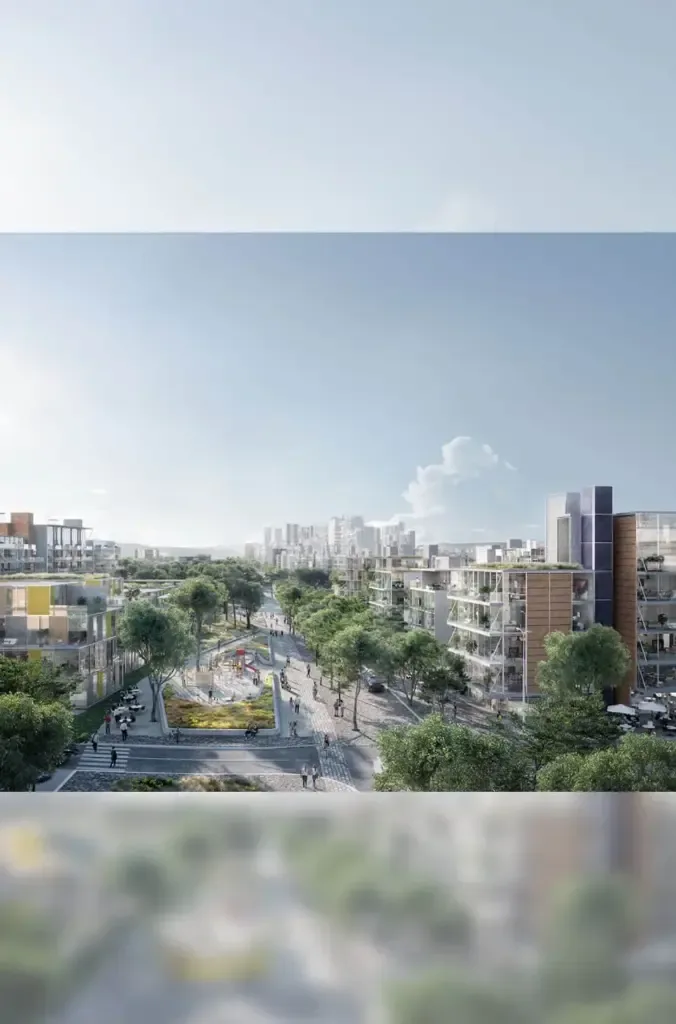
10,500 new homes
In the entire Madrid Nuevo Norte area, 10,500 new homes will be built. Of the total, 4,000 properties – 38% – will be owned by the Madrid City Council, to be allocated to different forms of home access.
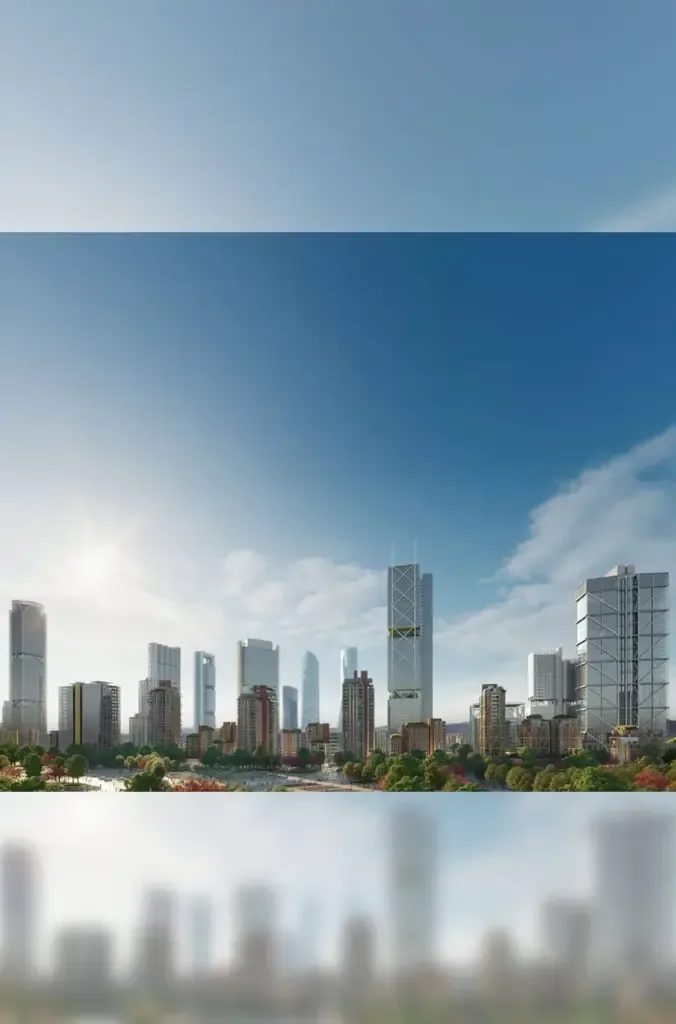
A business center integrated into the neighborhood
An office building complex will be built with an innovative approach: unlike the usual dynamic of creating business districts isolated or even outside cities, the new business center will be fully integrated into the neighborhood alongside homes, shops, and public spaces to encourage activity throughout the day.
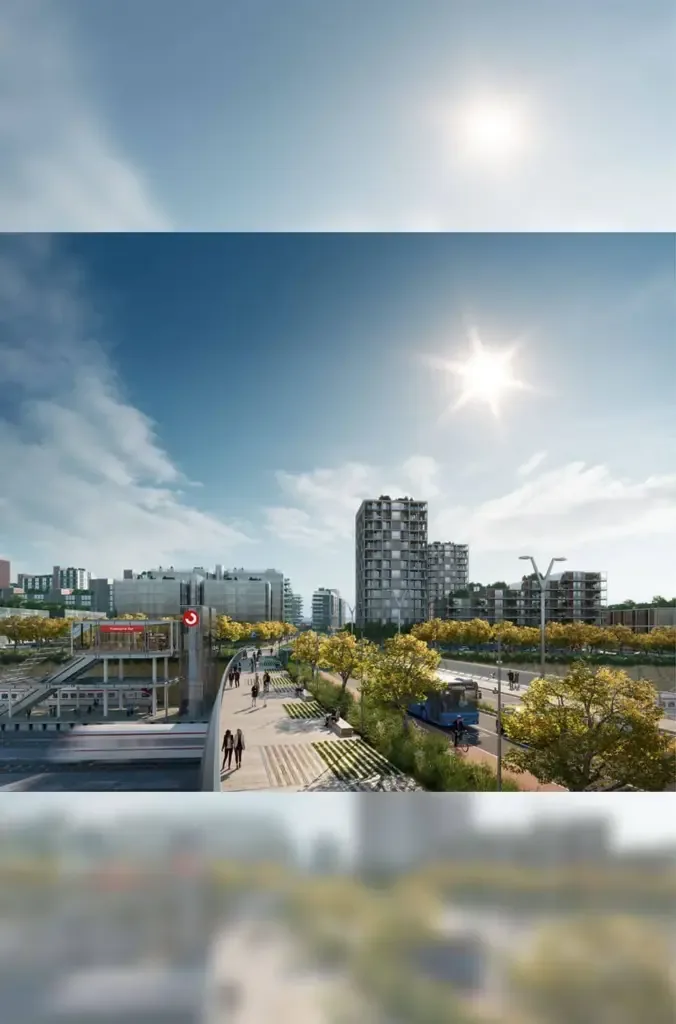
Mobility reinforcement
Madrid Nuevo Norte includes a three-kilometer metro line and three new stops. A new commuter train station, Fuencarral Norte (in the image, a recreation), will also be added, and a Bus Rapid Transit (BRT) system with its own platform and more than three kilometers of route will be provided.
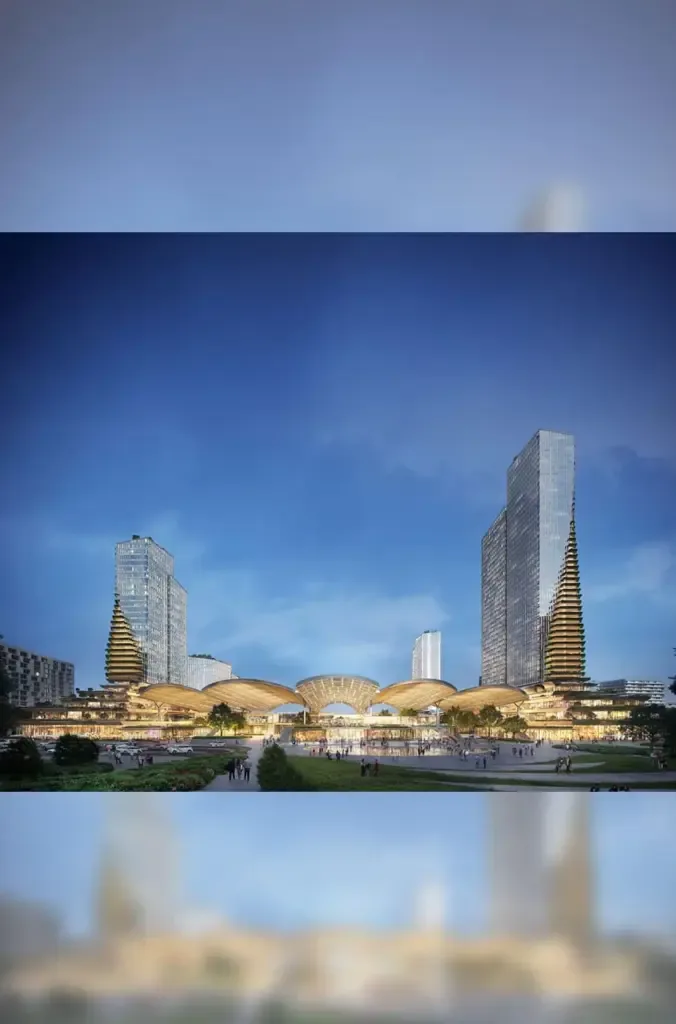
The new High-Speed center
The project includes the renovation of the Chamartín-Clara Campoamor station to turn it into the country’s high-speed rail hub.
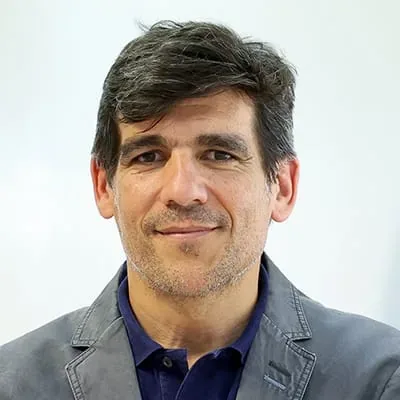
Miguel Hernández, architect and Strategy Director of Crea Madrid Nuevo Norte, has been part of the project team since its conception. “Traditionally, urban planners imagined the future city, drew it, society believed it, and everything developed accordingly.” To illustrate the mindset change that Madrid Nuevo Norte represents, he explains: “Here we decided to do it the other way around, consulting citizens and experts in different fields to detect today’s real needs and the possible challenges of the coming decades and design a city focused on people and adaptable.”
Madrid Nuevo Norte is a strategic operation that will allow the city to face the great challenges of the world’s capitals
The result of this process integrates “neighborhood life,” that is, homes, public services, or shops, alongside the new business center with offices and its workers. “No one really knows what the future will be like, and once urban planning is executed, it is very difficult to modify. You can change the use of a building, but you cannot move a street,” Hernández concludes.
Madrid Nuevo Norte is designed to go beyond a concept that has become popular in recent years: the 15-minute city, an urban planning system where most of a citizen’s basic needs are covered within a distance that can be walked in fifteen minutes. “We prefer to talk about the 45-minute region,” Hernández comments. “Within 15 minutes, you can have basic needs, but it is impossible to locate the best employment opportunities, which Madrid Nuevo Norte will provide, at that distance for all citizens,” he explains.
Read more Intocable, the soundtrack of Mexico’s Independence in a mystical month for the band
And this is where the Chamartín-Clara Campoamor station plays a decisive role, which is already undergoing its complete transformation and is set to become the largest hyper-accessibility public transport node in Madrid.
“According to our studies,” the architect continues, “around 4 million citizens from the entire Community of Madrid will be able to reach this point by public transport from their homes in less than 45 minutes.”
We prefer to talk about the 45-minute region rather than the 15-minute city because it is impossible for the best employment opportunities to be 15 minutes away from all citizens
Thanks to the advantages Madrid offers for its quality of life and international connection, the new business center of Madrid Nuevo Norte will attract not only national talent but will also create an international talent hub in the capital. Crea Madrid Nuevo Norte’s calculations indicate that there will be millions of passengers annually when the new business city operates at full capacity. In response to the demands of this goal, connections between Chamartín-Clara Campoamor and Madrid-Barajas-Adolfo Suárez airport will be strengthened.
A new concept of mobility
Responding to the great mobility demands was one of the major challenges. In this regard, the approach was also “the other way around,” explains Jorge Serrano, Technical Director of Crea Madrid Nuevo Norte. First, they designed the most sustainable ways for citizens to move on foot, by bicycle, or public transport, and from there, defined the street structure and building distribution and integrated new routes for private vehicles.
The result, according to Serrano, translates into “more balanced streets, with higher urban quality where moving is no longer just a matter of circulation but becomes a tool to improve public space.” With this premise, they integrated all mobility systems as a complete user experience. “We have worked to make connections faster, more intuitive, and comfortable, aiming to minimize friction between transport modes,” Serrano argues.
Meanwhile, efforts now focus on minimizing the impact of construction on residents’ daily lives. Serrano gives the key: “Anticipate. In projects of this scale, it is very important to plan in great detail before starting construction.” This requires permanent coordination with administrations, railway operators, construction companies, and technical teams throughout all development phases. And for the local residents, “keep them informed of any news and control measures.”
As an urban engineer, Serrano considers the greatest innovation to be addressing aspects such as sustainability, green infrastructure, energy consumption, or digitalization jointly. “This has been possible thanks to working from the start with multidisciplinary teams, with a cross-cutting vision that will be one of the main references for future major urban transformations.”
Political unanimity
Madrid Nuevo Norte managed to move forward thanks to political consensus after 26 years of deadlock due to lack of agreement among the parties in the Madrid City Council. On July 29, 2019, the Madrid City Council plenary, then led by Mayor Manuela Carmena, unanimously voted in favor of starting the project.
Now that construction has begun, efforts focus on minimizing the impact on residents’ daily lives. The key is to anticipate
According to Miguel Hernández, the key was “to depoliticize the initiative and approach it as a strategic city project.” “We understood that it was necessary to address a discussion about the city model to establish principles on which we all agreed. That was understood, and the plenary approved it unanimously, which is not so common.”
With construction underway, the scale of Madrid Nuevo Norte has attracted the attention of some of the world’s main capitals. “Technical teams from Amsterdam, Paris, South Korea, Japan, the United States… cities and countries that are urban planning references have come here to learn how we are doing it,” Hernández proudly says. “Madrid lacked a project that makes the city feel absolutely excited. And we are working to make this it.”