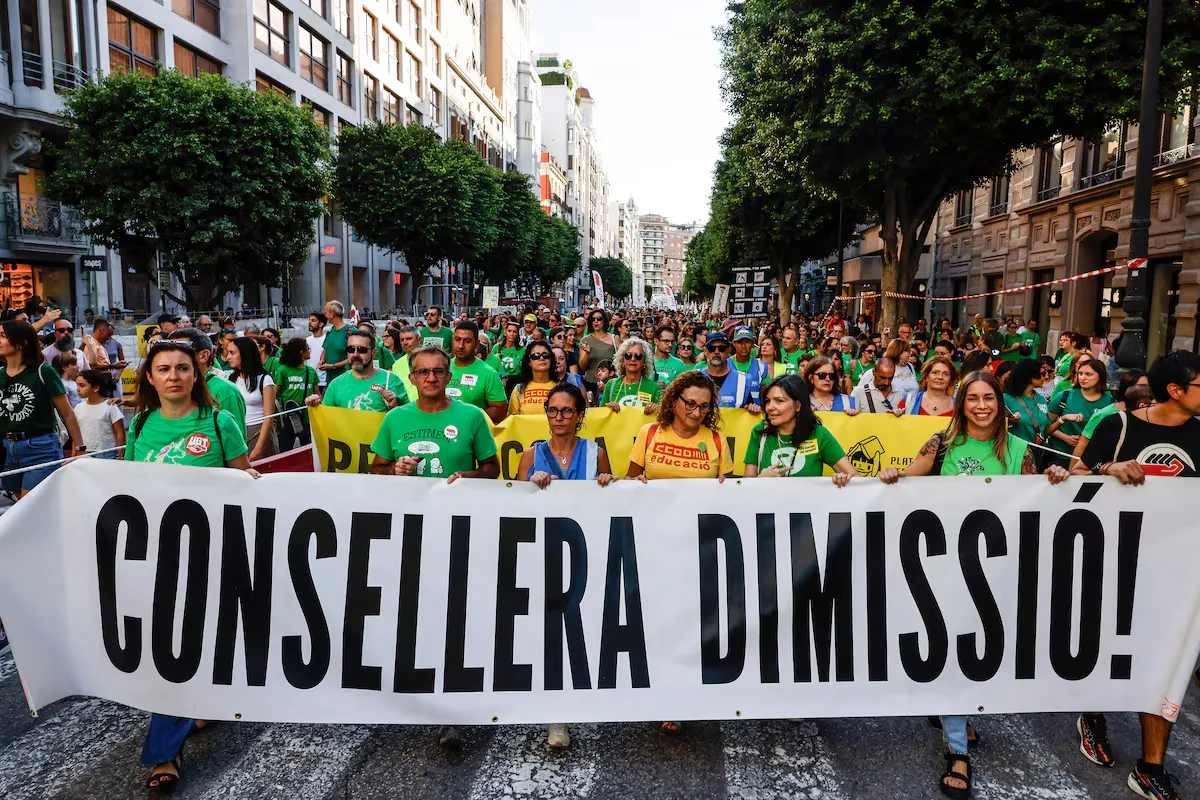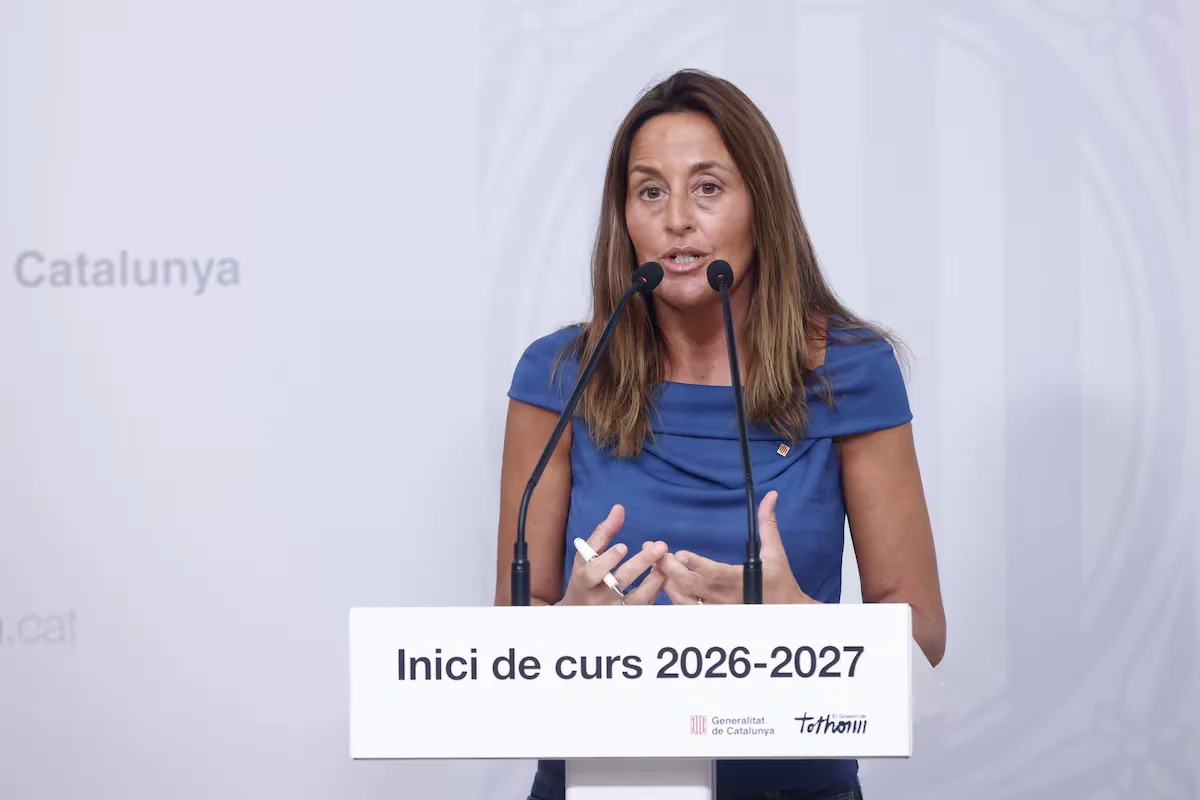





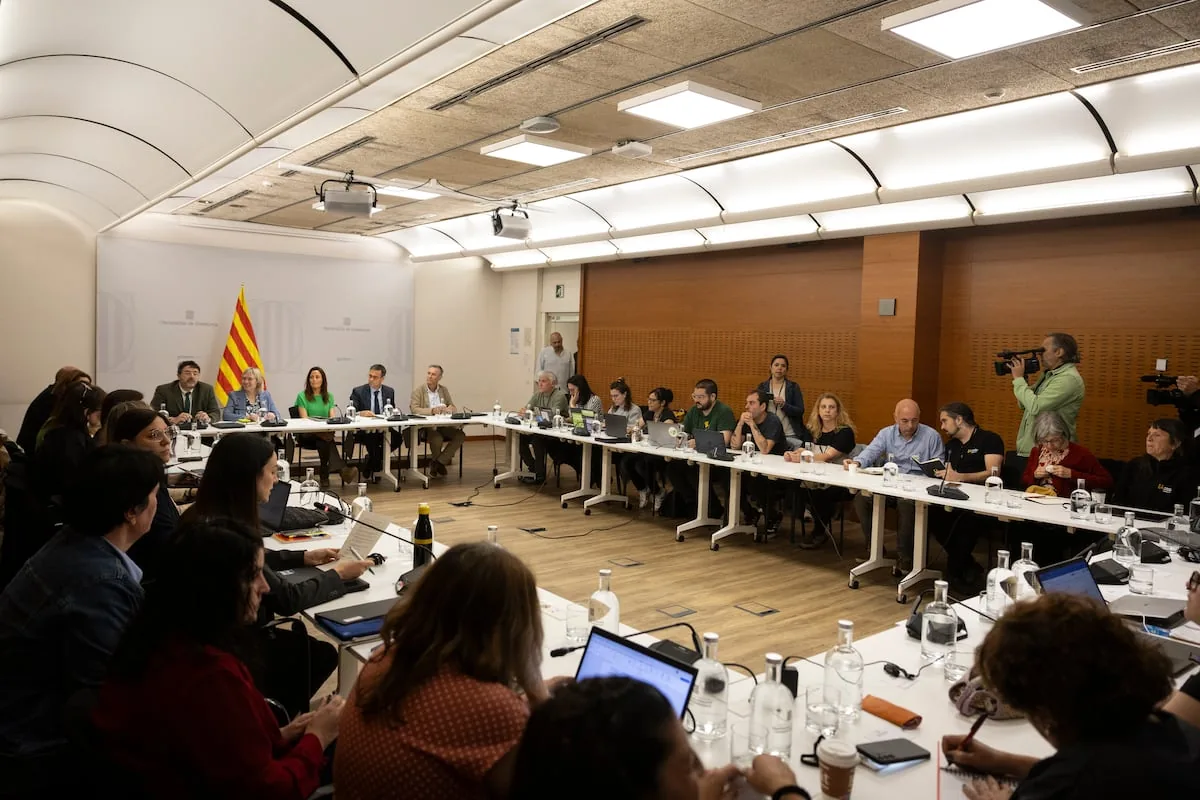
“We will do everything possible and meet whenever necessary to reach an agreement.” This is what Ignasi Giménez, Secretary of Educational Improvement, said after the second meeting held this Wednesday between the Department of Education and the educational unions – except Secondary Teachers, who have dropped out of the negotiation – to try to resolve the educational conflict that has lasted for more than two months, with massive strikes emptying classrooms and filling the streets. The meeting ended, once again, without an agreement, but with the willingness of all parties to find a solution as soon as possible. Thus, if Education had proposed a negotiation schedule with two meetings per week, the parties finally decided to speed it up and agreed on daily meetings, at least this week.
Read more Govern and Comuns finalize an agreement to secure Illa’s first budgets in Catalonia
Wednesday’s meeting, which lasted more than three hours, comes after the resumption of negotiations last Thursday, when Education and unions sat down again after the agreement broke down when the Government decided to sign an agreement only with CC OO and UGT, minorities in compulsory education. In that meeting, the Department only presented as a proposal an increase of 650 staff for inclusive education. For today’s negotiation, Education doubled the offer, raising the figure to 1,100, but also agreed, for the first time, to increase teachers’ pay by touching the supplements. On the one hand, it proposes increasing the tutoring supplement and creating two new ones: one for co-tutoring in secondary education and another for tutors in centers of maximum complexity. These new salary measures would affect 65,000 teachers, according to Education, half of the total staff in public and subsidized schools. In response to the unions’ demand for a salary increase, Giménez defended that “the supplements are part of the salaries” and considers that these could be what unblocks the situation.”
For their part, the unions demand that salary improvements reach the entire staff. “It would not make sense to work only on some supplements that some people do not receive,” said Ustec spokesperson Iolanda Segura, who also demanded that the debt the Department has due to the 2010 cut of six-year increments be put on the table. The unions say that, after the approval of the Budgets, the economic issue “is no longer an excuse” and call to maintain the strength of the planned strikes. “To be able to advance in the negotiation it is necessary to have pressure in the streets,” Segura concluded.
While negotiations continue, the dense strike schedule designed by the unions Ustec, Aspepc, CGT, and Intesindical is also ongoing in parallel. This Thursday was the turn of the nurseries, which are staging the second day of strike in two weeks. “After the historic demonstration on May 7, we received no response from the Department of Education, which we asked to take charge of the management of Catalan nurseries” [which are a municipal responsibility], highlighted the spokesperson of the 0-3 Platform Patricia Rodríguez.
Read more The Government agrees with corn producers on “fair prices” to defuse protests during the World Cup
Preschool teachers marched through the center of Barcelona at noon, in a march that gathered 1,500 people, according to the Urban Guard (two weeks ago it was estimated at one thousand people). The figures for participation in this strike are difficult to specify, since nurseries are a municipal responsibility. However, the Department of Education has estimated participation in the strike at 23% of the staff of the 42 nurseries under its ownership (two weeks ago it was 15%). And the Barcelona City Council has reported that in its hundred schools it was 30%, seven points above the previous strike.
Family Protest
For their part, families are also beginning to take action with more or less symbolic protests. On this occasion, a coordinated action was organized among family associations, consisting of massively sending emails to different addresses of the Department of Education and the Barcelona Education Consortium, showing their support for the teachers’ strikes and asking for solutions to the conflict. This Wednesday, the initiative overloaded some of the Administration’s email accounts.
Hours later, Education sent a response email explaining the measures it is carrying out and details of the negotiation with the unions. In the letter, which this newspaper has had access to, the Department details some measures, although with inaccuracies. For example, it boasts that 2 billion will be invested – it does not say that it will be over four years – and that “the salary will be increased by 3,000 euros annually” for teachers, when in reality the annual salary that teachers will have in 2029 is increased by 3,000 euros. It is also said that “the salary increase for teachers is 30%,” when in reality the specific supplement, which is 700 euros per month, is increased, and over a four-year period.