







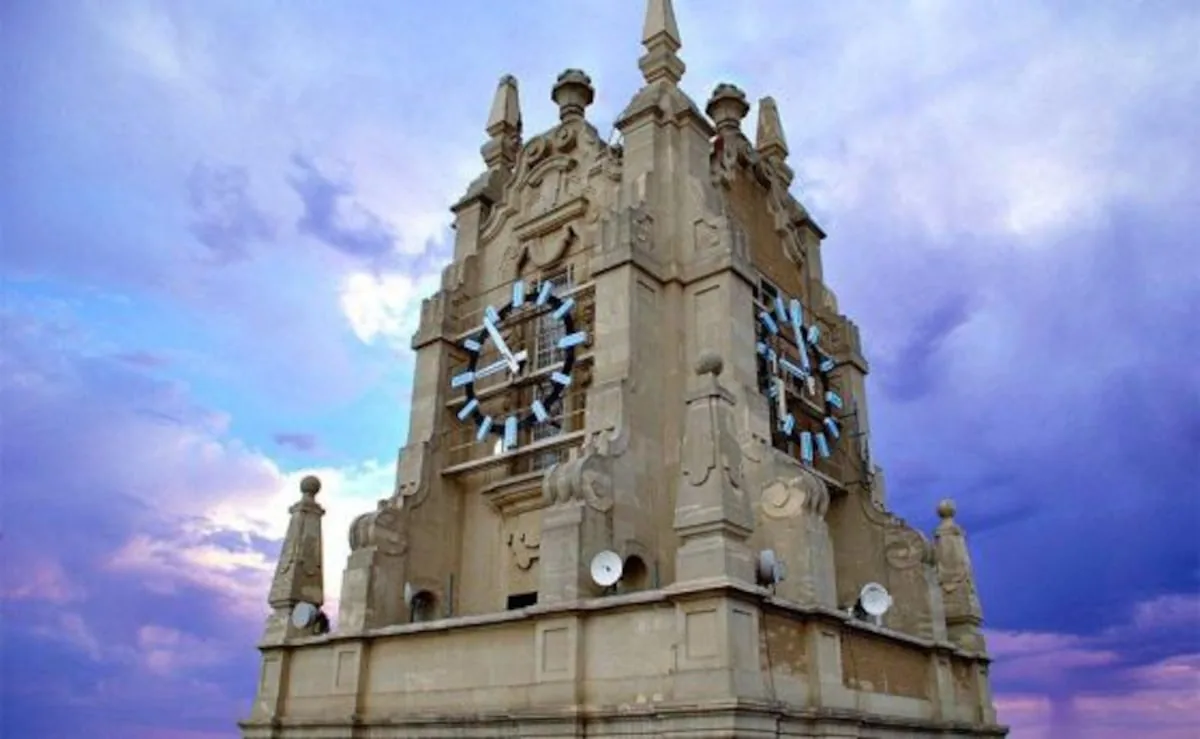
Telefónica has selected the offer presented by General de Galerías Comerciales (GGC), a company controlled by the Murcian businessman Tomás Olivo, for the sale of its emblematic building located at number 28 of Gran Vía in Madrid, in an operation worth more than 200 million euros, as confirmed to EL PAÍS by sources familiar with the transaction. Telefónica has declined to comment on the news when asked by this newspaper.
The award culminates a competitive process that had attracted the interest of international firms such as the American fund Bain Capital, the Italian insurer Generali, the Romero Group of Peru, the financier Rafael Serrano (Prime Investors Capital), as well as the Ardid family and the Drago Group. Olivo’s proposal, considered one of Spain’s most discreet fortunes, prevailed after the interest of several of these investment funds waned due to regulatory limitations imposed by the Madrid City Council, chaired by José Luis Martínez-Almeida.
The Gran Vía 28 property has Protection Level 1 in Singular Degree, the highest distinction granted by the Catalog of Protected Buildings of Madrid. This legal classification obliges the owner to fully preserve the original architectural, constructive characteristics, volumes, shapes, and decorative elements of the skyscraper, built between 1926 and 1929 by the architect Ignacio de Cárdenas Pastor.
The main regulatory complexity of the operation lies in the land classification. Unlike the adjacent buildings on Gran Vía, classified under tertiary use (Level D), Telefónica’s plot maintains a local system classification, divided into an infrastructural use and a cultural equipment use. This condition was established in 2003 through an agreement between the operator, then chaired by César Alierta, and the mayor José María Álvarez del Manzano. That agreement expressly excluded Gran Vía 28 from the residential reclassifications applied to almost fifty of the telco’s assets, in order to preserve the endowment character of the property.
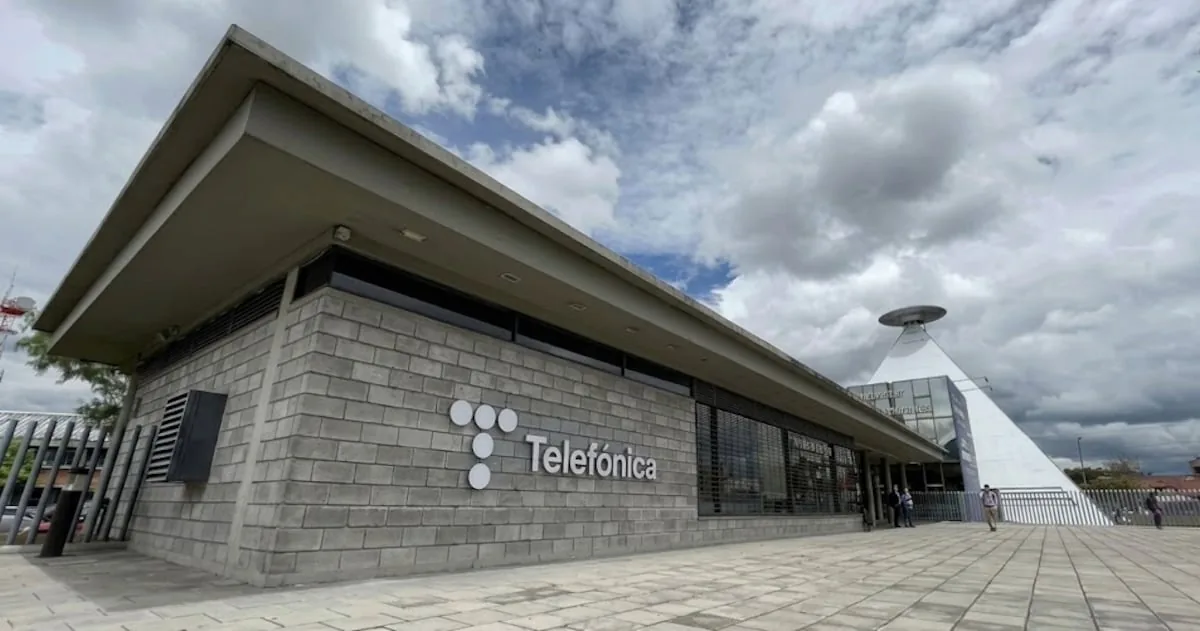
Subsequently, in 2009, the processing of a Special Plan raised the compatible use of cultural and educational nature to 50% of the total built area (32,000 square meters distributed over thirteen floors) to house the activities of the Telefónica Foundation. The urban planning restrictions imposed by the City Council prevent the transformation of the area into a luxury hotel or a large commercial area. The property, which has a height of 90 meters, presents difficulties for office use due to traffic restrictions and the lack of parking in the area. Currently, the building houses the Espacio Fundación Telefónica and the operator’s flagship store, having ceased its active corporate function after hosting a last institutional meeting of the board of directors in September 2025.
Legal sources in the real estate sector indicate that the reversion of a public or cultural use to a private lucrative use, such as luxury residential or hotel, presents high administrative difficulties. Antonio Giraldo, PSOE spokesperson for Urban Planning, Environment and Mobility in the Madrid City Council, has stated that a Special Plan is not legally valid to subtract local networks or systems from the General Urban Planning Plan (PGOU). According to Giraldo, the only way would require a formal modification of the General Plan or specific points of regional legislation, a procedure he describes as highly complex given that the regulations prohibit the reduction of local systems without equivalent compensations.
A Millionaire Fortune
Tomás Olivo holds the sixth position in the Forbes List of Spain’s largest fortunes for the year 2025. His net worth stands at 4.6 billion euros, representing an increase of 1.9 billion euros compared to the previous edition of the ranking, where he was in twelfth place with 2.7 billion euros.
Read more The Parliament calls for the dismissal of Parlón and Trapero over the scandal of infiltrated Mossos
The businessman’s main line of activity is channeled through General de Galerías Comerciales, a company listed on the BME Growth segment since 2017. GGC currently operates fourteen operational or in-development retail parks and shopping centers in Spanish territory, among which the Nevada shopping center in Armilla (Granada) and La Cañada in Marbella (Málaga) stand out. Likewise, the firm has recently acquired the Serrallo Plaza shopping center and maintains a position as the second largest shareholder of the financial entity Unicaja Banco.
In the same area of the classification of large real estate fortunes, the Granada-born builder Nicolás Osuna remains, occupying the 91st position with an estimated fortune exceeding 475 million euros, 75 million more than in the previous year. Osuna, administrator of the company Nogarent SL, is the owner of Inmobiliaria Osuna and the luxury establishment chain Hoteles Center.
However, warnings from the Madrid City Council’s Urban Planning delegation to potential buyers about the infeasibility of authorizing changes of use to residential or commercial tertiary use led to a downward adjustment in offers. The final price, set above 200 million euros, reflects a discount compared to the seller’s initial expectations, motivated by the high restoration costs and the legal easements that the new owner will assume.
The precedent of value increases due to reclassification dates back to 2003, when Telefónica paid the Madrid City Council 53 million euros as compensation for urban development rights after the conversion of its residential and office portfolio. In the current scenario, General de Galerías Comerciales will have to initiate a formal negotiation process with municipal technicians to define the definitive uses compatible with the skyscraper’s current urban planning file.
The sale of the property is part of Telefónica’s strategy of divesting non-strategic real estate assets developed over the last decade. Under the presidency of Marc Murtra, the operator has generated more than 1 billion euros through the sale of real estate assets with the aim of reducing financial debt and obtaining liquidity to face investments in digital infrastructures. The company’s initial plan contemplated raising close to 300 million euros for the Gran Vía headquarters, a ratio of approximately 10,000 euros per square meter.