







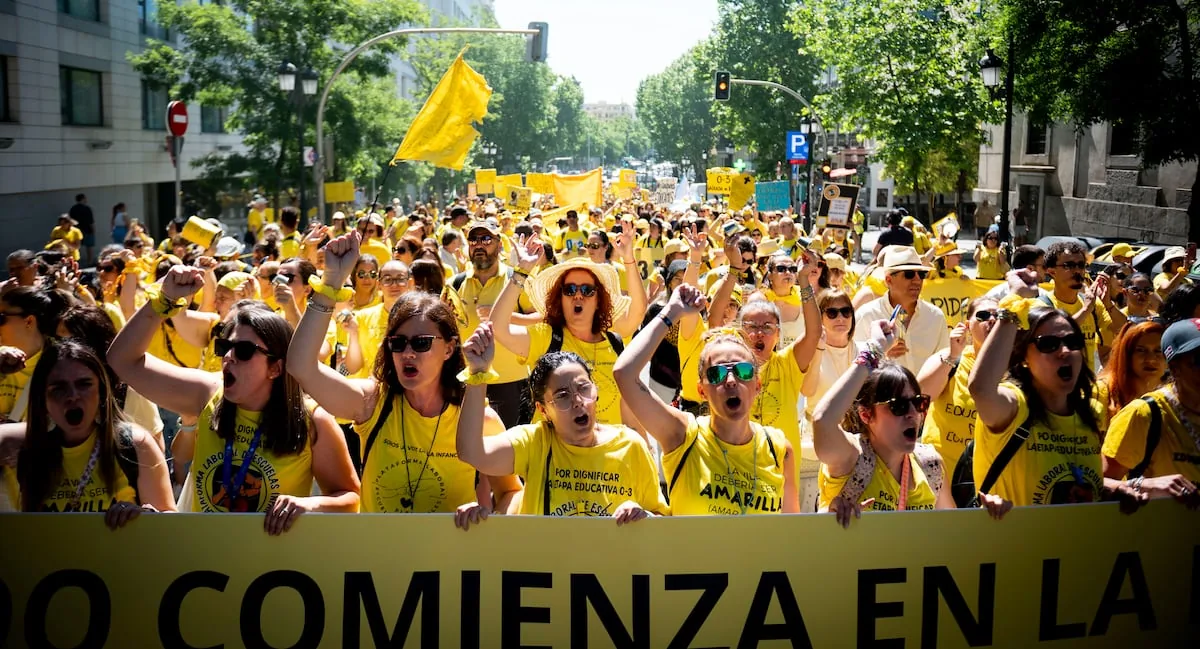
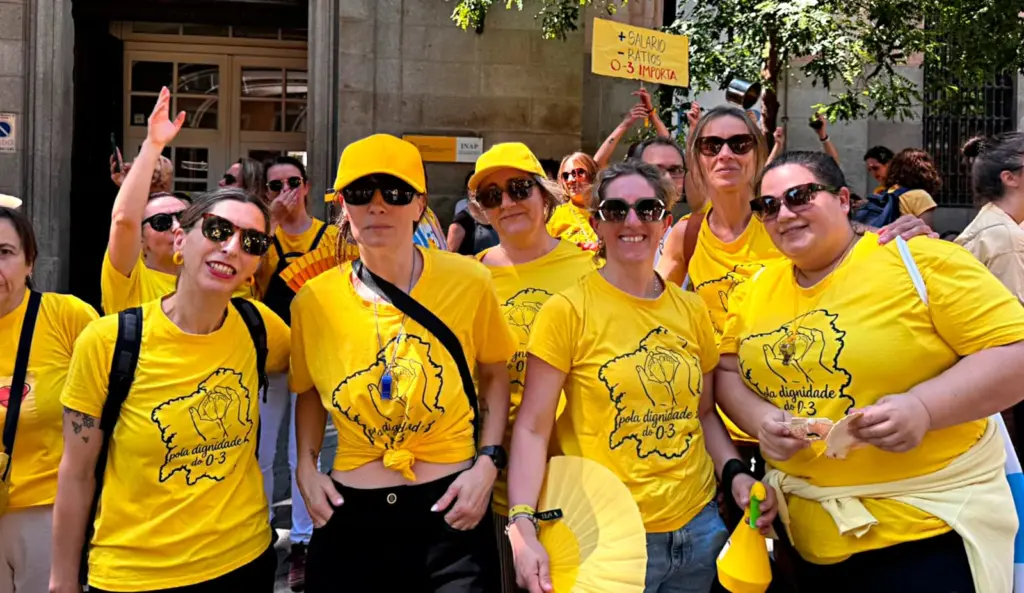
The mobilization of the education sector is intensifying across the country. The yellow tide has taken over the center of Madrid since noon this Saturday by thousands of teachers from the first cycle of Early Childhood Education (0-3 years). Dressed in yellow t-shirts, they have come from different autonomous communities to demand “the same rights, the same ratios, and the same labor dignity.”
Read more The ‘Plus Ultra case’ uncovers a fake invoice operation: “We can agree on the concepts”
Ronda de Atocha street has become the epicenter of the protest, accompanied by pot-banging, whistles, and reivindicative chants. “They call us daycare and it’s not, how bold ignorance is,” said María González among the demonstrators, a teacher with 15 years of experience, who traveled from Galicia to join the massive mobilization. “We demand lower ratios, salary improvements, and better working conditions. We demand them in the short term because we can’t take it anymore, because our physical health is affected, and our mental health is also broken. So much so that they fill their mouths [talking] about mental health and they have us riddled.”
View this post on Instagram
The call, promoted by CCOO, CGT, and the State Platform of Nursery Schools, comes after weeks of mobilizations and the massive follow-up of the general strike held last May 7. The professionals denounce the precariousness of the sector, the “unbearable” ratios in classrooms, and the lack of public investment in an educational stage they consider fundamental for the cognitive and emotional development of children.
In early childhood education, 61,000 educators work, almost equally divided between public and private education, and there are about 11,000 educational centers attended by half a million children. The staff of nursery schools in Spain, both public and private, protest to demand an improvement in the conditions of the centers regarding child-to-class ratios and infrastructure, as well as a salary increase, more focused on private centers, where educators’ salaries (the sector is 97% female) barely exceed the minimum interprofessional wage. “We have poor workers. Many tell us they need to have another job to make ends meet,” said Teresa Esperabé, general secretary of the CCOO Education Federation.
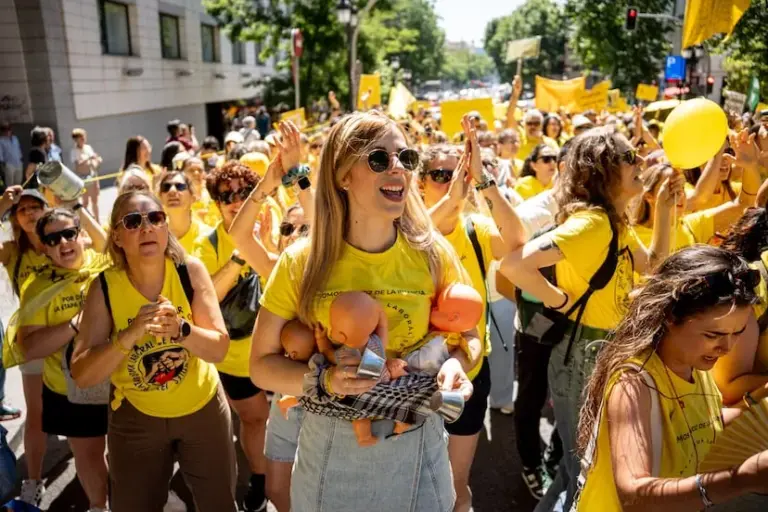
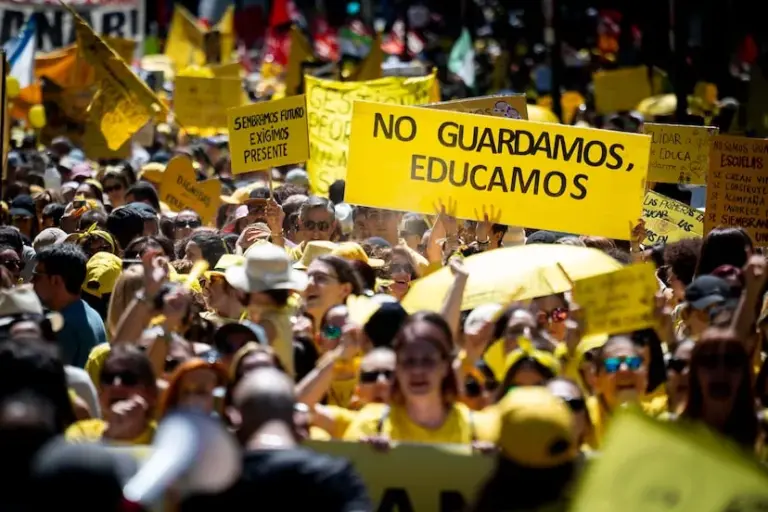
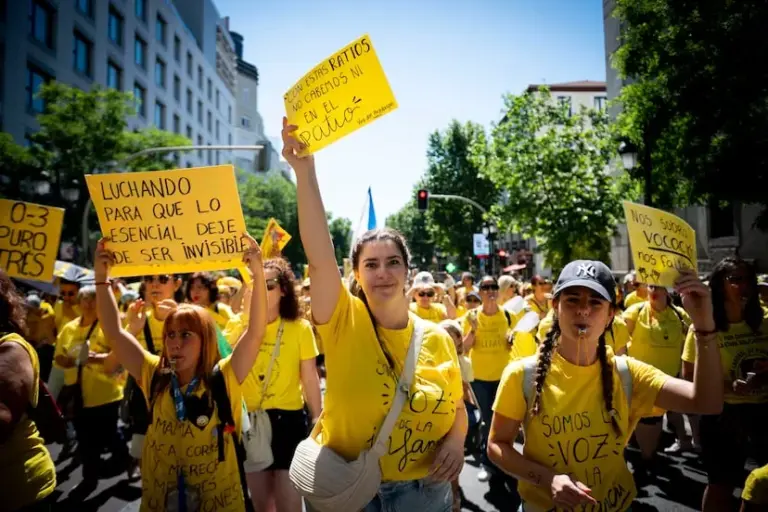
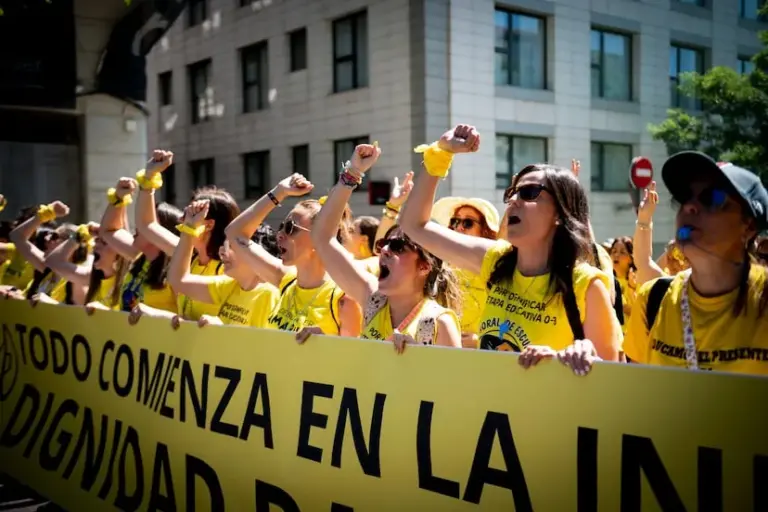
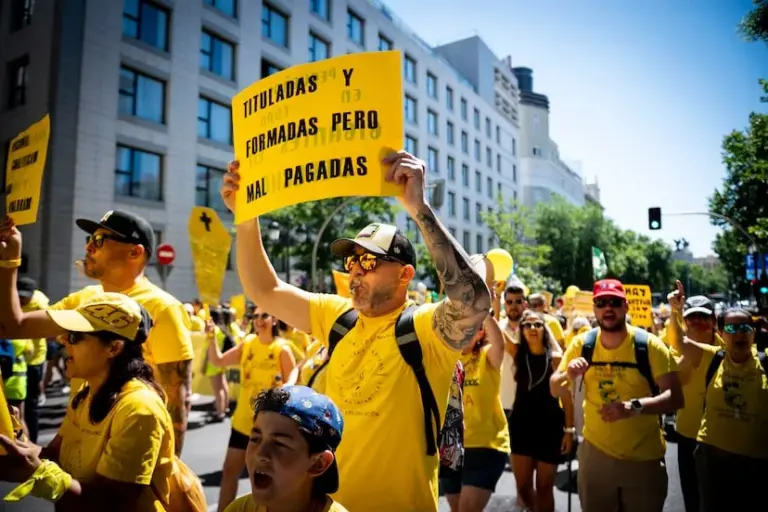
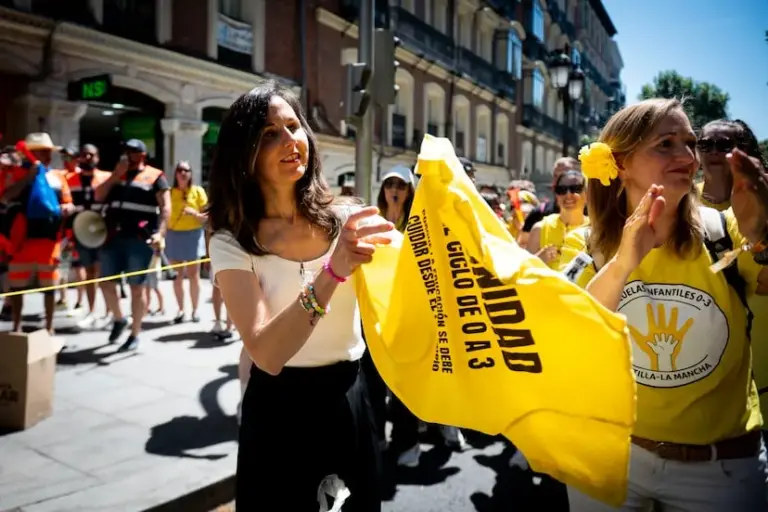
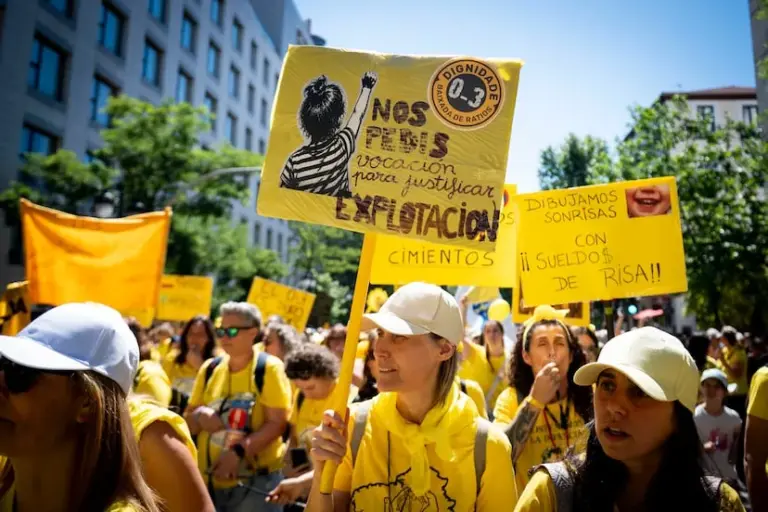
According to the organizers, the demonstration has had historic tones. With a participation of between 15,000 and 20,000 people, according to the convokers. The protest represents, for the first time, the union of educators from private, charter, and public early childhood education schools at this level. To which collectives and assemblies from the 0-3 cycle of various autonomous communities joined in a single state structure.
The educators demand greater state investment that allows the autonomous communities to improve salaries and expand public places. They also criticize the current model based “on fragmentation and outsourcing,” considering that “children’s rights have become auctions to the highest bidder.”
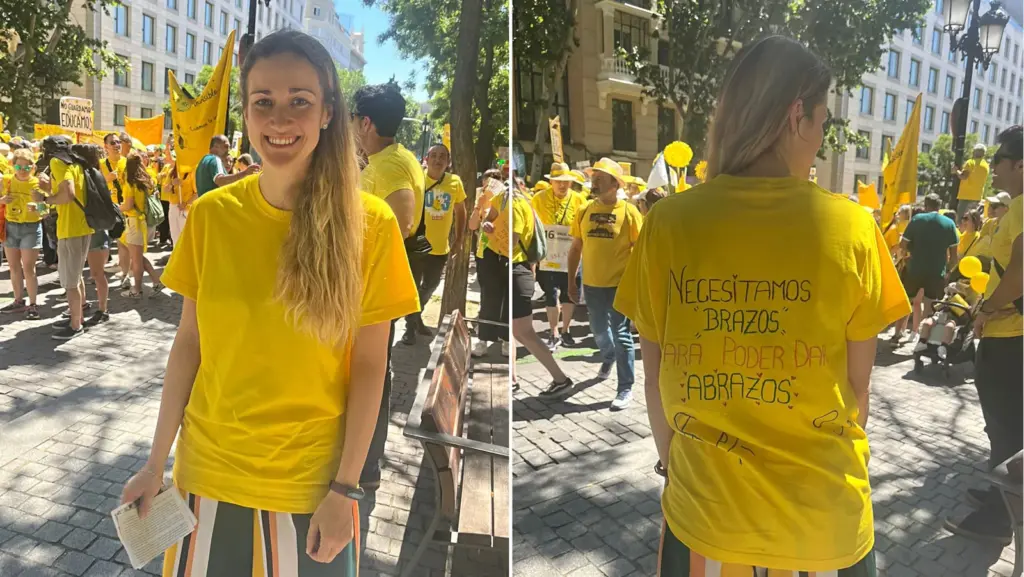
“We can’t take it anymore”
Lidia Gómez, 35, is a teacher at a private nursery school in Madrid, in Alcalá de Henares, and has come to demonstrate accompanied by her husband, her 14-month-old daughter, and her mother. Wearing a t-shirt with the phrase “we need more arms to give hugs,” Gómez demands dignity for the 0-3 cycle. “It’s impossible to work with so many children. My daughter, who is a baby, also suffers because she goes to school. We can’t take it anymore.”
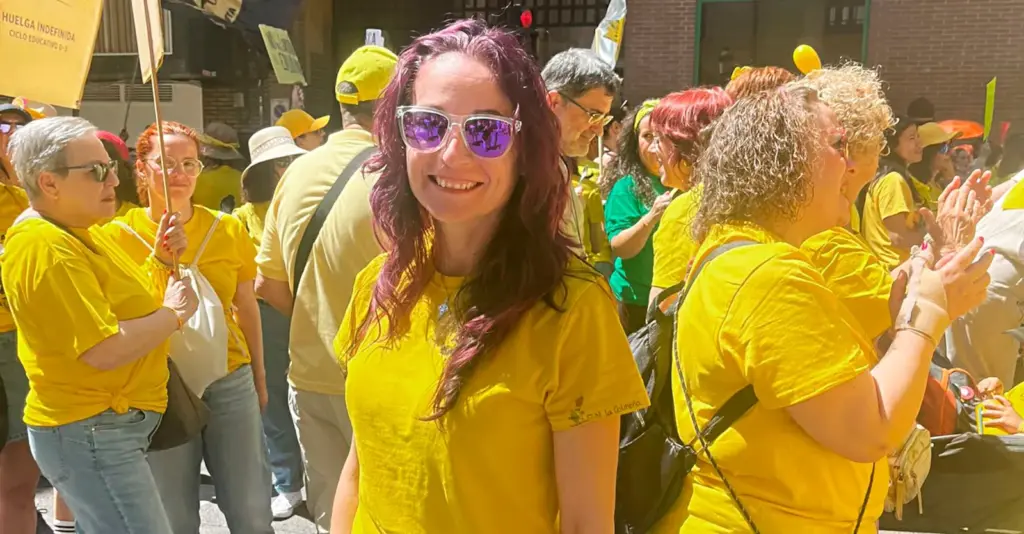
“The situation we live in is unfeasible”
Zaida Sánchez is a 47-year-old teacher at the La Colmena children’s house in Madrid. She currently works in a classroom with 20 children aged two and three, one of them with special needs. What they live, she says, “is unfeasible.” “I am here to ask to improve our conditions and those of the children,” she emphasizes.
In her institution, she says, they barely have one reinforcement person for nine classrooms. “While you change a diaper, another child falls and another climbs on a table. You can’t do everything,” she recounts. The worker defined the daily context in the classrooms as “a very stressful situation” that generates “helplessness.”
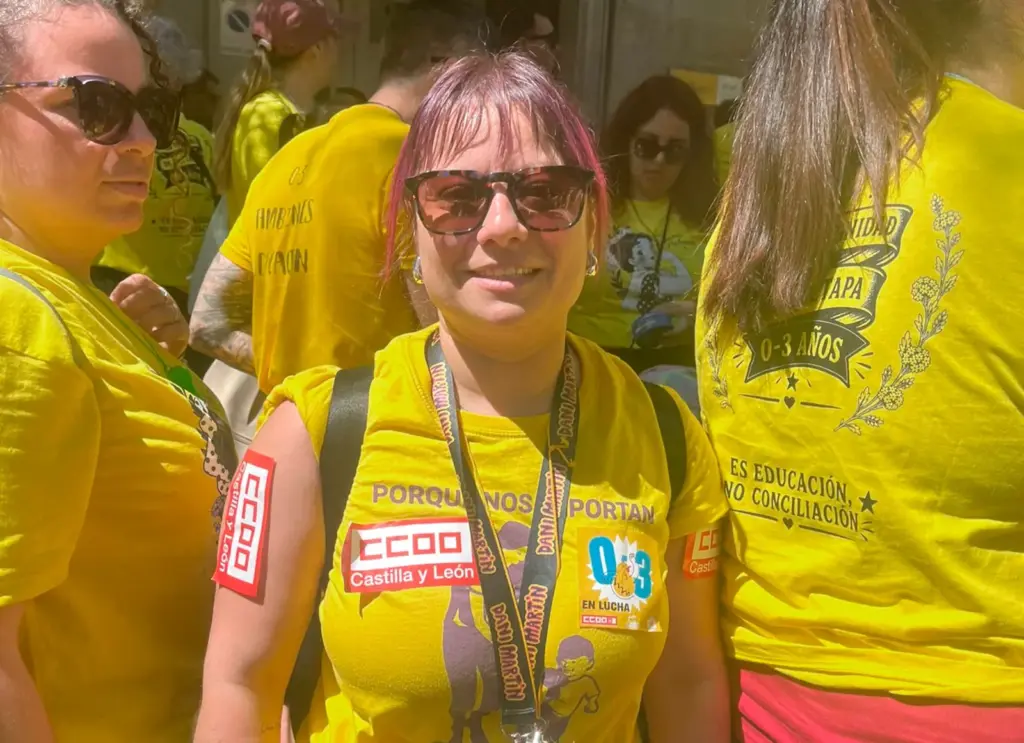
“We teach them everything and we are not being taken into account”
Elena Pascual is an early childhood education teacher in Burgos (Castilla y León) and a workers’ representative of Comisiones Obreras in this city. “From all over Spain, we early childhood educators have come here to demonstrate,” says this 39-year-old teacher. “I have had up to 24 children and we have to attend to them, teach them, teach them to eat, to go to the bathroom, to be autonomous. We teach them everything from the beginning of life. It is a very important stage and I think it is not being valued. Since it is not mandatory, they are not taking us into account,” she demands.
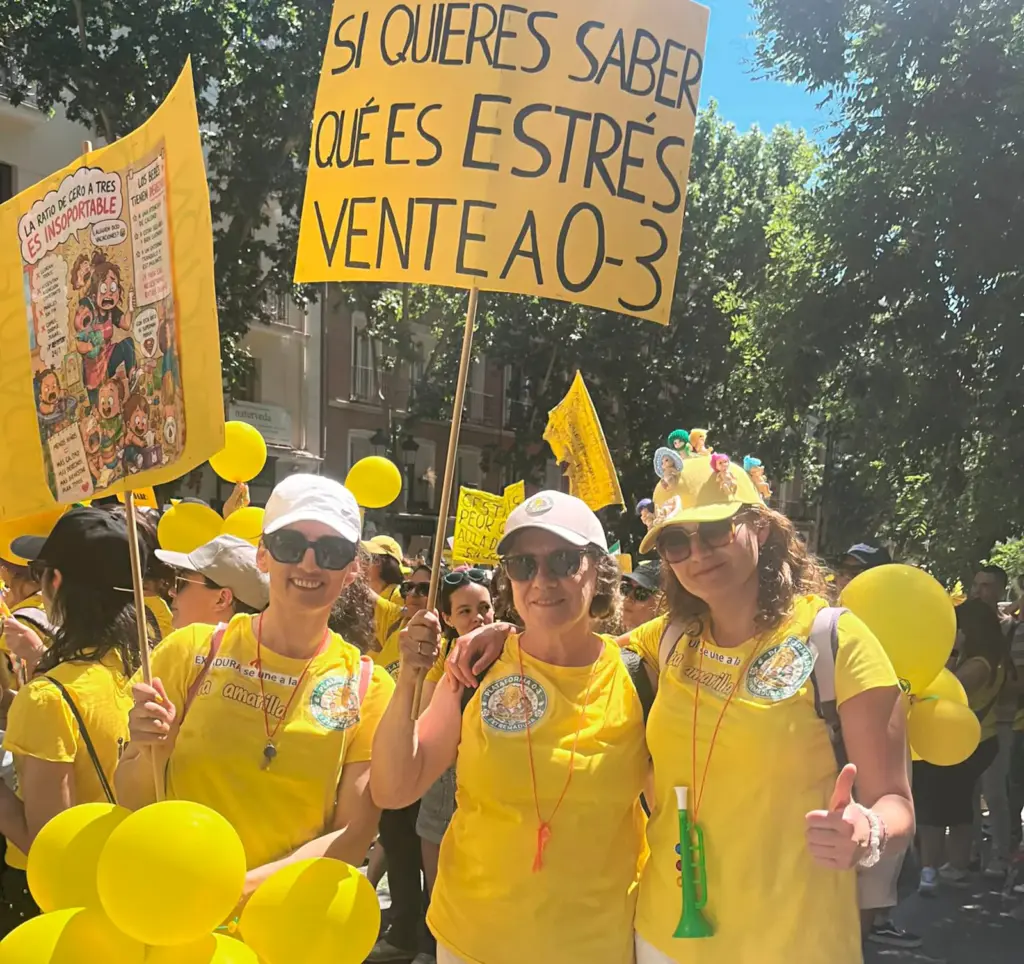
“We are not valued and we are tired”
Alicia Mendiola is 49 years old and works at a nursery school in Badajoz, Extremadura. “We endure very high ratios and our salaries have been frozen for more than 20 years,” she denounces. “It is a profession that is not valued or paid at all and we are tired,” says this teacher who has more than two decades of experience.
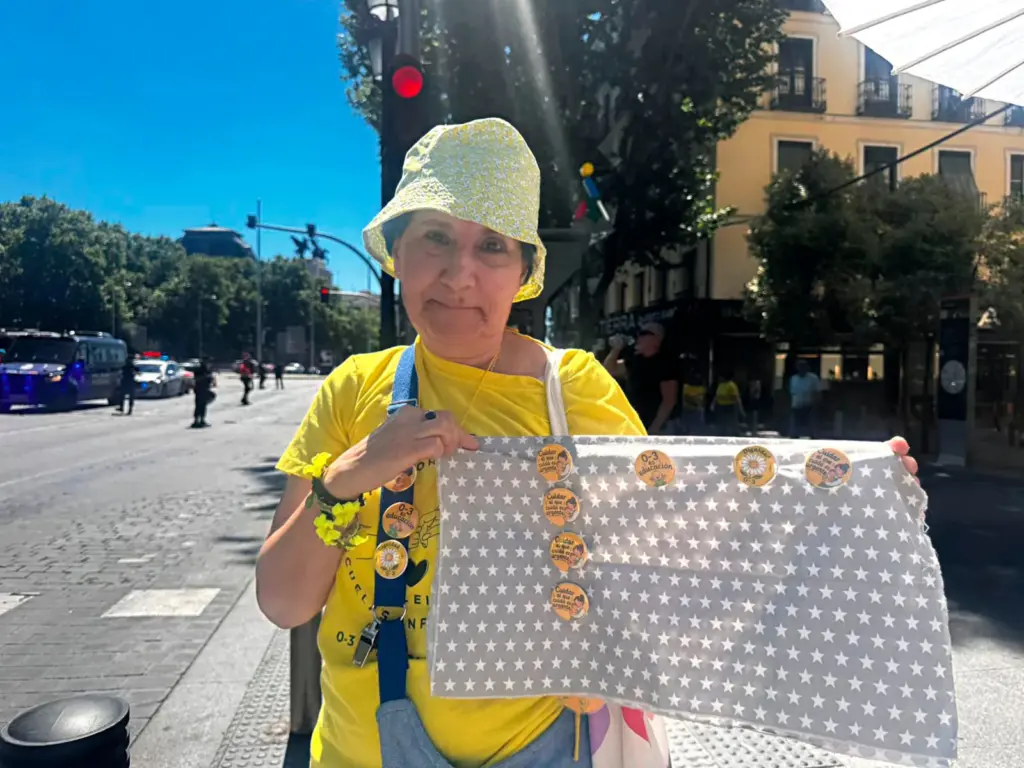
“An educator cannot be alone with eight babies”
Natividad Arroyo (Madrid, 59 years old) has been an early childhood education teacher since she was 18. With four decades of experience, the teacher denounces the poor working conditions of early childhood teachers: “We cannot continue with this model because our priority is childhood and the care of childhood. We cannot sustain that one person is alone with eight babies, it is inhuman for the children and for us.” Arroyo considers that there have been few struggles won by educators in Spain.
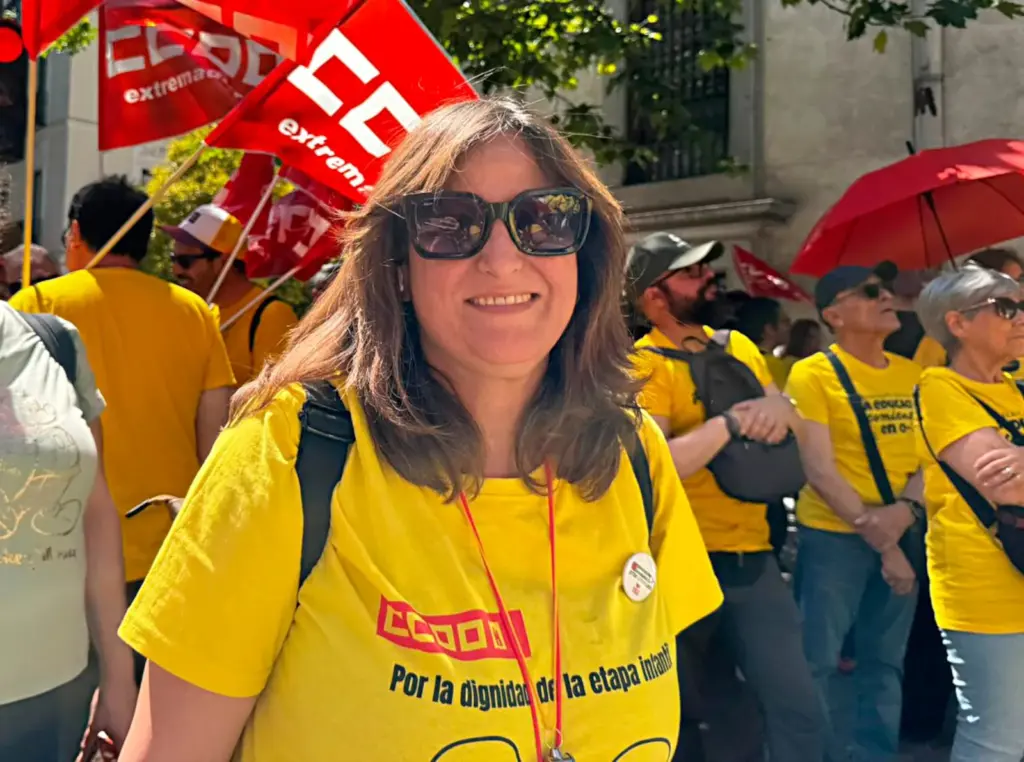
“We want the working conditions of educators to be dignified”
Rosana Díaz has traveled from Albacete (Castilla-La Mancha) to accompany the demonstration of early childhood education teachers. The secondary school teacher considers that the conditions in which 0 to 3-year-old teachers work are undignified: “We want the (working) conditions to be dignified and to be the same for everyone and to be able to make ends meet and to really have them within the educational system.” She says she has friends at this teaching level who live in precarious conditions and without attention from the authorities.
“We have been enduring for a long time, we demand solutions”
María González is fed up. With 15 years of experience in early childhood education teaching, the teacher says she can’t take it anymore: “We have been enduring and enduring for a long time. We don’t want long-term solutions, we demand them in the short term because we can’t take it anymore, because our physical health is at stake, but our mental health is also broken. So much so that they fill their mouths talking about mental health and they have us riddled,” she states. She has traveled from Galicia with a group of teachers with whom she shares the same conditions that they consider precarious. Dressed in yellow, all her colleagues have joined the protest to demand better working conditions “urgently.”
Read more The police arrest three people as accomplices in the crime of the singer Matías de Paula