








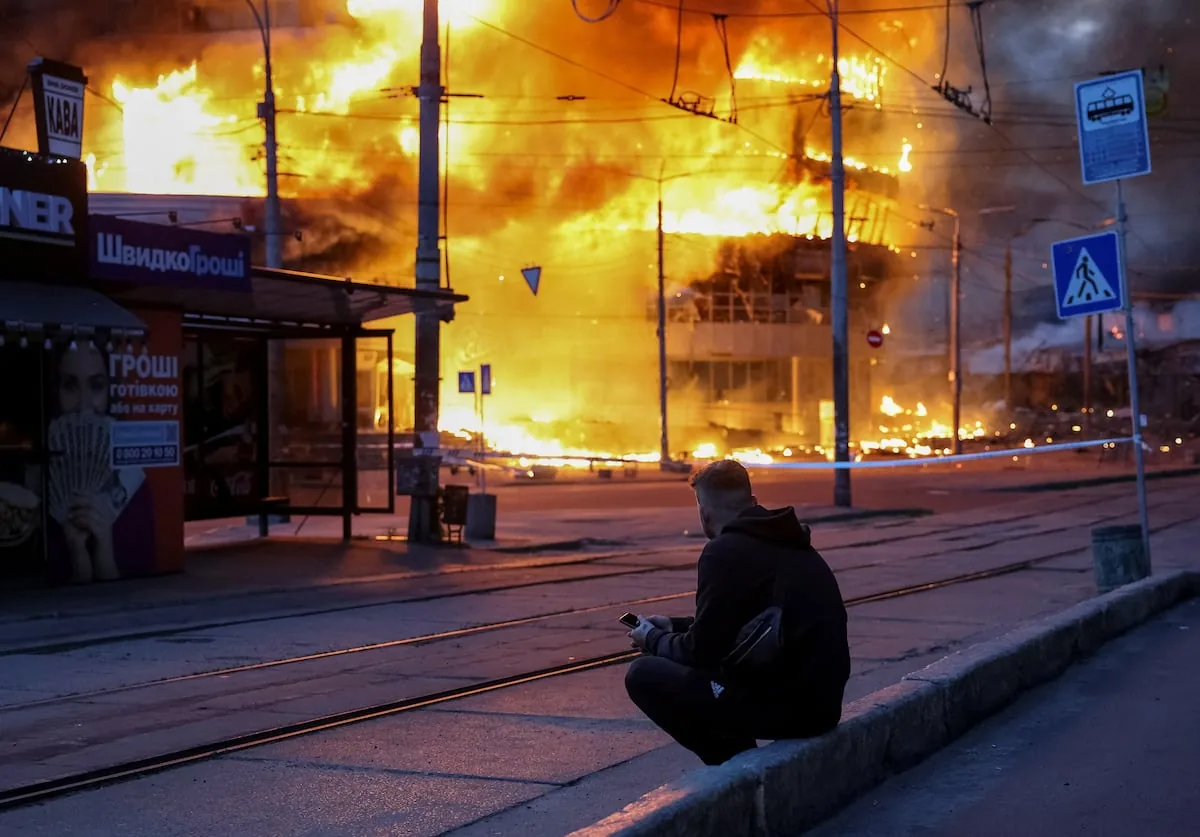
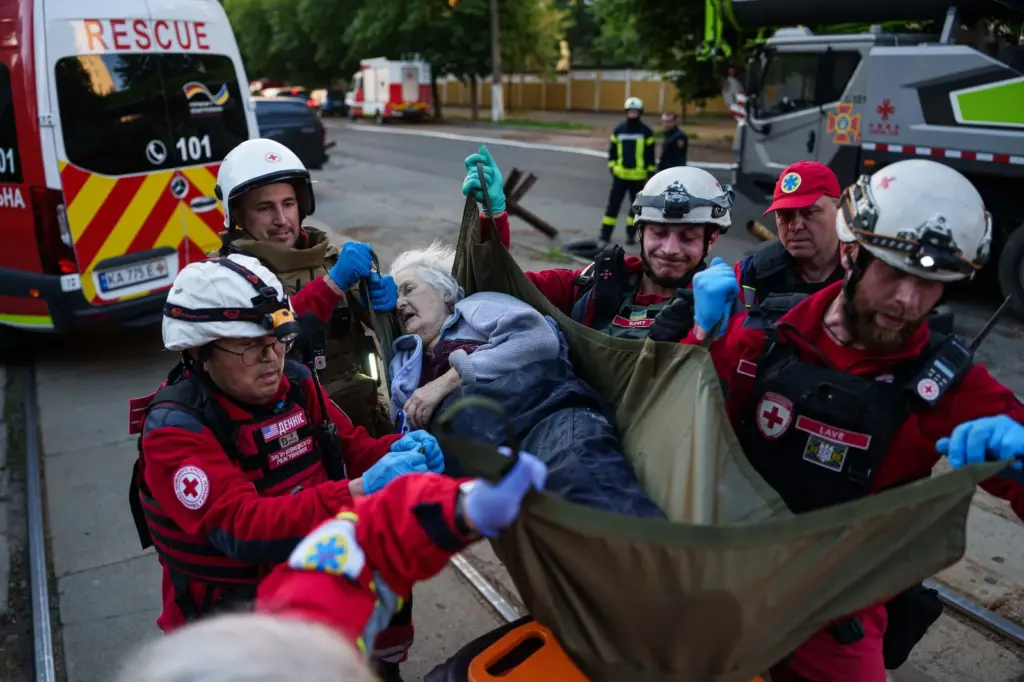
Russia punished Kiev and its region in the early hours of this Sunday with one of the largest bombings of the war. More than 600 drones and 90 missiles have struck the Ukrainian capital and its province. The Russian army has once again used the hypersonic Oréshnik missile, a weapon impossible to stop by conventional anti-aircraft systems, designed for nuclear war. The attack has caused at least two deaths and 80 injuries.
The six explosive warheads of the Oréshnik have hit an undisclosed location in Bila Tservka, a municipality south of Kiev frequently attacked because military bases are concentrated there. The Russian army has used its deadliest weapons in the bombing. In addition to the Oréshnik, it targeted the capital and its region with cruise and ballistic missiles fired from land, sea, and air. The city suffered impacts in all its districts for five hours, with dozens of buildings on fire. The bombing caused significant damage in the center of Kiev, including the National Art Museum of Ukraine, adjacent to the iconic Maidan square. The Chernobyl disaster museum, in the Podil neighborhood, was also partially destroyed by a missile.
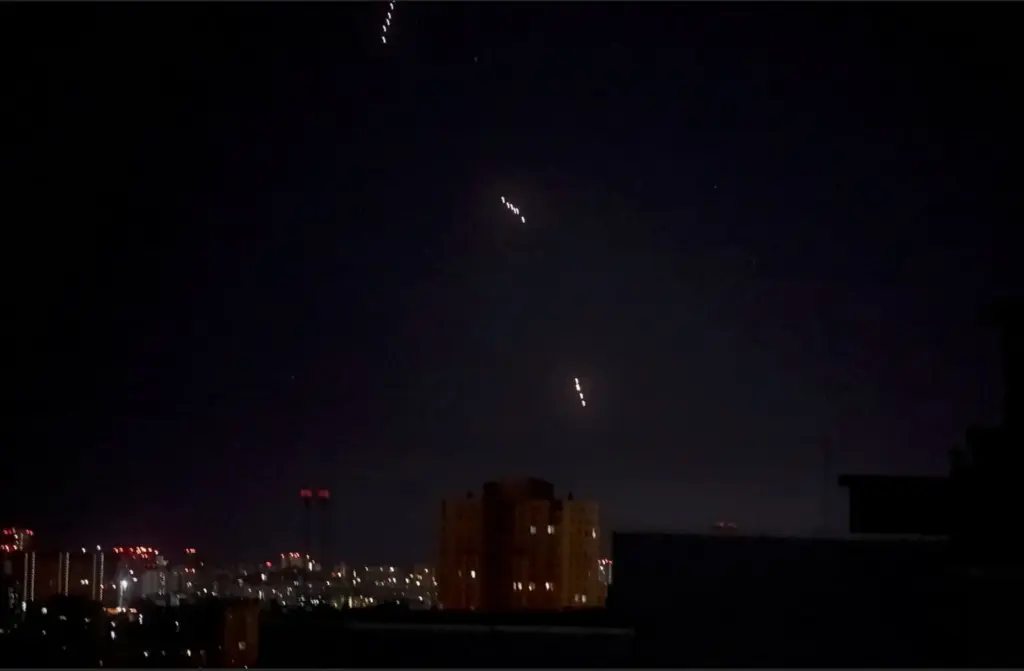
The mayor of Kiev, Vitali Klitschko, stated in a Telegram message that it was “a terrible night.” Many residents sought shelter overnight in the city’s metro stations.
The Russian army combined missile launches with waves of Shahed bomb drones to saturate the anti-aircraft defenses. “This is a new Russian terror tactic, which had been accumulating missiles and drones deliberately for some time to carry out this attack and create the greatest problems for our anti-aircraft defenses,” wrote Ukrainian President Volodymyr Zelensky on his social networks. Statistics provided by the Ukrainian Air Forces confirm a lower interception rate of enemy projectiles: 55 missiles were destroyed, just over half.
The previous major bombing of Kiev occurred on May 14. A total of 24 people died and 50 were injured when a Russian missile destroyed a residential building. Three days later, on May 17, Ukraine fired hundreds of drones at Moscow, causing three civilian deaths.

Kiev was again the main Russian target in the early hours, although other provinces of the country were also under enemy fire. It is the bombing with the highest number of missiles in 2026, and one has to go back to 2024 to find similar precedents. That year, on three occasions, more than 90 missiles were fired.
Read more A shooting near the White House ends with the attacker dead and one injured
Zelensky already warned on Saturday on his social networks that Russia was preparing an imminent attack with an Oréshnik. NATO intelligence services had detected movements for the launch at the base where this ballistic missile is fired, in the Astrakhan province.
This is the third time in the four years of war that Russia has used an Oréshnik against Ukraine. The first occasion was in November 2024 against an industrial area in the Dnipropetrovsk province. It was the first time in history that a nuclear power used such a missile as a weapon of war. The occasion even warranted Russian President Vladimir Putin sending a televised message to the nation reporting the attack.
The second occasion was last January against the Lviv province. Ukrainian authorities only reported that a civilian infrastructure was destroyed, without specifying. Russia concentrated its long-range fire that month against the energy network of the invaded country. That attack was also understood as a Russian threat to NATO because the impact site was close to the border with Poland.
In these two precedents, Russia warned the United States half an hour in advance that it was going to fire the Oréshnik. Treaties between Russia and the United States require both parties to inform about the launch of this type of rocket because they are part of their arsenal for nuclear war. The Oréshnik reaches a suborbital height and then descends toward its target at a speed close to 13,000 kilometers per hour. It is unknown if on this occasion Moscow warned Washington, although Zelensky did indicate on Saturday that the United States had warned his government of the imminent firing of this missile.