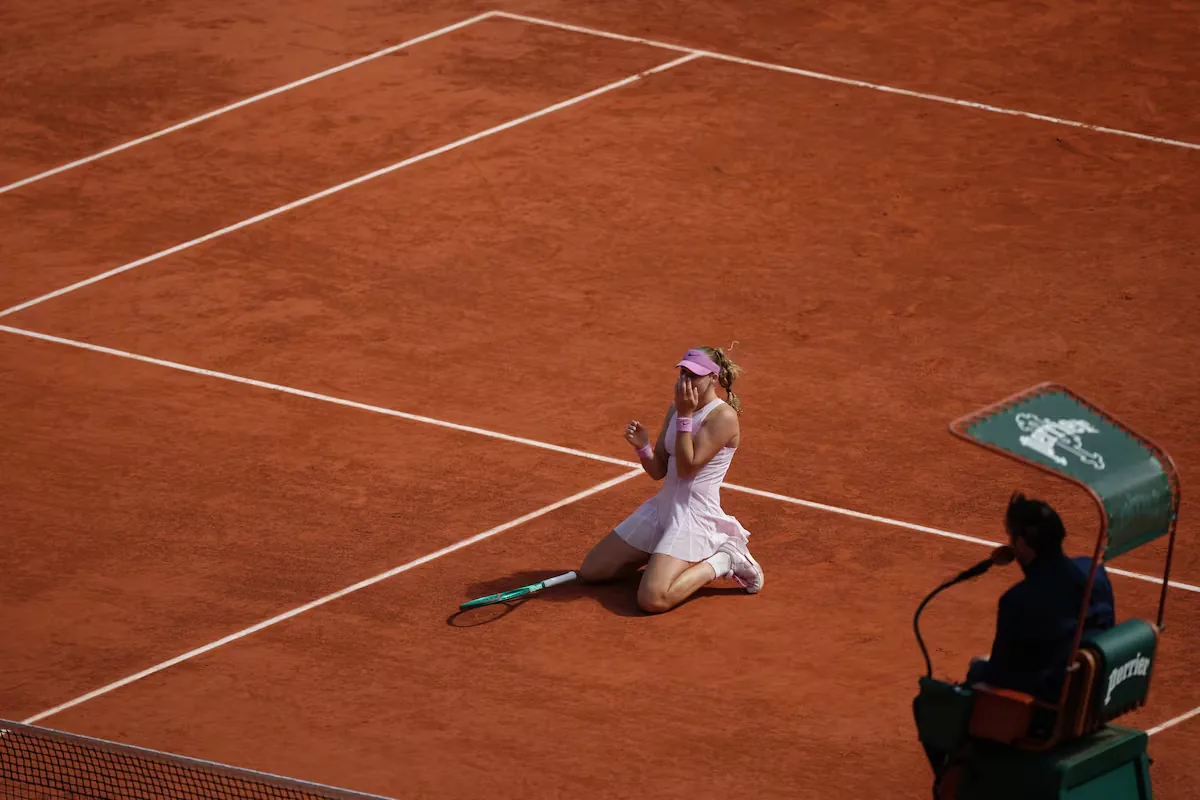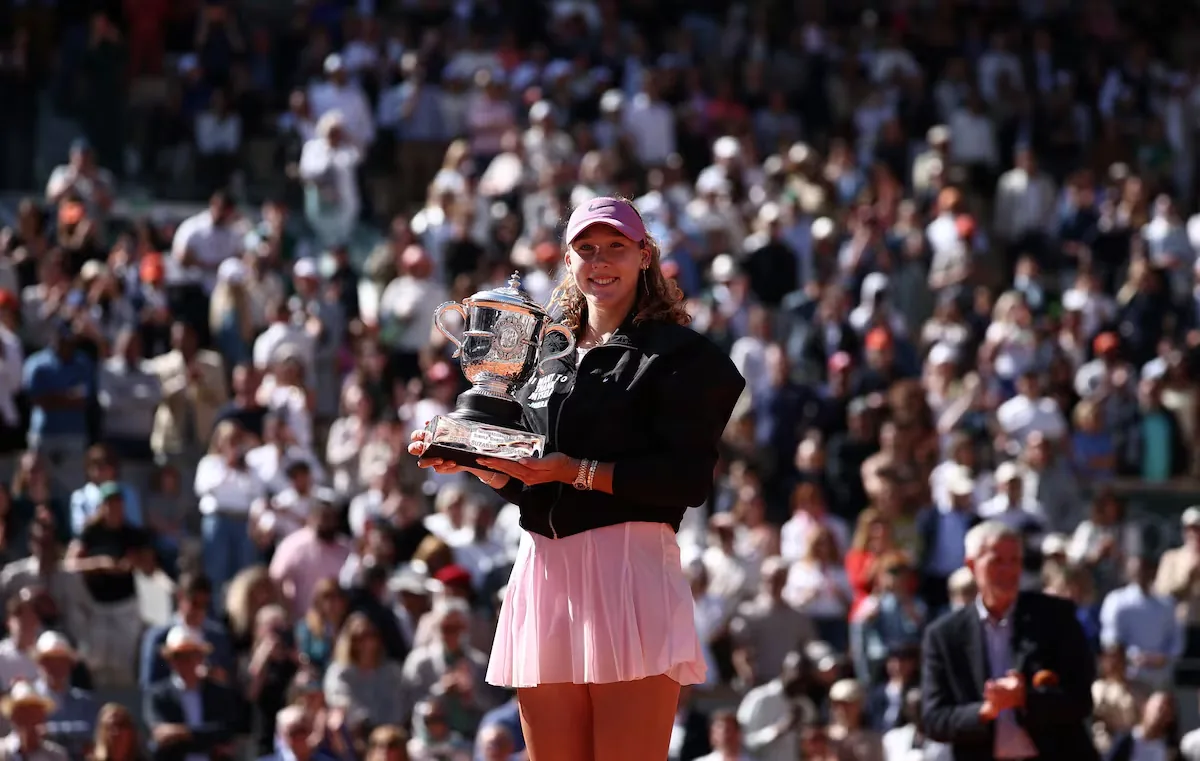




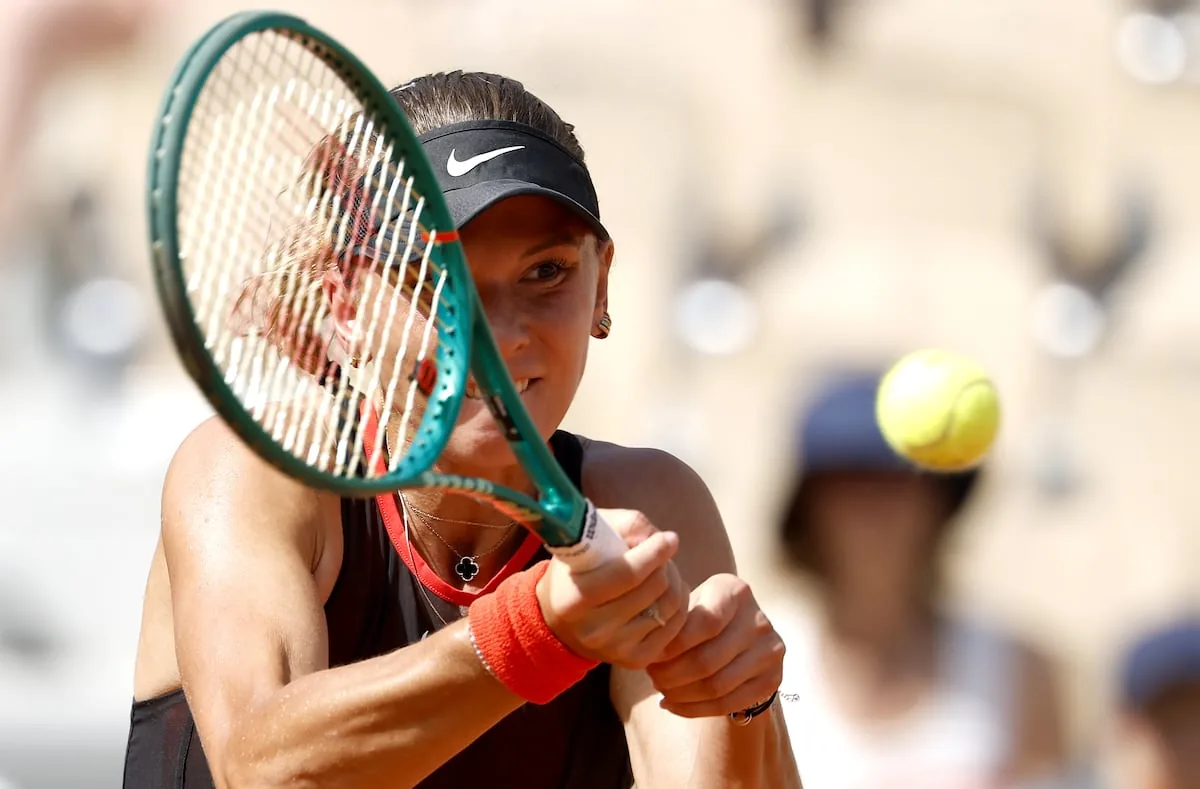
On Thursday, practically at the gates of Roland Garros and without prior matches, the Official State Bulletin (BOE) announced the naturalization of Oksana Selekhmeteva. She, 23 years old and born in Moscow, found out by chance. “I saw in an Instagram story that I was already number three in Spain, but on a very small account. I didn’t know if it was true or not, but then I received a message from Javier Soler [the sports director of the Federation] and he confirmed it,” the tennis player tells the group of journalists who want to know the backstory, who she is, where she comes from, and why. She had just lost to Marta Kostyuk on the Simone Mathieu court (6-2 and 6-3, in 1h 18m) and although she handles the questions with great composure, she is nervous. “Did I do well?”. Her hands are sweaty.
Selekhmeteva first visited Barcelona at 14 years old and the following year, she and her parents settled in the Catalan city. The TEC Carles Ferrer Salat academy welcomed her, although for some time she has been navigating solo, supported by the Royal Spanish Tennis Federation (RFET). “I live there. Well, I train there, because it’s hard to say I live… In the end, you travel about 40 weeks a year. My parents and my little dog Leo are there,” she introduces. For Messi? “Of course!”, she continues happily and in very correct Spanish, before delving into the life change. In 2023 she bet on the nationality change, although the process has stretched over three years. The announcement, however, was overnight. There is a new Spaniard: “Selekhmeteva”. She is 88th in the world and as a junior she especially shone as a doubles player.
In January, amid that sea of Russian names scattered across the circuit, few remembered hers, despite the victory against Paula Badosa in Melbourne. “I’m a mix right now. I’m a warrior, because Russia is like that, and as a Spaniard… That question is very difficult,” she apologizes. She recounts that the naturalization process has been “long and difficult” because of “the paperwork mess,” but it has been worth it and as soon as she sets foot in Barcelona she will complete the paperwork to obtain the passport. Moscow is left behind, then.
“A part of my family is there, my sister is there,” she says. And reasons: “I love Spanish people, the mentality you have. You know how to enjoy life, and for tennis it’s the same. In Russia we have the mentality that you have to work and work and work 24 hours, and I think there should be time for everything: to rest, for family… In that I’m a bit more Spanish, but I’m still a bit there.” She separates the decision from politics, although she hints a couple of times that “the world is difficult” and that she dreams of a prosperous career, hence the choice. “In Russia it’s cold, but it’s not just that. There you train and then you have two hours of traffic to go somewhere else to do the physical part. You need to have a structure, and I think Spain is the best country to have it and be a tennis player,” she points out.
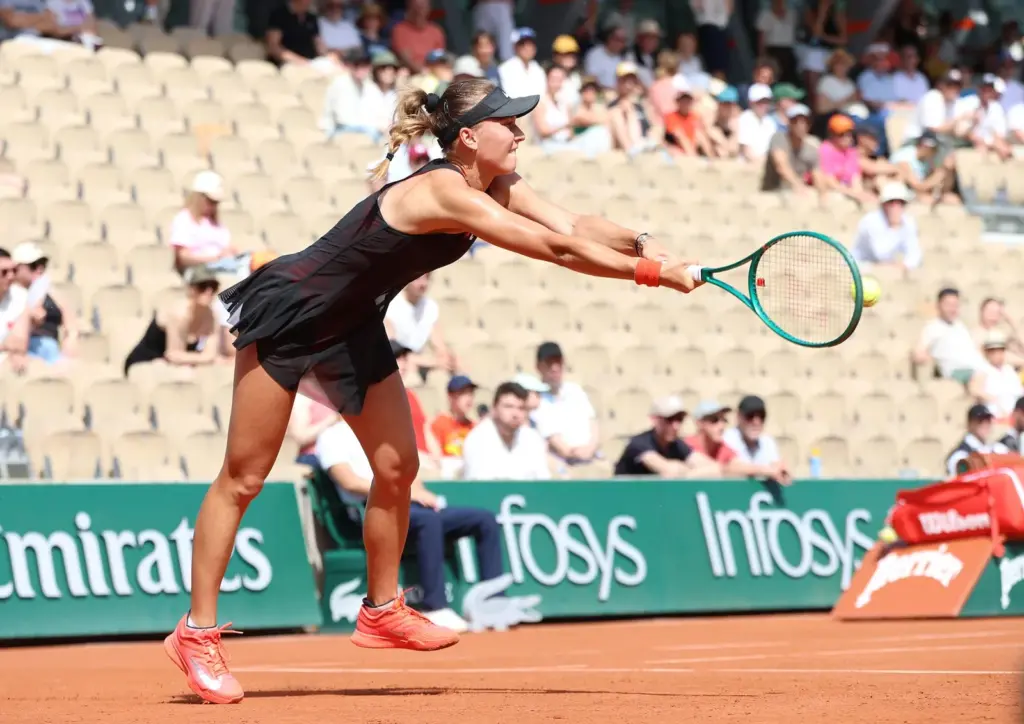
The player talks about “structure,” about how she has found the necessary environment and support. “The career is long, but at the same time not so much, so I have to do the best for me. Thanks to the Spanish Federation, because without them it would be impossible to do it… They are helping me a lot,” she thanks after the match against Kostyuk, a prominent competitor who recently triumphed in Madrid and who currently holds the 15th position in the ranking. “Her playing style is incredible. She is way above me, you know? I have to believe more in myself and in my tennis,” adds Selekhmeteva, a “leftie” who admires Rafael Nadal and Maria Sharapova, the latter for her “mentality” and her way of competing, both “incredible.” She describes herself as an “aggressive” tennis player, but who at the same time also tries to “change the rhythm.”
From Kuhn to Masarova
For some time, Spain has become one of the preferred places for professionals to train, along with Monte Carlo, the French Riviera, and the coastal extremes of the United States. The climate and the method attract. There are numerous centers and academies that host foreign talent — especially in Catalonia and the Valencian Community — and sometimes, as in her case, end up finding settlement. Aware of this, the RFET has always closely followed the steps of young people (boys and girls) who begin to stand out. Nicola Kuhn (Germany) was adopted in his day and later Rebeka Masarova (Switzerland). Both later recovered their original nationality.
“We have helped her with the file from the Higher Sports Council (CSD). Oksana repeatedly expressed her desire to naturalize and she has roots here; she grew up in Barcelona and has lived there since she was a teenager,” federation sources say. At the time, the RFET acted to resolve situations like Garbiñe Muguruza’s — she prioritized Spain over Venezuela — but it was too late to secure Alex de Miñaur, raised in Alicante and today representing Australia despite reports warning of his quality. The projection of the new addition is different, but enough for the federation to have helped her complete the process.
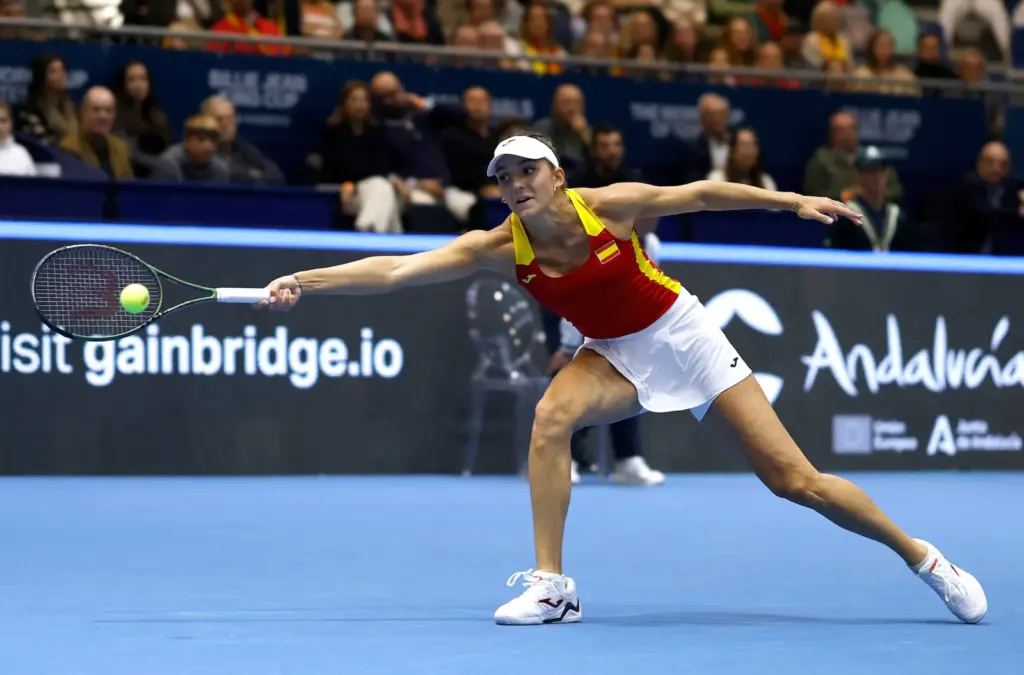
Selekhmeteva, born in 2003, reached position 71 in March and in the blink of an eye has become the third Spaniard on the list. Leading the representation is Cantabrian Cristina Bucsa (33rd) and next is Galician Jessica Bouzas (50th). From now on she is, therefore, selectable for the Billie Jean King Cup team, which will participate in the final phase of the competition in September. Captain Carla Suárez witnessed the duel between her and Kostyuk live. Physical problems have unseated Paula Badosa and after the Catalan (119th) appears the freshness of Kaitlin Quevedo (126th); below, middle-aged players who have not managed to enter the top-100, such as Andrea Lázaro (31 years old and 140th), Leyre Romero (24 and 158th) or Marina Bassols (26 and 175th).
“It depends on the ranking… If I’m there and the captain wants me, it would be an honor for me to represent Spain. We’ll see,” resolves the happy Selekhmeteva, whose naturalization has had an immediate effect. Although the announcement was made on Thursday, this Sunday she played for the first time under the Spanish flag — previously without any, due to the international ban imposed on Russian tennis because of the war offensive against Ukraine —. It was her sixth appearance in a major tournament, the third in Paris. She was unlucky, as was Sara Sorribes, eliminated by Tamara Korpatsch (6-4 and 6-2). However, the Malagan Alejandro Davidovich did advance. That said, between struggles and comebacks: 6-7(3), 6-3, 2-6, 7-5 and 6-3 (in 4h 05m). He will face Thiago Agustín Tirante, the conqueror of Pablo Llamas (6-3, 7(6), 6-7(5) and 6-0).