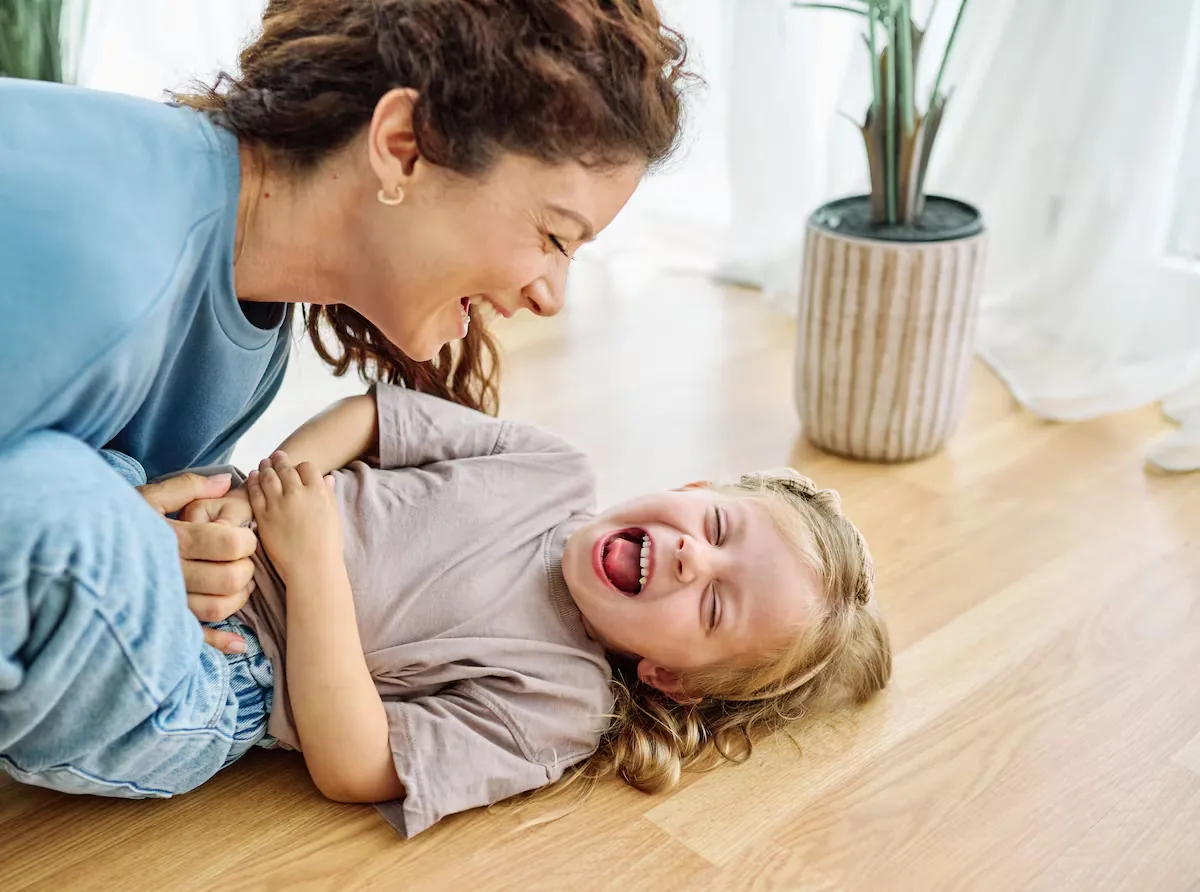










“Making children laugh can create deep emotional bonds and calm their nervous system, making them more resilient and open to new ideas,” explains Jacqueline Harding, a child development expert from Middlesex University, UK, and author of the book The Brain That Loves to Laugh, published by Taylor & Francis, about how laughter can help children face life’s challenges and better manage stress. Against all odds, laughter turns out to be more serious than it seems.
Read more Who is who in Enrique Riquelme’s candidacy for the presidency of Real Madrid
Harding, director of the Tomorrow’s Child center — a European research project focused on child development and parenting in the digital age — argues that laughter and play contribute to healthy brain growth, emotional well-being, and social bonding. Through her own empirical research and supported by existing studies in biology, psychology, and sociology, she emphasizes that laughter is not frivolous but a complex biological response involving a network of brain regions including motor areas and the prefrontal cortex: “Hope and humor, it seems, are not just a seasoning of life but the foundation of healthy development,” she notes. “When we see children laugh, we witness the brilliance of the brain in action: learning, connecting, and growing,” the author asserts.
Laughter precedes the natural development of speech in infancy but also influences our heart rate, breathing, and antibody production; it also acts as a buffer against stress hormones, cortisol and epinephrine, and increases so-called happiness hormones like dopamine, serotonin, and endorphins. Harding states that laughter can also strengthen the immune system and improve memory, which is why she associates it with learning and healthy growth during childhood. These bonds benefit children and can also help reduce burnout and stress not only in children but also in parents and teachers themselves, improving mood during parenting.
Humor and mental effort
Research shows that laughter helps develop social skills and emotional intelligence. This does not mean that parents should spend all their time telling jokes, but it does suggest that simple shared play and laughter, with eye contact, smiles, closeness, and joint attention on a task, foster connection. “Creative and joyful play exerts its greatest effect at the molecular level, especially when the human brain is most receptive,” says Harding, because spontaneous and fun play is an antidote to stress that increases endorphin levels.
But perhaps the most relevant aspect from an educational point of view is the cognitive impact of laughter. Neuroimaging studies suggest that humor requires considerable mental effort because it forces the brain to anticipate and resolve the tension between contradictory ideas. This process activates working memory and the frontal lobes, promoting creative thinking and neuroplasticity.
Ana Belén López-Rodríguez, research coordinator in Neurology at La Princesa Hospital, delves into this mechanism: “At the brain level, humor can act through two pathways. On one hand, it activates a more emotional pathway: it generates pleasant sensations, fosters connection with students, and increases the desire to participate. On the other, it activates a more cognitive pathway: it captures attention, introduces surprise, and helps think a little more about what is being learned.” According to López-Rodríguez, both pathways are especially activated when the student detects the incongruity of a joke or funny situation and then resolves it. “The content can be processed more deeply,” she notes.
Scientific evidence points in the same direction, though with nuances. “The results are not entirely consistent, partly because finding the right formula and dose of humor in the classroom is not easy,” warns López, citing recent research. But not all humor is suitable nor at any time. The neurologist distinguishes between different types and contexts: “Humor used to support teaching — so-called instructional humor — works better when it is related to the concept to be explained because it helps illustrate, understand, and remember it without breaking the class rhythm.” She also highlights self-deprecating humor, which the teacher uses to joke about themselves: “It improves the bond and generates closeness.”
Read more El City de Guardiola se despide en familia
The age of the students is another determining factor. With the youngest, López points out, humor must be simple, visual, and closely tied to immediate experience because they do not yet fully understand irony, abstract incongruities, or double meanings. Added to this are culture, gender, subject, context, and something not learned in any master’s program: the innate charm of the teacher, because, as she notes: “Not everyone is born with spark.”
On the opposite side of laughter, prolonged stress negatively affects both physical and mental development. Harding points out that a prolonged period of stress during childhood can impair learning, increase the risk of stress in adulthood, suppress immune function, and contribute to illness. “Early emotional experiences are imprinted in the brain’s structure. In short, the emotional state of young children directly influences how they navigate the world,” she states.
For the author, humor and hope can improve a child’s ability to adapt to stressful situations. Even after experiencing severe trauma, such as those caused by war or abuse, Harding notes that carefully introducing moments of joy and hope can calm their nervous system and help them regain a sense of security.
Both Harding and López-Rodríguez agree on calling for a paradigm shift. Harding directly questions current early childhood education protocols and advocates integrating humor into learning environments as a tool to reduce cognitive load, make information more digestible, and improve retention. “The curriculum should never be prioritized over secure relationships and stress-free play environments,” she warns. López-Rodríguez, for her part, points to that “magic formula” as the real challenge: “A just dose that manages to increase motivation and awaken curiosity with closeness, without losing rigor or turning classes into mere entertainment or a continuous, empty stimulus.”
Ultimately, neuroscience points to laughing together, even when learning, as one of the best things people can do. And perhaps it is also one of the most important lessons that happen inside a classroom.
Read more Great competition in takedowns