




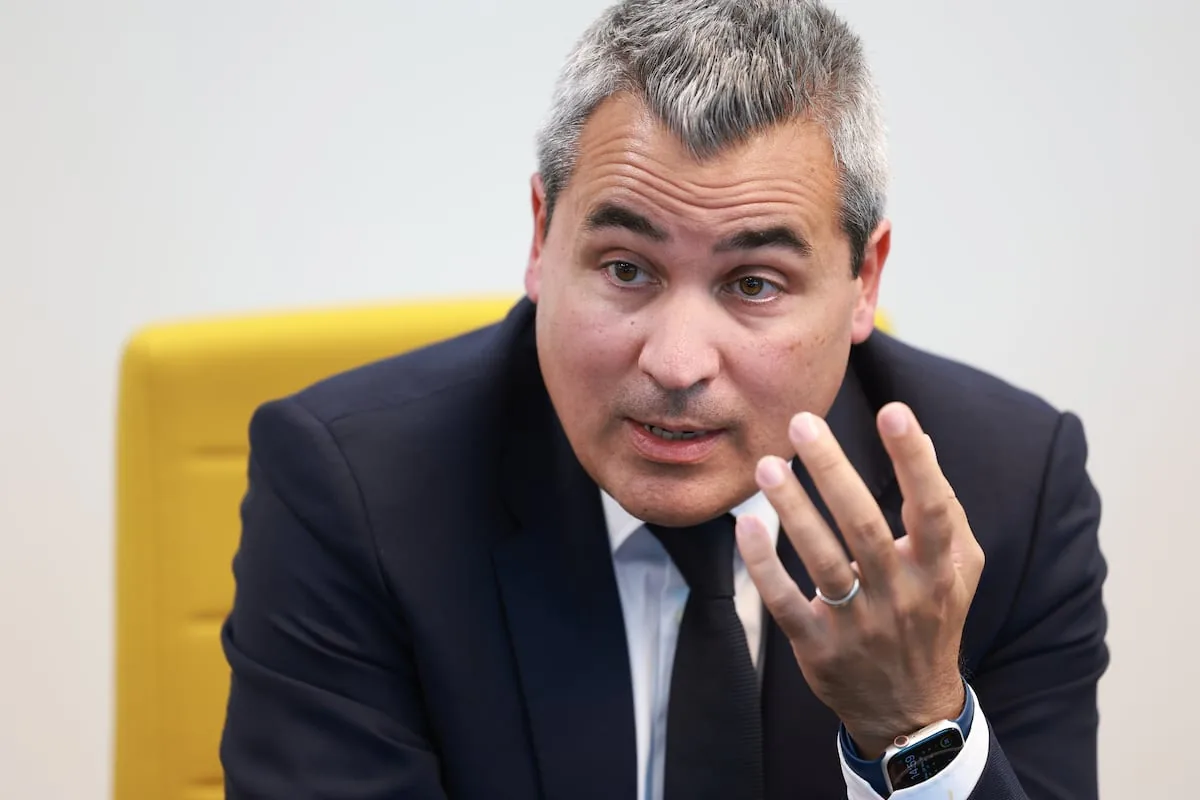
White smoke in the board of directors of Indra. The defense company announced on Tuesday afternoon in a statement to the National Securities Market Commission (CNMV) that Josep Maria Recasens will be the new CEO of the Ibex 35 listed company, replacing José Vicente De los Mozos, as EL PAÍS reported on Monday, who has resigned. Thus, the replacement takes place between two men from Renault, where Recasens has been until today the president of the company in Spain; director of strategy, product, and programs of the Renault group worldwide and, additionally, CEO of Ampere, the electric vehicle division of the French company. He also holds the presidency of Anfac, the national association of automotive companies, a platform through which he forged a smooth relationship with the Ministry of Industry and Tourism. The changes will take effect on June 17. The general shareholders’ meeting is scheduled for the 30th.
Read more Catalonia will allocate 1.2 million euros to Ukraine and Cuba in humanitarian aid
The appointment of Recasens comes just a week after Indra publicly announced that De los Mozos would no longer lead the technology company, despite having survived the governance crisis caused in the last months of Ángel Escribano as president of Indra, with whom De los Mozos ended up very opposed, according to company sources. The Escribano brothers felt betrayed by the company’s CEO until today after La Moncloa made it known that it no longer supported the merger with Escribano Mechanical & Engineering (EM&E) due to the conflict of interest posed by having the Escribano both on the buying side — until early May, they owned 14.3% of Indra’s shares, making them the second-largest shareholder, only behind the State, which through SEPI holds 28% — and on the selling side. The person chosen then to pacify the company was Ángel Simón, who assumed the presidency on April 2 after a vote that lasted until the early hours of Holy Thursday.
Simón, unlike his predecessor, was promoted as a non-executive president, as he did not have the necessary majority within the board of directors. This left De los Mozos as the executive head of the company, although Simón did manage to take over the presidency of the Strategy and Executive Delegate committees, the same ones Escribano held during his presidency. De los Mozos and Simón, in fact, held meetings both with the executive leadership and with the workers, to whom they sent a message of reassurance, asking them to focus on what lay ahead, that is, the major defense contracts that the Government assigned to Indra, especially last year.
“We are in a new governance stage, but the teams are committed, and not only the teams, but myself as well. And in that sense, there is a lot of speculation, but my commitment is total,” De los Mozos said at the analysts’ conference following the presentation of the first quarter results on April 30. Barely 18 days later, the statement to the CNMV announcing his departure arrived, stating that he would remain in office until the shareholders’ meeting to be held on June 30, to facilitate the transition.
In his barely month and a half as the sole executive head of Indra, De los Mozos tried to approach both Sapa, today the company’s largest shareholder with 7.94%, and Santa Bárbara, the company Indra replaced as the State’s reference military land defense company. Both ended up very opposed to Escribano, which affected contracts they shared, such as the Tracked Support Vehicle (VAC), which the Government assigned to Tess Defence (the temporary business union controlled by Indra and which also includes Sapa, Santa Bárbara, and EM&E). This contract remains unsigned, but business sources familiar with the process indicate that the signing would be imminent, as CincoDías reported last week. It remains to be seen whether Recasens will continue this line of understanding with Sapa and Santa Bárbara initiated by De los Mozos.
Read more Jonas Vingegaard paves the way to his first Giro d’Italia
Challenges for Recasens
The main task of the Catalan executive in his new stage leading Indra will be to turn the company into the new benchmark of the land military industry that drives the rest of the national sector. Despite not having its own production platforms, Indra leads important Special Modernization Programs (PEM) launched by the Government last year to reach 2% of military spending relative to GDP. Among them are the new wheeled and tracked artillery, two contracts totaling 7.24 billion; the new amphibious armored vehicles for the Marine Infantry, for 370 million; or the bridge launcher, added to other PEMs in cybersecurity or the Spanish part of the FCAS, the new European air combat system. The FCAS is currently stalled due to the confrontation between Germans and French, who are responsible for providing the platform, that is, the fighter jet. Indra, in this case, is more in charge of the part related to sensors and the combat cloud.
Additionally, Recasens will have to steer the contract for the 8×8 wheeled armored vehicles Dragon produced by Tess, which have accumulated one delay after another since the Government awarded the manufacture of 348 units for 2.5 billion in 2020. Tess faces the risk of a hefty fine for this contract if delays continue, with conflicting versions among the companies that make up the consortium, which blame each other for the contract breaches. The most pointed out for some time is the Basque Sapa, responsible for making the transmissions of the powertrain groups. By the end of June, Tess promised to deliver 60 units of the armored vehicle.
On top of all this is the elephant in the room represented by the possible merger with EM&E. The Escribano brothers sold their stake in the company earlier this month, achieving capital gains of more than 200 million. This removes any possible conflict of interest. Also, if the integration occurs, as the market speculates, with a share swap, the Escribano would fall below the State in shareholding weight. For now, Simón postponed the presentation of Indra’s new strategic plan until after the summer. It remains to be seen whether this includes the merger with EM&E or if other alternatives are sought to continue growing.