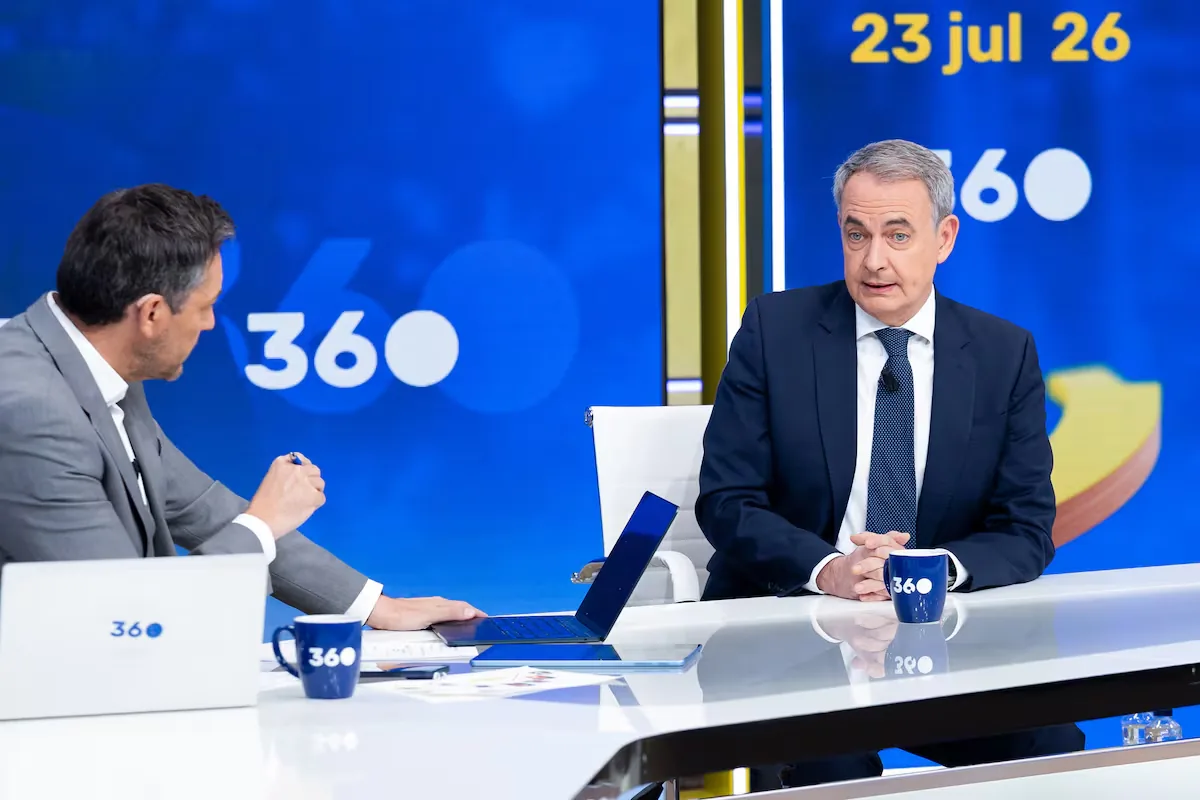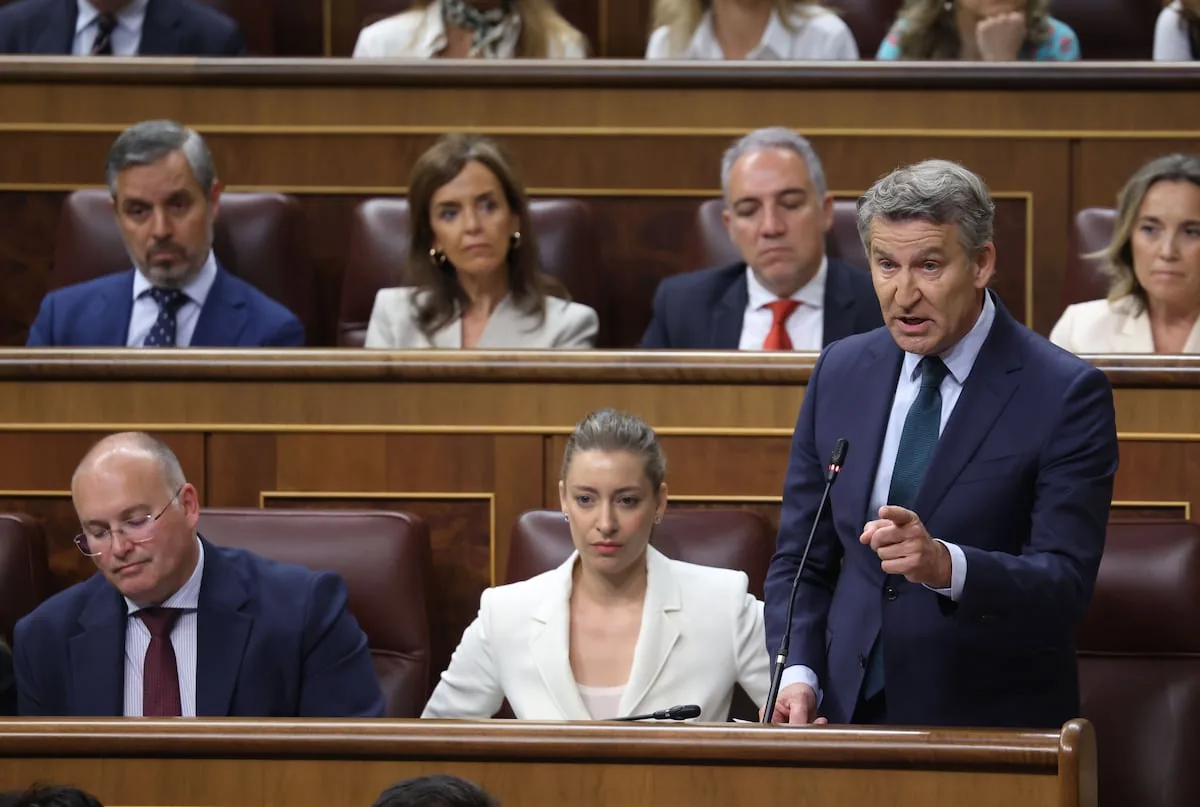










The judge in the Plus Ultra case, José Luis Calama, stated in the indictment order of former Prime Minister José Luis Rodríguez Zapatero that “the early access to privileged information about the imminent granting of aid” by SEPI was an indication of influence peddling in the airline’s bailout. However, that was the norm. The very nature of the procedure, a kind of negotiation, allowed companies that applied during the pandemic for public financing from the Strategic Companies Solvency Support Fund (FASEE) to know how the files were progressing and how the bailout requirements were being met.
Read more Mexico is also preparing for the violence against women that the World Cup will bring
In other cases, far from talking about privileged information, it was no secret that companies had minute-by-minute access to the procedures carried out by SEPI technicians and their independent advisors. These were transparent processes for the potential recipients of the lifelines.
The four listed companies that requested public financing (Técnicas Reunidas, Tubos Reunidos, Duro Felguera, and Airtificial) left the clearest trace that they knew in advance they would receive aid. Obliged to greater transparency, the four informed market regulators that they would receive the bailout before it was approved. The trail of their public communications shows in some cases that they had this information not only before approval by the Council of Ministers but also before the decision of the Fund’s Management Board. It is also recorded that unlisted companies, including Air Europa and Hotusa, knew in advance that SEPI would grant them aid. The UDEF reports submitted to the case file make no reference to this flow of early information being usual.
Técnicas Reunidas already knew (and communicated) in November 2021 the details of the terms and conditions of the aid to be received and that the process was nearing its end. The schedule showed the page of February 1, 2022, when SEPI published a press release confirming that its technicians and independent advisors had completed “the analysis for the granting of 340 million euros to the Técnicas Reunidas Group S.A., channeled through an ordinary loan of 165 million euros and a participative loan of 175 million.” The operation still lacked official blessing: “In the coming days it will be submitted for approval to the Fund’s Management Board [by FASEE] and, subsequently, to the Council of Ministers,” SEPI stated in that note, which the Lladó family’s engineering company enthusiastically sent to the National Securities Market Commission (CNMV). This gave investors certainty that the engineering company was saved from the crisis.
In the case of Tubos Reunidos, its president, Francisco Irazusta, announced to shareholders at the company’s meeting on June 30, 2021, that financing was imminent, which ended up being 112.8 million from FASEE. The Management Board reviewed it on July 13, and it passed through the Council of Ministers on the 20th of that month. It was clear that the tube manufacturer’s management was certain, well in advance, that it would replenish its battered cash with public credit.
For its part, the industrial firm Airtificial stated on May 26, 2021, “considering the progress of the application process to the Strategic Companies Solvency Support Fund, entrusted to SEPI,” that it would increase capital by 21.2 million. In this way, it added “the shareholders’ effort to the public support of the Fund to overcome difficulties arising from the health emergency,” according to what it told the CNMV. Its bailout was not approved by the FASEE Management Board until November 2, with two loans totaling 34 million.
The Asturian Duro Felguera was among those that agonized before receiving the state credit injection, and also among those that broadcast the process to the market. On August 28, 2020, it sent a first note to the CNMV talking about its critical situation and the request for 100 million from FASEE. On December 30 of that year, it informed the stock market regulator that it had increased its needs to 120 million and that SEPI “reports that the application, once submitted in due time and form, was admitted for processing and is under analysis,” with a resolution expected “before the end of January 2021.” The note about the viability plan requested by FASEE was published on March 3, “as a prior condition to the favorable resolution of the temporary public support application for a total aid amount of 120 million.” That same day it obtained the favorable resolution from the fund’s supervisory body, as recorded on the company’s website. And on March 9, like Plus Ultra, it received approval from the Council of Ministers. Duro Felguera’s management had to closely follow the process to respond to continuous SEPI requests.
As can be seen in CNMV records or SEPI’s own communications, if the applicant for state financing was listed on the stock exchange, notes sent to market regulators or shareholders about the progress of processes still underway usually followed one another.
In the case of Hotusa, it also knew in advance, on September 23, 2021, that everything was ready before the file reached the Management Board and, later, the Council of Ministers on October 5. The same is recorded for Air Europa: they had informal communication that there was a green light weeks before their financing was actually approved.

The critical days at the airline
The UDEF report on SEPI’s support for Plus Ultra shows that the airline knew it would have approval for the two loans totaling 53 million at least by February 26, 2021, four days before the Management Board gave its approval.
Read more Senator Enrique Inzunza also goes to the Prosecutor’s Office to give his statement
That public money, with repayment deadlines in March 2026 (19 million of the ordinary loan, postponed due to the kerosene price crisis) and March 2028 (34 million participative loan), was meant to first support the suspension of flights and then the demand crisis caused by Covid-19, although now the whereabouts of every last euro is being pursued. Sources familiar with the process Plus Ultra went through maintain that the company’s early knowledge of SEPI and Government approval was entirely logical.
“Within the bailout approval procedure, SEPI’s technical services, various external advisors from both sides, and the potentially benefiting company itself participated. It is logical that the interested party knew the status of processing of a file of which it was part,” says a technician close to the conversations at the time, who requests anonymity. Once the independent advisors hired by SEPI (DC Advisory and Deloitte in the Plus Ultra operation) deliver favorable reports and eligibility requirements for financing have been verified, “a favorable resolution to the administrative procedure could be anticipated,” he adds. With that documentation in its possession, known by Plus Ultra, SEPI’s services sent the favorable resolution proposal to the Management Board, which debated it on March 2, 2021, and from there it went to the Council of Ministers, which approved support for the airline a week later, on the aforementioned March 9.
By the time the Government spokesperson went out to the press conference to announce a bailout, there was usually information with an almost official stamp days before. Plus Ultra’s president, Julio Martínez Sola, celebrated with oysters and champagne on March 2, 2021, that his company would avoid bankruptcy while the pandemic had not yet subsided (the World Health Organization declared the end of the international health emergency for COVID-19 on May 5, 2023, and in Spain it was official on July 4 of that year). That day the Management Board had given its approval and the aid reception was practically assured.
The preliminary investigation report prepared by UDEF specifies that DC Advisory’s work for SEPI, reviewing eligibility requirements for access to the fund, is dated February 23, 2021. That report also supports the viability plan presented by Plus Ultra and its ability to pay the 53 million debt it was going to incur. The next day, the 24th, Civil Aviation signs a second analysis of Plus Ultra’s activity. At the same time, SEPI receives the report made by the State Aviation Safety Agency (AESA) on the airline’s economic situation, which it knows as a guarantee that it will meet the quality and safety expected in air service. And on February 26, 2021, Deloitte, as SEPI’s legal advisor, closes the deliveries with a report on legal, tax, and labor aspects. Thus, the company itself knew everything was ready.
The police document states that “on the same day the report from the legal advisor hired by SEPI, that is Deloitte [February 26, 2021], was presented, in a conversation between Rodolfo Reyes [then the main shareholder of Plus Ultra through Snip Aviation] and Julio Martínez Martínez [owner of Análisis Relevante, supposed payer for advisories to Rodríguez Zapatero], the latter congratulates him and congratulates him for having obtained the loan.”
“My greatest congratulations for having achieved the goal. Without a doubt, it has been the result of the exceptional work carried out by the Plus Ultra team. I have been informed and congratulated on this excellent work by SEPI itself,” the message says.
UDEF sees as an indication of influence peddling, due to privileged information, that it was Zapatero’s friend, Julio Martínez Martínez, who communicated by text message the obtaining of public aid: “It denotes and evidences prior and extra-procedural knowledge of the resolution’s meaning, also expressing that the information would have come from SEPI itself,” reads the police file, which uses the conditional. Since only a small part of the communications is intercepted, it is not possible to know if the information had reached him previously by another route, but what the message does seem to indicate is that Zapatero’s friend communicated with SEPI.
A few minutes later, according to the intercepted communication, Reyes replied to the supposed fixer Martínez: “Thanks for the support,” and praised his work stating that these are “difficult times that can only be overcome with the support of friends and good relationships.” Four days remained before Plus Ultra’s file reached the FASEE Management Board and 11 before the Council of Ministers granted the anti-Covid financial support.
Judge Calama subscribes to the police thesis: “The network’s capacity to access privileged information was evident” that day, he says in Zapatero’s indictment order, because the message exchange “celebrated the granting of aid before the formal decision.” In reality, that was usual in the pandemic bailouts granted by SEPI.
Read more Carlos Slim: “The efforts the president has made to control inflation are very important”