








They evacuate the wounded and dead, distribute food and medicine, plant mines, transport ammunition, launch drones, fire projectiles, build barricades, recover damaged vehicles, and carry out intelligence work. Ground drones are gaining prominence in the Ukrainian army, which has also achieved significant advances with its unmanned air and naval forces. President Volodymyr Zelensky announced this Monday that, for the first time, Ukraine has recaptured a position occupied by the Russians using only ground and aerial drones that forced the enemies to surrender.
On the ground, more and more tasks fall to this new robotic infantry that, sometimes controlled from hundreds of kilometers away, saves lives and adapts to the new electronic warfare. Some of them have even managed to hold a position on the front for several weeks. Replacing soldiers on the battlefield is, however, something still very far off, experts say.
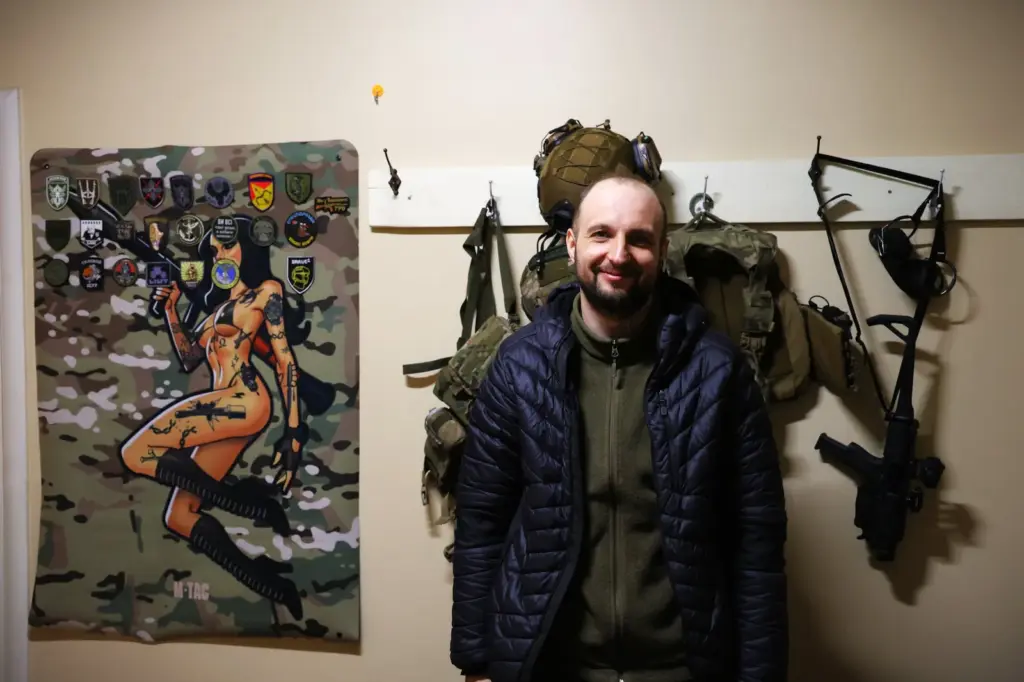
It is a “cheap, fast, and effective” weapon with “enormous potential,” emphasizes Oleksandr (no last name given), 36 years old and head of the Alter Ego battalion of the 93rd Brigade, dedicated exclusively to the development of ground drones, in his office in Kramatorsk (eastern Ukraine). He, a member of the Armed Forces since before the large Russian invasion unleashed in 2022, is not surprised because “there has been a natural evolution.”
“Until now, ground drones were not very necessary because their functions were carried out by soldiers. Now, with the so-called kill zone getting wider, they are more necessary than before. Technologies are sought that reduce the risk for the military,” he explains in facilities that used to be a ballet studio. The large mirrors are now partially hidden by the screens from which they control the movement of the devices deployed on the ground. “Look at this one, it got stuck on the terrain and we have to send another drone to recover it,” Oleksandr points out. Most of the activity takes place at night, and he estimates that about 10% end up lost.
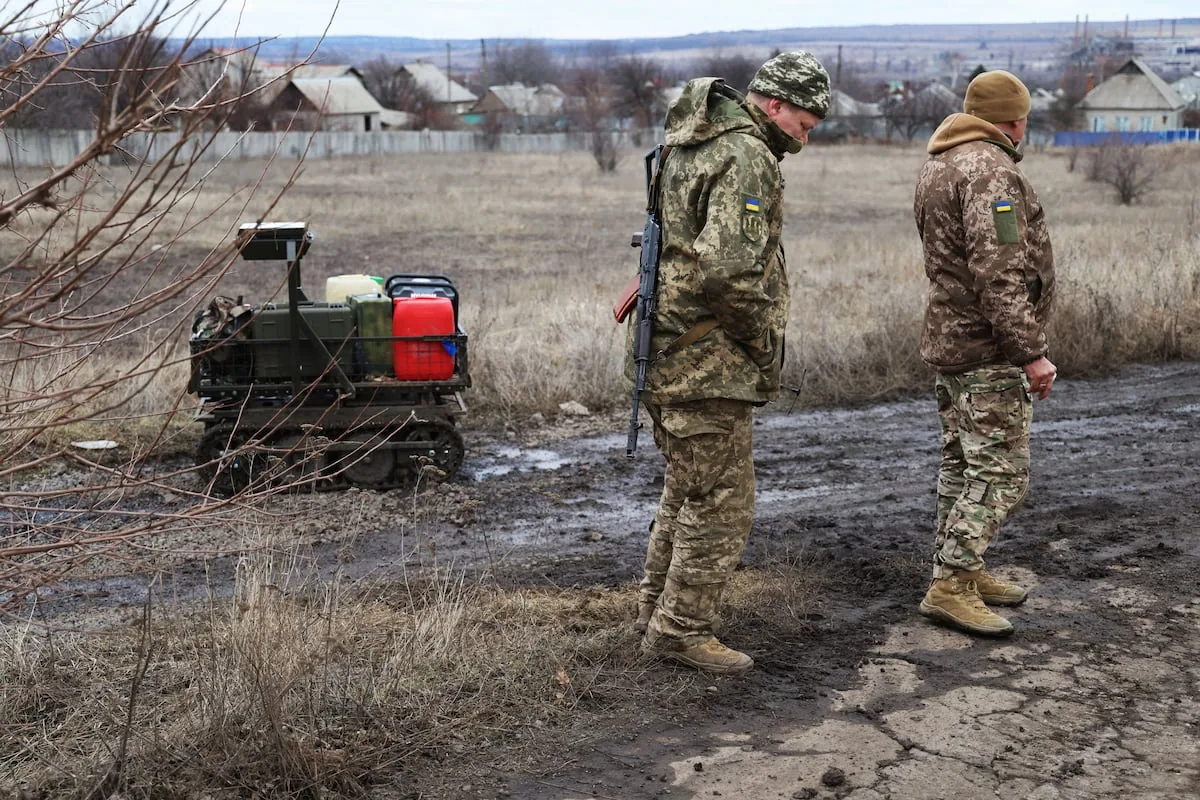
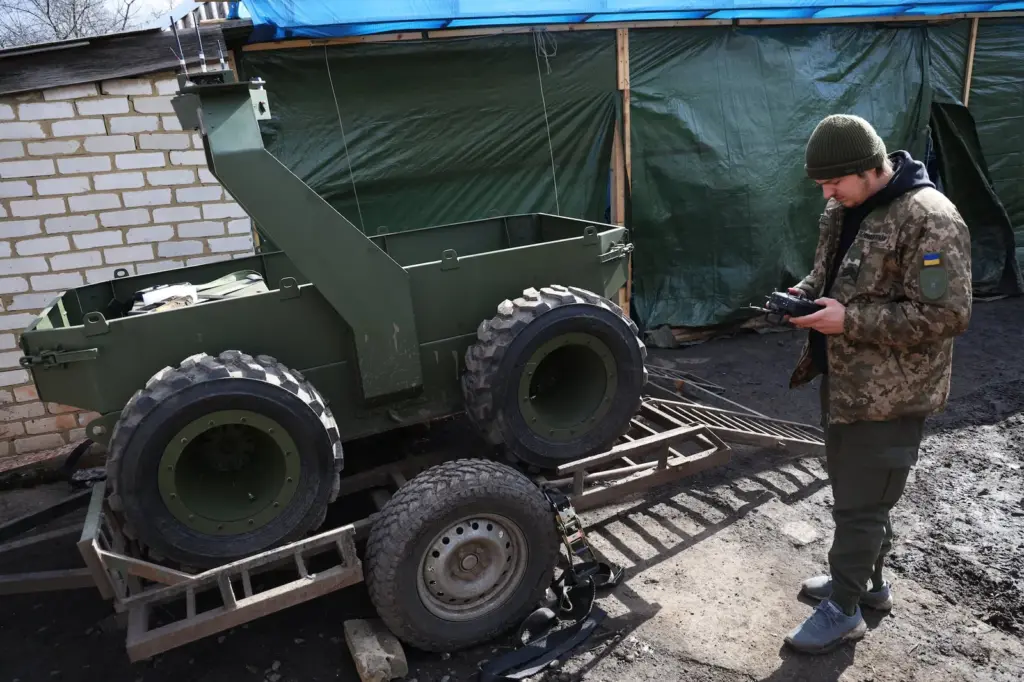
On the outskirts of Kramatorsk, on a promontory from where the sound of conflict detonations is constantly heard, several soldiers carry out drills with one of these devices. Loaded with fuel, water, and a generator, among other things, the drone advances with little resistance over terrain dominated by thick mud and some ice patches. The battery allows it to operate for two to three hours.
At the controls are Dmytro, 54, and Mijailo, 61, two of the uniformed men who have had to adapt to the new demands of war. The device is equipped with an autonomous Starlink wifi system (owned by American magnate Elon Musk), allowing it to be controlled from hundreds of kilometers away.
The commander of the Third Corps of the Ukrainian army, Andrii Biletski, estimates that in the coming months, if current technological advances continue, ground drones will allow up to a third of the infantry to be withdrawn. Their personnel would become part of a kind of elite corps that will carry out tasks that these robots cannot handle, he told TSN on March 20.
Replacing infantry is still utopian today, understands David Kirichenko, associate researcher at the Henry Jackson Society, without downplaying Kiev’s achievements in this field. “Ground drones will probably be vital for Ukraine in 2026, but they are not wonderful weapons nor can they serve as a miracle cure for Kiev’s personnel problems,” which sees hundreds of thousands of citizens dodging their obligation to join the army. In any case, “the Ukrainian robotic army should be considered an important part of the country’s constantly evolving defenses, which can help save lives while increasing the cost of the Russian invasion,” Kirichenko notes in an analysis published in January by the Atlantic Council think tank.
But meeting Andrii Biletski’s forecasts will not be easy despite the steps already taken. The main obstacle Ukraine faces is the lack of capacity to mass-produce a large number of drones, mainly due to the shortage of many necessary components, Oleksandr highlights. “In our garages, thinking and acting happens very quickly. However, it is no secret that we have problems mass-producing our weapons. We have experience developing cheap solutions, something irreplaceable,” this soldier assesses.
Read more Trump puts a veteran military doctor in charge of the health prevention agency in the US
This is how he describes the reality Ukraine currently faces, wrapped in the fifth year of the large Russian invasion: “First, the war keeps us all very motivated. In the US, what these men do would mean a good salary; here it means saving our lives. Second, we see the war very closely and know what the immediate needs are. People practice, research, and learn on the ground. The great powers have money, engineers, components… but they don’t have the war at their doorstep. What we are doing is covering immediate needs.”
In our garages, thinking and acting happens very quickly. However, it is no secret that we have problems mass-producing our weapons. We have experience developing cheap solutions, something irreplaceableOleksandr, head of the Alter Ego battalion of the 93rd Brigade
Advances in ground drones have skyrocketed especially in the last two years. During this time, Ukrainian soldiers have managed to carry out missions that would have been impossible before and that, according to Oleksandr, are unique in the world. Like blowing up facilities with dozens of Russian soldiers inside thanks to one of these devices that managed to reach that point loaded with 200 kilos of explosives. Already in 2023, a drone managed without help to carry and bring back the corpse of a comrade who was in Russian positions, he adds.
In another operation they say was extraordinary, EL PAÍS interviewed in November a soldier who stepped on a mine and survived after remaining in enemy positions for almost five weeks before being rescued by a ground drone on the sixth attempt.
Ukraine already has weapon production programs underway, especially aerial drones, with different European countries. Oleksandr believes it “would be very useful” to obtain funding in exchange for Ukrainian experience and knowledge to be able to produce more ground drones.
Despite the advances of the last four years, “the growing Ukrainian robotic army is still unable to carry out many military functions that require infantry,” estimates analyst David Kirichenko. “When small groups of Russian troops infiltrate Ukrainian positions and advance in urban areas, for example, soldiers are needed to clear and hold the ground. Advocates of drone warfare must recognize these limitations.”
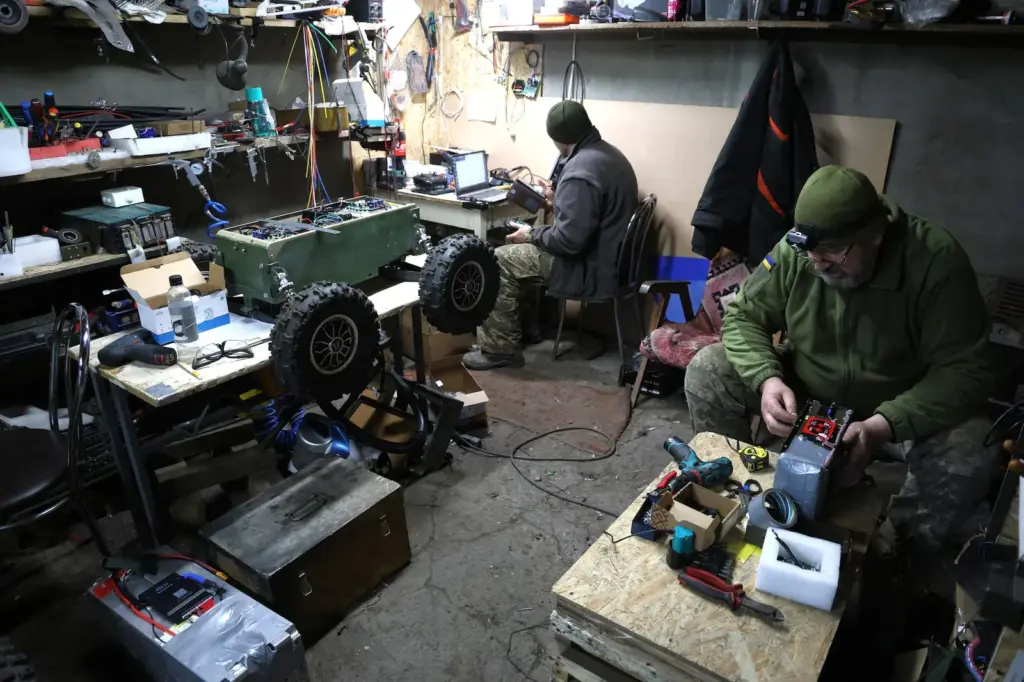
On the ground, the uniformed men maintain their course toward these ambitious goals. Several men are busy making improvements in one of the four workshops the Alter Ego battalion has in Donetsk province. Experience has led them to adopt tracks rather than wheels and batteries rather than combustion engines. “We are two years ahead of the Russians in ground drones, although they learn very fast and have more capacity than us to manufacture quickly,” Oleksandr says surrounded by various devices of different functionality and size.
Andrii, 28, was going to be an engineer — besides making a living as a magician — when he enlisted in 2024. He is convinced that the growth of these devices will be exponential, although, no matter how many advances occur, his magic tricks — laughs — will not help them. Oleksandr, his boss, is content with the essential: “They are going to save many lives.”
Read more Wildfires in Mexico increase in 2026