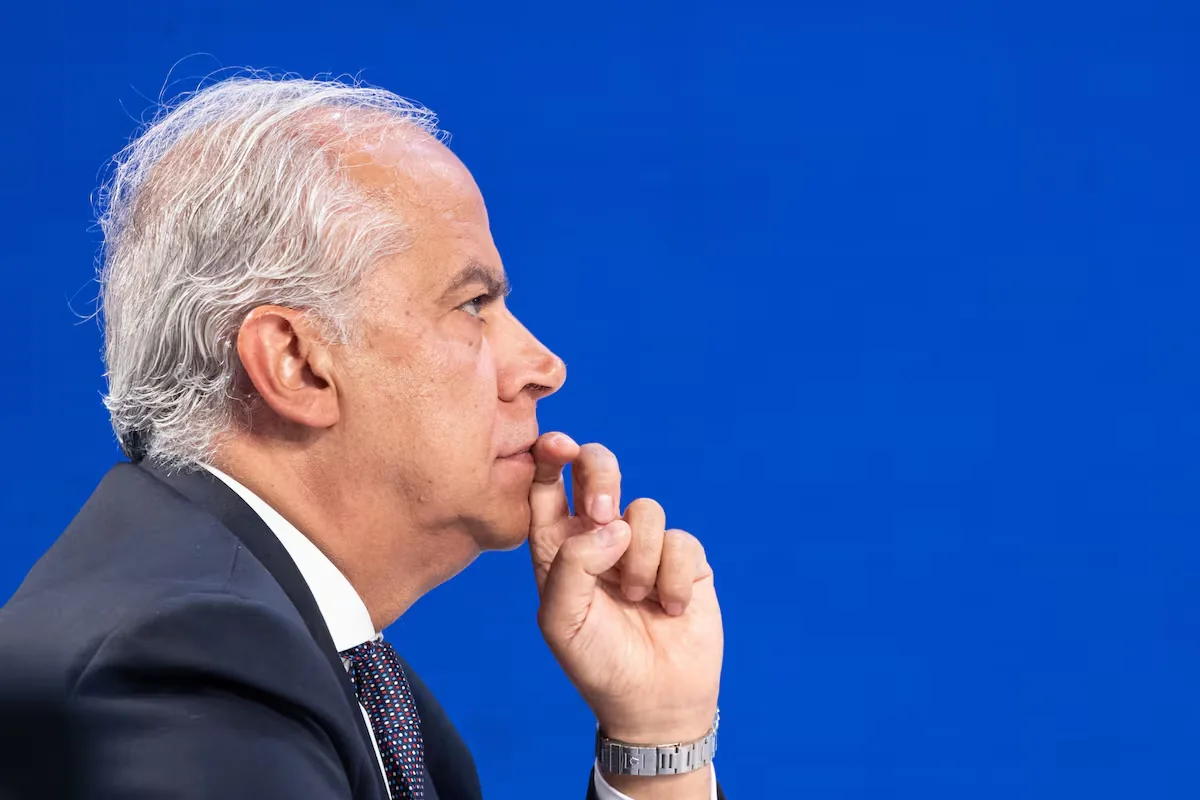

The debate about corruption and the scandals now surrounding the PSOE floods everything and ultimately dominated the political debate during the annual appearance of the Ombudsman before Congress to present his report on his management of 2025. The Ombudsman, Ángel Gabilondo, took advantage of his presentation to warn that “poor administration, abuse of power, or corruption discourage citizens” and also “disregard for judicial decisions or anticipation of them.” He then explained that he wanted to broaden the focus to all corruption cases from all parties. The PP did not take the hint. Its spokesperson, María Eugenia Carballedo, was straightforward and portrayed a “country governed by greed” under Pedro Sánchez, with “systemic corruption,” and demanded that Gabilondo “not remain indifferent to so much rot.”
For a little over an hour, the Ombudsman detailed before the full Congress all the detailed data he had presented last week before the specific commission of the Chamber regarding the thousands of complaints he received and processed during the 2025 term. In summary, Gabilondo listed that the institution he presides over processed 38,762 files last year, of which 38,144 were complaints, 253 ex officio actions, and 365 requests for filing appeals of unconstitutionality and protection before the Constitutional Court. They also personally attended to 44,278 citizens: 42,785 of them via telephone calls and 1,493 in person. And they issued 2,059 resolutions addressed to the state, regional, and local administrations: 721 were recommendations, 788 suggestions, and 550 reminders of legal duties.
In that monotonous and institutional tone, Gabilondo reviewed by areas, from justice, housing, immigration, gender violence, education, healthcare, immigrant minors, all the deficiencies and gaps in the system that reach that body, ending with a paragraph of more current relevance: “We live in geopolitically complex times, with direct effects on our daily lives, which also test our convictions and principles and values we thought were safe. Poor administration, abuse of power, or corruption discourage citizens. As does disregard for judicial decisions or anticipation of them.”
The Ombudsman thus tried to allude to a complaint about his inaction that the same PP spokesperson had already raised last week in the commission about the country’s climate of corruption: “This report is not aseptic; it is imbued with the current situation reflected through the complaints of those citizens who, despite unease and difficult situations, trust the institutions, and in this case the Ombudsman, to find answers to alleviate unjust or inappropriate situations.”
The Vox spokesperson, Ignacio Hoces, who after the debate chatted very amicably with Gabilondo in the courtyard, launched all kinds of reproaches from the podium about his performance as Ombudsman and particularly about his concern for the situation of immigration and immigrant minors, concluding with his staunch defense of national priority.
The debate then derailed towards the most current corruption with the uncompromising presentation by the Popular Party’s María Eugenia Carballedo, former deputy and former president of the Madrid Assembly, who recalled to start that a year ago, during the same annual appearance of the Ombudsman, the then Secretary of Organization of the PSOE, Santos Cerdán, “threatened” her from his seat that she would not dare to repeat the attacks he gave her that day outside the hemicycle, and that same afternoon the author was known with his indictment. Carballedo repeated in various ways that everything the current Government and the PSOE do related to various investigated corruption cases is “by mandate of the Prime Minister” and reiterated the idea with which the PP hammers that the socialists are “a criminal network” structured by Sánchez “to corrupt the rule of law.”
Faced with this scenario of “systemic corruption” and “a country governed by the greed” of socialist leaders and Sánchez, the PP deputy challenged the Ombudsman: “Do not remain indifferent to so much rot.” And she reproached him that with his inaction he allows “the deterioration of democracy” and that the country is taken “to an institutional crisis from which there is no return.” Carballedo wanted to leave for last a phrase that echoes the theories reproached to the PP by the PSOE that it has too much privileged information regarding these judicial cases now under investigation: “The definitive blow, and tomorrow there will be another, is given by the fact that in this country an attempt has been made to corrupt, by mandate of the president, the rule of law.” The Ombudsman listened to all this already from the guests’ gallery of Congress and wanted to respond, but with his usual tone, already from the courtyard, he explained that corruption is not a problem of only one party and after chatting amicably even with Vox deputies.