







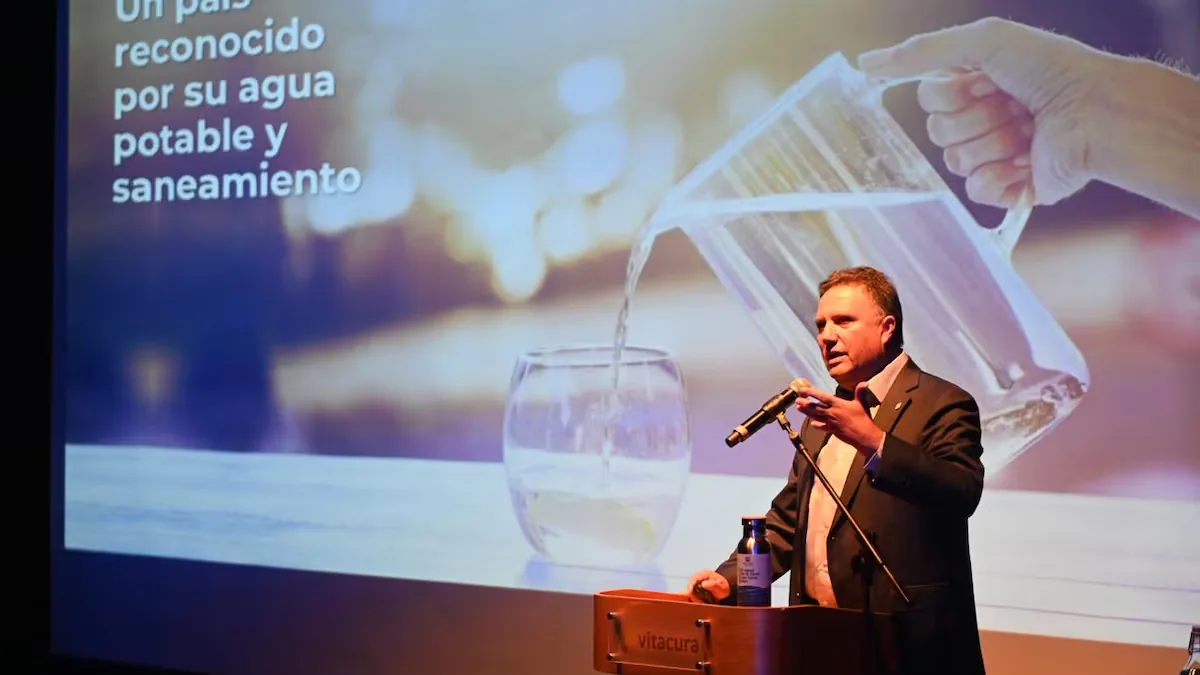
Amid a scenario marked by prolonged drought and pressure on water sources, local authorities, government representatives, academics, and private sector actors gathered in the auditorium of the Vitacura municipality to address one of the country’s main environmental challenges: water security. The seminar “Water Management and Water Security for the Future,” organized by the Association of Municipalities of Chile (AMUCH), focused on the need to coordinate policies and accelerate solutions in the face of the growing impact of climate change.
The meeting addressed the situation in Chile, considered one of the 16 countries with the greatest water stress in the world. The country has accumulated 14 years of drought and faces increasingly extreme weather phenomena, according to various studies cited during the day.
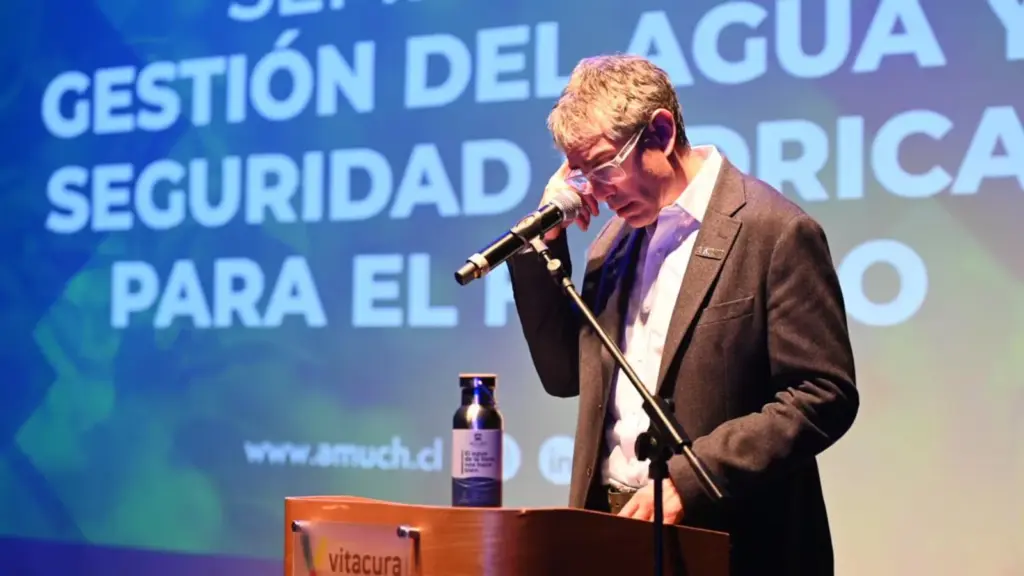
The event included presentations by the president of AMUCH, José Manuel Palacios; the former presidential delegate of the Metropolitan Region Gonzalo Durán; and the Undersecretary of Environment, José Ignacio Vial. The participants agreed on the need to strengthen coordination between public and private institutions to face the effects of climate change.
“Chile is already one of the 16 countries with the greatest water stress in the world and has accumulated 14 years of uninterrupted drought. Studies anticipate that by 2050 the situation will be even more critical. Municipalities are the ones who receive this impact every day, directly in the communities, and therefore we cannot wait. We need capacities, coordination, and concrete solutions. That was the purpose of this seminar, to connect all the actors,” said José Manuel Palacios.
During his intervention, the general manager of Aguas Andinas, José Sáez, presented the challenges arising from the decrease in water availability and the effects of climate change. The executive highlighted the need to coordinate actions with the State and local governments to guarantee future supply.
“We must adapt, but above all adapt the institutionality to the challenges imposed by climate change. We have to work with a future-oriented view that allows us to continue providing a constant and safe supply even under increasingly extreme conditions. In this, municipalities play a key role,” Sáez said.
The executive also presented the Biociudad strategy, the company’s roadmap towards 2035, which includes projects aimed at water reuse and efficient management. Among them is Retorno Maipo, an initiative based on the reuse of treated water intended to increase water availability in the Metropolitan Region basin.
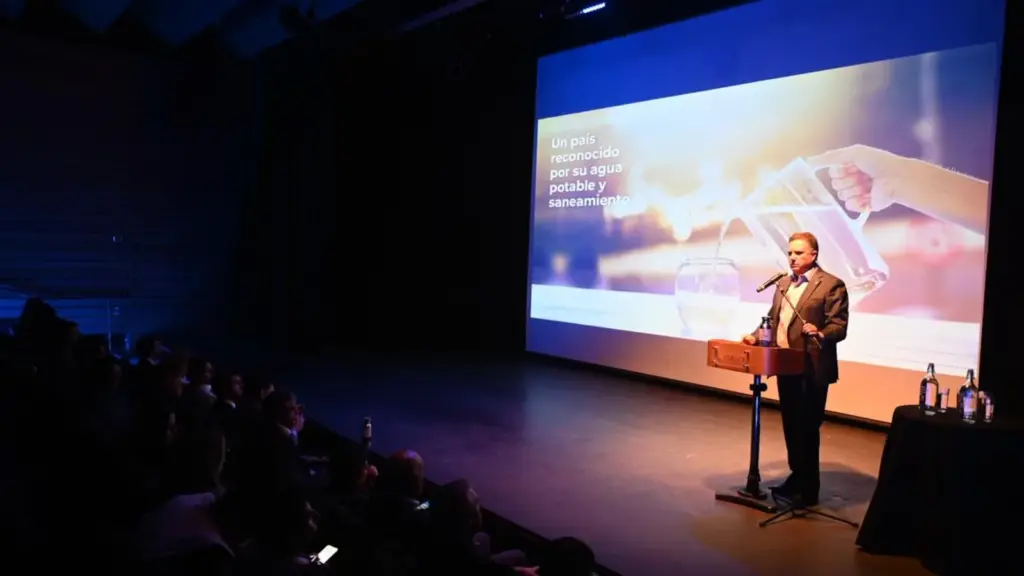
“We have to take a step to achieve integrated basin management. We cannot continue to view climate vulnerability in a fragmented way. Retorno Maipo is a concrete solution that requires coordination and collaboration,” he added.
At the closing of the seminar, specialists analyzed the obligations established by the Climate Change Framework Law for municipalities. The panel included Gonzalo Durán and representatives from LANDSKAP, a firm specialized in environmental law and sustainability.
The meeting sought to promote a coordinated strategy among municipalities, Government, and the private sector to strengthen urban water resilience in the face of a crisis that, according to participants, demands urgent measures.
Read more Rescued one of the miners trapped for nine days in a cave in Laos