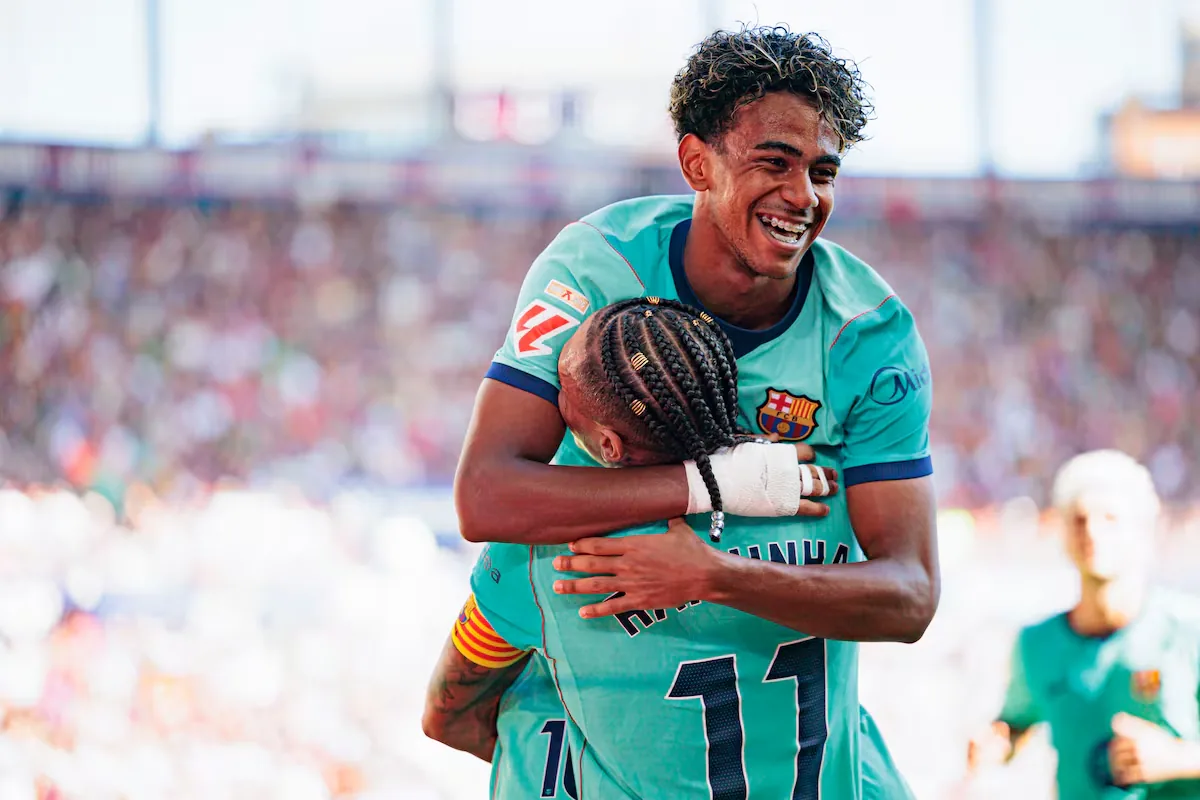



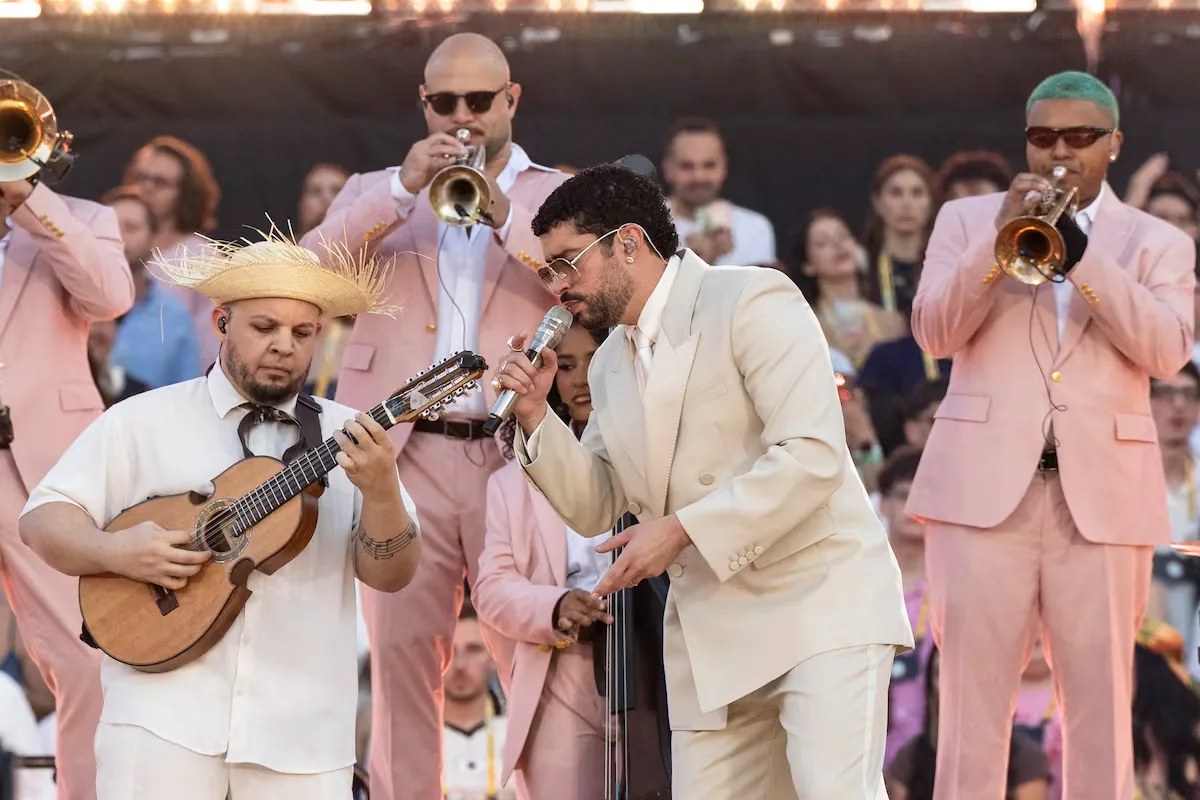
Bad Bunny performs today, May 30, at the Metropolitano stadium. He repeats on the 31st, then on June 2, the 3rd, and so on up to ten concerts. This, in terms of the entertainment industry, is called a musical residency, a series of concerts that an artist offers in the same venue and within a short period of time. How many shows should there be: there is no exact number, but one of the keys to this concept is to create impact, so the more, the better. 500,000 tickets have been sold to see the Puerto Rican artist, who chose Madrid for a strategic reason: Spain functions as a bridge between Latin America and the rest of the world, especially Europe. Another relevant aspect: according to data from the National Institute of Statistics, 3,200,000 people born in a Spanish-speaking American country reside in Spain, of which 1,038,671 live in Madrid; we are facing potential people attracted to the show of the composer of Debí tirar más fotos.
Given the weighty reasons mentioned, there are others why this model of massive and multiple concerts in the same city has been established. In September, Shakira also joins the trend with 12 concerts at the Iberdrola space, the same venue where the Mad Cool festival is held. Manuel López, co-founder of Sympathy for the Lawyer, a leading company in music business management, reports on the benefits of residencies: “One of the factors is that it saves costs. Everything has become more expensive after the pandemic and especially since the war in Ukraine, the tension in Venezuela, and now the United States-Iran conflict. These turbulences in international politics result in increased costs that are very noticeable in live events in transportation, logistics, materials, availability of equipment… If instead of touring many countries you settle in one city, expenses decrease.”
We are talking about only one day for setup and another for teardown. Technically, structurally, and economically this format offers more optimal features than a tour. It is like a theater for 50,000 people with the same dynamics every night. “The first day you might have an error, but you polish it and by the third day everything runs perfectly,” López points out.

This system with top-level artists is so unusual in Spain that Nacho Córdoba, from Live Nation, the promoter organizing Bad Bunny and Shakira’s concerts in Spain, clarifies: “Bad Bunny’s tour in Spain cannot be considered a residency, as he has been to Barcelona and will go to Madrid after his stop in Lisbon, to continue his tour through Europe and the United Kingdom. It is an international tour that, due to unprecedented demand in Spain, has needed to schedule ten concerts in Madrid and two in Barcelona. Currently, the only announced residency as such in Spain is Shakira’s.”
But the idea of residency is not new. Its beginning probably starts in Las Vegas, a place where fading stars saw an opportunity to make money by squeezing their last artistic breath. However, the first relevant rock experience was the opposite: Elvis Presley reinvented himself in Las Vegas starting in 1969. Later, the casinos of the gambling city did fulfill the function of a place to retire with a full bank account. Until 2003, when Celine Dion, far from retiring at that time, generated 700 million dollars with her performances. It is worth recalling the case of Michael Jackson in 2009, when he scheduled 50 concerts at the O2 Arena in London. While preparing this exhausting challenge, Jackson died at 50 years old. It has been in recent years that artists in the prime (or almost) of their careers have experimented with this model successfully: Adele, U2, BTS, Harry Styles, Lady Gaga, Drake…
Pascual Egea, president of the Spanish Association of Music Promoters (APM), believes this system “turns music into more of a destination phenomenon and less about proximity and approaching different cities.” And he adds: “A residency generates that feeling of an event you have to go to. I think many people attending Bad Bunny’s concerts will go because they have to be there, who do not know many of his songs, people who are not really fans. And that does not happen as much on a tour that passes through different cities.”
Within the industry, the cases of Bad Bunny and Shakira in Madrid are considered an exception in Spain, two experiences that will be difficult to repeat with other stars. On one hand, because it is complicated for Anglo-Saxon artists to choose a Spanish city as the only option to condense ten or more concerts, as they will prefer, for example, London, a city close to their language and culture. Spain as the Latin branch of Europe works. The problem here is that, except for Bad Bunny and Shakira, few Latin stars show enough power to sell 500,000 tickets.
Egea emphasizes the economic impact that the Puerto Rican’s ten shows will have on the capital: “It will generate a lot of wealth.” It is estimated that at least “30% comes from outside Madrid.” “There is a variety of places of origin among those who have bought tickets: Canada, Latin America, the United States, other parts of Europe…,” announces Live Nation. Benito Martínez Ocasio’s residency in the capital will leave 150 million euros in Madrid, among transportation, hotels, hospitality, and shopping. The majority age range attending the concerts is from 18 to 30 years old, with a similar proportion between women and men.
An artist chaining days of performances may seem like a physically and emotionally exhausting challenge. And it is. But Rosana Corbacho, a clinical psychologist with 15 years of experience specializing in the music industry, considers residencies less demanding than tours: “Psychologically, where the body undergoes more stress is in everything related to logistics, where people, and I also mean workers, are more at risk of accidents and injuries. That happens on tours that change city or country. Setting up, tearing down, moving 300 people, a stage of that magnitude…” Corbacho explains one of the incentives for the artist: “They see they can sign up for a novel format and it is a feeling of success, which is very difficult to obtain when you are so high. You have achieved everything, you are already used to selling tickets, records, and receiving awards, but this residency thing is a novelty, a new different success that takes them out of monotony. It is very stimulating for them.”
Bad Bunny arrives in Madrid with a team of 350 people, plus local workers. Within his personal circle, he has a doctor, physiotherapists, psychological support… A comprehensive care team for body and mind, because all the concerts are very concentrated and if the star gets sick, with a vocal problem, for example, he may have to cancel several shows. If the dates are more spaced out, as in a touring tour, there is more time for recovery.
The current sweet moment of this format allows opening the debate about the possibility that it could replace tours or, at least, if it will be permanently established. The president of the Spanish promoters, Pascual Egea, presents his theory: “At the moment residencies become very common, the model may lose its exceptionality. It will not be something so novel and will become a machine to maximize income and a kind of amusement park. That is, like going to Parque Warner once because it is new.”
Bad Bunny’s visit will coincide with the residency in Madrid of Pope Leo XIV. José Cobo, vice president of the Spanish Episcopal Conference (CEE), did not rule out a meeting: “If he wants to talk to the Pope, the Pope will surely receive him.” Here we have another incentive of these residencies.