
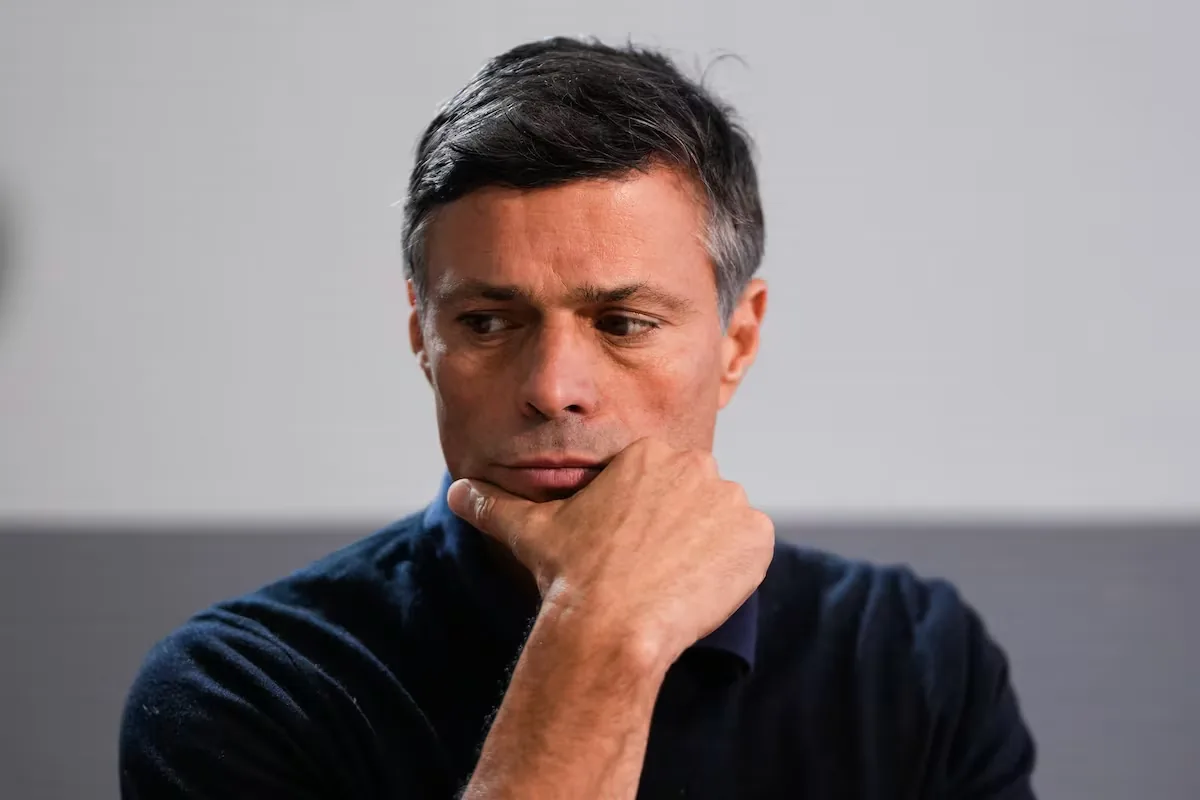
A group of elderly people get off a bus and enter a villa in a luxurious neighborhood in northeast Caracas. They look out from balconies surrounded by trees and happily tour the rooms that the Government has turned into a social center for senior citizens. There are medical services, an exercise area, training rooms, and a hair salon. They are in the house where opposition leader Leopoldo López and his family, now exiled, lived. They walk on the same terrace from which the politician greeted the press and waved a national flag when he managed to obtain house arrest — with the mediation of former Spanish president José Luis Rodríguez Zapatero — after serving almost four years in a military prison.
Read more Live | Elections in Colombia: Caracol Radio’s special program on the elections
Without a trial or administrative procedure, Chavismo has taken over the home of the opposition leader now residing in Madrid. From this home, he escaped in 2019 from the surveillance of intelligence agents who were daily at his door. His escape occurred during an attempt to overthrow Nicolás Maduro that collapsed within hours. López took refuge in the residence of the Spanish embassy for just over a year and finally ended up in exile.
Weeks ago, the coordinator of the Popular Will party and his wife, Lilian Tintori, had denounced that their house in Caracas had been taken over, that all their personal belongings were removed, and demolition had begun. This happened after López declared in an interview that he supported the military intervention by the United States in which Maduro and his wife Cilia Flores were captured. It now functions as the Casa de Abuelos y Abuelas Indio Chacao, part of the Misión Amor Mayor that serves the elderly population.
The works were done in record time, “thanks to the acting president Delcy Rodríguez,” notes Chavista deputy Freddy Gutiérrez in a post on his social networks. The legislator was at the inauguration of the space on Friday along with the governor of Miranda state, Elio Serrano, and the Minister of Education, Héctor Rodríguez, to whom the president has entrusted the reform of the State.
“This is the house I aspired to return to, because one does not return to a map, one returns to their home, to their memory, to their people,” López said in a video showing photos from his family album in the spaces taken over by the Government. “The message is clear: Delcy Rodríguez expropriates and steals. In every corner and town of Venezuela, there is someone who has had their house, land, factory, industry, or papers taken away. Everything stolen by the dictatorship will have to be returned to its rightful owners,” demanded the leader, who recalled that when he was mayor of the Chacao municipality between 2000 and 2008, he inaugurated similar spaces for the elderly — or prolonged youth, as the political program was called. “Those houses are still functioning today, and we made them without stealing from anyone.”
Read more Paloma Valencia, Uribe’s last card
In Venezuela, alongside the count of political prisoners and persecuted individuals, there is a number of movable and immovable properties that the Government has arbitrarily confiscated without judicial process. López’s house is an example. It has also happened with properties of people from María Corina Machado’s team. This week, the case of José Breijo, a Venezuelan-Uruguayan political prisoner, was reported; he was released for being over 70 years old and in delicate health. When he arrived at his apartment three years after being imprisoned, it was occupied by one of the police officers who had arrested him. The elderly man spent a few days sleeping in the building’s hallway. The scandal led the Government to arrange the eviction of the occupant. The Ombudsman’s Office acted to attend to his health.
Other opposition members and Chavismo dissidents have also denounced the occupation of homes and beach houses by police officers, particularly from the Directorate General of Military Counterintelligence. Former deputy Williams Dávila, a member of the Democratic Unity Platform, recently denounced that when he was detained in 2024, the police took his vehicle. The leader was released a year ago, but it was not until this month that his car was returned. “When I was captured in August 2024, this vehicle was in perfect condition. Today they deliver it to me on a tow truck, completely stripped.” This happened after he, along with other political prisoners, demanded the return of illegally seized properties and compensation for losses.
On the streets, the growth of the fleet of police patrols from intelligence services is visible. They are trucks and vehicles of all kinds labeled: “This vehicle was seized by the Venezuelan State from a traitor.” These include those seized from criminal organizations but also from political prisoners. In 2024, the Chavista Parliament approved the Simón Bolívar Law, which punishes those considered “traitors to the homeland” with asset forfeiture, prison sentences of up to 30 years, and political disqualification for up to 60 years for those who promote or have supported sanctions against the Venezuelan Government. “I cannot accept that Mrs. María Corina Machado has housing and assets at her disposal or ownership here, nor companies,” said deputy Iris Varela at the time. This is one of the regulations that human rights defenders have requested to repeal without success.
Read more Electoral card: how it was formed