




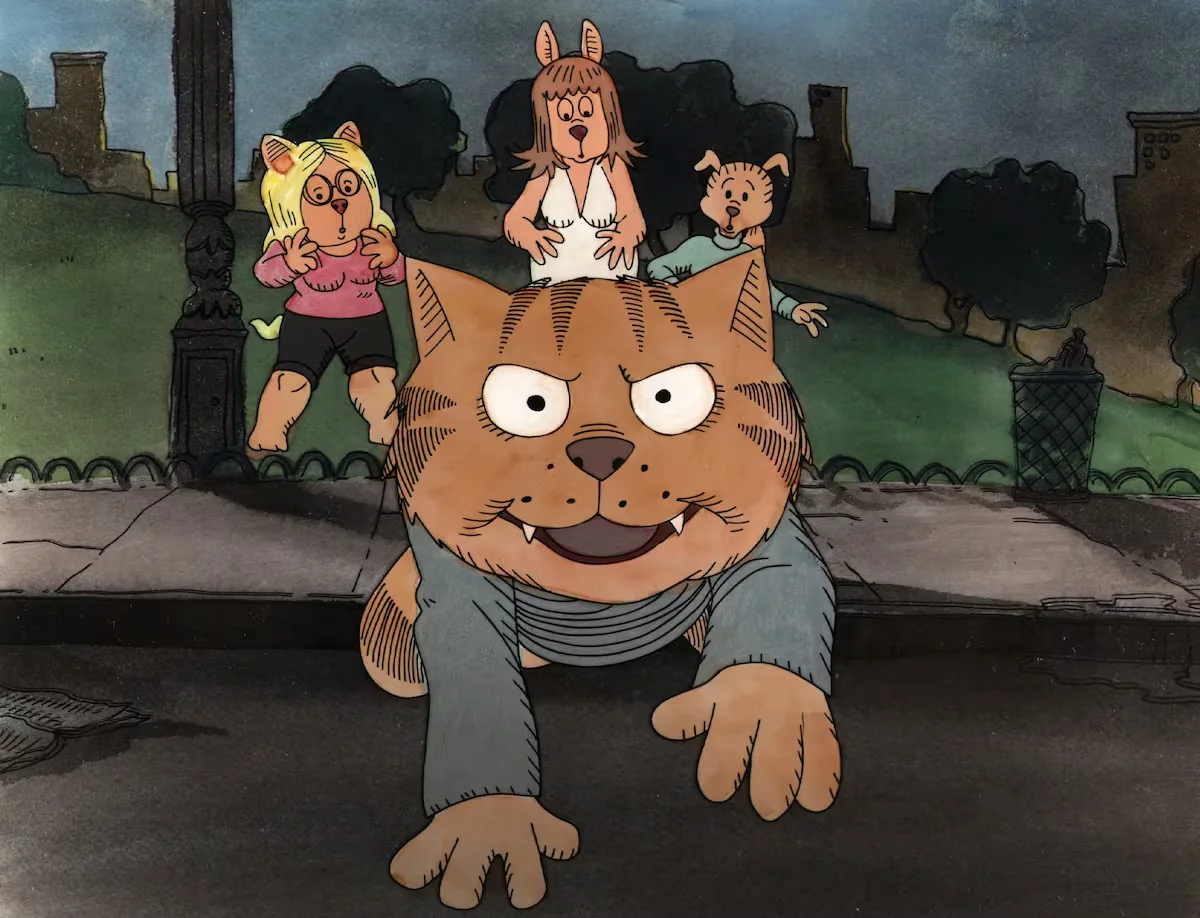
They didn’t rate us X for nothing, baby! is the promotional phrase with which Fritz the Cat, the revolutionary film by Ralph Bakshi, was released in 1972 and which Filmin will include next month in its catalog. An X rating by itself wouldn’t be too surprising: the rating that restricted entry to minors had been in place for four years at that time and had already been given to Midnight Cowboy and A Clockwork Orange. What makes it peculiar is that in this case it was an animated film, a territory then very far from adult cinema and dominated by Disney and its well-meaning productions. Bakshi’s film was also starring a talking animal, but not one related to the adorable Dumbo or the naive Bambi, but an anthropomorphic cat — that is, with human characteristics — sexual, foul-mouthed, and irreverent.
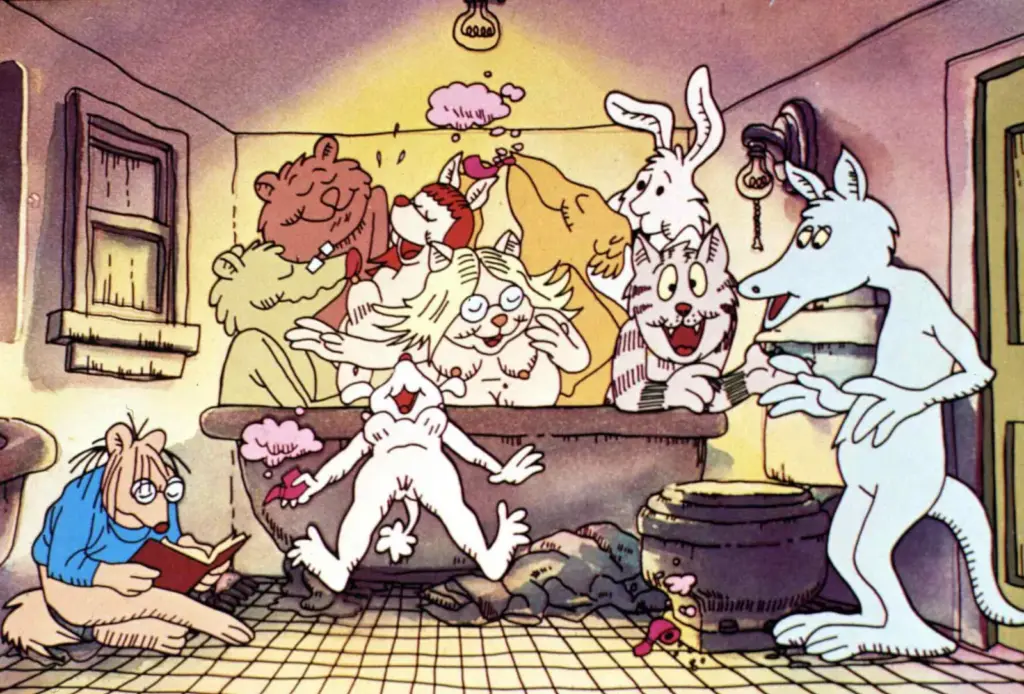
Its arrival on Filmin coincides with the success of series like Fleabag Season on Netflix, which perhaps show that adult animation, in its most literal sense (with spicy little animals), is in fashion. And Fritz is the father of them all. Hot Cat, as the film was called in Spain, was the opposite of Disney’s little animals. “Fritz is very far from being Disney,” wrote Vincent Carnby in The New York Times, and throughout the 80 minutes of the film we confirm it. It also doesn’t resemble other animated felines like Tom, Felix, or Sylvester much. He is a hedonistic character whose only interests are smoking marijuana and having as much sex as possible. At the beginning of the film, he leaves New York University and embarks on a journey to San Francisco, during which he ends up involved in various adventures. He participates in an orgy in a bathtub — which the website Vulture included among the hundred most relevant scenes in animated cinema — unintentionally causes a racial riot, and ends up mixing with a gang of Nazi bikers who intend to blow up a power plant.
The film contains violence, sex, and nudity. No religion comes out well, and drugs are consumed in abundance, which scared off the major studios that had been interested in the project. It attacks all institutions: the police are represented by incompetent pigs, and the army bombs Harlem. No one is spared, neither conservatives nor liberals, hippies nor intellectuals, upper nor lower classes; all are portrayed as opportunists and hypocrites. That’s why its animated nature was a shock: “In the United States, animation was considered exclusively for children, and Fritz plays with the incongruity of seeing explicit sex, nudity, profanity, and violence in a medium known for its innocence, sentimentality, and absence of deliberate ideological stances,” explained Noel Brown, associate professor of film at Liverpool Hope University, to BBC Culture.
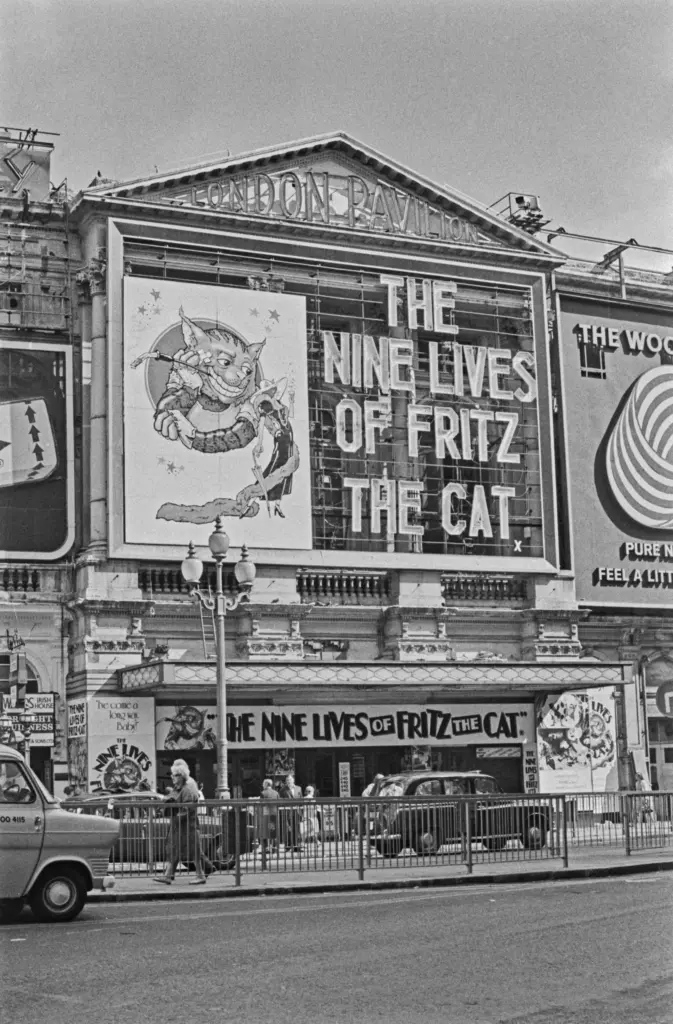
Filmed with a budget of one million dollars, the film grossed 90 million, an extraordinary success that places it as one of the most profitable independent films in history. It received applause from most critics and paved the way for Duckman, South Park, Bojack Horseman, and The Simpsons, which would be inconceivable without it. Fritz the Cat is a child of its time; it appeared just when the ideals of the sixties of peace and love began to sound outdated and the disillusionment of the seventies emerged; independent cinema was booming and censorship was declining. The National Legion of Decency, a Catholic group dedicated to identifying morally reprehensible films, and the Hays Code, which for decades had acted as a censor with an iron fist, were replaced in 1968 by an official rating system, and its inclusion in the X category worked as a splendid free advertising campaign for an audience eager for new sensations.
“Receiving it was synonymous with being considered a pornographer. At first, I got furious, but then I understood that it could be good,” Bakshi confessed to EL PAÍS on the fiftieth anniversary of the controversial rating. “I wanted to show that Fritz the Cat was not like the rest of the cartoons, and receiving the X allowed it to be seen as something apart. It was almost a blessing.”
Behind Fritz the Cat are two prodigious minds: its creator, Robert Crumb, a living legend of underground comics and one of the main figures of the sixties and seventies counterculture, and Ralph Bakshi, an artist forged in the Terrytoons animation studio, the home of Super Mouse and The Talking Magpies, who years later would sign the first version of The Lord of the Rings, a masterpiece that laid the foundations for Peter Jackson’s trilogy. Both geniuses had a turbulent partnership that ended in lawsuits and insults. “Do I think he’s a son of a bitch? Yes,” Bakshi said about Crumb to Black Book Mag. The ego clash between the two artists is as fascinating as the film itself.
Before being the lewd animal we knew, Fritz was the real cat of the Crumb family, about whom the artist invented stories for his little sister. He was a normal cat, but Crumb soon put him on two legs, dressed him, and created a personality for him that, according to those who knew him, was the one he would like to have. “Fritz was the realization of his desires,” said Marty Pahls, childhood friend and Crumb’s brother-in-law. “Through him, Robert could perform great feats, live wild adventures, and experience various sexual experiences he felt incapable of. Fritz was bold, serene, and had a gift with women; all attributes Robert longed for but felt he did not possess.” Perhaps that’s why the changes his creation underwent in its leap to the screen disturbed him so much.
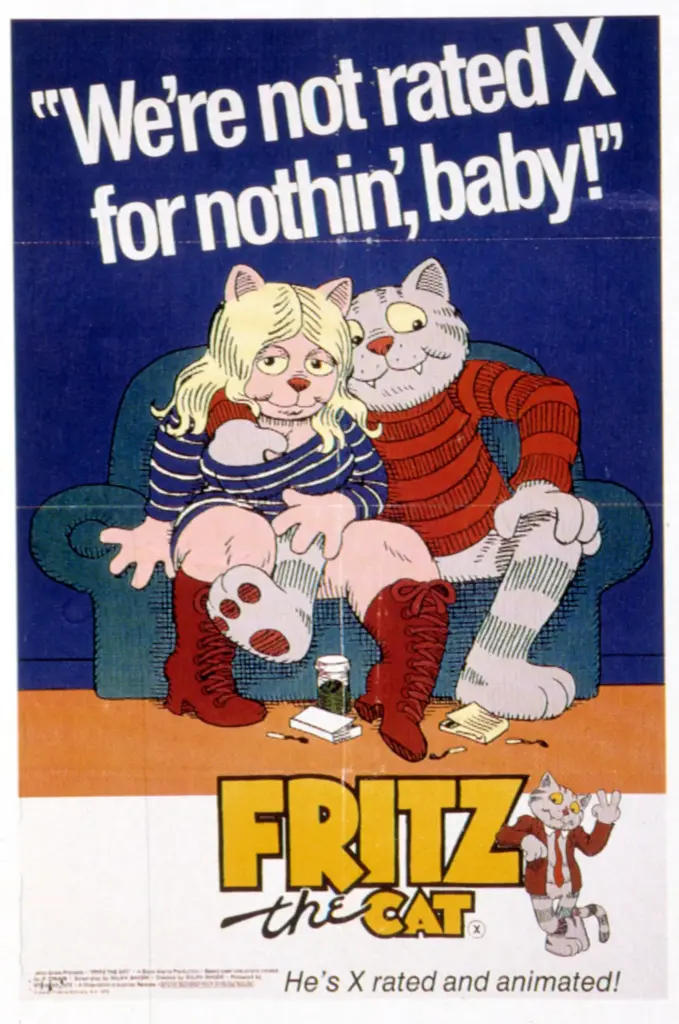
The film version was much darker and more violent than Crumb’s original stories. According to Bakshi, these changes were necessary to add narrative depth to the film, more substance. He added, for example, the pig police and a brawl in a synagogue to increase religious tension, something that made the artist furious. Crumb, very progressive, considered that the satire of radical movements was excessive, that those who only wanted to improve society were being denigrated. Crumb’s hippies were naive; Bakshi’s were sinister.
The struggle with the author was as fierce as the negotiations with the studios. Warner Bros, the first interested, asked for the sexual content to be toned down and for stars to be incorporated into the dubbing. Bakshi refused, and the money disappeared. “When you have a big budget, people pay too much attention to you. Low budgets can be a blessing for directors. Besides, with so many people starving on this planet, it’s simply a mistake to spend that kind of money on movies,” he admitted in his interview with Black Book Mag. “When you don’t have money, no one looks at you, no one cares. I believe in the vision of a director.” Faced with the studios’ demands to have recognizable stars for the dubbing, he opted for “found sound” (that is, everyday or ambient sounds used as background in a film). Especially because it was cheaper, but also because it added credibility. “When I heard the natural sound, the background traffic, and what they said, I loved it.”
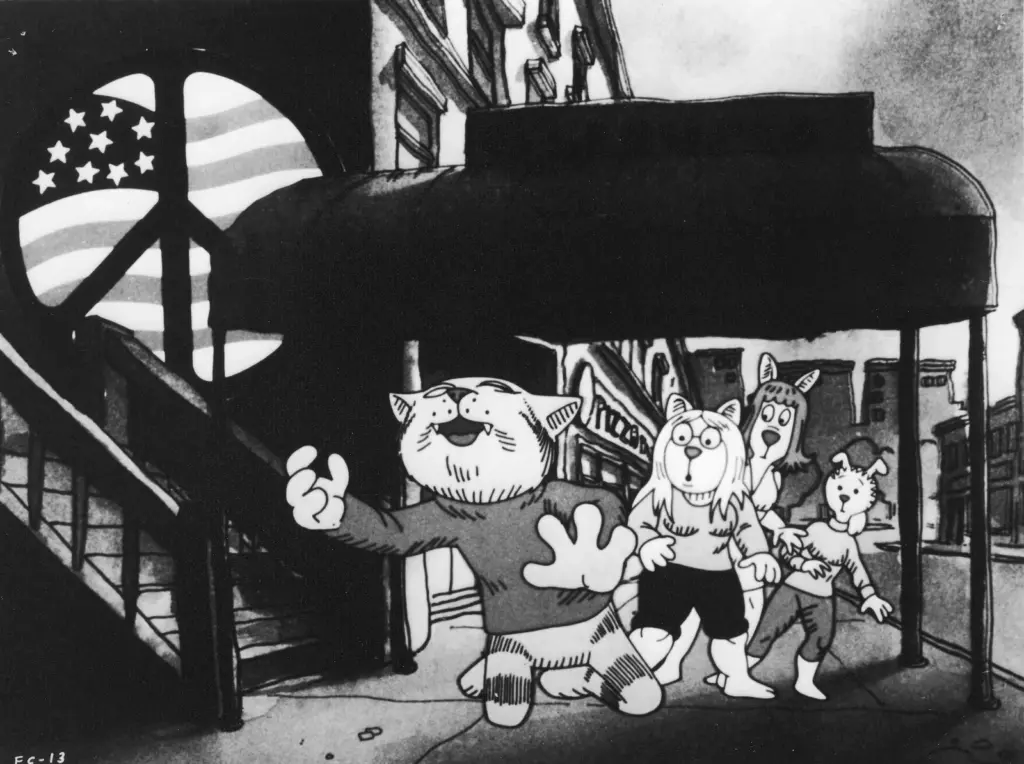
There were only a couple of professional actors, two television stars of the seventies, Skip Hinnant and Rosetta LeNoire. The rest of the voices are casual street recordings, friends, and even Bakshi himself. To do the drawings, he hired his former colleagues at Terrytoons, but not all were able to integrate into the project. According to Serious Business: The Art and Commerce of Animation in America, from Betty Boop to Toy Story, one of the artists refused to draw a black crow shooting a pig policeman, and an animator preferred to quit rather than draw bare breasts.
Bakshi’s partner, producer Steve Krantz, husband of novelist Judith Krantz and responsible for the television adaptations of her sumptuous novels of luxury and passions, was in charge of getting Crumb to finally sign over his rights. Bakshi never stopped considering him greedy. “He’s in a castle in France, drinking wine! The Underground Lord! Do I think he’s a good artist? Absolutely. Do I think he has the right to yell at me? No way.”
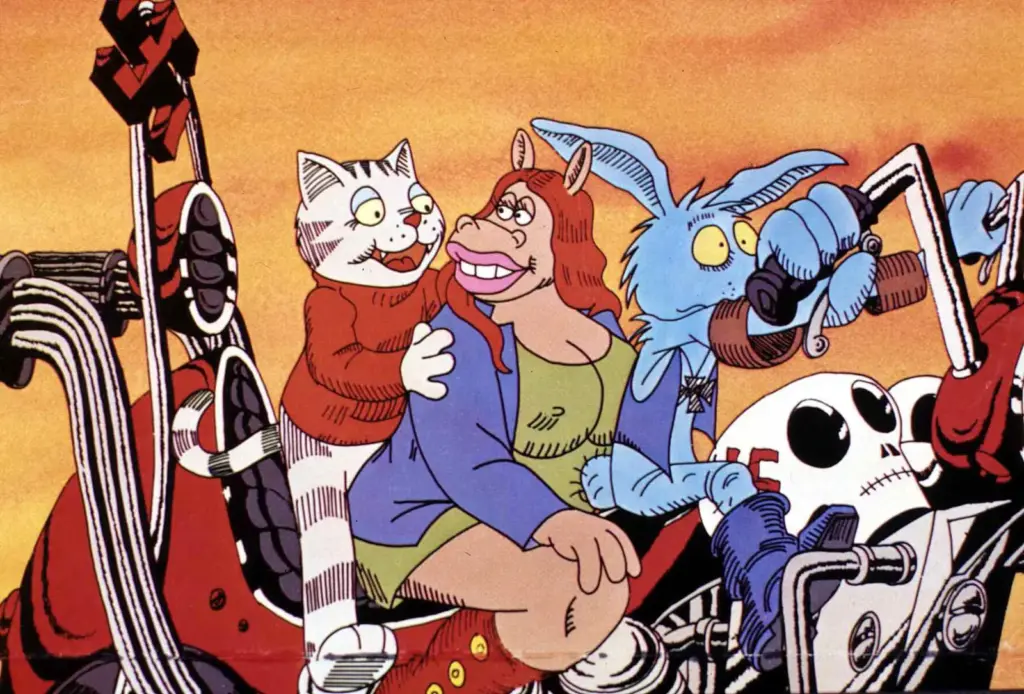
The film seduced the audience, who filled the cinemas, and also the critics. “Fritz the Cat is not the obscene film it pretends to be, but an intelligent social satire. Unlike Wyatt and Billy, from Easy Rider, who went looking for America and found it didn’t exist, Fritz does find America, and survives it by exercising his priapic talents with an enthusiasm that, unfortunately, is only possible in cartoon characters,” published The New York Times. Crumb, however, hated it. He was so disappointed with the film that he took drastic measures to prevent it from happening again. In the comic Fritz the Cat. Superstar, Fritz has become an unbearable star who does business with Bakshi and Krantz, who don’t come out very well, and ends up being killed with an ice pick. “He killed Fritz to get back at me, and told everyone I’m a scammer, a loudmouth, that I can’t draw, and all that nonsense,” lamented Bakshi. But with such a juicy box office, a sequel was inevitable, the not very successful The Nine Lives of Fritz the Cat, no longer directed by Bakshi.
Bakshi continued revolutionizing animated cinema with films like Heavy Traffic (1973), Coonskin (1975), and Wizards (1977). He gave Brad Pitt one of his first opportunities in the mix of live-action and animation, Cool World (1992), and became a reference for directors like Tarantino, Spike Lee, Peter Jackson, and Matt Groening. Crumb, for his part, founded the magazine Weirdo and retired to the south of France with his second wife, also a comic author, Aline Kominsky-Crumb. In 1994, the shy author opened up to the world in Crumb, a documentary in which the artist, besides talking about his work, revealed his family’s mental health problems, and thanks to almost total access to his environment, we discovered everything from his passion for vinyl records and curvy women, something any reader of his work knows, to intimate details like the size of his genitals. “He has the biggest penis in the world,” revealed one of his exes. The final result, signed by fellow artist Terry Zwigoff and produced by David Lynch, is so disturbing that, this time, Fritz the Cat seems like Garfield.