







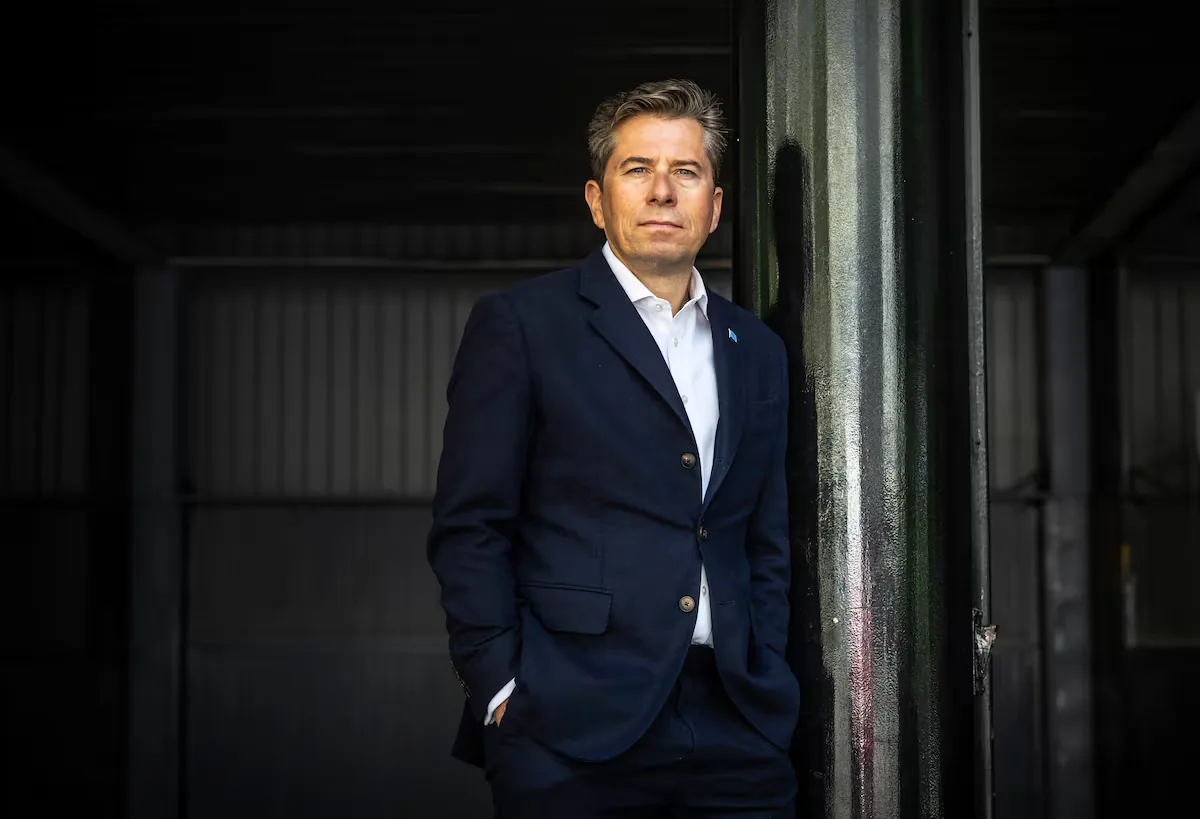
A few months ago, at a center for malnourished children in the depths of the Darfur region in Sudan, an orphaned baby who had arrived days earlier at the brink of death tightly grasped Tom Fletcher’s finger. The UN humanitarian chief says those seconds eased his frustration at international inaction and the “anger” caused by cuts in cooperation, in a world where needs and conflicts are multiplying.
Read more Iran and the US ease up in Hormuz despite bombings and negotiation ups and downs
“The UN plan to save 87 million lives costs less than half of what Wall Street spends on bonuses and less than what the world spends on pet toys or video games,” said the 51-year-old British official in an interview with EL PAÍS in Madrid, where he met with government members and participated in the 5th Feminist Foreign Policy Conference.
The head of the UN Office for the Coordination of Humanitarian Affairs (OCHA) also lamented that life in Gaza, one of the priorities of his management, has not improved after the ceasefire that came into effect in October and criticized the insufficient volumes of humanitarian aid to provide food, shelter, and health to its two million inhabitants. “We are stuck,” he laments.
Question. Cuts in humanitarian aid have forced programs to close worldwide. How have they affected OCHA?
Answer. In 18 months, I have gone from coordinating about 50 billion dollars (43.102 billion euros) in humanitarian aid to managing 23 billion. Our teams have to make brutal decisions: the cuts force us to choose which lives to save and which not to save, which programs to fund and which to abandon. On every trip, I talk to people who tell me their relatives are dying because we have closed the nearest hospital or that they have had to travel farther to give birth or to find a doctor. And those are just the people we meet. Think of all those we do not see because they die before reaching us or before we reach them.
Q. How many people will you reach with those 23 billion dollars?
A. The plan is to save 87 million lives, out of a total of 340 million people who need humanitarian aid. That money is less than half of what Wall Street spends on bonuses and less than what the world spends on pet toys or video games. The good news is that in the first three months of the year, we have reached 16.4 million people with this plan. That is a third of Spain’s population.
Q. How are decisions made within OCHA amid this funding collapse?
A. If I have to choose between spending one dollar here saving someone’s life or four dollars there organizing a conference in Europe, I choose to feed a person. We also try to make the entire sector much more efficient by eliminating layers of bureaucracy and transferring power to local organizations, involving them much more in decisions on how money is spent.
If I have to choose between spending one dollar here saving someone’s life or four dollars there organizing a conference in Europe, I choose to feed a person.
Q. Behind the numbers and cuts, there are lives. Is there any person or encounter that has particularly marked you in these months?
A. Earlier this year, I spent a week in Darfur. At a center for malnourished children, I met a very young woman whose family had been killed. She fled with her neighbors’ baby, who was also the only survivor of the family. On the way, she was raped by a group and broke a leg, but she kept going with the baby. Eventually, someone helped her, and she ended up at this center. The child was very weak, but after two or three days, we managed to save him. It was not only our merit but that of that brave girl. I took him in my arms, he squeezed my finger tightly, and I felt that extraordinary connection with the world. I wanted to believe that if that child could squeeze my finger, it was partly thanks to our work.
Q. The latest OCHA report warns of repeated violations of international humanitarian law permeated by growing impunity. Where does one start to reverse this situation?
A. Often, people criticize the UN and say we are not doing enough, but we only have the mandate given by states and do not have an army to stop conflicts in Sudan or the Democratic Republic of Congo. When someone attacks the United Nations, one must ask: what is gained by having a weaker UN? And the answer is quite clear: countries that want a world where only the strongest survive. And we have to stand up to that.
Q. Speaking of standing up, most of Gaza’s population remains displaced and could end up living in 30% of the 365 square kilometers of the Strip’s surface. How can Israeli ambitions be countered?
A. What is happening in Gaza is devastating. I have been twice in the last 18 months, the last time in October, and I know what we are talking about when we talk about destruction or trauma. These are people who have had to move several times and who now find themselves crowded into an increasingly smaller space. The international community has struggled to moderate Israel’s actions. Since last fall, through President Donald Trump’s initiative, we have managed to end the direct conflict, but the lives of Gazans have not improved as they should have. More food, medicine, and shelter materials are coming in, but it remains a drop in the ocean of needs.
The lives of Gazans have not improved as they should have. More food, medicine, and shelter materials are coming in, but it remains a drop in the ocean of needs
Q. What are the humanitarian priorities in Gaza?
A. The main one remains food. We are supplying 1.1 million hot meals per day in Gaza because half the population depends on them to survive. Second, vaccines for children. We are pleased because we managed to carry out an immunization campaign last month. Then, shelter, because living conditions must be improved before winter. And also education. But the reality is that we are stuck in the first phase of the plan and are not yet talking about phase two, which is reconstruction. Every day we face bureaucratic obstacles and restrictions on the entry of products that, according to Israel, could have dual use and be used for military purposes.
Q. What word would you use to define your relationship with Israel?
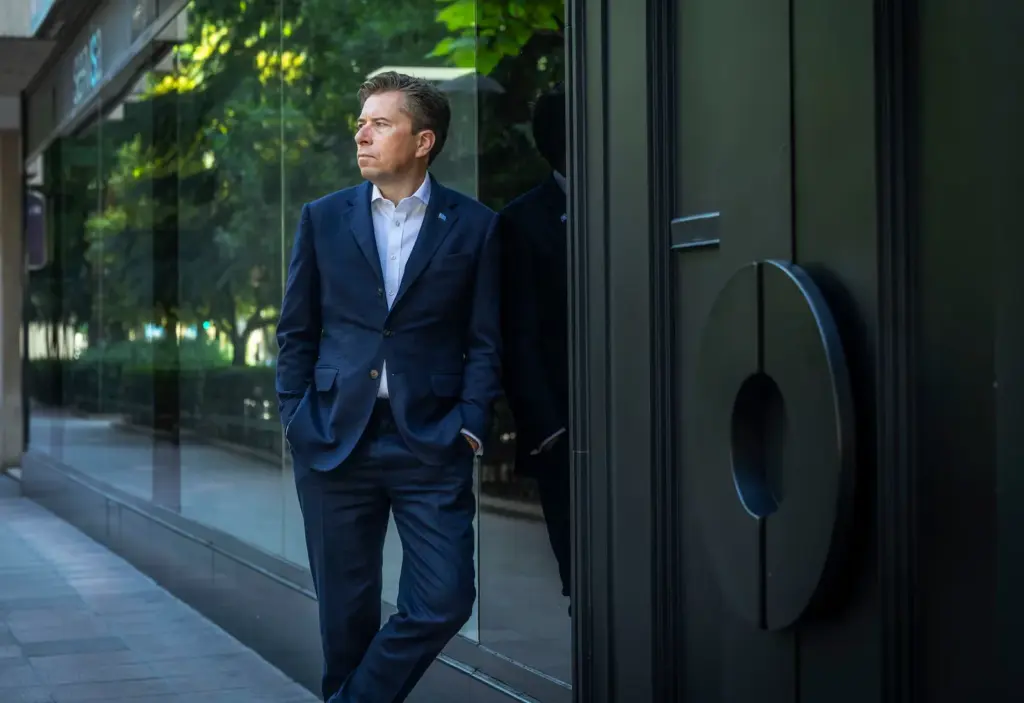
A. Complicated. Israel has been very critical of me, our work, and the UN. On several occasions, it has refused to cooperate with us and does not appreciate when we openly defend international humanitarian law and the protection of civilians. I am a neutral humanitarian. We are impartial. We are fully focused on achieving the highest level of vital aid for those who need it. And that is why we will talk to everyone and work with everyone.
Q. After the dismantling of USAID, the United States is signing bilateral agreements with various countries, some of which undermine women’s sexual and reproductive rights. How does this affect your organization?
A. We are very clear that we cannot compromise our core values. We have explicitly conveyed this to the US and other donors. Women and girls are the most affected by these crises. We see it in sexual violence and its use as a weapon in places like Haiti, the Democratic Republic of Congo, or Sudan. That is why we cannot give in on this point: we will continue prioritizing women and girls in our response.
Spanish authorities challenge us to be better, to make reforms with intensity and speed, and they do so constructively
Q. You have warned about the growing impact of drones in conflicts, especially on the civilian population. What are you seeing on the ground?
A. A month ago, I visited Somalia, spoke with refugees, and they were not talking about droughts, famines, or floods, but about drones. A woman told me she was collecting water when a drone attacked them. A friend of hers died. I asked if drones did not attack combatants. “They kill us all,” she replied. In a few years, one of the big issues will be the increased use of drones in conflicts. In the first quarter of this year, 25% more children were killed in Sudan than in the same period last year. And that is drones.
Q. You have mentioned the importance of the next UN Secretary-General being a woman. What would that female leadership change?
A. I think the time has come. We have had male secretaries-general for 80 years. During my academic life, I have seen that when women participate in health policy formulation, it is more likely to succeed and be sustainable. In my humanitarian work, I have also seen the impact of NGOs brilliantly led by women in places like Sudan or Myanmar.
Q. At this moment of cuts and rethinking development aid, how is Spain’s role in defending multilateralism viewed?
A. Spain has taken difficult political positions defending the rule of law. That seems very important to me and also to our staff on the ground. Because when they feel the world has turned its back on them, that they are literally attacked, there are voices like those we hear here that give strength and reassurance. Spanish authorities challenge us to be better, to make reforms with intensity and speed, and they do so constructively.