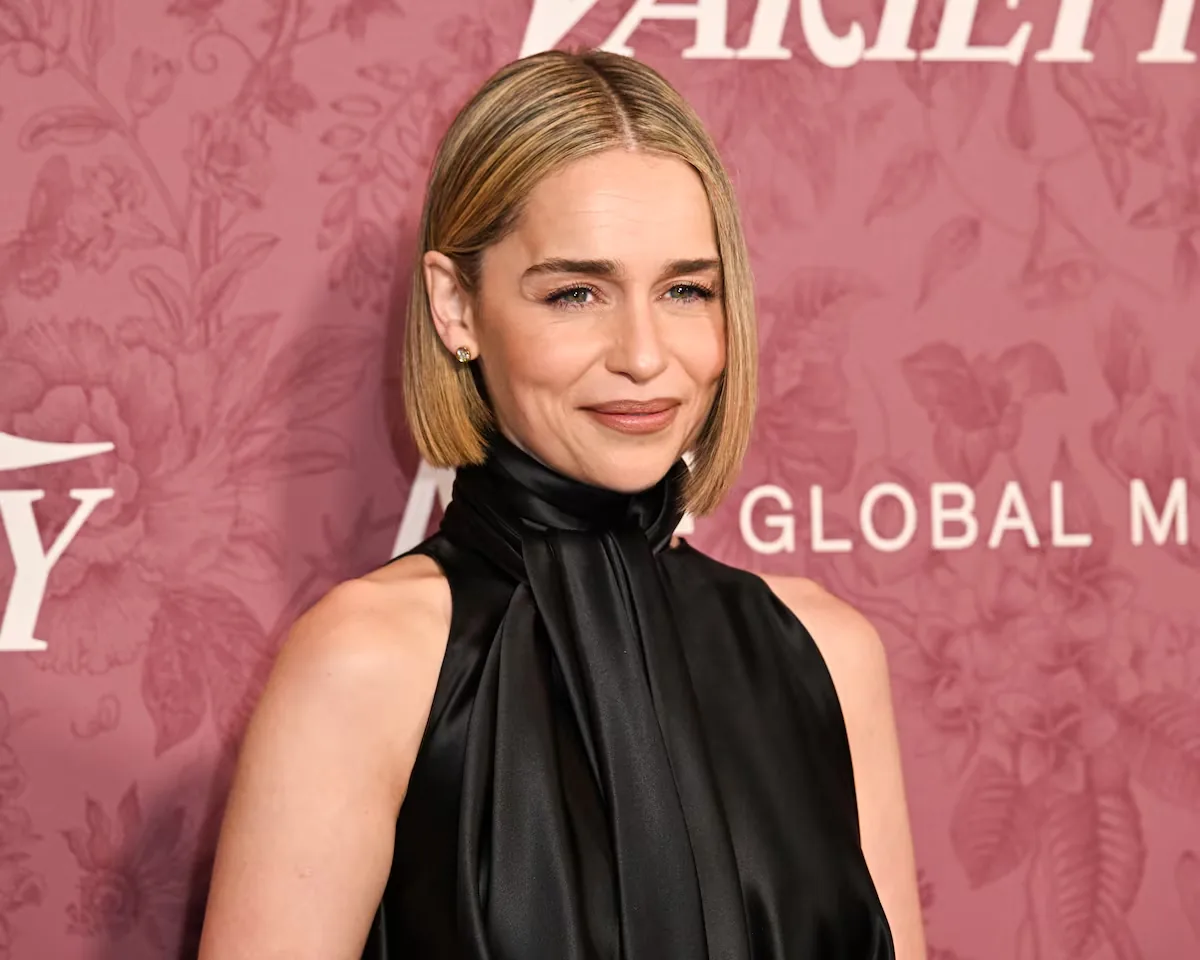
15 years ago, actress Emilia Clarke (39, London) thought her career was over after suffering two brain hemorrhages. It was in 2019 when the actress revealed that she had suffered two aneurysms after the first season of Game of Thrones, the HBO series that had launched her to stardom. An incident that completely changed her life and from which she still suffers consequences. “For several years I felt like I had cheated death and that it was coming for me. I really felt like I had done something wrong and that I shouldn’t be here,” she said last night in her speech at Variety‘s Power of Women gala, held in London. “I also thought I had ruined my ability to act… which some people might agree with,” she joked on stage.
“I was 22 when I suffered my first brain hemorrhage. 24 when I had the second. At 22 I filmed the first season of Game of Thrones and at 24 I debuted on Broadway. I’d like to blame my brain hemorrhage for the bad reviews, but it happened after we finished the shows, ahead of time,” she confessed with humor. 15 years have passed since the incident and the actress wants to raise awareness about the consequences of her brain injury, which for a long time she couldn’t fully grasp. “I never had the chance to reflect on what my two brain traumas had caused me, because I could walk, talk, be myself, remember my lines, and I was back in front of the cameras within weeks of both injuries,” she recalled during her long speech at a gala that paid tribute to prominent women in the entertainment industry and where she received recognition for the impact of her voice and the charitable causes she champions.
“I ignored what was happening with my hormones, or rather, my lack of them, and my extreme fatigue, which no one else in their twenties around me suffered from? What about my anxiety? Surely that’s normal working in our image-obsessed industry. Breaking a rib after filming a sex scene? Well, maybe that was his fault. But sometimes even fainting after long night shoots? The pain all over my body? I didn’t even think I should find out why. I simply attributed it to stress and my uninterrupted work pace, which I wasn’t very good at dealing with. I thought I had been cured. My doctors too. None of us could see the pattern, so I blamed myself,” she recalled about the second time she ended up in the hospital. “It never occurred to me that maybe the problem wasn’t me, but that it was because a brain injury is extraordinarily complex, and we are only just beginning to understand the impact it can have long after you have supposedly recovered.”
“What many people don’t understand is that, regardless of the remaining symptoms, whether physical, cognitive, emotional, or linguistic, the consequence is unresolved trauma. And there are simply too few neuropsychologists and specialized rehabilitation services for that reality to change,” she asserted in her speech during an event that also paid tribute to actresses Emma Corrin, Cynthia Erivo, Hannah Waddingham, and Suki Waterhouse. “When everyone around you thinks you look fine, they treat you as if you are. Over time, you also start to believe you should be. I often compare the current situation of brain injuries to that of cancer a century ago: misunderstood, stigmatized, and hidden from plain sight,” Clarke said.
Read more When the United States loved Obama: the first black president inaugurates his presidential library
View this post on Instagram
The actress stated that when it first happened in 2011, she didn’t want to tell anyone because she felt ashamed and overwhelmed by a diagnosis she didn’t understand. “We didn’t even tell HBO until we knew I wasn’t going to die,” she recounted. It wasn’t until she suffered a second hemorrhage in 2014 that she began to speak publicly about what had happened, and in 2019 she decided to found her charity SameYou, to help brain hemorrhage survivors with recovery. “When I shared my story in 2019, the response was overwhelming. Especially young people contacted us to tell their own stories, and today we have thousands of survivors in our community who say practically the same thing: the path to recovery feels like falling into a void with no one to catch you,” she assured.
The actress later mentioned that one in three people will suffer a brain injury at some point in their lives and highlighted the inequality regarding post-injury care. “The combined number of people currently living with the aftermath of a stroke and traumatic brain injury, in the UK and the United States alone, exceeds 15 million people,” she stated. “Recovery is just as important as survival. People need guidance, answers, physical and mental support. Because when you think about who you are, your personality, your intellect, your humor, your memories, where does all that live? In your mind. And when that fails you, it can make you lose confidence in yourself. It can leave you scared and convinced that you will never be who you were again. But we know that recovering yourself is possible. Hence the name: SameYou (Yourself),” she concluded.
Read more Tom Holland reveals the reason why he doesn’t want to host ‘SNL’: his severe dyslexia