





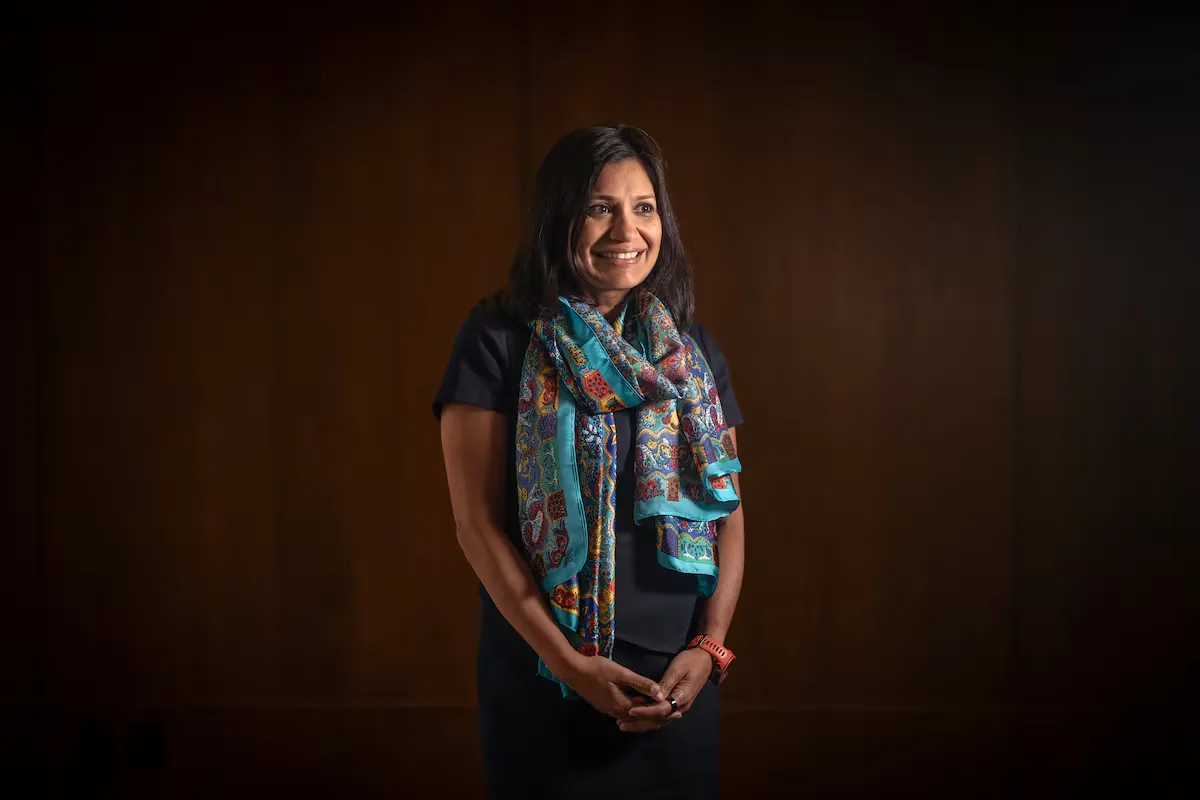
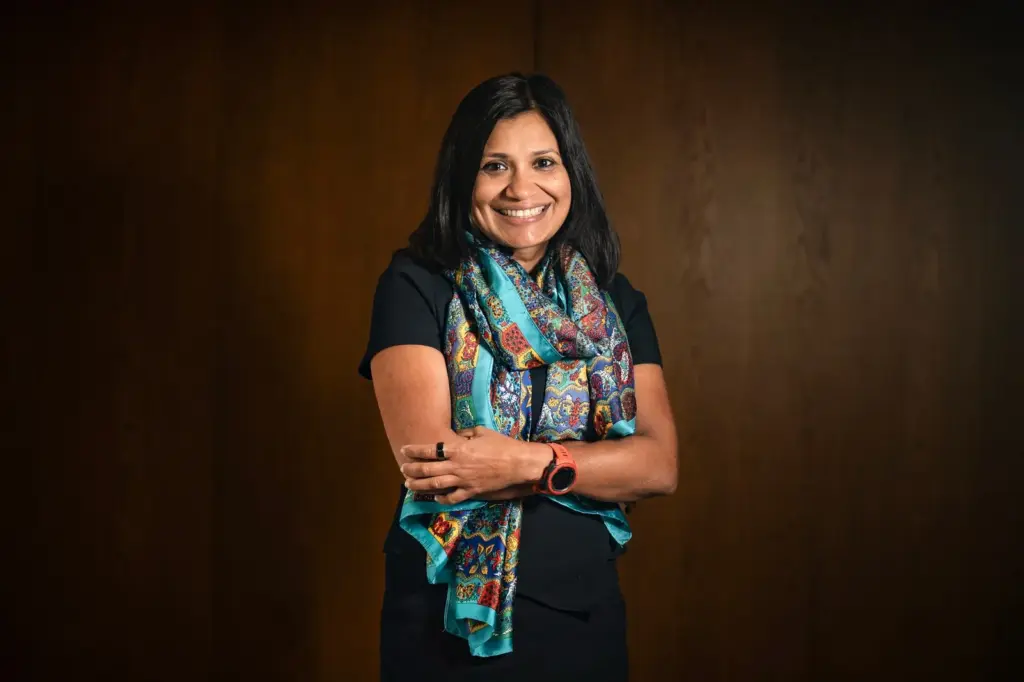
BlackRock maintains a favorable view of Mexico despite uncertainty surrounding the USMCA review and geopolitical conflicts, such as the war in Iran. Gargi Pal Chaudhuri (India, 47 years old), head of investment and portfolio strategy for the Americas at BlackRock —the world’s largest fund manager—considers Latin America’s second-largest economy a market with great resilience and potential due to the benefits of nearshoring, the high yield it offers, and the diversification of its industries. With more than two decades of experience in fixed income markets, macroeconomic strategy, and portfolio management, Chaudhuri recognizes that one of the central themes for the Mexican economy revolves around the USMCA review, a process that will formally begin next July. However, she trusts that negotiations with the United States on the trade agreement will lead to a deal that benefits both economies.
Read more Journey to the heart of ‘fracking’
Question. What is your perspective on opportunities for investors in such an uncertain environment, with several open fronts worldwide?
Answer. One of the topics that has taken many clients by surprise is that, at the beginning of the year, if we had told them that oil prices would rise, that interest rates would be higher, that growth expectations might decrease, many people would have been surprised by the incredible performance of emerging markets, US markets, and many US sectors, and I believe the reason all this is happening is because there are two structural forces driving the markets right now. One of them is artificial intelligence and all the spending and investment being made in this field, and the second is the need for more energy resilience, more energy security; this became even more important when the Strait of Hormuz was closed. I believe these two themes are driving the markets.
Q. How is the Trump factor affecting market forecasts?
A. As investors, we must always consider a world where politics and geopolitics coexist with factors such as earnings growth, structural themes, demographics, inflation, and interest rates. All of this must coexist, so, obviously, regarding the war (in Iran), that is something we are paying close attention to. Obviously, any kind of resolution will be a great relief for the markets, especially for many energy-importing countries.
I believe that when thinking about the relationship between the United States and Mexico, the main thing to focus on is the USMCA —the free trade agreement between Mexico, Canada, and the United States— that is something that will be on everyone’s radar, and I think it can be a really good positive factor. Hopefully, if everything goes well as planned, I think that can be very positive for Latin America, and specifically for Mexico. But I have always told investors, and in my position, I am fortunate to speak with investors from all over the world and throughout the Americas, and one of the things I always tell clients is: keep politics out of your portfolio.
Q. But is that possible?
A. It’s impossible in terms of sentiment, but in terms of reality, it’s not. Therefore, if you only invested during certain US government administrations, or if you only invested based on certain policies, you wouldn’t do as well. What you need to do is keep investing throughout the different phases of the cycle, under different governments, and you need to keep investing and keep finding what I call durable growth investments. What are the themes that are likely to generate cash flow and earnings, even if politics could be favorable or unfavorable? That’s what it means to keep politics out of your portfolio.
Q. But what do you think will happen in the markets if the conflict in Iran drags on for more months?
A. It is certainly a risk, and in fact, if there is no prolonged conflict and there is a near resolution, which is what we all hope for, I think it will take some time to return to the pre-war situation, given the damage caused and the fact that inventories have been depleted. So, it must be recognized that there will still be supply chain disruptions, that this world will still be supply-driven, supply-shaped, I think that is something that will remain for some time. But, obviously, if there is an escalation or if the price of oil continues to rise and the conflict prolongs, I think investors should add diversification and risk hedging to their portfolios.
Q.What are the most important investment opportunities in this uncertain environment?
A. Globally, bonds and stocks move in the same direction, right? So you need other things, you need a basket of commodities, for example, you might need gold. That’s something our clients in Mexico have been allocating resources to because, historically, it has been a very good hedge for geopolitical events. It’s about finding sources that truly bring resilience to your portfolio when markets are down.
We already talked about the two themes related to AI, but diversification is fundamental. For investors with a high allocation in Mexico, it is necessary to diversify outside of Mexico, considering emerging markets like Korea and Taiwan, which are currently among those with the highest earnings growth. In the United States, diversification is key, especially in sectors like semiconductors and chips.
Q. How does Latin America fit into the current global investment landscape?
A. For a long time, one of the reasons many investors were moving towards Latin America was nearshoring, obviously with the US and China maintaining their dominant position. That trend is solid, but the region encompasses more than that, so, when I think of Latin America, I think of a country like Brazil, with which we are very optimistic. It is a huge market, an area that we believe can continue to benefit, given energy prices, as the central bank can continue, if all goes well with the elections, slowly lowering rates.
Read more ‘We’, by Compañía Mal Pelo: dance that overwhelms and reveals
From a structural point of view, we recommend our clients continue investing in Mexico, as they will benefit from the relocation of production. In the near future, when the USMCA (TMEC) is resolved, which we hope will happen soon, that can be a positive catalyst or generate favorable sentiment.
Q. What would happen if the USMCA renewal is not achieved in its next trilateral review?
A. I think we need to be very careful about that risk. None of us knows exactly what the outcome will be. What I can say is that we saw how markets operated when the tariff risk was highest, right around Liberation Day, last April, when everyone was saying: “The tariff rate is going to be 25%, 35%, 50%.” And what I would say is that the leadership in Mexico was very proactive, doing a really good job to reach an agreement with the United States and ensure the country benefited. We don’t know how the USMCA will be resolved, it is certainly a risk (that the agreement might conclude) but I think, if we use history as a bit of a guide, I hope we will see the leaders of both countries seeking a trade agreement that benefits both parties.
Q. What can Mexico do to attract more international capital?
A. Mexico is a country that does not depend on a single industry or a single trade; it has many sources of traction. This is a country that, from a profitability perspective, if you analyze an emerging market debt portfolio, is very attractive. Investors, at least from a fixed income perspective, are investing in emerging market debt due to the available yield. Furthermore, any country working to attract capital must ensure certainty regarding public order and regulation. I believe that is what foreign investors are looking for: opportunities, whether in terms of profitability, income, or return, as well as transparency and regulation.
Q. Is insecurity in the country not a worrying factor for BlackRock?
A. BlackRock is extremely committed to its business, to our clients in Mexico. I have not once felt insecurity or concern, and I have never spoken to anyone who has. I cannot speak for others, but I can speak for our business and for the commitment it has to BlackRock Mexico. I have team members who work here, we have hired here in Mexico City, and it is one of the fastest-growing points in our ecosystem, and from a business perspective, we have never had such a strong conviction about the opportunities, investment, and talent this country offers.
Q. Is there any sector or industry in the country that sparks particular interest at BlackRock?
A. In fact, I think one of Mexico’s advantages is that, obviously, it used to be just a country for production relocation, and now it’s much broader. It’s not just about relocation, but also energy, manufacturing, and a combination of different industries that we believe will continue to grow, and that’s another reason why at BlackRock we are so committed to our clients here.
Q. And what is your perspective on the US economy this year?
A. In the years following the pandemic, many thought the US economy might slow down; however, thanks to the large number of factors driving it, such as artificial intelligence, manufacturing, consumption, among others, the US economy has shown incredible resilience. If we consider the improvements that artificial intelligence will bring and the reorientation of supply chains, I believe the United States will experience a productivity boom. We continue to believe that, by the end of 2026, the US economy will grow above 2%.
Q. And what is your perspective on the Mexican economy?
A. In Mexico, we have seen a slight slowdown, that’s what we’ve observed in the data, but I believe a diversified economy can, at times, better face crises, volatile crises, whether derived from external factors such as rising energy prices.
Q. If you could give advice to Mexican investors, what would it be?
A. Invest for the long term, focus on structural market factors—artificial intelligence and energy security are the current structural factors—maintain a diversified portfolio, and do not let politics influence your portfolio.
Read more Gorillaz steal the show at a Primavera Sound where everyone danced