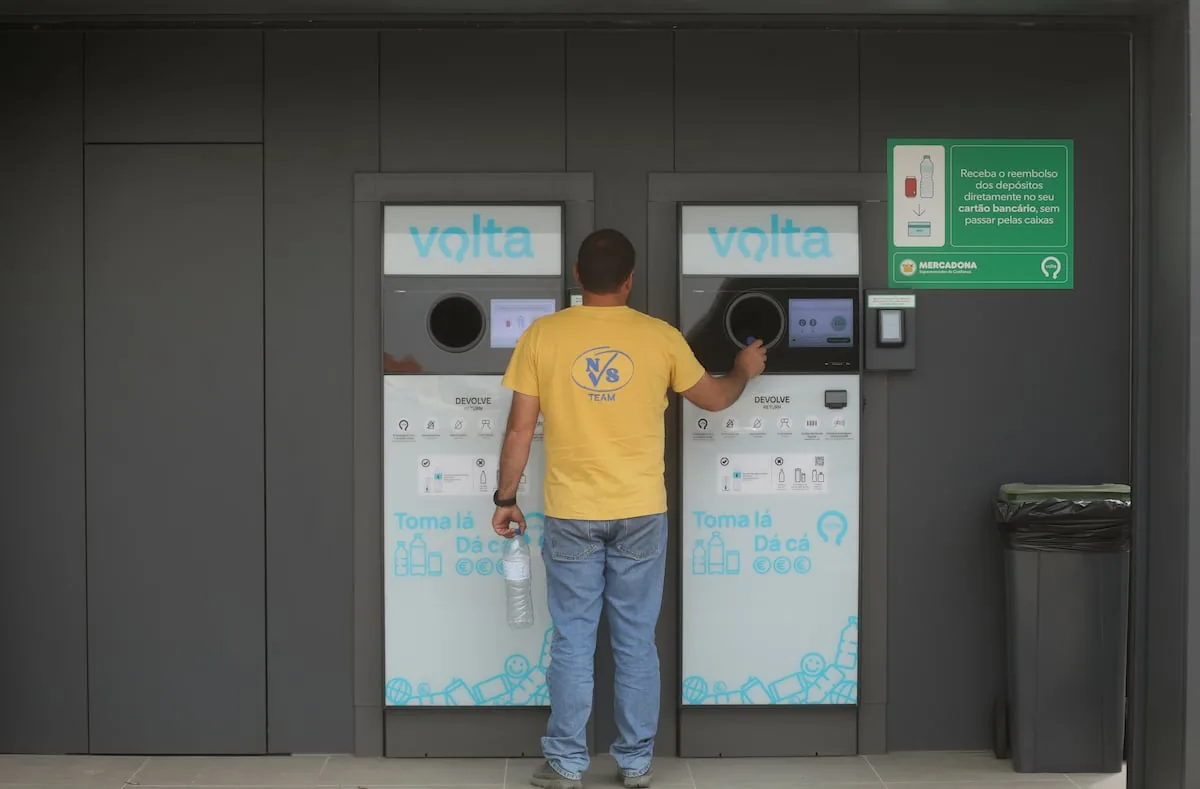







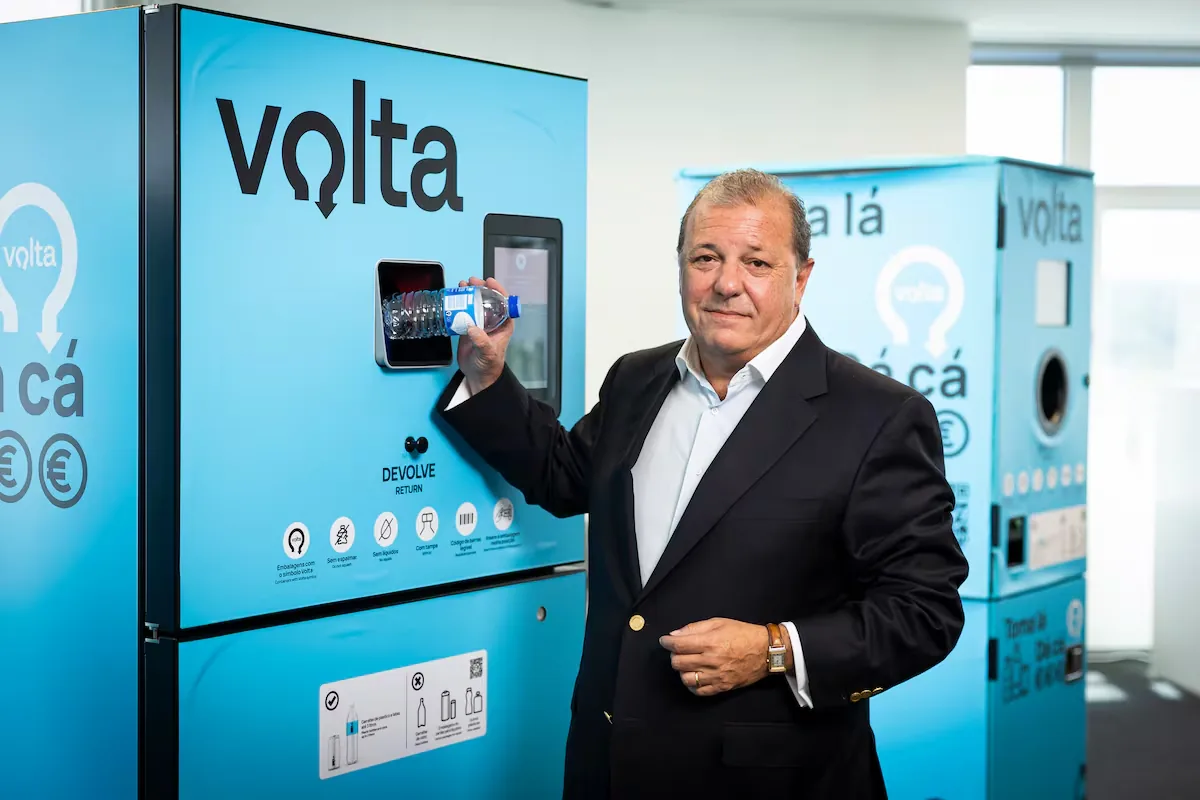
Portugal is the first country in Southern Europe to install machines in supermarkets that return receipts redeemable for money to consumers if they return empty plastic bottles and beverage cans to improve recycling, known as a Deposit, Return and Refund System (SDDR). For this, the brand Volta was created, whose top executive is Leonardo Mathias (59 years old, Lisbon), a former Portuguese Secretary of State for Economy with experience in finance and banking who must carry forward what is considered one of the largest environmental projects launched in Portugal. A few days ago, he was in Madrid to share his experience with packers and distributors working on their own SDDR for Spain. According to him, if the Portuguese system represents a huge logistical and habit-changing challenge, the Spanish one is almost 10 times bigger: “It will be the largest Spanish start-up [new company],” he highlights.
Read more Gabriella Conti, economist: “The income drop for a woman with menopause can reach 20%”
Question. With the new system, the consumer pays a deposit of 10 cents when buying a drink in a plastic bottle or can, which can be recovered if the empty container is returned. Has explaining this apparent price increase been the most difficult part?
Answer. Well, everything has been very difficult. For 40 years we communicated to the Portuguese population that they should put bottles in the yellow ecopoint [container], that they could throw the cap separately, and that they could do whatever they wanted with the container [it was not a problem if it was broken or crushed]. Now it is not like that. Then there is the habit change of having to pay a deposit; some people did not want to do it or did not understand why. Another big challenge has been the entire logistical and industrial component.
Q. But did you expect so much criticism at the start because of the 10-cent deposit?
A. Social networks are a free space where everyone says what they want, when they want, in the way they want. So, many people said this was a tax and asked: who is going to profit from this? The Portuguese are very distrustful of everything and everyone, but this is changing and people are understanding.
Q. Do you agree, as the Portuguese Minister of Environment, Maria da Graça Carvalho, has stated, that this is one of the largest environmental projects carried out in Portugal?
A. Yes, and it will be in Spain as well. In Portugal, we have 2.1 billion containers [to manage annually], 10.7 million inhabitants, 30 million tourists, and 95,000 beverage sales points. And besides all this logistics, there is the financial component. We are talking about the population giving us 210 million euros a year [from the 10-cent deposit on 2.1 billion containers] that we have to return to the population.
Q. Is this not only an environmental challenge but also a financial one?
A. There is a fiduciary responsibility; this container collection system is almost like a small bank: the citizen gives you 10 cents and you have to return it. There is also an information technology component; all this has to be digital and work instantly.
Q. Is creating an SDDR in Spain much more complex?
A. In Spain, it is estimated between 17,000 and 20,000 billion containers [to manage annually] and 500,000 distribution points. It is truly impressive. It will be the largest Spanish start-up.
Q. At what stage is Portugal in container recovery and what are the goals with the SDDR?
Read more The ‘grandchildren’s law’ challenged by the PP passed 32 parliamentary procedures in five years
A. Previously, we did not have a single statistic, but the figure for recovered plastic and metal containers, not only beverages, was 51.5% in 2024. In Portugal, half of the waste goes to landfill, which is not good for the environment. Now, with the new system, we want to reach 80% beverage container recovery by 2027, 85% in 2028, and 90% in 2029.
Q. How long did it take Portugal to implement the system?
A. The clock starts at zero once all legislation is published and the license is approved, which has not yet happened in Spain. For us, that point came in November 2024, and from then on, we thought we could set it up in 24 months, but we did it in 15 due to political pressure.
Q. In Spain, a national regulation sets November 2026 as the deadline to create an SDDR, but companies defend a start date of 2029, which is what a European directive marks. How do you see these timelines?
A. Imagine, if in Portugal we have 3,000 machines for collecting cans and bottles, in Spain it is estimated that between 20,000 and 30,000 are needed. There are not that many machines on the market at this moment, because the United Kingdom is also entering [with other SDRRs] and inevitably France and Italy have to enter. All information technology systems have to be set up, logistics changed, container eco-design, and the population informed of the changes. Ideally, it takes 24 months, but achieving 90% collection [as established by the directive for 2029] in the first year is very ambitious. It would be best to start in 2028 and have a transition period.
Q. Is this waste recovery system a commitment of left-wing or right-wing parties?
A. No, this is not a political issue. In Portugal, the SDDR was in the political program of almost all parties, from right to left. This is a commitment that both Portugal and Spain have with the European Union. And if we do not comply, there are fines we have to pay with public money.
Q. What advice would you give to Spaniards?
A. It is important to have a single system for all of Spain. A single manager is needed to set the rules of the game for the whole country. And from there, within the rules, competition can take place.
Q. Are there other options to reach 90% collection of used containers for recycling?
A. We are the 19th SDDR in the European Union. There is no other way, or at least no other way has been found in Europe, to reach 90% without this system of incentives and change of attitude and mentality.
Read more Ayuso ends the self-government of La Hiruela, the last rebellious town in the Community of Madrid