









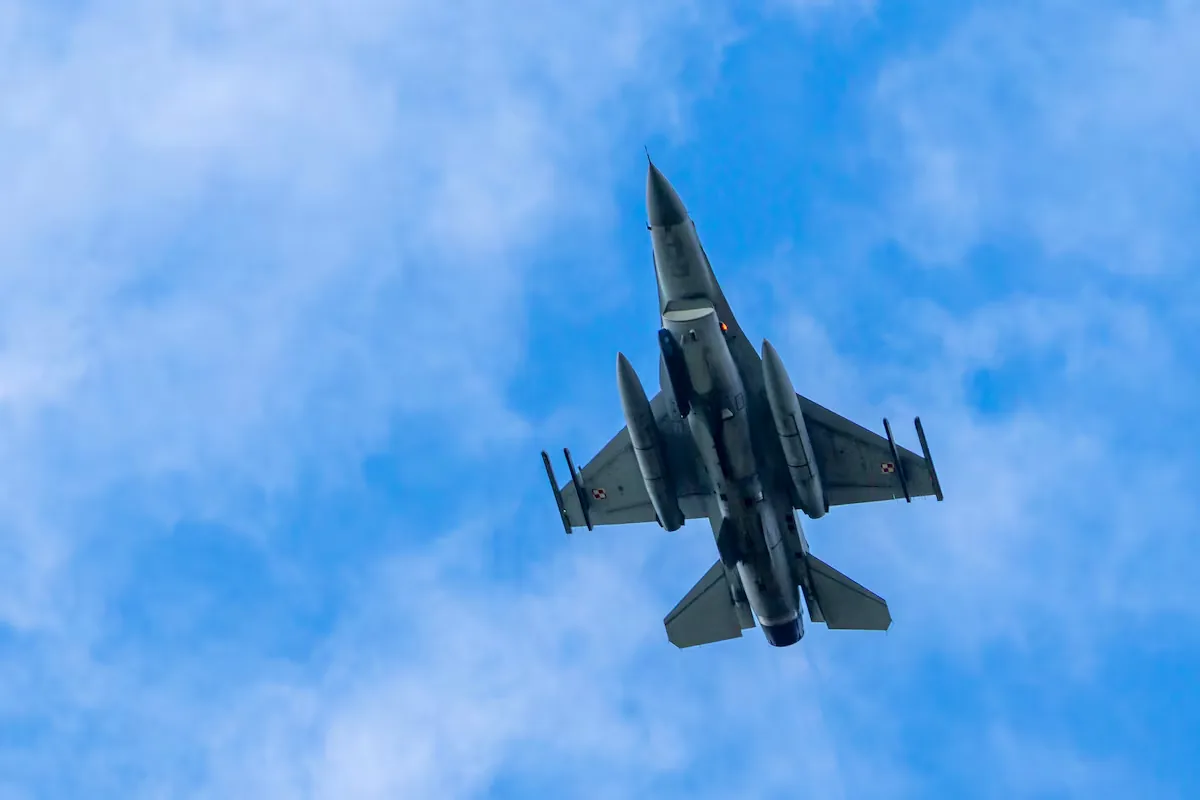
Two Polish fighters intercepted a Russian Il-20 reconnaissance plane on Tuesday that was flying over international waters in the Baltic Sea, about 30 kilometers from the coast of Poland, according to Polish Defense Minister Wladyslaw Kosiniak-Kamysz.
“Today, just after noon, over the Baltic Sea, about 30 kilometers from Ustka, in international waters, two of our combat aircraft intercepted a Russian Il-20 reconnaissance plane,” Kosiniak-Kamysz detailed. “After establishing contact and ordering it to leave the airspace, the plane headed towards Russia,” he added.
“This is the first Russian attempt in a long time to approach our maritime border to reconnoiter our air defense systems,” the Polish minister highlighted. In the same vein, he assured that “the Russian Federation constantly wages a hybrid war, conducts reconnaissance, and is hostile towards all NATO member states.”
The incident, according to Kosiniak-Kamysz, “once again highlights how dangerous the Russian Federation is,” which “should make those who question military support to Ukraine think twice.”
As the Polish minister explained, after establishing contact with the plane and issuing the appropriate signals for it to leave the area, the Russian aircraft withdrew towards its territory.
The interception process in international waters requires pilots to identify the target using optoelectronic systems and visual contact, and establishing communication, if necessary, to escort it out of the Polish area of responsibility.
Read more Macron celebrates his last July 14th with a display of European rearmament
Kosiniak-Kamysz emphasized, referring to the Russian presence in the Baltic Sea, that “this direct threat” was unanimously ratified by NATO members at the recent Ankara summit, where the Atlantic Alliance identified Russia as its “greatest threat.”
So far this year, at least a dozen similar incidents have been recorded: in March and April, Polish F-16 fighter patrols intercepted Il-20 reconnaissance planes flying without flight plans and with their transponders off, which Warsaw described at the time as “recurrent provocations.”
Poland plays a prominent role in NATO air patrol missions in the Baltic due to its proximity to the Russian enclave of Kaliningrad, which is the base of a significant Russian military contingent that Warsaw holds responsible, among other hostile actions, for causing GPS signal interference.
Meanwhile, this Monday the European Union — of which Poland is a member — pointed to the Russian intelligence service FSB (Federal Security Service) as responsible for the increasingly frequent cyberattacks the continent has suffered in recent months. Several countries even summoned their respective Russian ambassadors to demand explanations.