







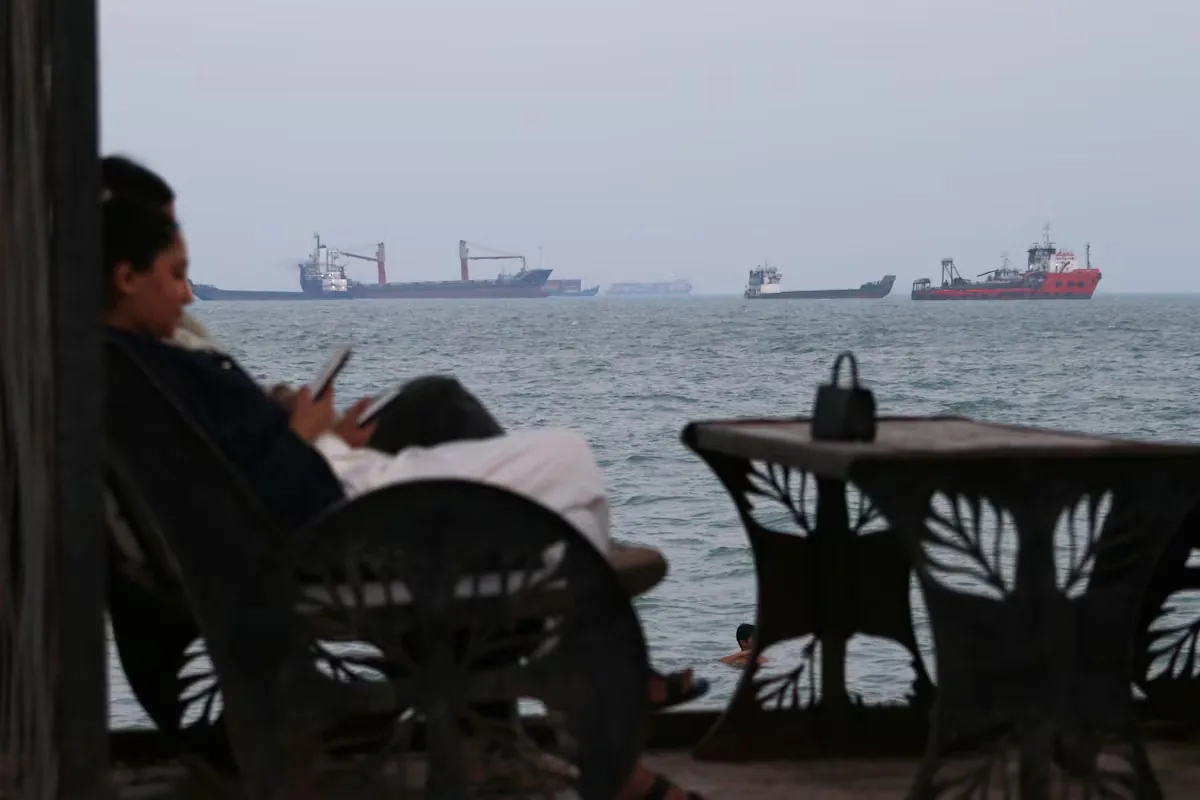
Tuesday, June 23. U.S. Secretary of State Marco Rubio lands in Abu Dhabi with a clear message: the Strait of Hormuz, he says, is an “international maritime highway” and, as such, “no country can charge tolls or fees” on it. “That is what international law says, what happens on other maritime routes around the world, and what we expect to happen there as well.” His words have several recipients: the United Arab Emirates, the friendly country he is visiting, and the rest of the hydrocarbon exporters in the Persian Gulf will be able to export without restrictions. And, of course, Iran, which — according to his words — will not be able to profit from the ships transiting this key route for the transport of oil, gas, and their derivatives.
Monday, July 13. All the hopes brought by the ceasefire agreement vanish. Donald Trump has just notified Congress that his country is at war again, and his speech about Hormuz takes a radical turn: “The United States will be reimbursed, at a rate of 20% [of the value] of all cargo transported, for every cost necessary to carry out the task of providing security and protection in this volatile area.” Shortly before, in an interview on Fox News, his favorite television channel, he had called himself the “guardian angel” of the strait.
Tuesday, July 14. As the clock counts down the hours to the entry into force of a new U.S. blockade of Hormuz, effective only for Iranian ships, Trump strikes again… and backtracks in his own way: “I have decided to replace the 20% fee with trade agreements and investments that several Gulf countries will make in the U.S.,” he writes on his social network, Truth, only to say shortly after in a White House press conference that he does not believe “anyone should be able to charge a fee for using the strait.”
However, the damage is already done.
Despite the far-fetched nature of the idea — and the fact that the Republican magnate has made not keeping his words, promises, or threats a lifestyle — a source from the U.S. Administration had assured on Monday that Trump’s position is “very serious” regarding this point. “It’s what he always wanted to do, but people tried to convince him not to. For him, it’s an instinctive decision and, in a way, he has become interested in it again,” the source added in statements to the news portal Semafor.
Among those who have publicly opposed this “instinctive decision” are Rubio, U.S. Vice President J. D. Vance, and Secretary of Defense Pete Hegseth. A review of the archives reveals several statements against the idea of charging a toll… when it was Tehran’s idea.
Iran — which has been in talks about this with its neighbor Oman for weeks — has repeatedly put on the table a possibility that changed sides this Monday. It is Trump — who, along with Benjamin Netanyahu, launched the war that led to the closure of Hormuz — who now sees it possible to charge for transiting those waters.
On either side, the mere idea destroys any semblance of security in a critical area for the global economy. And it legitimizes tolls that have “no legal basis,” as the International Maritime Organization (IMO, under the United Nations) reminded this Tuesday, but which seem increasingly close.
With this flip-flop, the umpteenth, Trump also hands a powerful argument to his antagonists: Tehran only sees its proposal to charge for crossing Hormuz supported. “The President of the United States is absolutely right. Whoever guarantees the safe passage of merchant ships through the strait should be compensated for this service,” published Iranian Foreign Minister Abbas Araghchi after the Republican’s proposal. He added, immediately after, his own interpretation: “Iran has always been the guardian of the strait and will remain so forever. The 20% is, of course, excessive. We will be fair.”
Trump’s outburst and subsequent backtracking actually bring Iran and Oman even closer. This Monday, hours after hearing from the White House, Omani authorities reaffirmed that their “priority” remains to reach an agreement “with Iran to guarantee freedom of navigation.” Even countries that initially wavered between both contenders seem to be moving further away from Washington. No Middle Eastern capital was consulted by the Trump administration before launching its proposal, according to reports by the Qatari media Al Jazeera and the U.S. Axios.
From Trump’s Truth post this Tuesday, it is also unclear whether those “trade agreements and investments that several Gulf countries will make in the United States,” announced clearly to disguise his latest reel-in of his threats and, according to Washington analysts, to avoid their unwanted effect on gasoline prices in an election year, are new deals. Or if the Republican was simply referring to agreements closed after his visit to the region last year, from which he brought, among other gifts for himself and his family, a plane donated by Qatar that the president hopes to use as Air Force One and which has already raised initial doubts about its security.
In a press conference this Tuesday in the Oval Office, where he received Iraqi Prime Minister Ali Al Zaidi, Trump explained his backtracking: “I was contacted by various people and representatives of different countries — kings, emirs, and figures we all respect — to tell me they would prefer to do it another way: invest billions in the United States instead of charging a fee; and, in fact, I like that idea, because I don’t think anyone should be able to charge a fee for using the strait,” he said.
Read more A prodigious Spain captures another final
The Schrödinger Strait
Hormuz has again been, in recent days, the Schrödinger strait: open according to the United States, closed according to Iran. On the ground, the reality is much more nuanced: some ships continue to cross, yes, but in dribs and drabs compared both to the volume of crossings before the war and to the weeks immediately following the memorandum of understanding. Those who dare do so in the dark, with the transponder off, to go as unnoticed as possible and avoid being attacked.
Crossings have especially plummeted on the southern route, a path that runs through Omani waters and which, on paper, is protected by the U.S. Navy. This indicates, according to the specialized media Lloyd’s List, that “confidence in that protection is eroding among shipowners.”
In just the last week, at least seven vessels have been attacked by Iran, most of them large tankers linked to Emirati, Saudi, and Qatari hydrocarbon companies participating in a scheme whereby these vessels, escorted by U.S. warships or monitored by aircraft, take the risk of crossing Hormuz to then distribute their cargo to smaller ships off the port of Fujairah (United Arab Emirates).
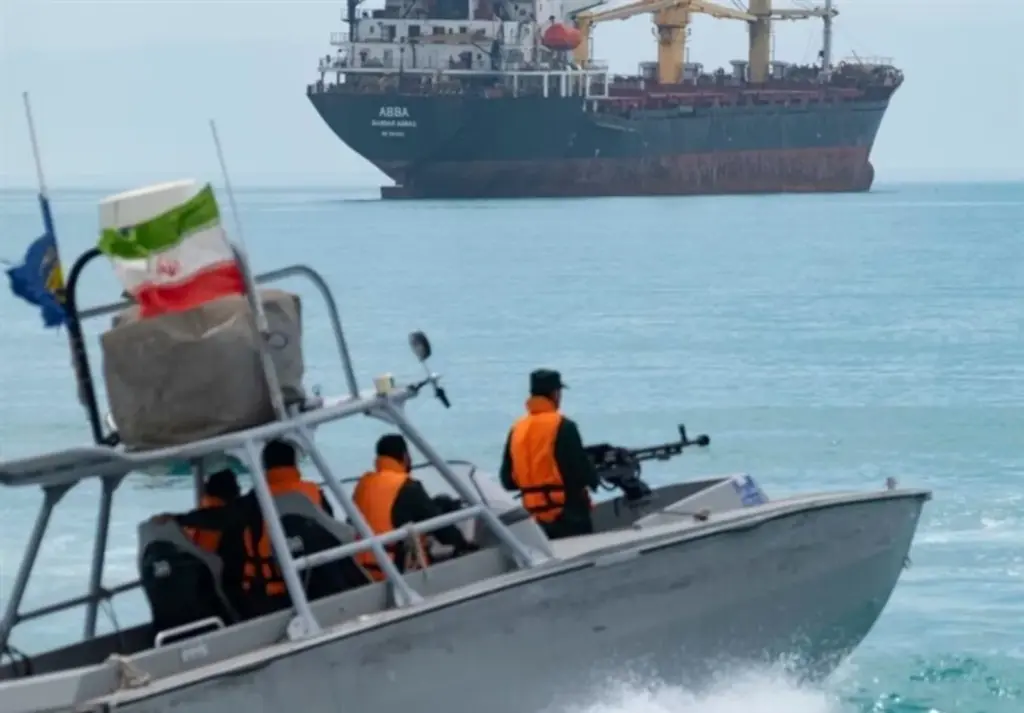
“It is unlikely that ships will go full speed to take the same risks while also paying a high tax,” warns Paul Donovan, chief economist at Swiss investment bank UBS, in an analysis published this Tuesday. “A 20% fee would be about 15 times higher than the levy Iran had considered and, being a proportional tax, would amplify fluctuations in the price of oil,” he recalls.
The International Maritime and Baltic Council (Bimco), the largest shipowners’ association by number of members, estimates that supertankers — which carry between one and two million barrels of crude — would have to pay about 27 million dollars (23.5 million euros) per trip, while container ships would have to pay between 65 and 260 million, depending on their cargo capacity. “While some cargo owners and operators might decide to absorb these additional costs, in most cases this expense will be passed through the supply chain and reflected in higher costs for consumers,” the analysis sent to this newspaper explains.
The shipping sector, which was already opposed to the possibility of an Iranian fee or toll, is furious with Trump’s idea. “Charging tolls for passage through international waters would be fundamentally wrong,” Hapag-Lloyd shipping company tells EL PAÍS in a comment sent by email. “Tolls for infrastructures like the Suez or Panama canals are different because they reflect significant investments in infrastructure. That is not the case in Hormuz.”
The , the basic text regulating global relations in this key area, prohibits the application of “tolls” in exchange for the passage of merchant ships through natural straits, although some, like the Turkish straits, do apply pilotage fees due to their greater navigational difficulty (the Bosporus has a minimum width of 700 meters compared to Hormuz’s 30 kilometers).
Brazilian President Luiz Inácio Lula da Silva has been harsher, even comparing Trump to pirates: “He says he will clear the strait, but for every ship, the owner of the oil must pay him 20%. This used to be called piracy. An important country like the U.S., which fought piracy for a long time, cannot now become a pirate.”
Price Increases
The toll proposal has been joined by the decision to reimpose the U.S. blockade in the Gulf of Oman to prevent trade to and from Iranian ports, something that also increases tension in the area and which, according to Jakob Larsen, head of security at Bimco, will lead Iran to “increase its threats” against maritime transport. Trump’s proposal, which increases transportation costs and represents an “additional disincentive” for transit through the strait, would only make sense if it contributed to a “significant reduction of the Iranian threat,” which, according to Larsen, “it is not clear how it is expected to achieve.” Therefore, he believes all this entails “a serious risk of escalation” in Hormuz which, combined with the restriction of Iranian crude exports intended by the U.S. naval blockade, “will exert greater upward pressure on oil prices.”
The fragile peace promised by the June agreement “has come to an end,” conclude Gregory Brew, Clayton Allen, and Firas Maksad from the risk consultancy Eurasia Group. It does so, moreover, more than a month earlier than expected: the promise was a ceasefire until August 17, with Hormuz open throughout that period and the world finally taking a breather after a succession of upheavals. “Although it is unlikely for now that the U.S. will resume large-scale bombings against Iran similar to those in the March war, the volume transported through the strait will fall from between 30% and 50% [of pre-war levels, in recent weeks] to between 5% and 15% until both sides reduce tensions.” In plain terms: more expensive oil, gas, and fertilizers, until further notice.