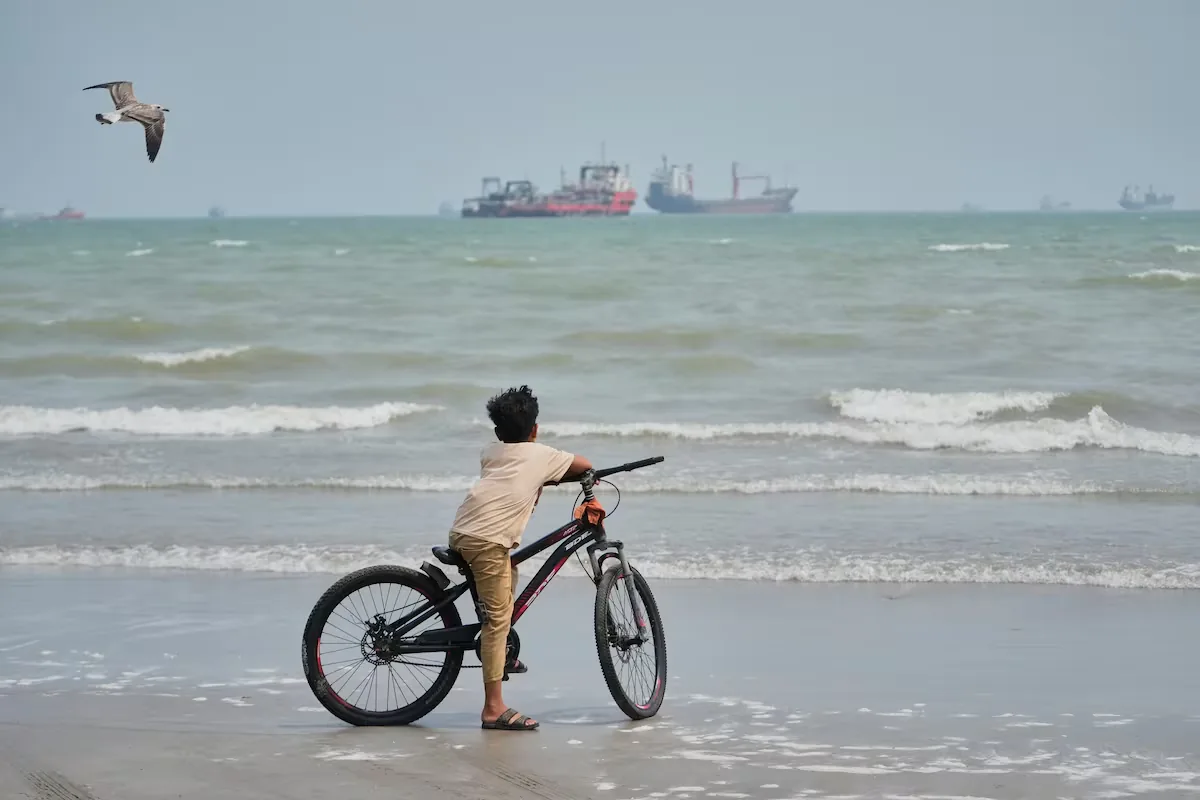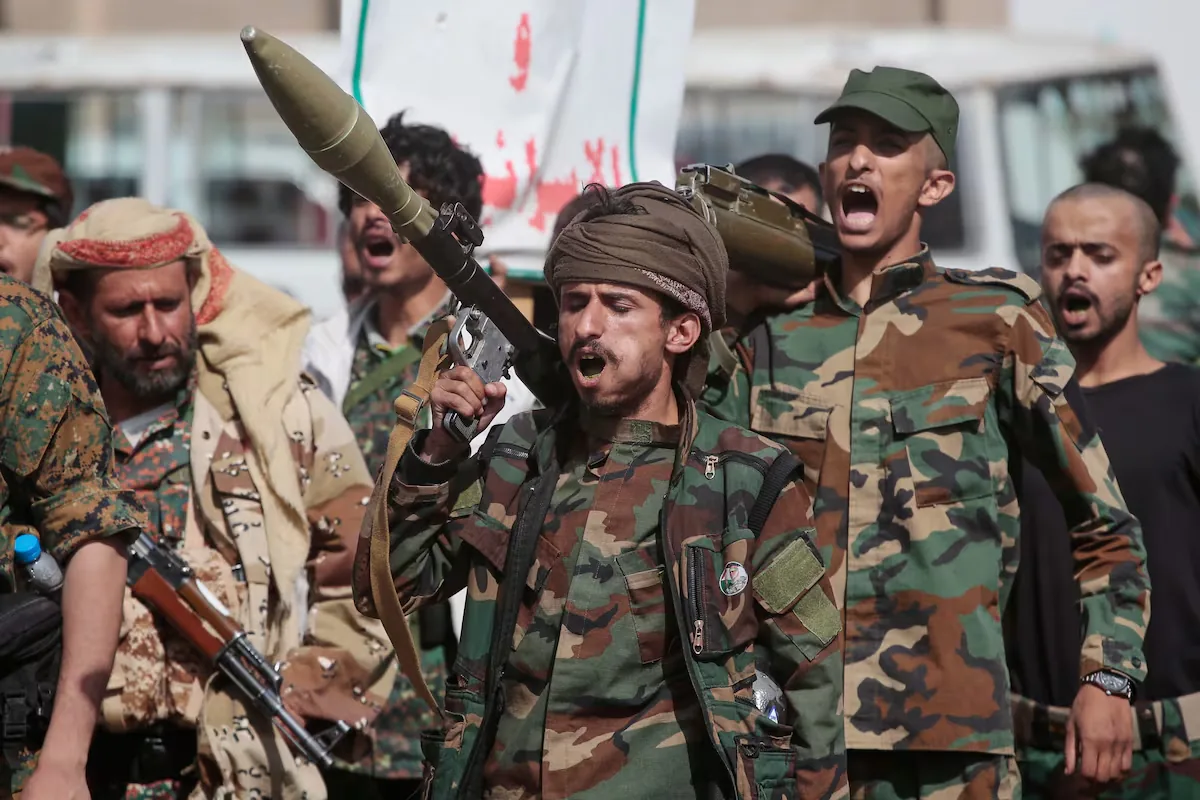
Yemen’s Houthi rebels took control of the strategic port of Mocha on Thursday, on the Red Sea, consolidating their presence near Bab el Mandeb ― the strait between Yemen and the Horn of Africa that connects the Red Sea with the Gulf of Aden ― and one of the world’s most important maritime routes for the transit of hydrocarbon supplies, according to statements from Yemeni military sources collected by Reuters.
Read more The ECB raises rates for the second time this year due to rising energy costs
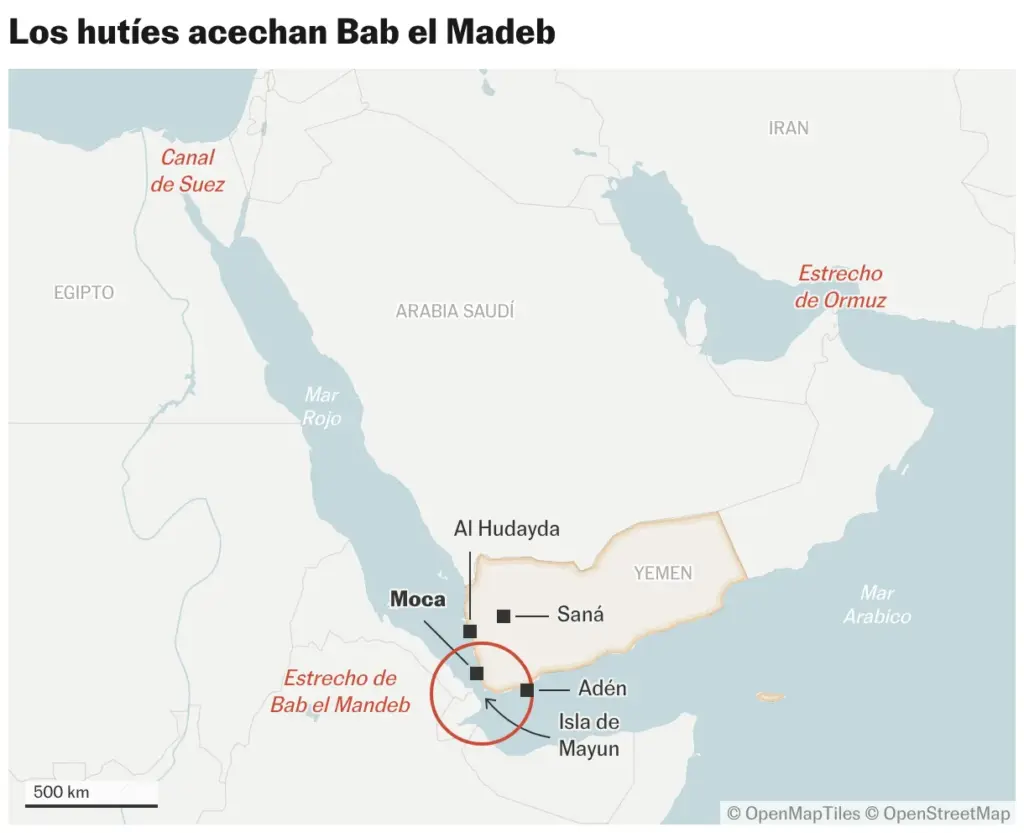
The capture of Mocha occurred hours after the insurgents completed control of the entire Al Hudayda province (southwest), after taking the Hays district overnight. Several witnesses cited by the Efe agency stated they saw convoys of forces loyal to the internationally recognized Yemeni government withdrawing from the port city to the south.
A Houthi spokesperson said on Thursday that navigation through the Red Sea and Bab el-Mandeb remains “safe and normal,” despite the escalation, and that their operations are defensive and will cease when the blockade against Yemen ends.
“The Houthis are very close to controlling Bab el Mandeb, and especially the island of Mayun [in the middle of the strait], where they can place mines or launch missiles to obstruct all maritime traffic to the Suez Canal,” assesses Maysaa Shujaa Al Deen from the Sana’a Center by phone from Cairo.
Four Yemeni government military sources contacted by Reuters say Houthi forces have gained greater control over the area, which would allow their ally Iran to exert a double stranglehold on Hormuz and Bab el Mandeb, with drastic consequences both for crude oil and gas sales. Also for maritime goods trade: Bab el Mandeb is the only possible entry to Suez, a crucial passage for large cargo ships connecting Asia and Europe.
Although Riyadh’s response, which supports the legitimate government parallel to the Houthis, could change the tide: “Government forces are regrouping and the conflict area is flat, so Saudi aviation can stop the Houthi advance towards Aden [capital of the legitimate government],” explains Al Deen. In this vein, Yemen’s recognized government has not confirmed the fall of Mocha and maintains that the withdrawal of its troops in the face of the Houthi advance is part of a reorganization plan to prepare a coordinated operation.
Escalation between Washington and Tehran
This advance on Yemeni ground takes place after the recent escalation protagonized in the Gulf by the United States and Iran. On Tuesday, there was a new exchange of attacks in what is already a continuation of the war. The US Central Command sank five tankers linked to Iran in the Persian Gulf, in retaliation for two previous attacks by the Islamic Revolutionary Guard against a US warship. Tehran, for its part, responded by attacking ships and destroyers in the Strait of Hormuz, as well as US bases in Jordan.
The Houthis joined this crossfire, causing fires at oil facilities in southern Saudi Arabia, which forced the petro-monarchy to temporarily suspend part of its operations, according to the Saudi Ministry of Energy, and drove the price of crude oil above $100 (about 86 euros) per barrel.
Back in 2019, a Houthi drone attack on Saudi company Aramco’s facilities caused the shutdown of more than 40% of crude oil production (90% state-owned). According to a report published yesterday by OPEC, Riyadh reduced its production by 23% in August, representing its lowest level of the year.
Given the volatile situation, Pakistan conveyed a Saudi warning to Tehran to contain its Houthi allies, to which a senior Iranian official responded that Iran “does not control” the Yemeni group.
Riyadh may seek regional backing to respond and thus avoid a direct confrontation with Tehran, through recently signed regional agreements, either with Ankara and Pakistan in the Mecca Pact — of which not all official details are yet known — or, more relevantly, with the so-called Red Sea coalition.
This last initiative was announced on July 31 by Riyadh, creating a multinational military alliance to protect freedom of navigation and energy supply routes through Bab el Mandeb, the Red Sea, and the Gulf of Aden against Houthi attacks.
Vanguard in the axis of resistance
With Iraqi militias neutralized by their own domestic dynamics, Hezbollah weakened, and Assadist militias in Syria and Hamas in Gaza deactivated, the so-called axis of resistance has proven to be much less decisive as a deterrent element.
It has been the blockade of the Strait of Hormuz that has given Tehran a strategic advantage in an asymmetric war against two superior military powers: the United States and Israel. In this context, the Houthis and their ability to disrupt traffic in the Bab el Mandeb strait have gained greater relevance in that ring of regional allies.
US President Donald Trump, whose popularity has been weighed down by rising fuel prices, said on Wednesday that he trusts the war will end shortly after the November legislative elections, and accused Tehran of trying to influence the election outcome.
The Houthis’ entry into the war launched by the US and Israel against Iran dates back to March 28, although they largely stayed out ― after being heavily bombed by the US and Israel in 2025 ― before declaring a naval blockade against Saudi Arabia in July and intensifying attacks on the south of the kingdom in September.
Riyadh and Tehran, despite rapprochement fostered by Chinese mediation, remain long-standing regional rivals for leadership of the Muslim world. Internally, after the Houthis took control of the north and west of the country in 2014, southern and eastern Yemen have suffered new civil wars between Yemeni forces backed by Saudi Arabia and those financed by the United Arab Emirates.
“Negotiations between the Houthis and Riyadh are stalled, whether via the United Nations or Oman,” concludes the Sana’a Center analyst, who sees the Houthi movement as a strategy to seek a regional repositioning that favors Iran more in its conflict with the US than the Yemeni militia in its struggle with Saudi Arabia.