



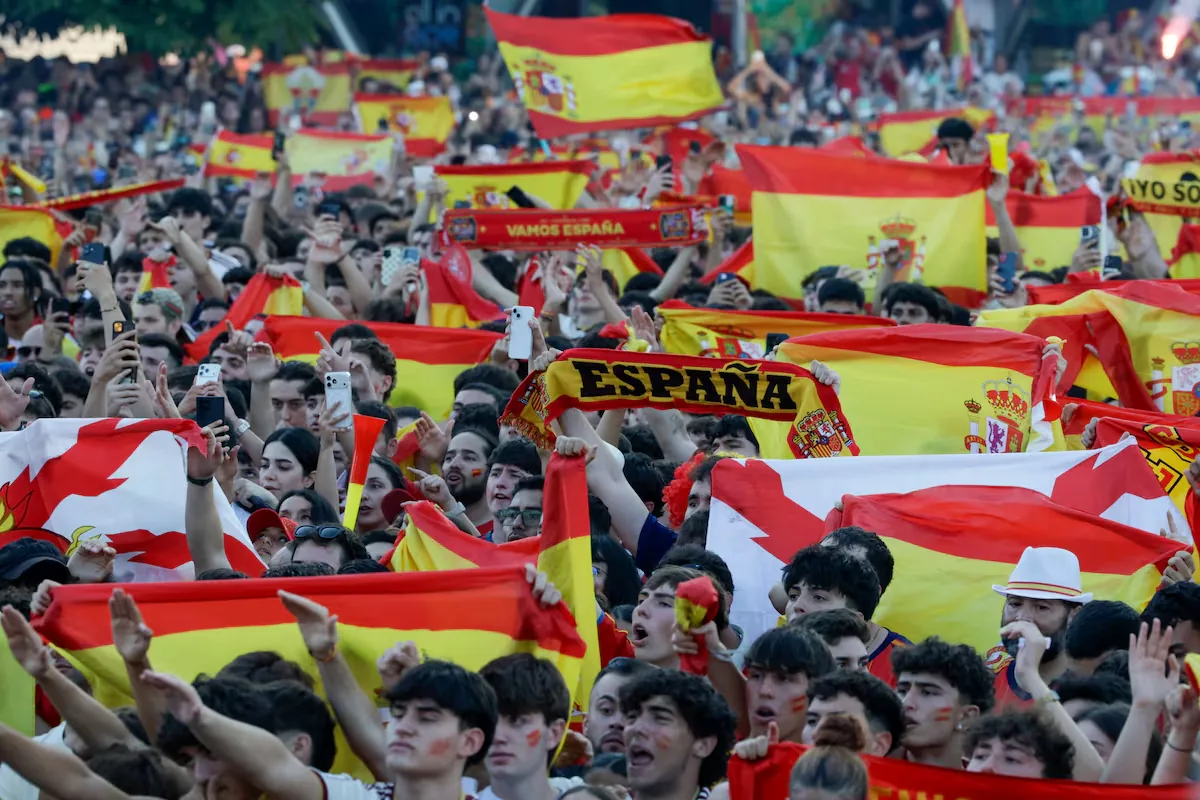
The Spanish national football team, world champion for the second time in history after winning the final on Sunday against Argentina, will land this Monday at 12:50 in Madrid and will celebrate their victory with authorities and fans. Spain departs this early morning from Newark International Airport, New Jersey, aboard an Iberia A350 plane. In the afternoon, La Roja will be received by the Royal House and, subsequently, will head to La Moncloa, before starting the open-top bus tour with which they will celebrate their victory with the fans.
EL PAÍS offers the latest World Cup celebrations news for free. If you want to support our journalism, subscribe.

Spain’s World Cup victory dominates television: 15.7 million viewers
Spain’s victory over Argentina in the World Cup final has dominated Sunday’s audience, gathering an average of 15,706,000 million viewers in front of the TV and achieving an 87.1% share, according to Barlovento based on Fiftyfive data.
These are the audience figures for the match and extra time combined from La 1, la2cat, TDP, and Dazn, a number that rises to 20,105,000 million people if those who tuned in at any point during the broadcast (unique viewers) are counted.
These figures make the final the most-watched match in World Cup history and the second most-followed event in Spain’s history, according to the consultancy. The first was the penalty shootout against Portugal in the 2012 Euro Cup (18.1 million viewers).
The first ninety minutes of the match were watched by 19,168,000 unique viewers, 15,385,000 average viewers, and the share was 86.3%. On La 1 alone, almost 17 million people watched for at least one minute, 13.3 million watched on average on TVE’s first channel, and from the start, 13.3 million with a 75.1% share.
The extra time was watched at some point on all channels by 18,120,000 unique viewers, 16,608,000 average viewers from start to finish, and the share was 89.3%. On La 1, 15.7 million unique viewers watched, with an average audience of 14.4 million and a 77.6% share.
The golden minute of the final was at 24:01 with 17,082,000 viewers. These were sixty seconds in which the share reached 91.2% across the four channels combined.
The match was watched mainly by more men (their share was 91.1%) than women (83.1%), and the data stands out in the age group between 13 and 24 years (95.2%) and the follow-up in the communities of Madrid (92%), Balearic Islands (89.4%), and Andalusia (89.2%). (Efe)
About 46,000 people celebrated Spain’s victory in Barcelona
About 46,000 people celebrated last night in Barcelona the victory of the Spanish national team in the World Cup final, a celebration that took place festively and with hardly any incidents, except for the arrest of three people for thefts during the fan gatherings.
According to the Mossos d’Esquadra, most fans, about 27,000, celebrated the Spanish team’s victory on the Fórum platform, where the Barcelona City Council had installed a giant screen measuring 8 x 5 meters to follow the final.
Another point where many supporters of La Roja gathered was Plaza Catalunya, where about 13,000 people gathered to celebrate the victory over Argentina, while 5,000 gathered at the Arc de Triomf and about a thousand fans at Plaza de España.
The Mossos d’Esquadra, who had organized a deployment of about 300 officers to ensure the safety of the gatherings, made three arrests. Two arrests took place on Ronda de Sant Pau for a violent robbery of a mobile phone, while the third arrest occurred at Plaza Catalunya for the theft of a backpack, in addition to an administrative complaint for disobedience. (Efe)
Madrid prepares from early morning to receive the world champions this afternoon
The Madrid City Council has designed a special security and mobility plan for the celebration of the Spanish national football team’s victory after their win in the 2026 World Cup, which includes the occupation of the area around Plaza de Cibeles and impacts on pedestrian and motorized mobility in the area.
The World Cup victory celebration will be this Monday, from 18:00 to 23:00 at Cibeles and its surroundings, and it is expected that more than 60,000 people will come to celebrate the victory with the Spanish team.
The Madrid City Council has reported that the stage assembly work at Cibeles has already begun, and its dismantling will extend until Tuesday early morning, so since midnight last night, Plaza de Cibeles, Paseo de Recoletos, and Paseo del Prado between Plaza de Neptuno and Plaza de Cibeles are being progressively closed to traffic, affecting mobility at Glorieta del Emperador Carlos V.
Alcalá Street between Plaza de Cibeles and Plaza de la Independencia, and between the latter and Cedaceros Street, will also be affected. There will also be closures on Gran Vía between Alcalá and Hortaleza streets, affecting mobility at Plaza de España, Princesa, and Ventura Rodríguez. These traffic closures may be extended or modified depending on the crowd size and the needs perceived by the authorities.
The Madrid City Council recommends that citizens who want to travel to the celebration area use public transport. Metro lines 1, 2, 3, and 4 will be reinforced until the end of service, although for security reasons, the Banco de España Metro station will be closed.
Some lines of the Municipal Transport Company will be diverted due to the celebration, and up to ten buses will be available at night to meet possible increased demand.
The celebration will also affect several Bicimad stations, with bases 86, 94, 106A, 106B, 10, 93, 104, and 20A located in Cibeles, the Recoletos train station, those located in Plaza de Colón, Marqués de la Ensenada, Plaza Margaret Thatcher, Castellana with Hermosilla, and Banco de España out of service.
Regarding public parking, traffic closures may affect access to Serrano III, Sevilla, Recoletos, Las Cortes, and Plaza del Rey. (Efe)
World Cup football
The World Cup of inequality
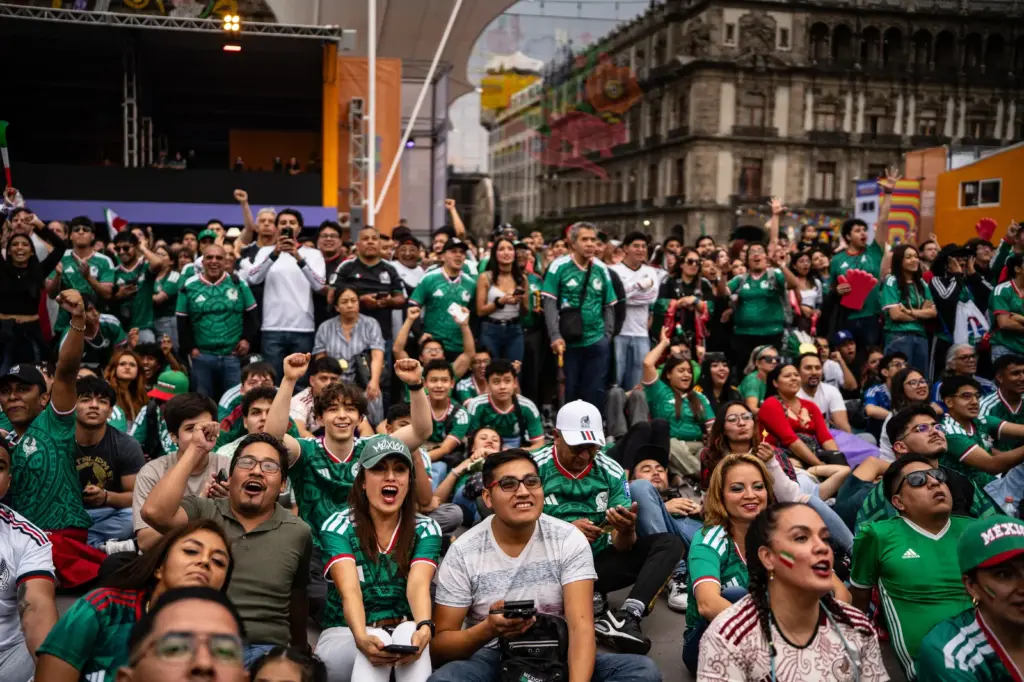
Mexico is a deeply unequal country. This characteristic was very clearly manifested during the 13 matches of the 2026 World Cup played in our country. The most evident form was the segregation between the few who could afford a ticket to access one of the World Cup stadiums and those who could not afford that luxury. To live and enjoy the World Cup in their own country, the vast majority of Mexican fans ended up being displaced for economic reasons to public squares. This phenomenon, which surely had been present in the other two World Cups played in Mexico, seems to have been exacerbated this time. I consider that there are at least three factors that explain it: one on the supply side, another on the demand side, and one more on the interaction mechanism between the two. Let’s look at each element separately.
You can read the full column here
Incidents
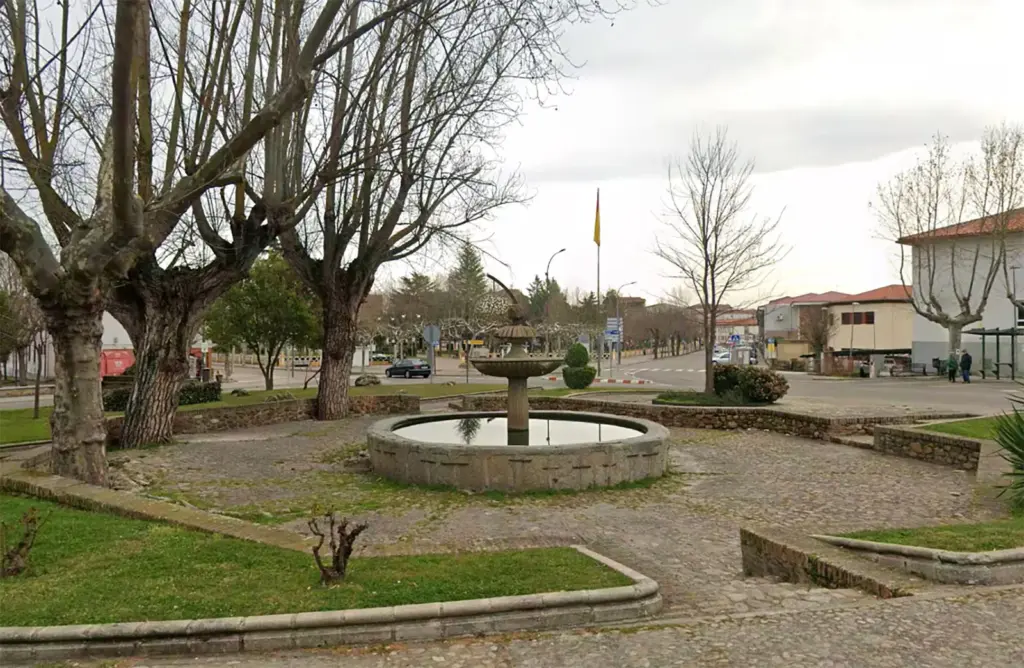
A 13-year-old dies in World Cup celebrations in Ciudad Rodrigo (Salamanca) due to a fountain collapse
A 13-year-old has died in Ciudad Rodrigo, Salamanca, and two other people have been injured due to the collapse of the fountain where they were celebrating the Spanish national football team’s victory in the World Cup.
You can read the full information here
Madrid celebrates Spain’s World Cup victory almost all night
Thousands of people spent almost the entire early hours of this Monday at Plaza de Cibeles in Madrid to celebrate Spain’s victory in the World Cup final, in which the team led by Luis de la Fuente defeated Argentina by a narrow margin thanks to a goal by Ferran Torres in extra time.
Until the police began to clear the crowd around 5:00, thousands of people were still counted filling this central square of the Spanish capital and the main access roads to it, such as Alcalá Street and the Paseos del Prado and Recoletos.
During this early morning, the celebration also extended to other points in the capital, such as Puerta del Sol, where a few hundred people celebrated until around 4:00 the second world title for Spain, accompanied by a brass band.
The emergency services of the capital and the Community of Madrid plan to issue a report on incidents resulting from these celebrations in the early hours of this Monday.
The decoration and infrastructure are already prepared at the Cibeles fountain for the Spanish national team to celebrate the victory with all the fans this Monday.
On Sunday afternoon and night, nearly 40,000 people gathered at Plaza de Colón and Madrid Río to watch the match. Also, 15,000 people gathered at Movistar Arena, one of the city’s multipurpose pavilions. Bars and terraces were also packed, while other venues, such as Madrid Autocines or Parque Warner, installed giant screens to follow the match. (Efe)
World Cup Football
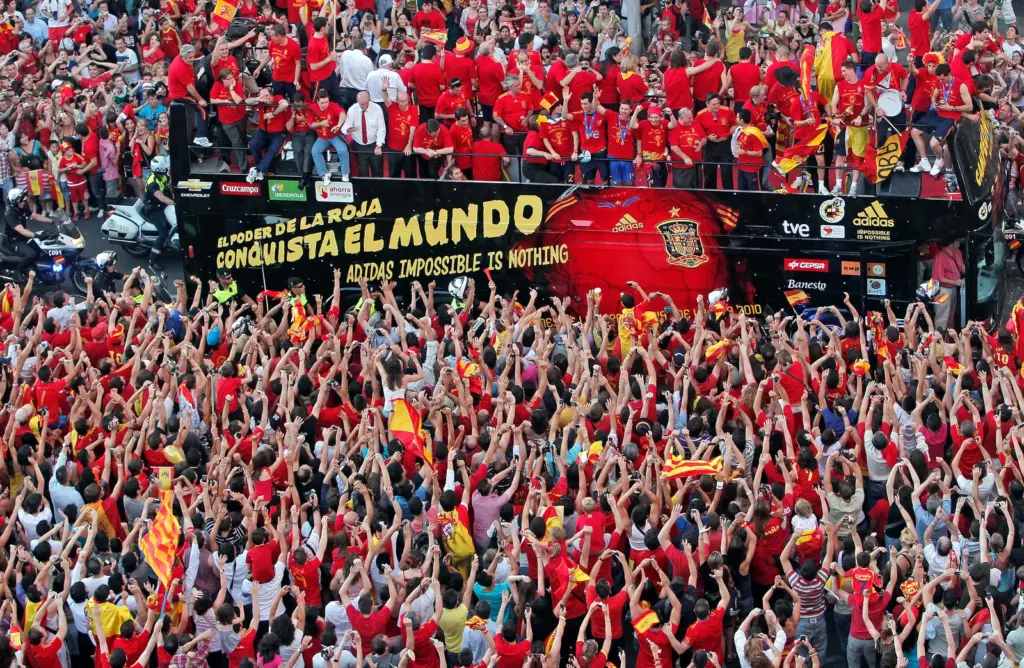
Where and when is Spain’s celebration after winning the World Cup: route and schedule of the parade through the streets of Madrid
The Spanish National Football Team is heading to Spain after being crowned world champions. The delegation led by Luis de la Fuente will start a day full of events upon arrival in Madrid and will conclude with a big celebration with all the fans.
You can check the route and schedule of the celebration here
Good morning. We start the live narration of the celebrations of the Spanish national football team’s victory, world champion for the second time in history after winning the final on Sunday against Argentina. The players will land at 12:50 in Madrid and will celebrate their victory with authorities and fans.
Spain departs this early morning from Newark International Airport, New Jersey, aboard an Iberia A350 plane. In the afternoon, La Roja will be received by the Royal House and, subsequently, will head to La Moncloa, before starting the open-top bus tour with which they will celebrate their victory with the fans.
Read more Spain inhabits eternity