




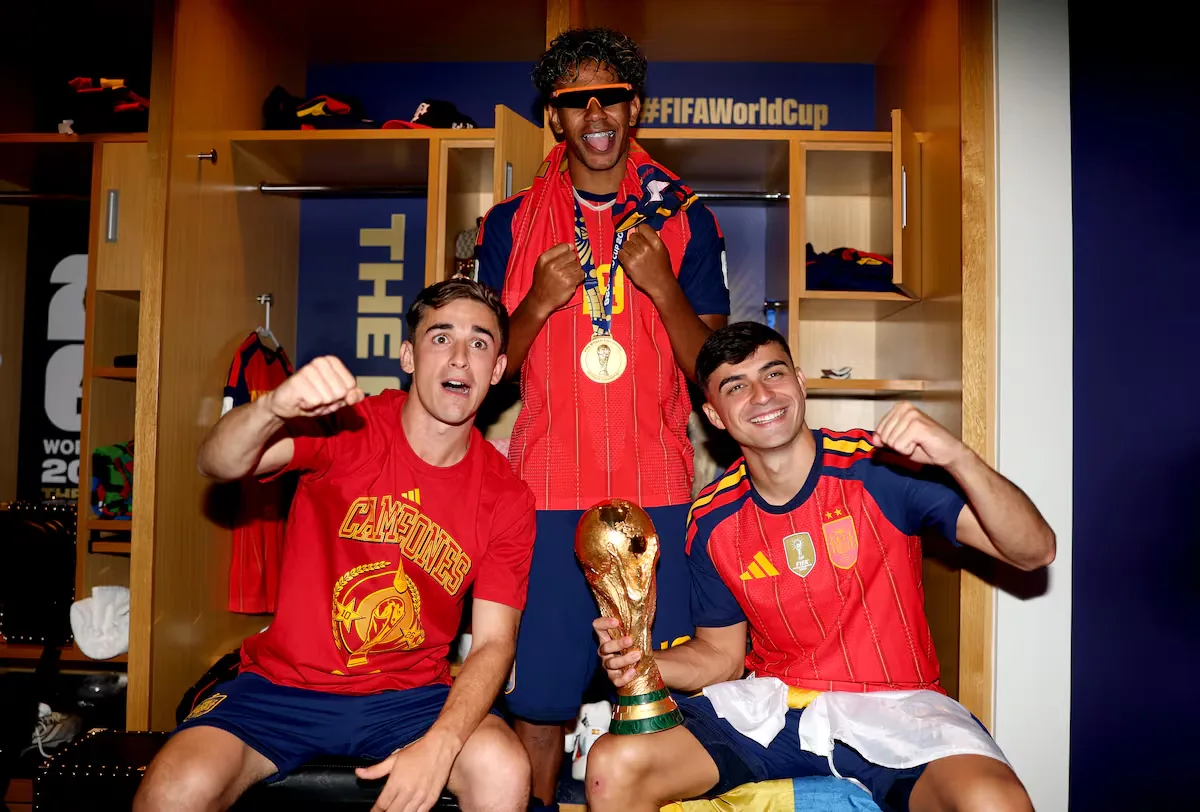
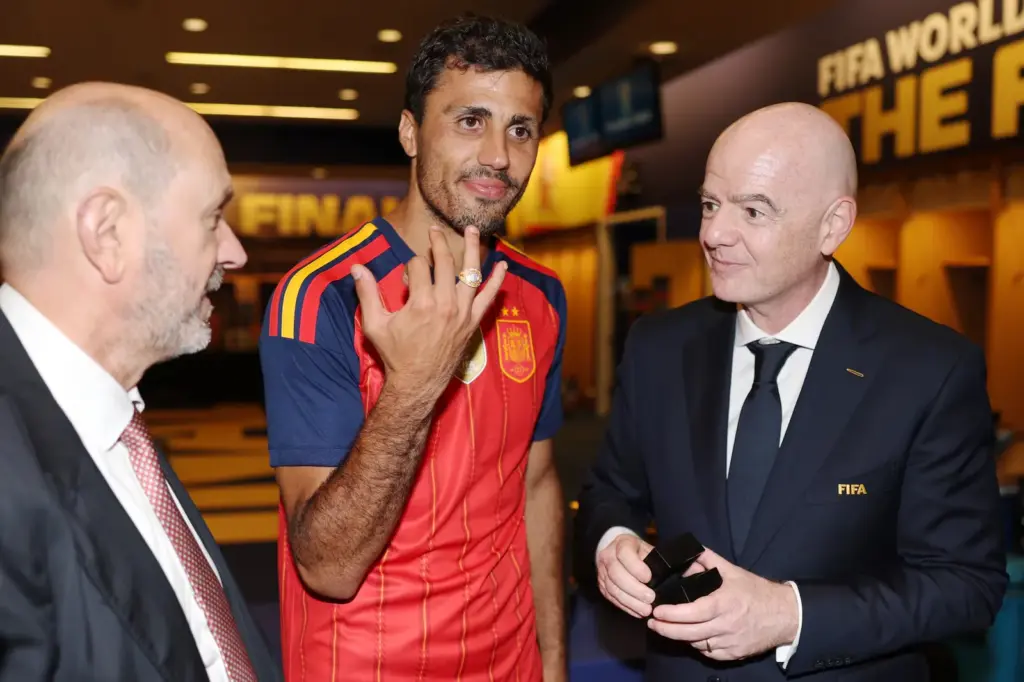
The last to leave the Spain locker room at the New Jersey Stadium was Rodri Hernández. He carried the World Cup in his arms. Alongside the captain, a member of the Roja staff accompanied him. He had to help carry the rest of his belongings: none other than the tournament’s Golden Ball, the replica of the cup protected in an exclusive Louis Vuitton Trophy Trunk, and another commemorative version, but made of Lego, FIFA’s sponsor. Plus his clothes, of course. Afterwards, he went through the mixed zone to take Dani Olmo to the bus. It was 9:40 PM and for Rodri, Spain’s journey at the stadium where the national team conquered the world for the second time in its history was coming to an end.
Three hours earlier, the Empire State had been painted with the colors of Spain. La Roja had decisively defeated Lionel Messi’s Argentina. The celebration was effusive, but not theatrical. One of those present on the pitch was even surprised: “They still don’t know what they achieved.” Lamine rolled on the grass with his friend Nico Williams, affectionately hugged Messi, and looked for his family before going through doping control. Before that, though, he took a photo with the cup. Everyone did, including the players’ families, protected with gray vests to be recognized, many already friends among themselves after more than 40 days accompanying Spain’s players.
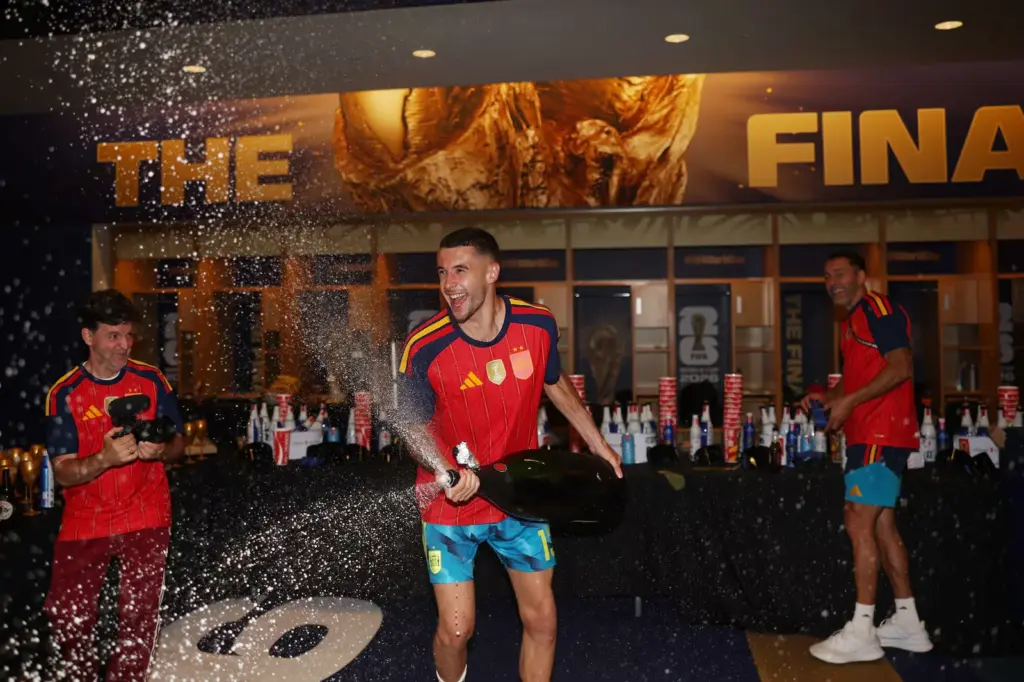
“When you aspire to a competition like this, where you have to be focused for 51 days, it’s very important to maintain that feeling within the group. That respect between players who get more minutes and those who get less. In that, I think the coach is exceptional. He has managed everyone’s emotions very well. Tactically, he gave us four premises to secure the matches,” recalled Unai Simón. The same idea as Rodri. The chemistry of La Roja on the field started in the locker room. “We help each other, have fun, enjoy ourselves… And that’s important,” emphasized the captain of La Roja.
The staff of the Roja expedition in the United States say that in Luis de la Fuente’s locker room there were different affinity groups, but there was great cohesion. “They mix,” they clarify. The comparison then arises with the squad that won the Cup in South Africa: “That generation was more divided: the Madrid players on one side, the Barça players on the other.” In the United States, therefore, it was not unusual to see Ferran Torres with Pubill and Marcos Llorente sunbathing, nor Cubarsí spending time with Zubimendi and Oyarzabal. And although they added new members to their group, no one yet separates Nico Williams from Lamine Yamal.
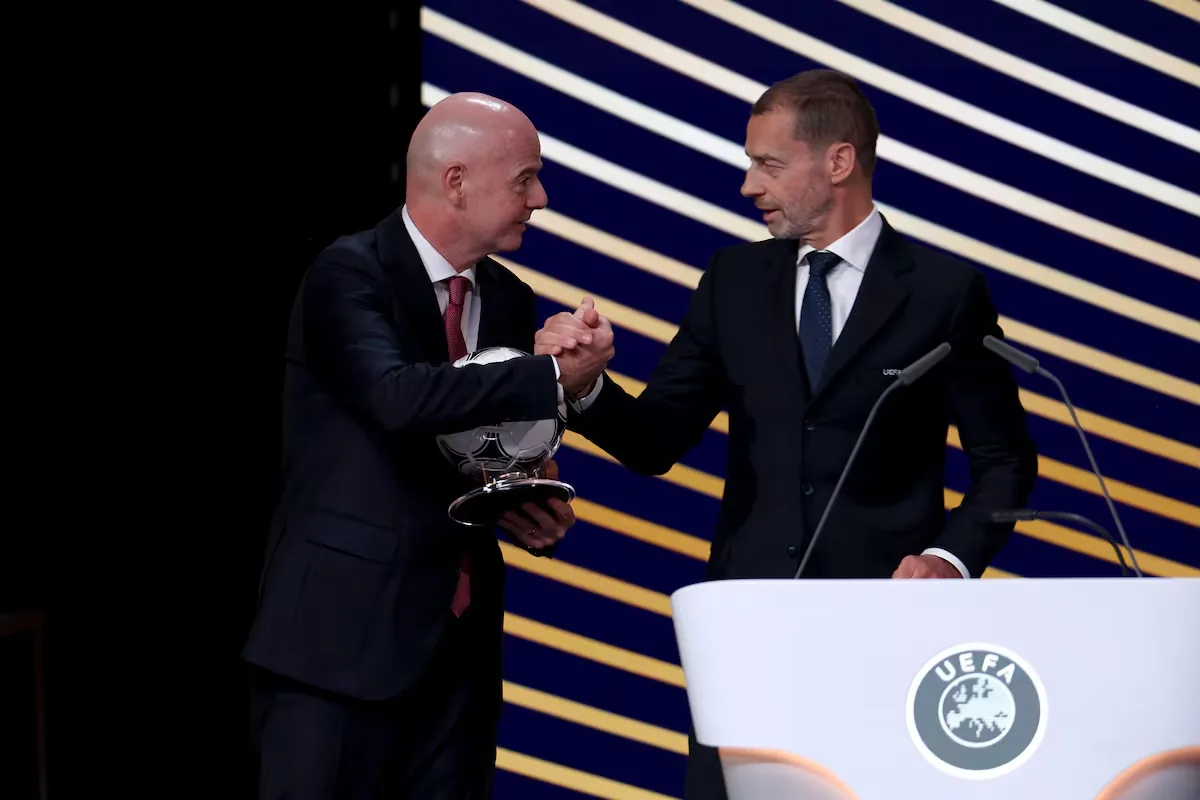
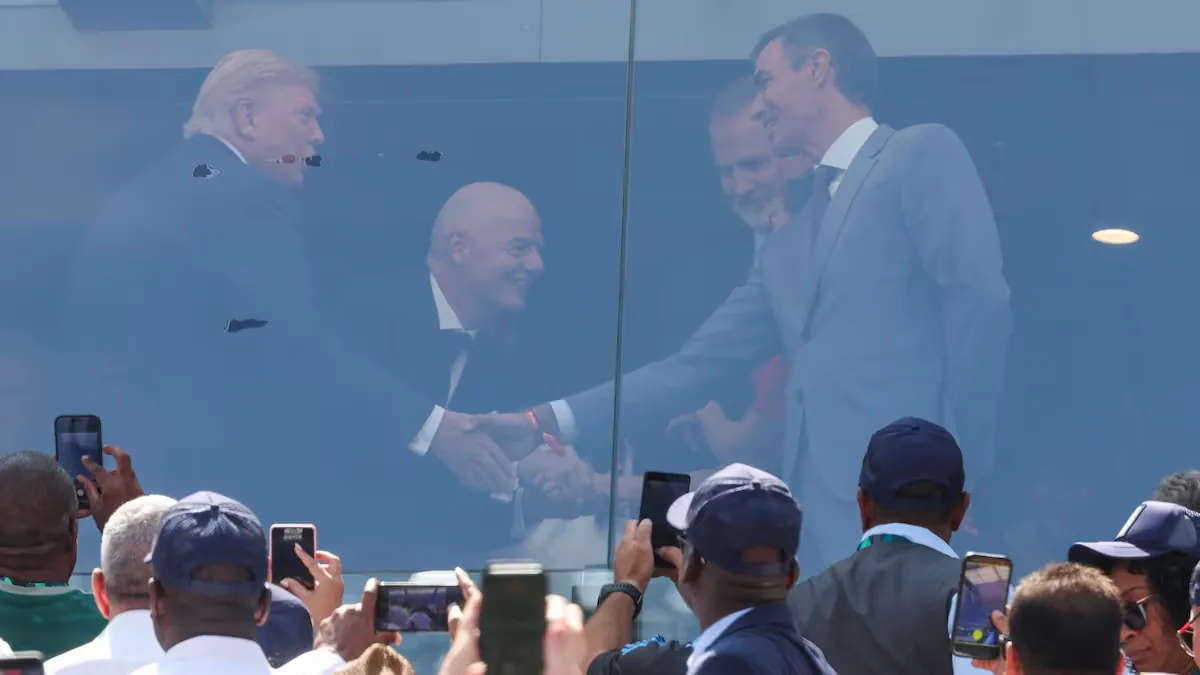
It was hard to get Lamine out of the New Jersey locker room. He was one of the last to leave. He wore a cap and glasses. And completed his outfit with four necklaces and a luxurious watch. He was no longer in charge of the music. Earlier, through the catacombs of the New Jersey Stadium, Borja Iglesias had passed accompanied by Víctor Muñoz with the speaker. Dirty Cash (Money Talks) by PAWSA & Adventures of Stevie V was playing. He had fulfilled his role: a cold greeting with Trump at the medal ceremony — Lamine also showed distance with the U.S. president — and warmth in the locker room.
The players kept smiling like Borja. Or like Cubarsí, who needed the help of two staff members to carry everything he had. Something similar to what had happened to Rodri. Between the replica, the Lego, and the clothes, he had no hands free. “Our boy, the best of the tournament,” they commented. And when the central defender, chosen best young player of the World Cup, was asked how it had been to mark Messi, he regained his shyness. The shyness he never has on the field. “I had never seen him face to face. When he came to greet me, then I believed it was real, that we were here. It’s a huge privilege to share the field with him. He’s my idol and I also feel sorry he lost, but I’m happy for our victory,” he later said in the mixed zone.
Luis de la Fuente passed accompanied by his trusted person within the federation staff. “The good ones are them,” he emphasized. And immediately pointed towards the locker room door. Some of his guys were still inside. His entire work team had already passed through. “We danced on Argentina!”, they highlighted. It wasn’t arrogance. At least, it didn’t seem so. De la Fuente’s staff put words to what had happened on the field. “We don’t care. What matters are the values you want to transmit. We are an example for many generations and I think they should be too. Now, we enjoy,” Dani Olmo replied when asked about the final image of the Argentine team, with their backs to the Spanish team when Rodri raised the cup to the sky.
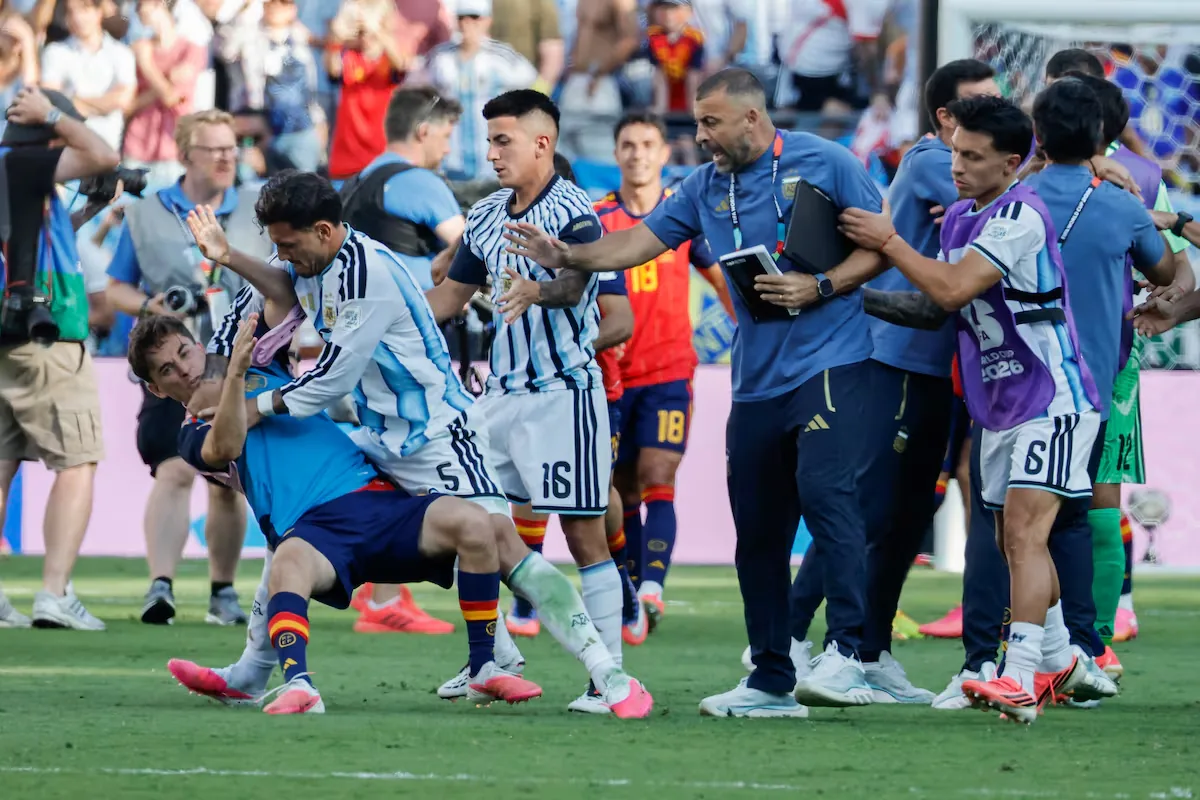
The Argentine players also didn’t want to go through the mixed zone. And, as FIFA requires someone to speak, it was Lionel Scaloni who took over. Alongside him were his two sons; the eldest wore the silver medal hanging. He did so with pride, a different image from that of his players. Some, like Paredes, even lost their composure. “Did you see what Paredes did?”, the Roja players commented as they left the locker room.
The quarrel was already an anecdote. The locker room lights went out and La Roja was already heading to Spain. The wait was at Cibeles square. And Rodri, of course, will offer the Cup. The same one he took from the New Jersey Stadium after La Roja danced on Argentina.