





The footprint of Rome in Spain is much more extensive than the monumental remains in Mérida, Segovia, Santiponce (Seville), Tarragona, Cartagena, or Lugo, among others. The Empire left seeds in hundreds of towns scattered throughout the Spanish geography that shape much of today’s society. “It is a civilization that goes far beyond the circus, the beasts, and the orgies,” jokes the researcher and director of Clunia Sulpicia (Peñalba de Castro, Burgos), Miguel Ángel de la Iglesia, referring to the most indelible stereotypes of Rome. Towns that today make up what is known as empty Spain were 2,000 years ago fundamental administrative, economic, cultural, and social centers for the Empire. Now, these localities, some with fewer than a hundred inhabitants, cling to this glorious past to recover it as a development engine, beyond the festivals.
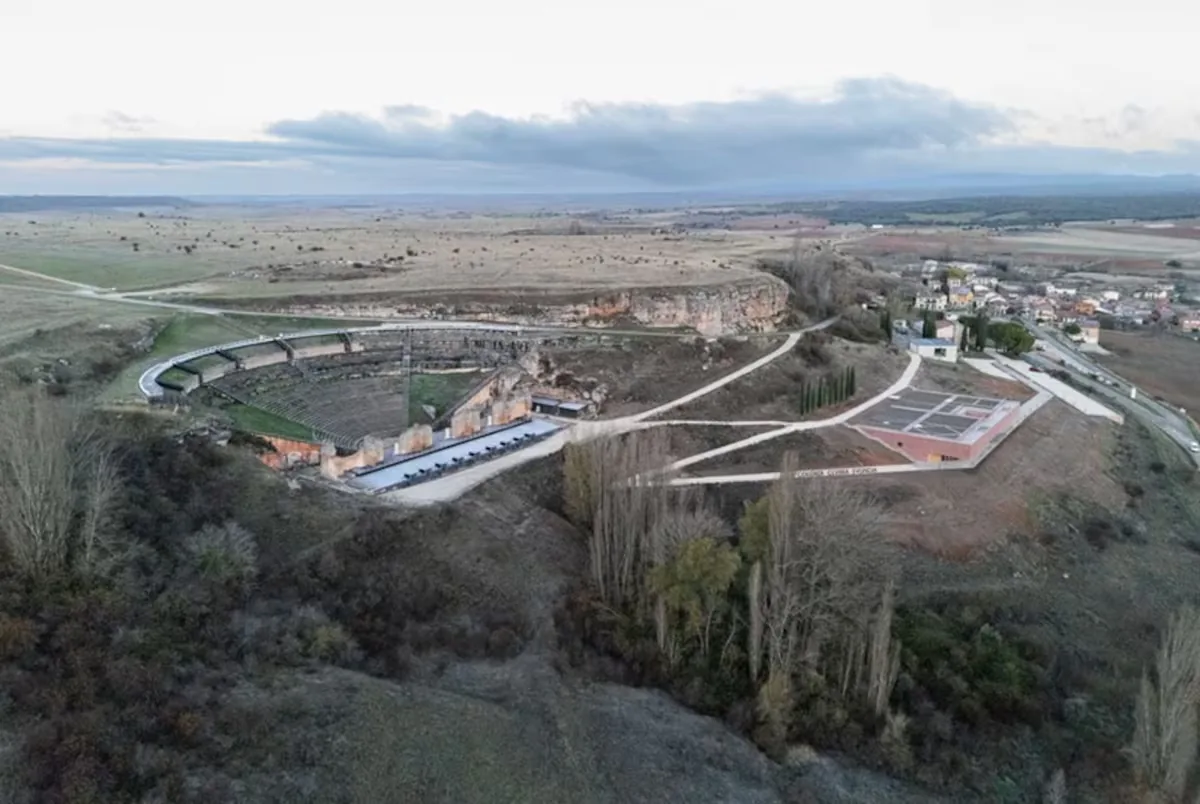
Clunia Sulpicia is precisely one of these examples. This site, which was a Roman conventus (administrative and judicial center), is located next to a population with about 70 registered people, of whom only half reside regularly. But it once had 30,000 inhabitants and a theater with a capacity for 10,000 spectators. From the beginning, it was understood that the monumental rehabilitation would be incomplete if limited to the archaeological site.
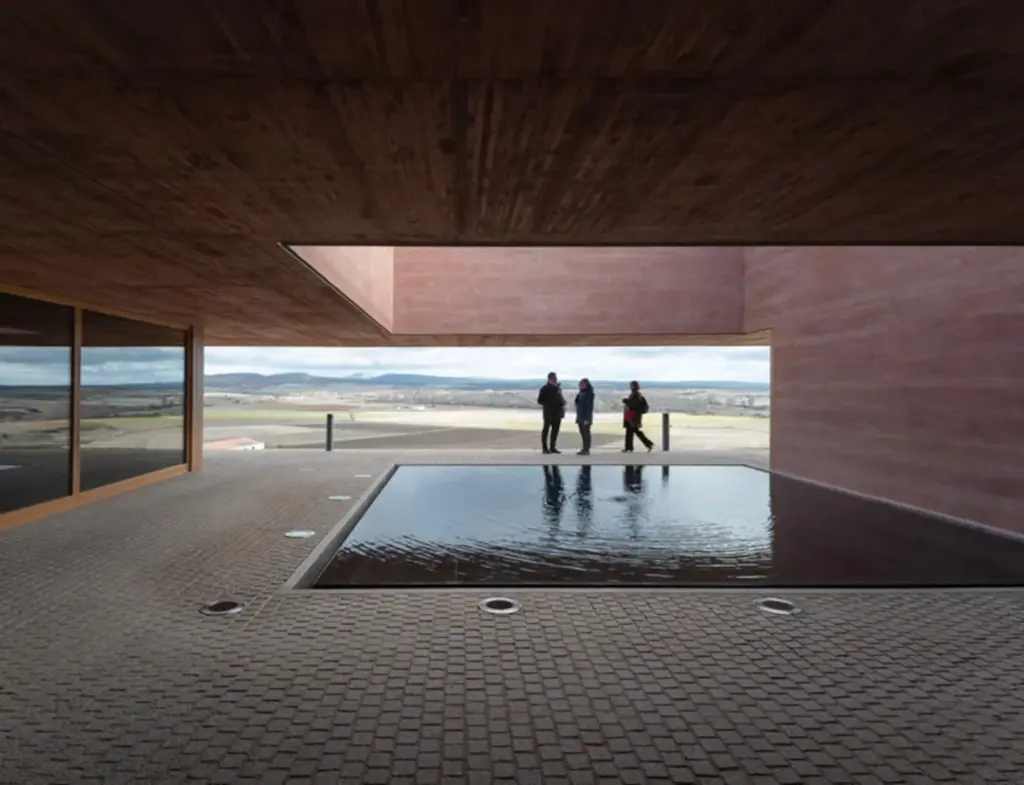
That is why a new, radically contemporary center was planned next to the site to serve as a revitalizing engine for the area. This complex, which has been awarded the Castilla y León Architecture Prize granted by the León professional college, was designed by Mercedes Linares from Huelva and Antonio Tejedor from Seville, both architects, professors at the University of Seville, and co-authors of the Visitor Center of the Roman Theater of Málaga.
“It is a territorial device,” Linares explains to highlight its conception as a development tool and historical and cultural center in perfect relation to the territory. Its design responds, according to Tejedor, to a “pedestal” of the rock beneath which it rests and which forms a natural monument by itself. All interior and exterior elements link to the history of Clunia Sulpicia and the land that supports them, from the origin of the woods (Sorian pine) to the water sheets that connect the space with the pools and caves that gave life to the city. The cost of the work has been 4.6 million euros.
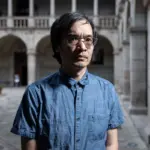
Miguel Ángel de la Iglesia, besides being director of Clunia Sulpicia, is a member of the Architectural, Heritage, and Cultural Landscape Laboratory. His group has been responsible for the restoration of the Roman canal of Yeres, also awarded the Castilla y León Architecture Prize. With a minimal investment of 160,000 euros, they managed to enhance 500 meters of a fundamental canal in the Roman gold mine of Las Médulas, declared a World Heritage Site in 1997.
“The Clunia Sulpicia visitor center is the final point of a process that began with a master plan developed by the Landscape Laboratory. Elements like these are engines of rural development, reference points that attract the population,” explains the architect, who highlights a change of trend in the area, with many emigrants returning after retirement.
For them, for potential visitors, and for the business, educational, and social fabric of the area, the new complex was created. “We organize courses and intend to use the building not only for those who visit the site but also as a cultural, social, and economic center. If winemakers want to meet or hold a small celebration, they can use the auditorium or classrooms,” specifies Iglesias, who believes there is much more potential than organizing traditional festivals.
It is about adding users to a site that already has followers, mostly with archaeological and cultural interest. “We want to teach people that what they are seeing is much more. Clunia had courts, registries, hosted assemblies of the cities in the area, taxes were decided, there were artists… all that which Roman civilization has, besides games, theater, and horse races,” recounts De la Iglesia.
A-Roma
This project aims to be the seed of a network, initially regional, led by the manager of the Las Médulas Foundation, Marián Revuelta, who promotes the A-Roma project (originally called Traces of Rome), which seeks to bring together the most relevant imperial-era heritage assets of the community to unify conservation, management, and promotion criteria. Castilla y León has more than 2,600 Cultural Interest Assets (BIC), of which 26 are cities, palace towns, engineering works, and Roman gold mines. Two of them (Segovia and Médulas) are already World Heritage Sites.
Read more Trump approves new 50% tariffs on Canada amid ongoing USMCA negotiations
It is the designation that Itálica aspires to, in Santiponce (Seville), whose proximity to the Andalusian capital makes it one of the regional infrastructures with the most visitors. However, about fifty kilometers further north, in Villanueva del Río y Minas, is the archaeological site of Munigua, one of the most unique and unusual Roman cities on the Iberian Peninsula linked to iron mining exploitation. The difficulty of access, traveling rural roads and opening fences, makes this site an almost unknown gem.
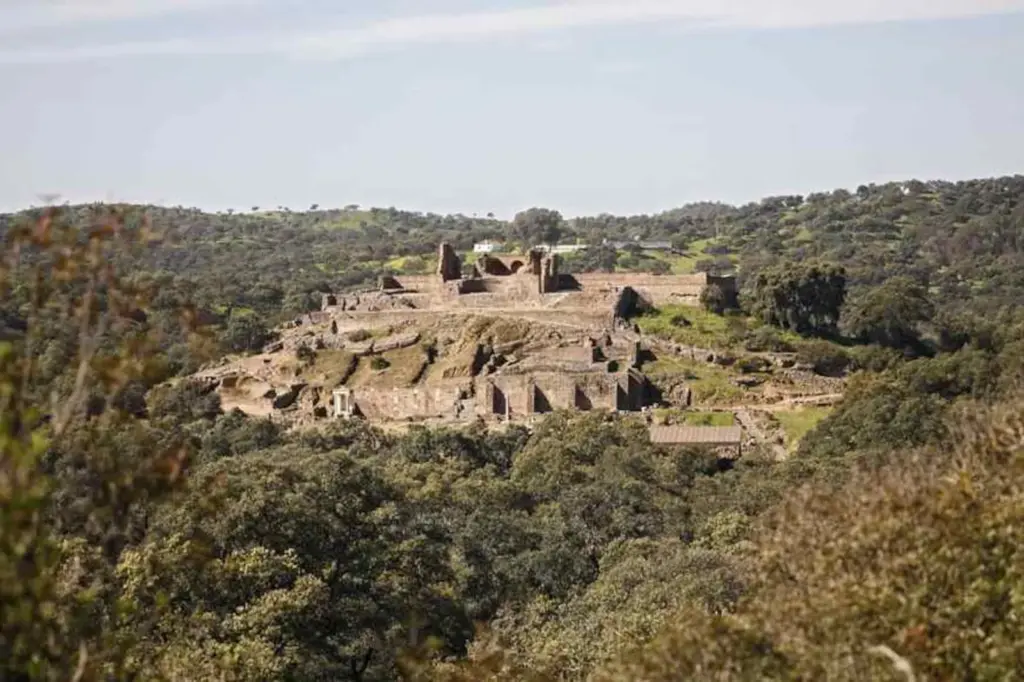
In this regard, Carteia, a site in Cádiz located in the town of San Roque, has a project involving the universities of Cádiz, Marburg (Germany), and Autónoma and Complutense of Madrid to expand knowledge of the ancient Roman city and visualize the main emerging structures. “It is a commitment by the Junta to archaeological heritage as a cultural, educational, and economic engine,” the Junta states.
Like these, other sites scattered throughout the territory of ancient Hispania could benefit from initiatives like A-Roma and turn History into a lever for development.
“The model tries to apply cultural or tourist projects that improve the employability of the territories because, in the end, they are areas with very limited employment opportunities. A-Roma aims to find new niches of economic development through culture and the tourist management of these resources,” explains Revuelta.
For now, 12 sites are part of the network, although the goal is to reach 17 in Castilla y León and, in the future, even cross regional borders. “They are declared cultural interest assets or protected assets with public opening availability and managing entities that give them solidity,” details the foundation manager, who has developed the project with just over 200,000 euros for two years from public aid and Caixabank.
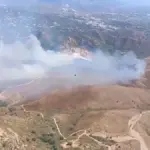
Although the great fire last summer has changed the order of priorities, a “reservation engine to market their own tourist product” has already begun to be created, and they expect the incorporation of private initiatives.
“It is necessary to believe in the resource and be aware that it can be exploited with sustainability criteria. It is not necessary to have thousands of visits a year, but to attract people who stay overnight, promote investments, and make the territory attractive. It is a matter of adding up, of linking resources,” concludes Revuelta as a basic recipe to rescue Roman remains and, with them, the towns that 2,000 years ago were fundamental pieces of the Empire.