






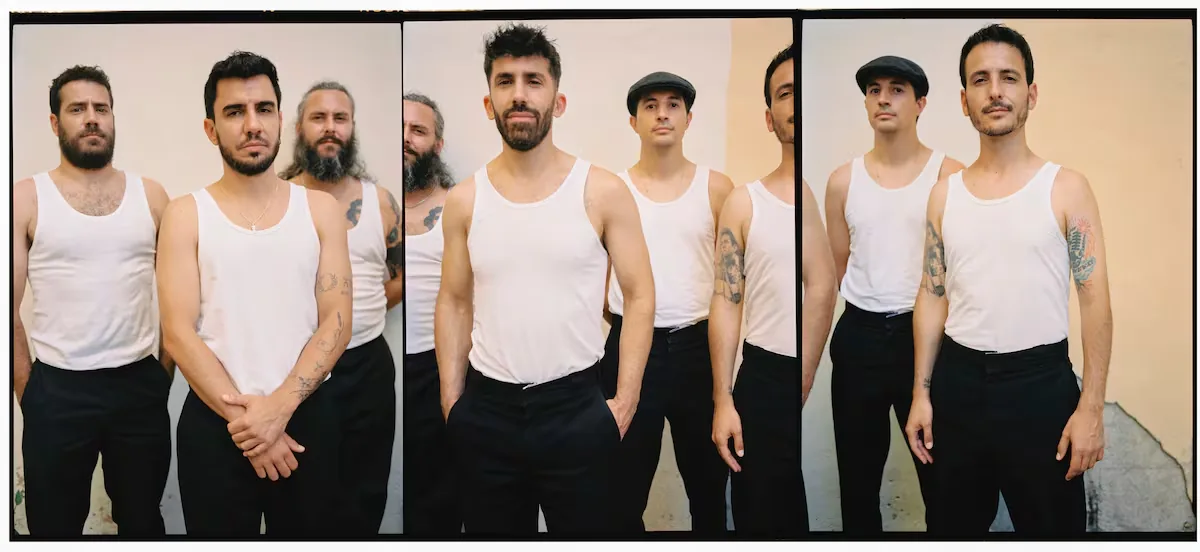
First summer morning in Burgos, with an intense sun in the blue sky and happy daisies in the field, when the crowd gathers at the door of Cernégula. Even the Civil Protection ambulance assistants get out. “You are artists!” exclaims an old man named Paco at the door of the old inn on the Arcos road, open for 70 years in the current San Felices neighborhood and of which today only the tobacconist’s remains, a pilgrimage site for the guys from the Maravillosa Orquesta del Alcohol (M.O.D.A.) to grab sandwiches, drinks and tobacco when they escape from their recording studio just 200 meters down the slope in Hangar park. “You’re home. Come on, get inside, grab water bottles, it’s very hot,” Rosa Melgosa, owner of Cernégula and cited in M.O.D.A.’s song ‘San Felices’, asks everyone: “And I know we’re home again when I see Rosa at Cernégula.” That house is now full of people who have seen the members of the city’s most important band arrive and have gone straight for them. Some were at the tobacconist’s, others came out of a nearby bar, others crossed from the other sidewalk, one got off his motorcycle and two others from the ambulance, the emergency resolved, also came closer. Even a group of children with autism who leave with their “very fan” tutors from the Sagrado Corazón Hermanas Salesianas school, right in front of Cernégula, stopped to take pictures with them. Photos, autographs, kisses, hugs and words of affection everywhere: “you are the best”, “thanks for everything”, “don’t stop playing”, “Burgos loves you”… The six members of M.O.D.A. attend to everyone, one by one. “All this happens because of the tank tops,” says David Ruiz, singer and composer of the group. “If we don’t wear them, people don’t recognize us. When we dress in normal civilian clothes, we go unnoticed throughout Burgos as if we were Clark Kent,” he adds. “When we put on these shirts, it’s like they’re Superman’s suit and cape,” says drummer Caleb Melguizo with a half-smile. “Or Superlópez, which suits us better,” adds Ruiz.
Whether they are Superman or Superlópez, tank tops are an element of distinction, but, far from any heroism of superiority, they are a declaration of intent. “It’s a garment anyone can wear. From our grandparents to a worker,” explains Ruiz. In fact, the group has a song precisely called ‘Héroes del sábado’ (Saturday Heroes), a true anthem among their followers, sung at the top of their lungs in their massive concerts, especially in the verse: “Don’t forget where you come from.” They, all from Burgos except for guitarist and producer Nacho Mur, “although he’s already adopted,” don’t forget where they come from. The city of Burgos, with its beautiful cathedral presiding over the silhouette from any horizon, is their home, as could also be the province full of towns from which some of them and their families come, all that land they sing about and claim for the common people, for the anonymous people made up of “the nobodies,” as Ruiz says, paraphrasing Uruguayan writer Eduardo Galeano, who has a Johnny Cash tattoo on his arm in honor of “the singer of the disadvantaged.” They have done so since M.O.D.A. was born in 2010, after David Ruiz decided to create a band with his friends from the parks upon his return from playing in Dublin bars, and they continue to do so today with their latest album, San Felices (Universal), a tribute to the neighborhood where they have their rehearsal space and office.
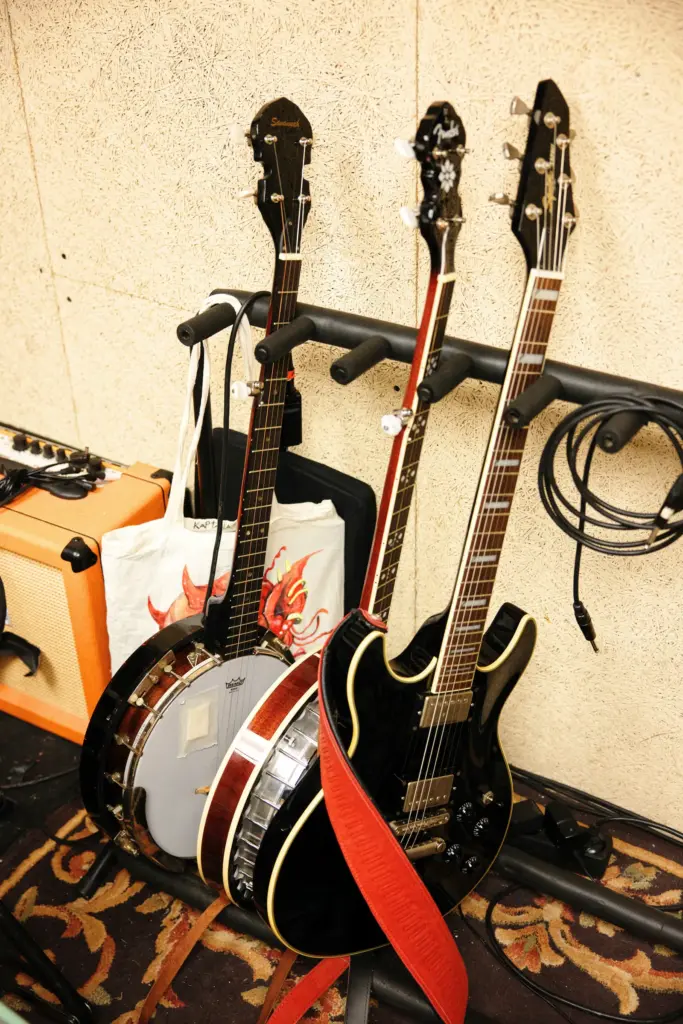
When they established their operations center in this neighborhood in 2011, it was all countryside. The members of M.O.D.A. were among its first inhabitants. San Felices was built in the old railway workers’ neighborhood, and that’s why, when walking through its wide streets of new residential buildings, one can see, as a decorative element with their weeds, the old train tracks. The rehearsal space and office are located in El Hangar, which was once a station and today also houses a cultural center and a concert hall within a park with an old freight car. “In Burgos, it’s said that there used to be only two seasons: winter and Renfe station,” says saxophonist Alvar de Pablo. That was when there was no climate change, nor did M.O.D.A. exist, a band that can be said to have become the most important in Burgos’s history after its public success throughout Spain. Facts confirm this: last year, they played on a memorable night before 50,000 people at the Fiestas de San Pedro y San Pablo in Burgos; and this year, they are headliners at the Sonorama Ribera festival where they will play again before nearly 30,000 people in Aranda de Duero. On that festival day, they will share the main stage with Leiva, another headliner who collaborates on the album San Felices, on the song ‘Subiendo como el Chava Jiménez’.
This Monday morning, the boxes with the new merchandising t-shirts inspired by the song dedicated to cyclist Chava Jiménez have just arrived. It has a very nineties vibe. M.O.D.A.’s office is on the upper floor of the Hangar venue, so it still smells of the weekend concert party. In the hallways leading to the rehearsal room, posters of The Cure or Jimi Hendrix can be seen. Choli, the owner of Hangar, appears and hugs everyone. “Let’s see if we can get together for a meal before the holidays,” he says. Until this album, when they signed with the major Universal, the group self-released their albums and controlled everything: booking, merchandising, communication, social media… “We always plowed everything by hand, but we were already seeing others pass us with the harvester at full speed,” explains accordionist José Ángel Hortigüela, Joselito, referring to other groups that have been working with major record labels for years. “We wanted to try it to stop dedicating so many hours to non-musical matters,” adds Ruiz.

Beyond this signing, the essence of M.O.D.A. has been the same since they gave their first concert for friends in 2010 at Estudio 27, a bar that no longer exists and was located in the lower part of El Plantío. The essence of a group of friends representing the simplicity of ordinary people from Burgos. Nacho Mur, who also plays the mandolin, was the last to arrive from Madrid in 2017 and soon realized it. “The day I officially joined the group, I thought the white tank tops were part of the contract or something. It was a mistake. Here, everyone buys their own and takes care of them,” he recalls with a smile. This has led to them sometimes having to rush to get others because someone left theirs at home or, in a lapse of attention, someone grabbed a gray one, and that’s not allowed. It has also led them to reject “a good sum of money” for having them sponsored. The band’s independence remains intact as on day one. “We don’t do anything with institutions, nor do we want to be used in politics,” explains Ruiz. “A few years ago, they offered us 50,000 euros for institutional support, and we said no. At the time, it was a lot of money that would have helped us greatly, but we made that decision and we stick to it strictly.” In recent years, moreover, they have had to face the non-payment by the ticket sales platform Wegow, which went into receivership and left many artists without their money. M.O.D.A. was the most affected band, losing tens of thousands of euros. “We have decided to focus on what led us one day to get into a garage, which are the songs, the concerts, and the audience,” says Ruiz. They, apart from collectively suing the platform, continue working.
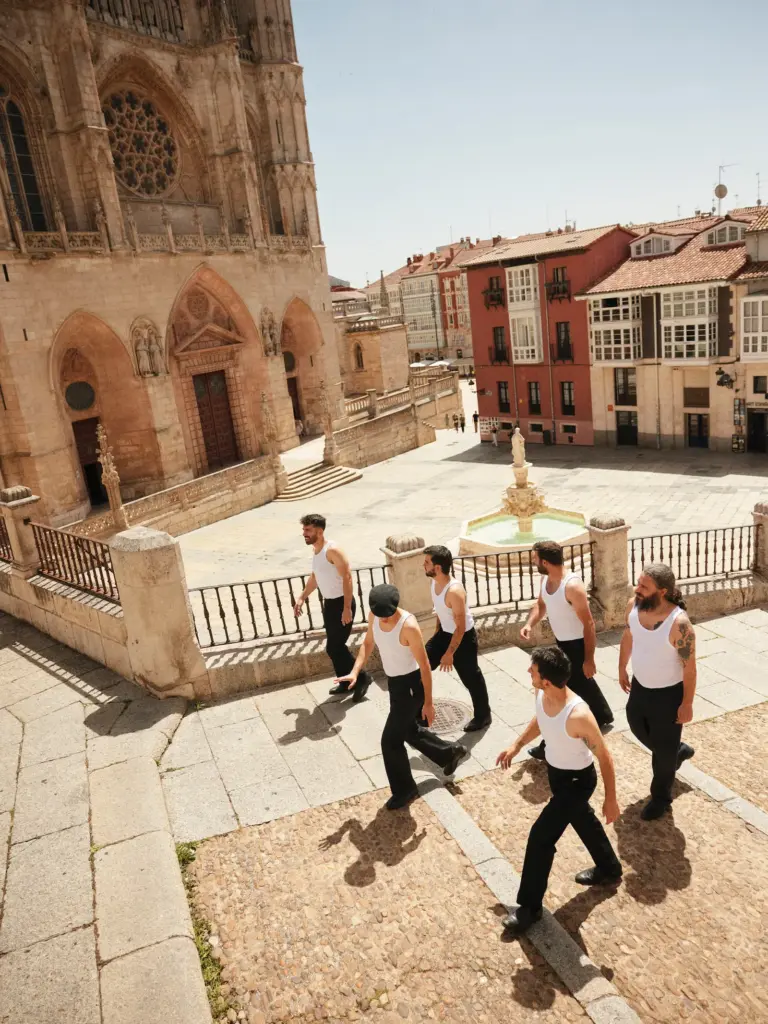
The people of Burgos recognize it, and not only because they attend their concerts with unrestrained passion. This Monday, for the photo shoot, they decide to go with their white tank tops to the city center and receive waves of affection and admiration. Workers from the top of cranes greet them with shouts, ladies sitting on park benches call them “handsome” and “lovely,” young people from their apartment windows cheer for them, or passersby ask for selfies, shake hands, or remind them of that performance that moved them. When they stop to buy some Medina roscas and chevaliers, famous Burgos sweets, at the Dieste pastry shop, the saleswoman makes the master bakers come out to greet them. And, when they arrive at the bus station for the photographs for this report, a commotion breaks out. People gather to take a photo. One of them is Marta Hebrero, the station manager. “The song ‘Héroes de sábado’ is my daughter Ángela’s anthem and mine,” she confesses emotionally. “We want you at Sonorama now!” exclaims Carmen García, an “elderly lady” who loves the group and lives in Aranda de Duero. “In the province of Burgos, these guys are as good as the wine,” she adds.
One of M.O.D.A.’s successes is its ability to be an intergenerational group. This is evident in their walks through Burgos, where they are equally liked by teenagers and the elderly. Even children, like 10-year-old India and 8-year-old Pedro, who are at the station with their mother Alejandra and already say they have seen them live. “Seeing grandparents, parents, children, and grandchildren at our concerts is the most beautiful thing that has been happening to us for a few years,” assures saxophonist Alvar de Pablo. Without being part of the indie scene or any musical M.O.D.A., the band has that rare quality of urban rock, like Extremoduro or Rosendo, that reaches several generations due to its eagerness to be chanted. In their songs, imbued with an Irish folk aroma and sung with David Ruiz’s very particular husky voice, there is a sense of belonging. “For us, it has always been more interesting to be outside the indie scene, although, in principle, that harmed us in the live music circuit in Spain. It’s better not to fit in anywhere because otherwise, you’re already pigeonholed into one thing, and that limits you a lot,” states the singer.
A song from the latest album, a candidate to become another anthem, is ‘Alsa pa Madrid’, in homage to all those young people who, then and now, have had to leave Burgos or their towns in Castilla y León to make a living in the big city. Burgos alone has more towns than all of Portugal. It is the province with the most towns in all of Europe, with a total of 371. And ‘Alsa pa Madrid’, like so many M.O.D.A. songs, reflects that reality. The bus station manager herself recounts seeing them in Villadiego, a small town in the province, during one of the four free tours they have done since 2018 through the depopulated villages of Burgos. “There was no room for anyone in the town. It was packed. And everyone was happy,” the woman recalls. “For us, it’s great to do these tours,” explains bassist Jorge Juan Mariscal. “People come from far and wide and really get into it. The oldest residents tell you they hadn’t seen the town with so many people in 60 years,” he adds.
Read more Zapatero’s explanations leave a “bittersweet” taste in the PSOE despite Ferraz’s closing ranks
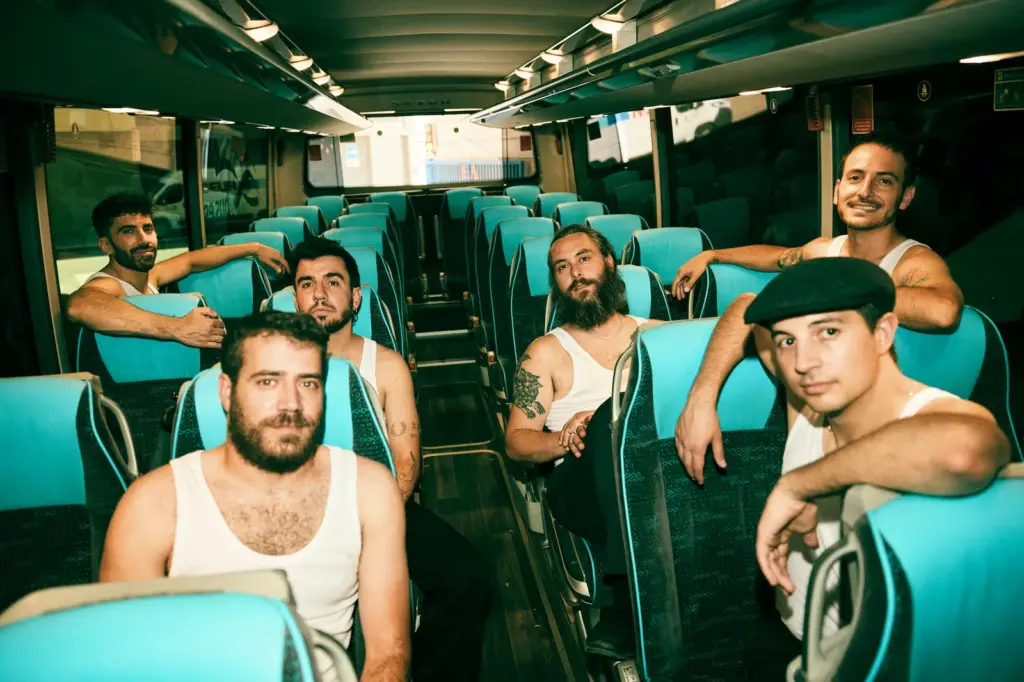
The entire group leaves Burgos. First via the N-I and then along secondary roads, their van ventures through beautiful landscapes on the way to Sedano, a place of rest and summer retreat for Miguel Delibes, who met his wife in this charming territory conquered by stone in its architecture. Years ago, they played there on their tour supporting depopulated areas and met Florentín, an elderly man, now deceased, who welcomed them with a pot of food every time they visited and lent them the spacious balcony of his house when they had to improvise and couldn’t play in the square due to the risk of rain. “It was full of people. We set up the sandwich stand there, and you couldn’t even get through to grab one,” recalls Alberto Peña, a 70-year-old friend of Florentín. Peña says he also knew Delibes, who used to sleep above the old inn and, later, bought a house with his wife to spend summers and “ride bikes” every year. His granddaughter Rosa comes out of the house and brightens up when she sees all six members of M.O.D.A. She asks for a photo and for them to sign the white t-shirt she is wearing. “Artists, you are artists. You are home, please, come in for some fresh water,” says the grandfather. They obey.
Part of the group’s strong connection with the people of Burgos came after the 2021 release of the album Nuevo cancionero burgalés (New Burgos Songbook), with the support of the Burgos folk group Fetén Fetén. In that work, which exuded love for the land of Burgos by recovering the popular songbook from the early 20th century by Federico Olmeda and Antonio José, they struck an important chord with themselves and their audience. “We were amazed because no one had ever told us about them in school, or institutionally. Either you were lucky enough that your family knew them, or we had no idea. These are songs that could have been written now with beautiful lyrics,” says Ruiz. “They communicate something very important, not only in Burgos but also in Andalusia or even Mexico. They put the name of their town or city in lyrics that connect with their grandparents,” adds drummer Caleb Melguizo.
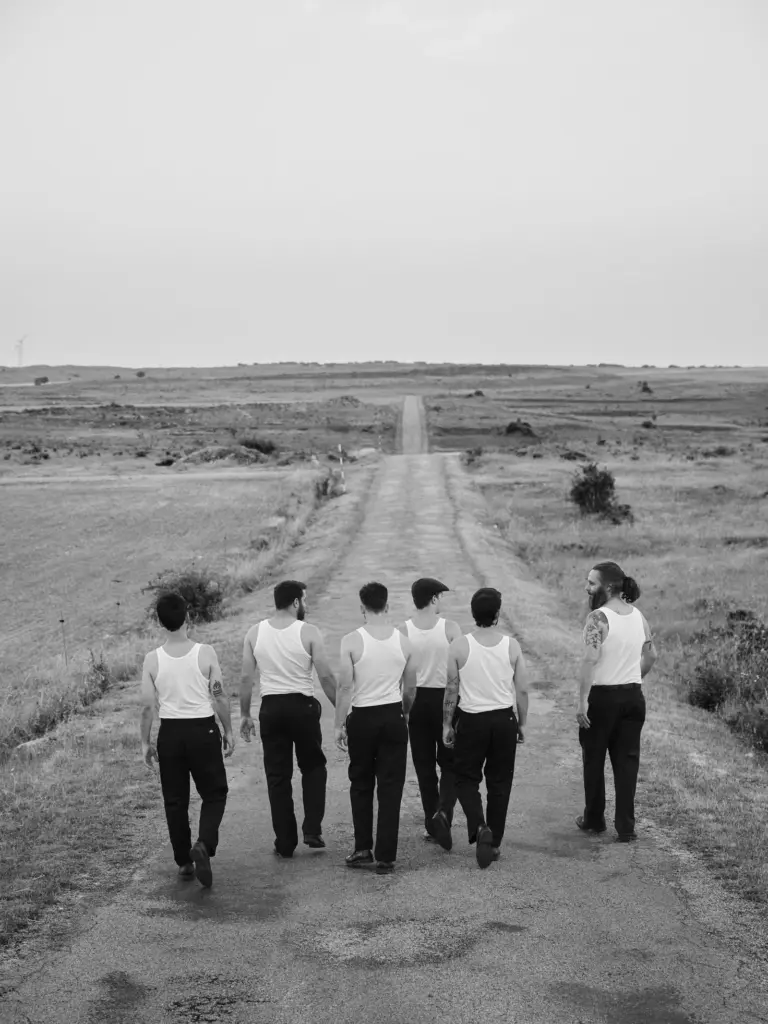
The van stops in Quintanaloma, the village with only one inhabitant in winter where accordionist Joselito’s parents were born and where the group has a kind of warehouse for things and gifts that don’t fit in their Burgos office. After traversing a winding road where deer cross and a tractor must be overtaken, a charming little village appears at the top of the hill with the emblematic Casa Torre, a silent witness to centuries of history. The sunset of the newly arrived summer makes the yellow fields glow with a golden color. A car stops upon reaching the path where the photo shoot is taking place. The elderly couple seems to get out of the car to complain. “Hey, guys!” shouts the man. “Can we take some photos of you?” They have recognized the members of M.O.D.A.. “By their shirts, how else?” says the woman when asked.
Back in Burgos, the group says that next autumn they will do another tour of empty villages. In the same format: free, with just the right instruments, and “gaining a lot humanly.” In autumn, they will also play again at the Movistar Arena before 17,500 people. It will be the fifth time they have filled it since they first did so in 2018. “We come from the mud. We don’t forget it. We are hard workers,” assures Ruiz. “For us, a hero is someone who works hard, creates with little, and has pushed forward with everything. We come from heroes. Because our parents and grandparents could practically not even consider dedicating themselves to music, but, thanks to their sacrifice, we have been able to dedicate ourselves to it,” he reflects.
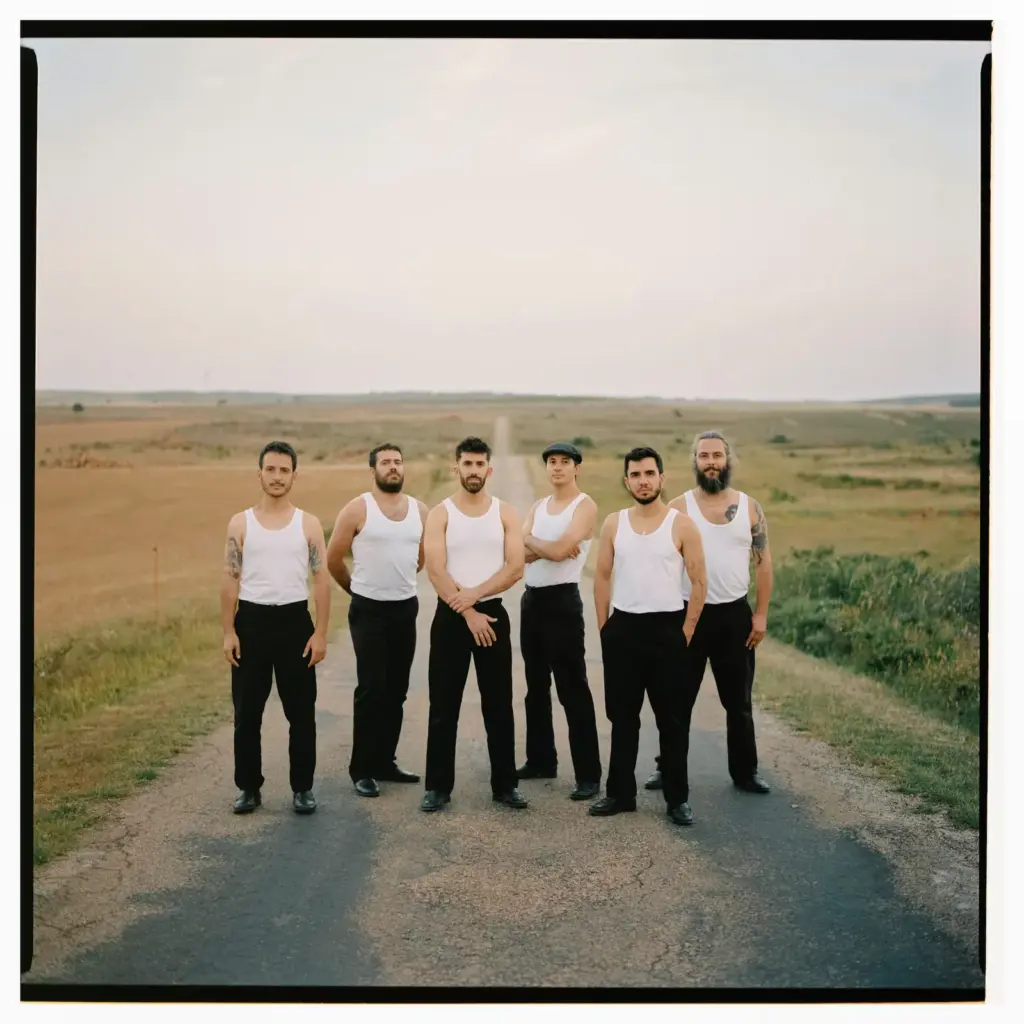
As they close their concerts, transformed into parties of choirs and dances, they play ‘Héroes del sábado’ and ‘Mañana voy a Burgos’. Dressed in their white tank tops, the six members of M.O.D.A. belt out the final climax. They always insist that these shirts give them superpowers. Perhaps because, between laughs and a bit of embarrassment, they recount the day the police arrested some of them in Burgos when in 2020, in the midst of the pandemic, they had the brilliant idea of going out to put up posters advertising a new song and, while taking their time to put them all up, they were left on the street outside curfew and the officers caught them. They were taken to the police station. There, while waiting to be attended by the commissioner, an officer asked: “Aren’t you the guys from M.O.D.A.?” Upon affirming c
with their heads, a commotion broke out and the officer said: “What are you doing putting up the posters yourselves? Don’t you have anyone to do these things for you?” Then, already informed of everything, the commissioner appeared and, seeing them dressed in civilian clothes, said with his hands on his head: “You could stick a pin in me and I wouldn’t bleed.” So they started asking for autographs and taking photos with those heroes of Burgos, dressed as Clark Kent.