









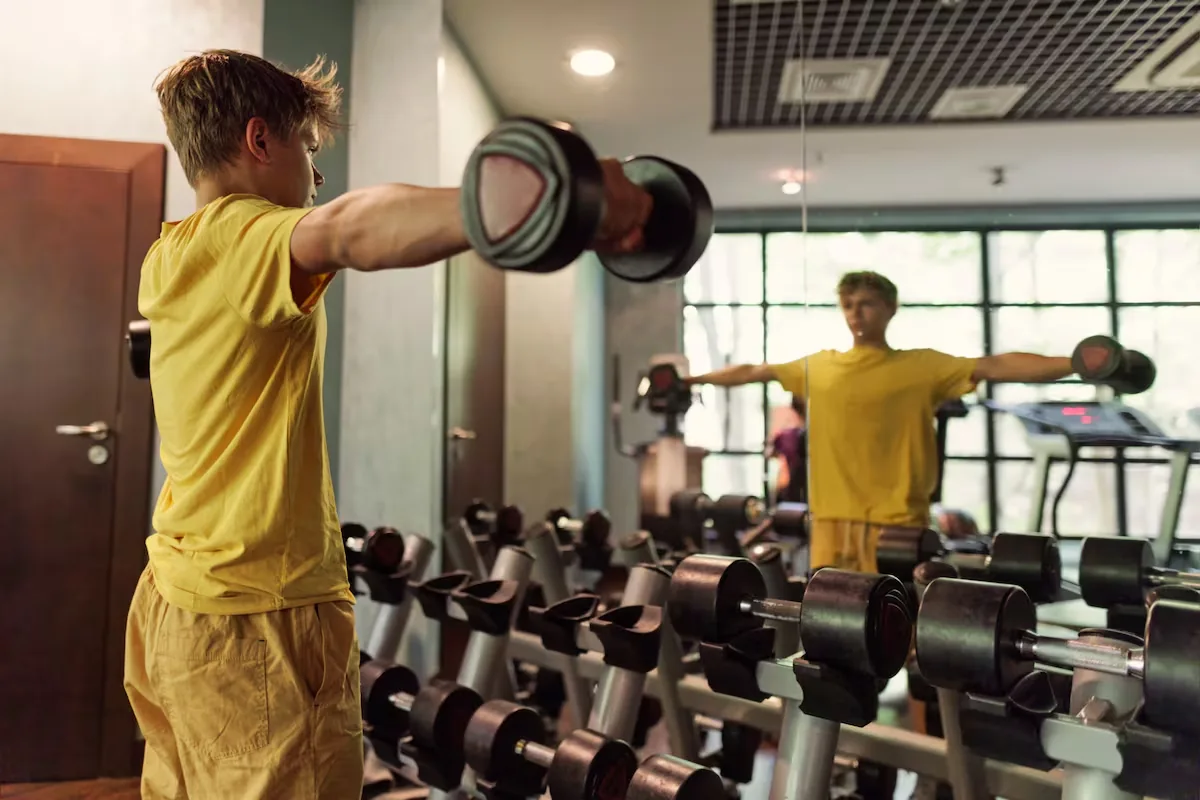
Strength sports have fully entered our lives; it’s not that they didn’t exist before, but they didn’t occupy the space or importance they have now. Their benefits are numerous, not only physically but also emotionally. But is it healthy at all ages? Is it always the best option? The answer is, it depends.
Read more La M.O.D.A.: heroes from Burgos who champion ‘the nobodies’ of life
Official data from the Survey of Sports Habits in Spain, prepared by the Ministry of Education, Vocational Training and Sports and the Higher Sports Council (CSD), indicate that almost 60% of those who practice sports started before the age of 15. 20.5% started between 15 and 24 years old, and only 7.5% started after 44 years old. The same survey shows that a third of the Spanish population is subscribed to a gym, where there are many young people. Bodybuilding is one of the most practiced sports modalities, according to the survey.
Gyms manage the age at which one can enter them independently; there is no state consensus. In general, between 14 and 15 years old, some gyms allow access accompanied by parents and with their authorization; from 16 years old, parental authorization is sufficient. The age of starting at the gym is increasingly lower. Now we have children whose sport is going to train at the gym. There are not a few cases of parents who ask me if it is appropriate for their 13-year-old daughter or son to join.
Training alone fosters individualism. Some values taught by team sports are lost
Sport is always good, but perhaps this is not the right sport, nor is this the right place at these ages. In the gym, there is practically no social interaction; one trains alone and, generally, with headphones. There is a lot of fixation on body appearance; body change is highly rewarded, and exercise is practically focused on that. Gyms, in general, although there will always be exceptions, are decorated with images of a single body type. There is no body diversity in their images, which makes training become another way to achieve that ideal.
Training alone fosters individualism. Some values taught by team sports are lost, where cooperation is important, where you learn to be frustrated because you are not taken off the bench, and where there is more camaraderie than competition. Furthermore, the focus is not on body change; sport can change body shape, but playing basketball or volleyball does not focus solely on bicep size or how obliques are defined.
When kids play team sports, they reinforce values like empathy and leadership. They are forced to communicate and learn to resolve conflicts. A sense of belonging is fostered, something fundamental in adolescence: being part of a group, in addition to the possibility of creating friendships. Something much more complex than training autonomously in a gym.
In gyms, people usually train with their mobile phones nearby, which allows them to continuously take photos; not only are videos recorded to improve training, but it is also done with the aim of being able to assess physical changes. This leads to body monitoring, increases pressure on it, and, as a consequence, can generate greater body dissatisfaction.
Exercise is closely linked to nutrition, and kids end up receiving unsolicited information about creatine, proteins, and other supplements. If we add to this the bombardment of information they receive about nutrition on social media, the cocktail is served. We have children no older than 16 who are concerned about their macro consumption and supplementation. Is it really healthy?
I know that for some families, this option is better than doing no sport at all, but I believe the challenge is to find them a sport that fosters something more than the growth of certain body parts, which, in an aggressive way, forces them to monitor themselves.
The wellness industry does nothing but boost protein consumption
The influence of strength exercise is neither casual nor innocent; science is giving it a lot of importance because it has it. But social media, fitness influencers, the wellness industry, and those who talk about “high-value” men and women and give classes on masculinity also play a role. For the latter, appearance is fundamental: it is the way to create authority and convey that having a certain body provides distinction and respect. As if body diversity, or bodies that do not fit their defined and muscular patterns, could not have those same characteristics.
In turn, the wellness industry does nothing but boost protein consumption, and the food industry plays along, so much so that it is now harder to find foods without extra protein in the supermarket than with it. Reaching the absurd, they offer us flavored water with protein or tuna with extra protein. Gentlemen, tuna has always been a protein food; it does not need an extra gram of protein and, of course, no extra in price.
As a nutritionist specializing in eating disorders, it saddens me to see how we are stealing their childhood, how play and exercise are disappearing to become another way of molding the body towards those impossible canons. I do not intend to demonize strength sports or gyms, but rather to open a reflection on whether this is the appropriate entertainment for adolescents and what long-term consequences it may have on them. We do not need adolescents who only know how to transform their bodies; we need adolescents who learn to accept and care for them.
Read more Zapatero’s explanations leave a “bittersweet” taste in the PSOE despite Ferraz’s closing ranks