




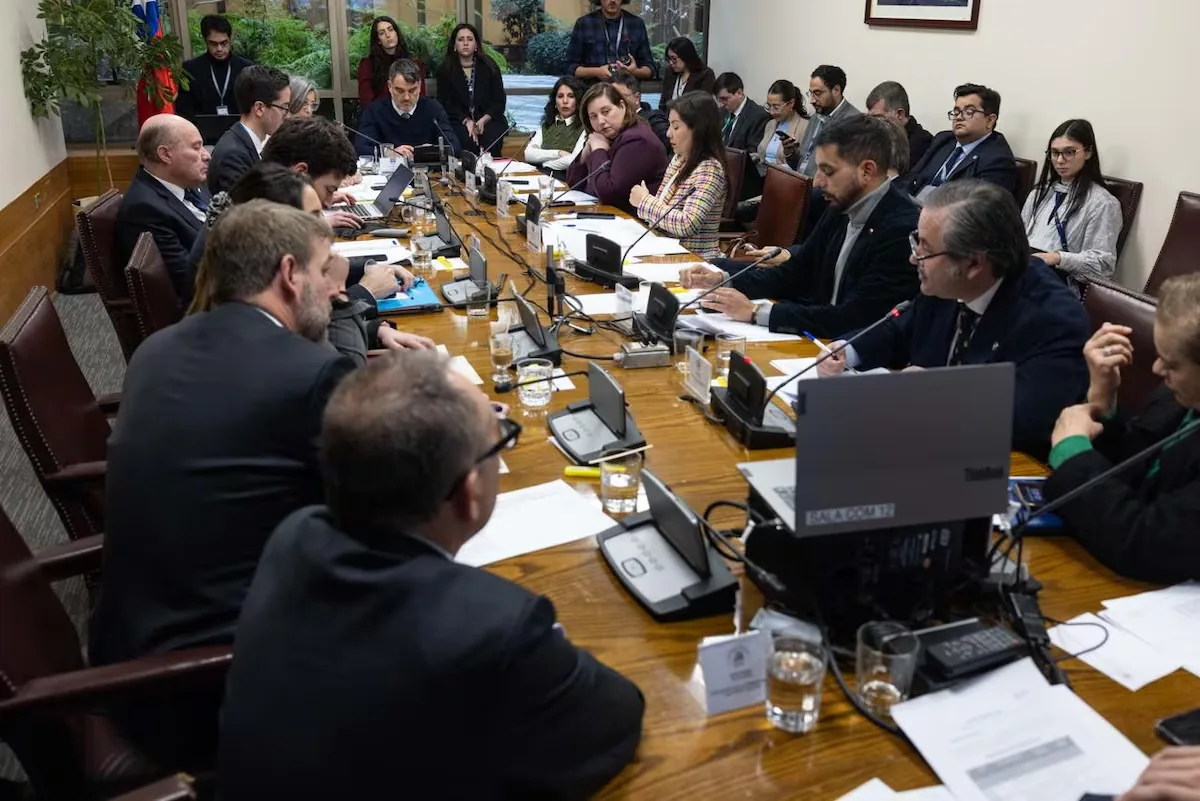
The parliamentary processing of the Government’s mega-reform is nearing its end, awaiting the Senate’s vote on the mixed commission’s proposal. The Government will also introduce vetoes in a couple of critical areas (such as the prohibition of anatocism), which slipped through due to errors by the ruling party. What is still pending, however, is a discussion announced several weeks ago: the appeal to the Constitutional Court on some tax and environmental matters. I welcome the left’s appeal to the TC: it means that they now recognize it as a valid actor in the political and institutional process. With this, they leave behind, even if de facto and for spurious reasons, their criticisms that it was a “third chamber” aimed at “neutralizing” popular will or legislative majorities.
If that appeal does not become common currency (although allow me to be pessimistic given the chaotic state in which the left is immersed), it could be a symptom of constitutional normalization. Boy, do we need it.
However, there is a point where resorting to a third party to settle a discussion has become problematic. I am not talking, of course, about the courts of justice. These are a civilizational achievement that we should protect. I am referring to the growing role played in Chile by autonomous bodies of political power: the Comptroller’s Office, the National Institute of Human Rights, the Commission for the Financial Market, the Autonomous Fiscal Council, or the aforementioned Constitutional Court. Each one arises to protect different assets, but shares with the others the fact that its members are not democratically elected and that, in its operation, it seeks to exclude strictly partisan reasoning.
Read more The PSOE will join the case of the Los Gallardos fire in which 13 people died
Given that they are abstracted from common political logic, their legitimacy cannot be measured in votes or citizen support. The legitimacy of the TC, the Comptroller’s Office, and the INDH is played out in other areas. I mention two: that they are not captured by political games and that their operation responds to the function that gave them origin. And there lie the risks. For example, that the TC effectively transforms into a third chamber because its rulings respond more to the political position of its ministers; or that the Comptroller’s Office, in a laudable effort to contribute to a better use of public resources, begins to intervene in areas that are not within its competence, where one begins to doubt what effects are sought to be produced in public opinion. The INDH, in fact, is a clear example of what not to do. Despite having a council that aims to be plural, the truth is that since its origins it has not managed to shake off the reputation of being an organization captured by the left and of systematically excluding positions that do not fit with the predominant doxa within it. It is not a caricature of the radical right. Sergio Micco, who can hardly be called a “facho” (fascist), had to suffer internal attacks for challenging the standard version of human rights violations during the social unrest (and for being against abortion).
It is not simply about holding the INDH accountable, although a reform that guarantees that much-resisted pluralism would do it good. It is, above all, about ensuring that these autonomous institutions do not fall into the logic that prevails today in Congress and that they operate with different forms of legitimacy. Given that the political process today is not achieving reasonable effectiveness, and that its losers seek to influence the results by other means, the first to resist should be the members of these bodies themselves. To tie themselves, like Ulysses, so fashionable today, to the mast of their mission, to perform it honestly and in adherence to their mandate, to resist the siren song of popularity or of speaking to any of the interest groups that surround them. Given that political combat has become so complex, it is natural for the battlefield to shift to other venues. But as Arturo Valenzuela reminds us in El quiebre de la democracia en Chile, this shift does not occur without consequences; it does not resolve the conflict, it only changes its location and ends up erupting more massively.