






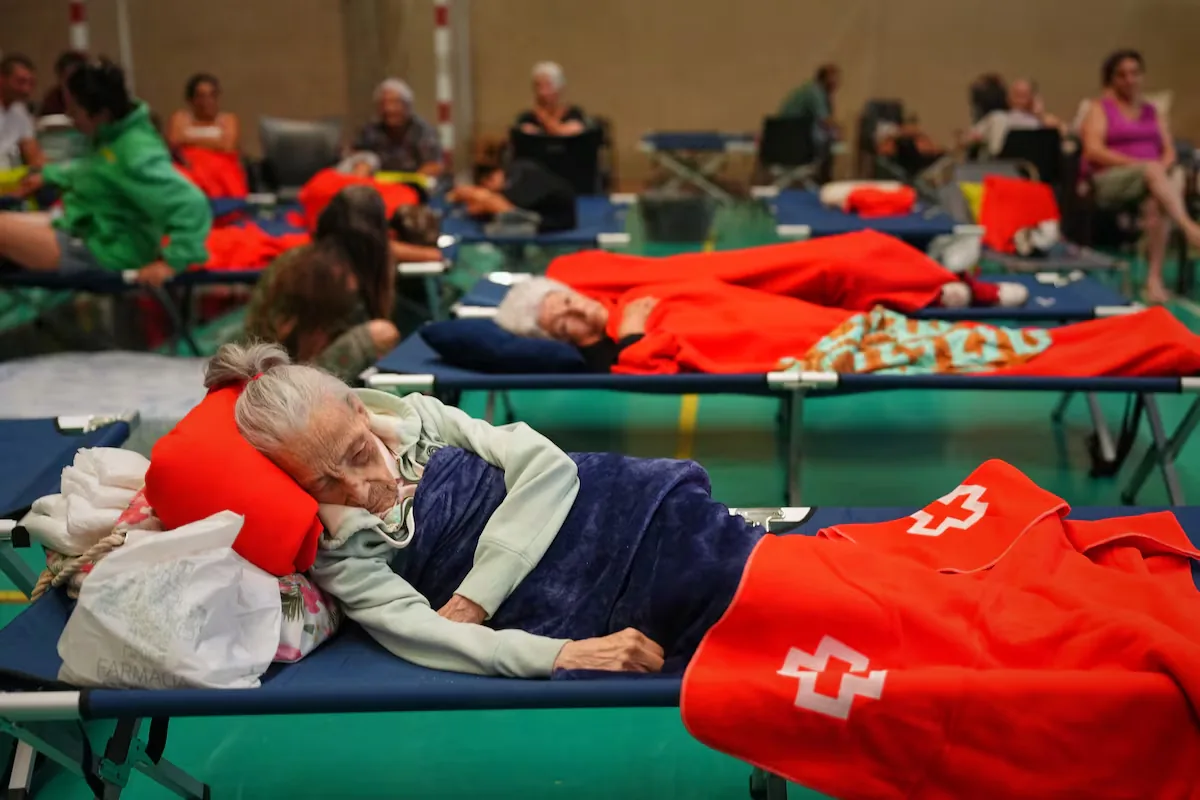
No one in Cebreros has slept a wink. This town in Ávila welcomed more than 500 people who had to abandon their homes due to the advance of smoke and flames from the three fires threatening the Spanish capital and the province of Ávila. In the streets, embers fly as a grey cloud covers the sky. A sports hall, filled with folding beds, has become an improvised shelter. It’s almost three in the afternoon and about twenty people are waiting for news that will allow them to return to their villages or, at least, find out what will happen in the next few hours. Outside, trees sway, driven by the strong, relentless wind. “The night has been dramatic,” says Marina Robledo, a Civil Protection volunteer and resident of the town. She is 20 years old and spent the early hours accompanying people arriving at the sports centre, including the elderly from a neighbouring village’s residence who, she recalls, “arrived in bathrobes and barefoot.”
Read more Where to get the flu vaccine in Chile after the campaign opened to the entire population
Almost all the elderly people who spent the night there have been transferred to Ávila, to another residence, and eight elderly care centres have had to be evacuated. On Friday afternoon, relatives of those remaining arrive to pick up their kin who have spent the night in the pavilion, while volunteers prepare to face another night with evacuated people who continue to arrive from other cleared municipalities. Pilar Bolaños arrived at the sports centre on Friday morning. She says her granddaughter is confined in San Martín de Valdeiglesias, but that she is calm and safe. “The girl told us not to worry, that she’s fine,” she recounts. She left home with just enough: “A neck warmer, my mobile, the charger, and my bank book, in case I need to withdraw money.”
Bolaños recalls how, “about twenty-something years ago,” there was already “a very large fire in the area.” “My daughter-in-law, with the children who were one month and one year old, had to flee quickly and no one warned them until our house was already on fire. We were afraid the same thing would happen to us,” she says. This time they left quickly and controlled their nerves as they watched the “flames approaching.” At night, she recounts how her youngest grandson was struck by the colour of the sky: “You could see nothing but red, all bright red.”
In some areas, mobile phones vibrate and receive a stunning sound with a warning. Most people have arrived with only the clothes on their backs, with their pets, and with a document or two. Their faces reflect exhaustion. Amidst folding beds, chairs, and volunteers constantly coming and going, the voices of those trying to establish contact with their relatives can be heard. One woman scrolls on her mobile screen, trying to refresh the page again and again, while another wipes away tears running down her cheeks.
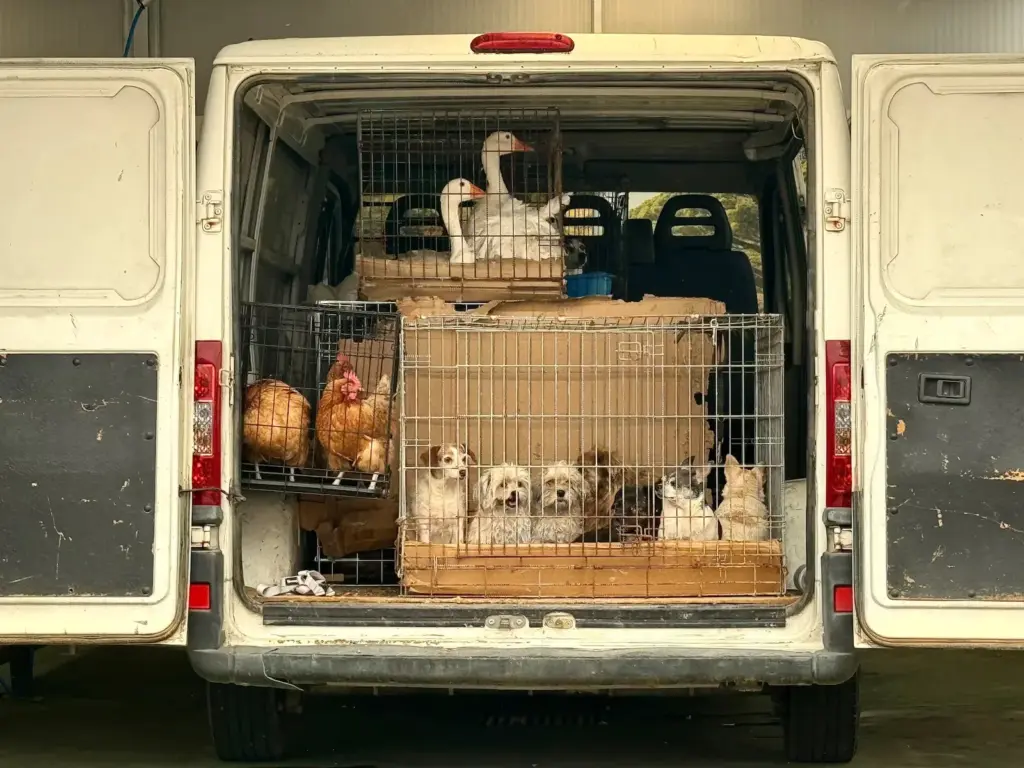
Sitting on a wooden chair, a woman watches, on her mobile, the image from her house’s security camera. She is Concepción Estebarán Crespo, one of the residents of La Atalaya, an urbanization that was evacuated on Thursday. “For now, we know the fire hasn’t entered, but they expect it to be there by 3 or 4 in the afternoon,” she says. Her dog waits under the chair, while the woman tries to calm him. She spent the night with him and her husband in Cebreros, but as there were many people in the pavilion, including some children who couldn’t sleep, they preferred to spend the night in the car.
“Well, [we took] the dog and a small suitcase I keep in the car with a few things, nothing else. Because they didn’t give us time for anything,” she explains. For now, her plan is to wait. Perhaps they could spend the night in Madrid, where their children are, but they don’t want to move away from the house that has been their home since the pandemic. “We have our things here, so we are eager to know what happens.”
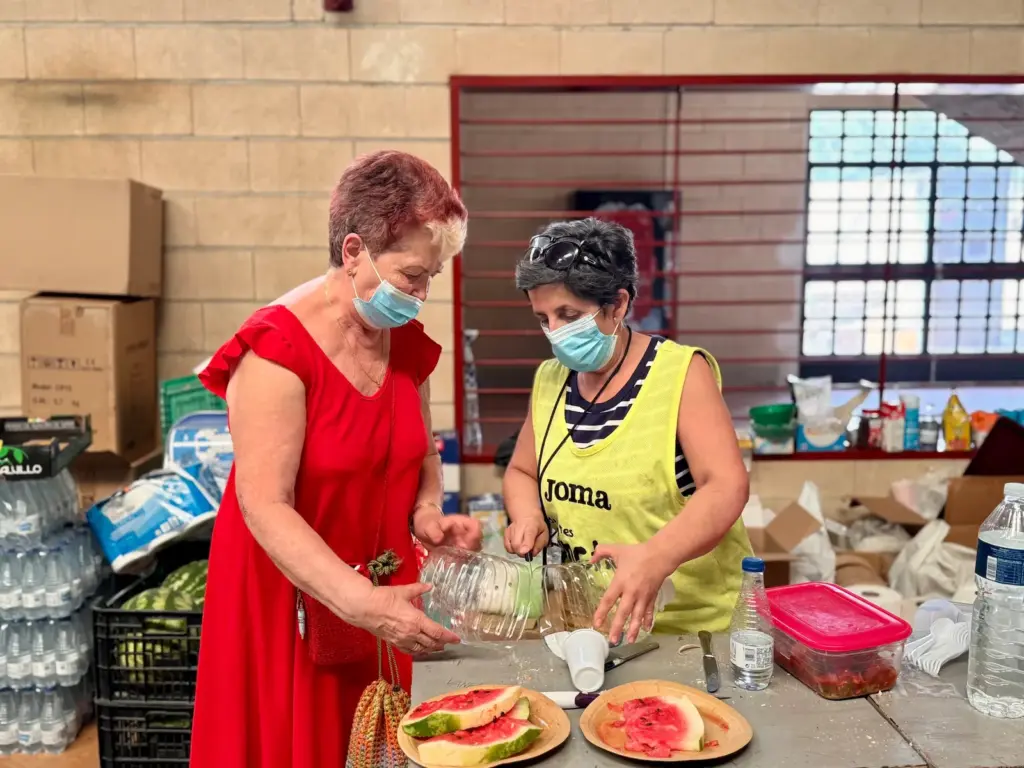
A woman in a fluorescent green vest organizes some tomatoes and pieces of bread. “We’re going to set up tables, chairs… We have all the beds here together for when they need them,” she tells her colleagues. This is Raquel Robledo, 53, who arrived in the early hours. “I was at home. I work for the town hall and my son was here as a volunteer. I saw that things were getting bad, so I came to help in any way I could.”
Gloria de Arcos is 33 years old and was with her husband when she heard someone knocking on their door. “They evacuated us about half an hour ago. The Civil Guard arrived and told us we had to leave the Valdesanmartín urbanization,” she recalls. They had two options. Go to Madrid or stay in Cebreros, but they chose to stay because they had “the house nearby and wanted to wait a bit to see how the situation evolves.” While stroking her dog, she admits to feeling a little fear and sadness. “So much sorrow for all that has been lost, which is of incalculable value. The entire Iruelas valley area is beautiful, and it’s in a terrible state,” she adds.
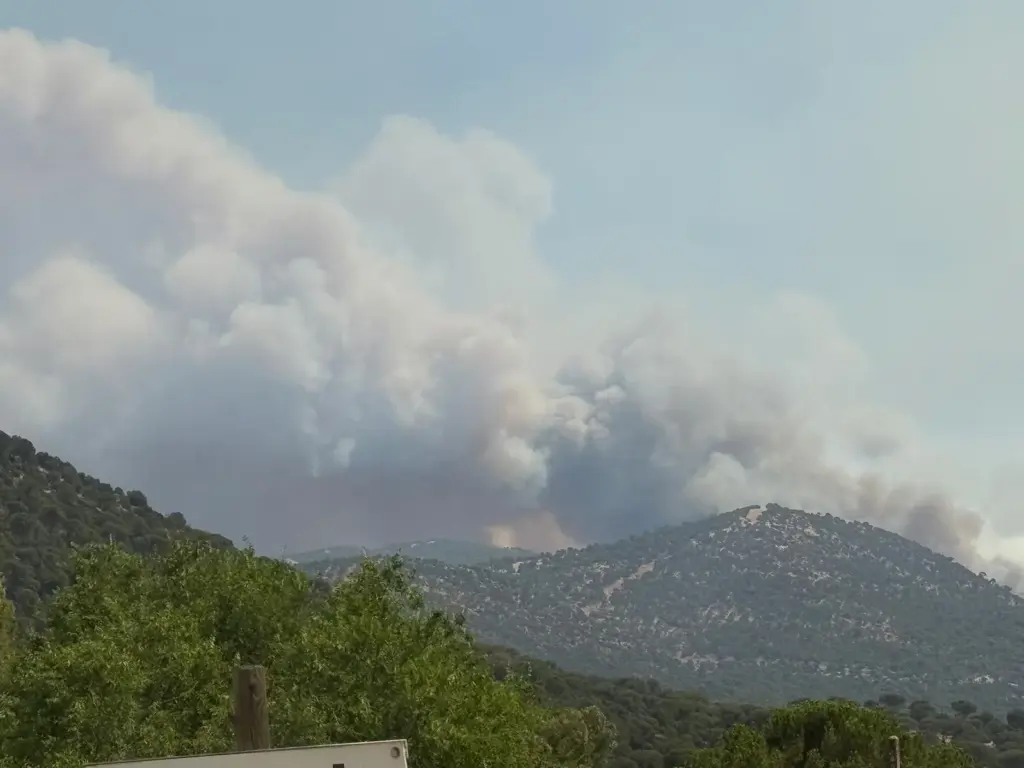
The smell of burning coming from the hillsides is getting stronger and stronger. Some members of the health team hand out large masks, the ones that seal the face well and filter the smoke. “Please put on your masks,” says one of the volunteers. Some evacuees wait inside their cars, with backpacks on the passenger seat and their gaze fixed on the sky. At the entrance of the sports centre, a man inside an ambulance unloads oxygen tanks.
The night before, many people slept on the grass, desperate from the heat. In a corner of the pavilion there is food for pets: bowls with kibble and water bottles. There is also ash on the ground, accumulated at the edges of the sidewalks and stuck to the wheels of cars.
Read more Barcelona will ask for the price of commercial premises rentals to be regulated