





A woman sweeps the floor of her doorway. The bristles of the broom drag the grey microparticles that have been raining for two days. The small pile grows in the street and is removed with the dustpan before, in a few minutes, ash falls from the sky again, a miniature sign of the destruction of the immense nearby forests. The south of Ávila is burning and the grey cloud formed by the fire spits out a reminder of the drama onto hair, cars, sidewalks, asphalt. Cebreros exceeds its usual 3,400 inhabitants: in addition to holidaymakers, it has filled with residents from other towns. Displaced or exiled, they seek refuge where, a few hours later, confinement is decreed due to the ashes carried by the wind. Go home! There are children from camps, frightened elderly people, astonished Madrileños, and doubts about what will happen next if the fire continues to rage after engulfing more than 9,000 hectares since its origin on Wednesday in Burgohondo.
Read more This is what the Madrid and Ávila wildfires look like from the air
A huge convoy of Civil Guard receives people on the outskirts of Cebreros, monitoring who enters and where they come from, and who leaves and where they are going. There is no fire in sight but there is by smell, which is why many inhabitants of nearby areas have been relocated to the town where former Prime Minister Adolfo Suárez was born. Passers-by observe how the perennial grey cloud continues to grow thanks to the fires in the south of Ávila, bordering the Community of Madrid, although everything will depend on the wind: its gusts and intensity will determine the safety of the municipalities. César Hidalgo resigns himself. At 60 years old, he has seen a lot of fire in this very sensitive area, with high temperatures and a lot of forest mass: candy for the devil. The magnitude of this one, as he reveals in the workshop where he chats with his mechanic friend, has astonished him. The man shows photos taken in El Tiemblo, where he lives. This Thursday, in a matter of 15 minutes, the flames burst into the mountain and eagerly descended towards the plots that are smoking today, victims of such voracity. The orange in the images against the black night still intimidates him: “We have a vineyard with three small dogs and we don’t know what has become of them, if they have died… this was hell”.
The speed of the front and its power almost caused a great scare in Charco del Cura, in the Iruelas Valley, punished by the flames and home to the black vulture, like the now charred remains that were once trees. The monitors of a camp with 165 youngsters first saw the smoke and then the orange tongues, little by little, sliding towards their facilities. Daniel Miguel, 30 years old, comments that no one warned them and that they were the ones who called the authorities. The Local Police asked for calm and for them to confine themselves; they obeyed and held indoor workshops to distract the boys. The Emergency SMS urged them to lock themselves in. They obeyed. After a while, they saw the fire. They rebelled. They were surrounded by forest and they could be the next to smoke.
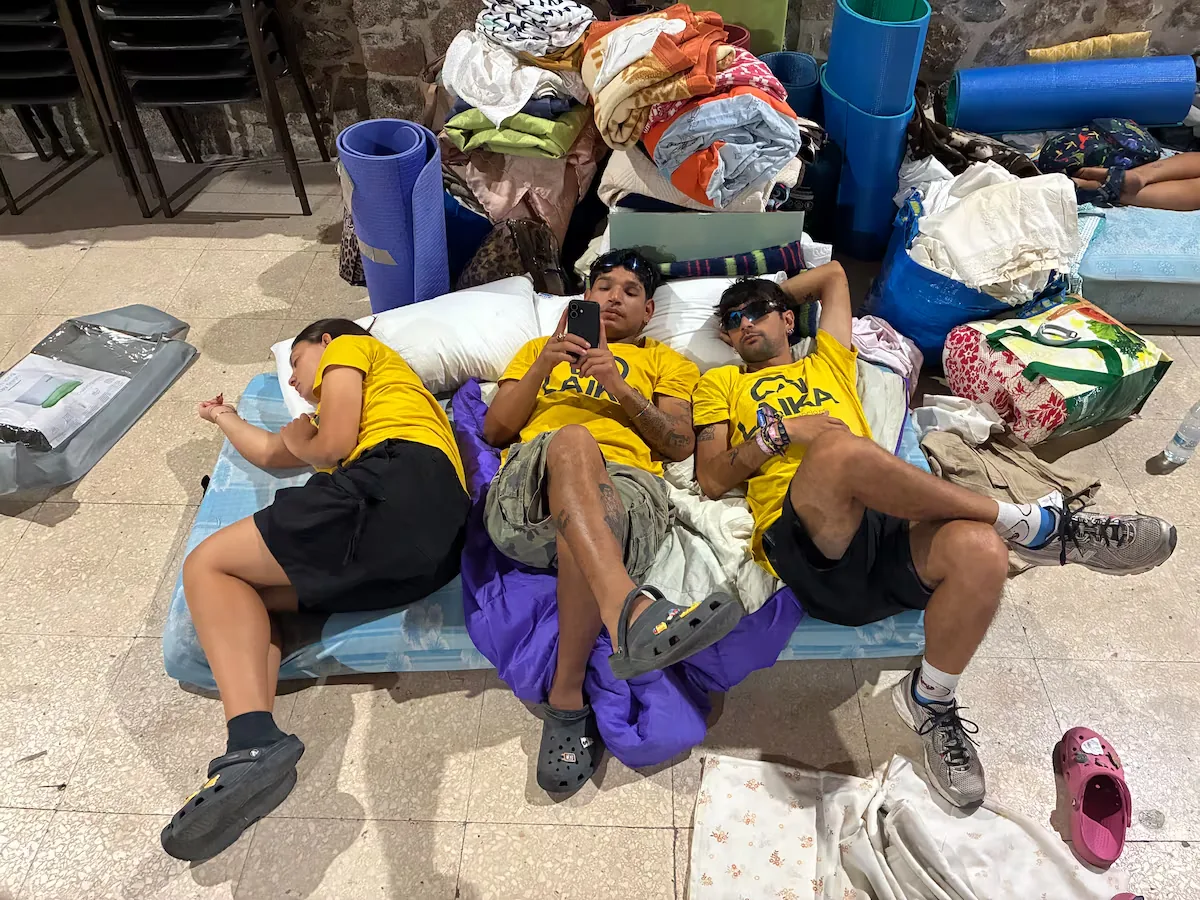
The youngsters, somewhat restless, received orders to water the surroundings until the adults called 112, where someone sensible suggested that perhaps they should leave despite the order to stay. So they chartered cars “with eight children” or “crowded” vans to move the kids as soon as possible. Pablo Sanz, also a monitor, adds that they went to Cebreros, where they were wonderfully welcomed and placed in a public space. There they slept on donated mattresses and had dinner and breakfast with food provided by the locals. Sara García and Ainhoa de Abajo, 19-year-old intern monitors, explain their astonishment at such a debut in the profession. “Some children cried, which is normal, but they behaved well,” they indicate; the younger ones, calmer, call their parents. One tells them precisely that “we have been evacuated due to smoke, not fire; yesterday the sky was red”.
Lunchtime. The smoke continues to spread through Cebreros and the locals take refuge in the bar and its daily menu. There are jokes about the pandemic and the abundant masks in the streets, environmentalists are urged to come and put out the flames, the hoax that the mountain can no longer be cleaned is proclaimed. A Local Police officer interrupts the pepper salad with tuna and the lean pork with tomato: when they finish eating, they have to evacuate. People are surprised. It’s all due to the smoke, the uniformed officer adds. A firefighter consulted by EL PAÍS details that the gusts have changed and now, more powerful, they hinder their work: they are retreating towards El Tiemblo to redefine strategy. There they will reunite with the neighbors who were evacuated the night before: they have been able to return home on the condition of locking themselves in.
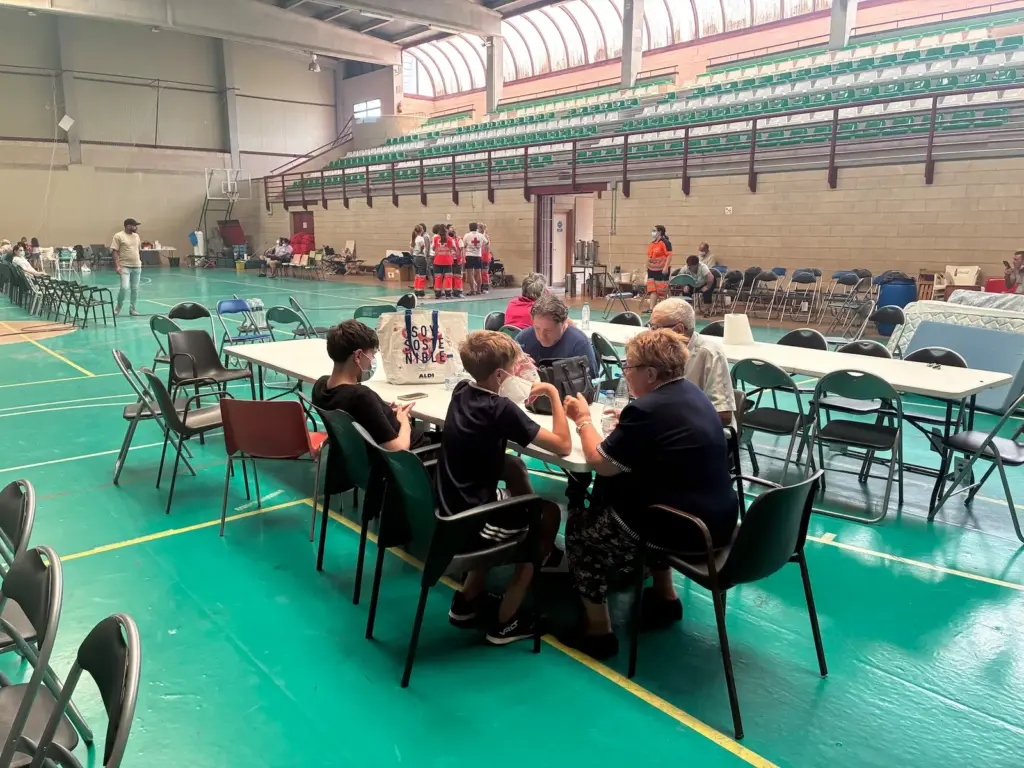
Those who do not have a home in Cebreros are herded towards the sports center. There are elderly people with canes, children with kittens that fit in their hand, loyal dogs awaiting news, resigned teenagers looking at their phones. Civil Protection supplies masks and reprimands those who don’t wear them, amidst laughter, as in 2020: enjoyment police, yes, but health comes first. One of them reports that the Civil Guard, given the large volume of Madrileños, urges them to return to the capital to reduce the tension of cars and users of the designated space.
José María Páez and Mercedes Martín, 83 and 82 years old, are thinking about it: they came for a few days of rest and find themselves with disaster. They will probably turn back. Their grandchildren, glued to the screen, bored. Mercedes Tamayo, 70, lies down on a sun lounger set up for the displaced. Nina, her cat, accompanies her, first nervous and then yawning at her feet, delighted with a new couch. “I have two others but they wouldn’t let themselves be caught, they are locked in the house,” Tamayo confides, amidst the general boredom. In the sports center, the echo of a helicopter, the roar of an air extractor, and the murmur of conversations resonate. Even inside, ash falls.
Read more The two smoke columns, seen from the Command Center: “We ask citizens to collaborate”