





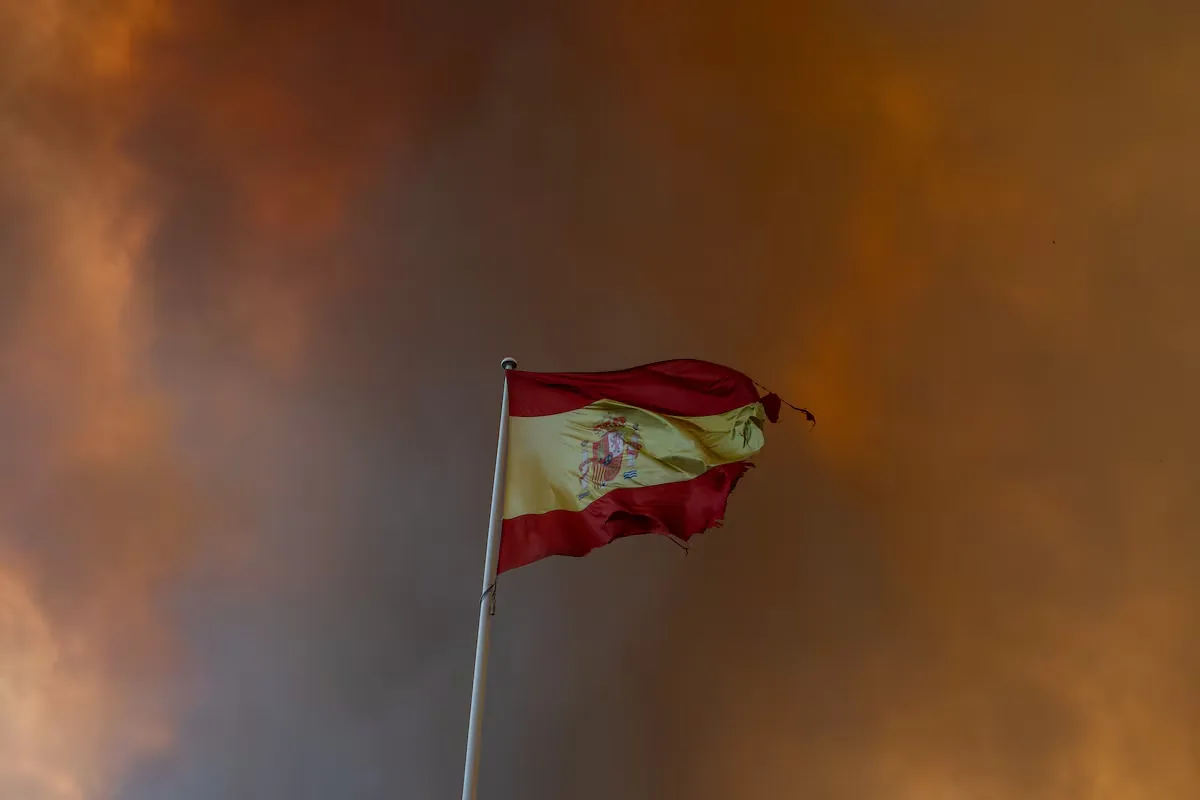
This is not the time for divisions or quarrels, but for solidarity and unity among administrations in the face of the seriousness of fires that in Ávila, Toledo, and Madrid have already devastated at least 15,000 hectares, forced the evacuation of a dozen municipalities, and left some 60,000 people affected, including those displaced and confined. Spain has suffered 29 large fires so far this year, a figure that triples the average of the last decade, and successive heatwaves, accelerated by global warming, threaten to turn these catastrophes into a new normal with unpredictable consequences. There is now no other priority than to assist those affected with the utmost speed and save lives threatened by uncontrolled and devastating fire.
Read more Housing for Well-being 2026: Conavi opens registration in 26 states of the country
The nature of these fires makes them different from others suffered this summer in Spain, because by covering different communities, it forces closer collaboration between administrations. In this context, there is no other option than to coordinate, as was done in the first hours to evacuate affected residents, provide shelter to the evacuated and the most vulnerable, perimeter the fire, and commit to its extinction. The sending of reinforcements from other European countries through the EU civil protection mechanism and the deployment of a thousand military personnel is part of that scale of priorities, as is the declaration of a national emergency decreed by the Government, in response to the request of the Community of Madrid. All these measures are justified in a situation that overflows territories and administrative frameworks, and that demands the greatest cooperation and effort when there are uncontrolled fires and so many citizens are uncertain about whether they will be able to return to their homes.
The tragedy is that these fires have become increasingly frequent, extensive, and difficult to extinguish, and each year earlier, because record temperatures are reached sooner. In Spain, 114,796 hectares have burned in 2026, including the 7,000 that burned on July 9 in Los Gallardos (Almería), where 13 people died, one of the deadliest fires in the history of this country. The catastrophe affects the center of the peninsula and approaches the capital, Madrid, but its dimensions are European. In France, three large fires remained active this Friday: two on the southern Atlantic coast and a third near Marseille. This country has already accumulated more than 60,000 hectares burned this year in regions less accustomed to fire than the southern and Mediterranean regions, such as the historic Fontainebleau forest, 70 kilometers from Paris.
Read more The NAHJ awards the coverage on the rescue of the Pinabete miners published in EL PAÍS
Traditional methods are becoming obsolete in the face of the emergency’s magnitude. It is not enough to increase existing services as before; it is essential to modernize prevention strategies, alert systems, and fire extinguishing methods. The risk associated with high temperatures requires better forest control, such as opening corridors to stop the possible spread of fire. Neither the fight against climate change nor the reduction of fossil fuels can be relegated on the international political agenda. The urgent and immediate response now is the extinction of these fires and attention to those affected, but once the last embers are extinguished, the most complicated part will begin.
Read more Real Madrid renews the tireless Sergio Llull, who will complete 20 years in white