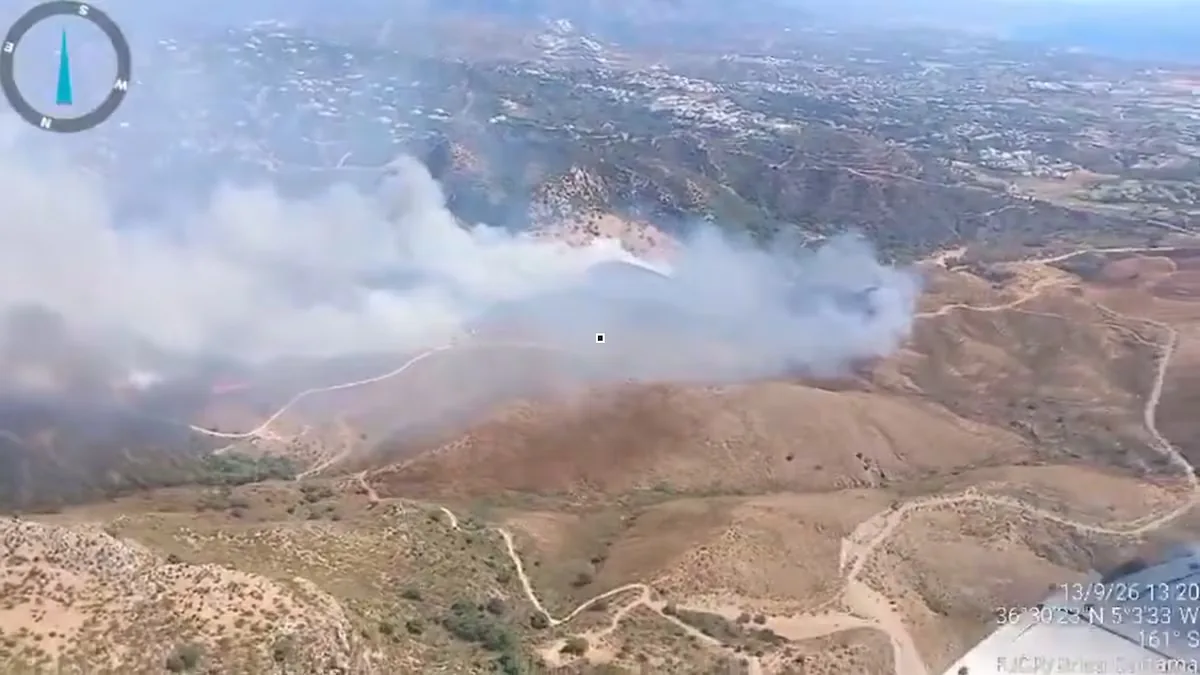
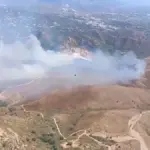






If tiredness could be measured and 10 was the maximum, Fernando Echave’s voice sounds like an 11. From the other end of the phone, this head of the Madrid Community fire brigade has just arrived, around one in the afternoon this Saturday, at his home in Valdemoro after spending more than a day fighting the flames in the southwest mountains of Madrid. And he did it as a volunteer, because he was on vacation and didn’t hesitate for a minute to put them aside to help. He has 11 years of experience and many victories against fire, some of them in the toughest fires of recent years. “I’ve been to Portugal several times, I’ve been to Extremadura… and what I’ve seen here, I had never seen before,” he confesses.
Read more A 21-year-old man drowns in a canal of the Ebro Delta
The difference with previous infernos he helped extinguish is that in this one “there’s a lot of interface,” as technicians call situations where what’s burning is a mix of forest mass and homes, so “the devastation is very great.” “In the end, if a fire burns a mountain, well, it burns a mountain, we try to contain it, protect it. And there are strategies to tackle it that can be done, which are very difficult to do here because there’s a lot of interface, many houses in between, and a large population. And, above all, here an evacuation isn’t a town of 3,000 or 4,000 people, it’s 10,000, 15,000, 20,000 people. Logistically, it’s super complicated.”
According to the latest report from the Ministry of Interior, in command of operations as it is a national emergency, there are 29,488 people evacuated from Chapinería, Navas del Rey, Colmenar del Arroyo, Fresnedillas de la Oliva, Robledo de Chavela, Navalagamella, Valdemaqueda, Aldea del Fresno, Zarzalejo and Peralejo, to which Rozas de Puerto Real, Cadalso de los Vidrios and Cenicientos were added early in the afternoon, from where even the fire command post itself has to be evacuated, finally moving to Navalcarnero. Another 20,262 residents are confined in San Martín de Valdeiglesias, Pelayos de la Presa and Villa del Prado. The damage to properties is extensive and remains unevaluated.
“They activated me [on Friday] to lead a volunteer pump that left from Las Rozas. We went in at half past eight, went to the fires at nine and worked until four in the morning, when we were relieved. Then we came back this morning [Saturday] until they sent us home again,” he recounts. On Monday, he will return to work. “The reliefs are guaranteed until Monday, which is when I go back in. The mobilization of the Madrid fire brigade staff is being absolutely exemplary. People who have returned from wherever they were, vacations from everywhere, to go work at the fire, there’s even a waiting list,” he says, full of professional pride.
For Echave, the fire literally passed over him. “We started attacking the fire from what was then the tail, the back part, and we advanced towards the right flank and the head, and we were mainly working in the Chapinería and Navas del Rey area, which is where it hit in the afternoon, and then it overtook us and went to Fresnedilla de la Oliva, and we stayed working and extinguishing the Chapinería and Navas del Rey area.”
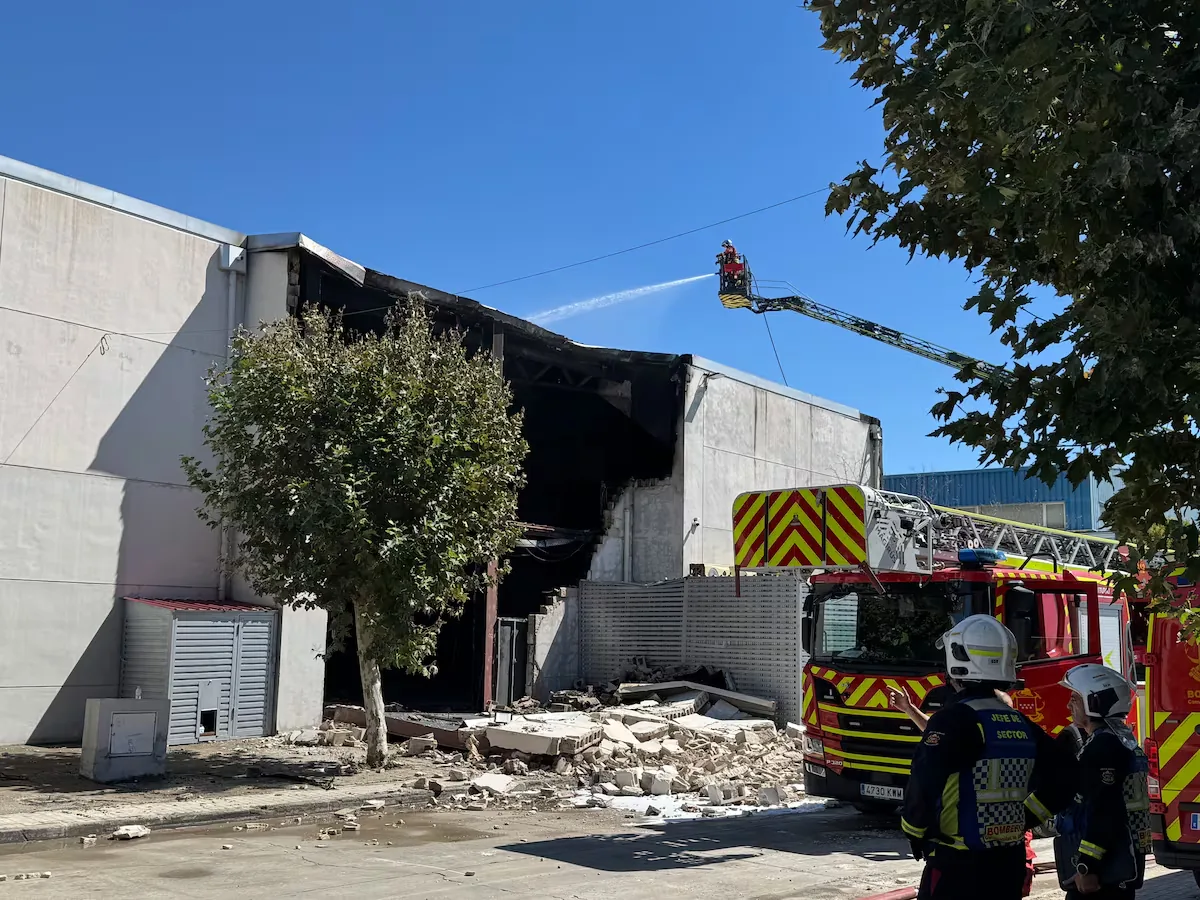
He says that in Chapinería, with 2,705 inhabitants, “the impact was strong, though not as strong as in Navas del Rey,” with 3,420 residents, due to its location. “But there’s an industrial estate in Chapinería where all the warehouses caught fire and are very close to homes. Our job was to extinguish the gardens and houses that might be burning and limit the spread in the warehouses and put them out to prevent them from reaching the homes. At that moment, we couldn’t work in the forest area because the fire’s intensity was too strong.”
Read more Detained at NATO military headquarters, an intern accused of espionage
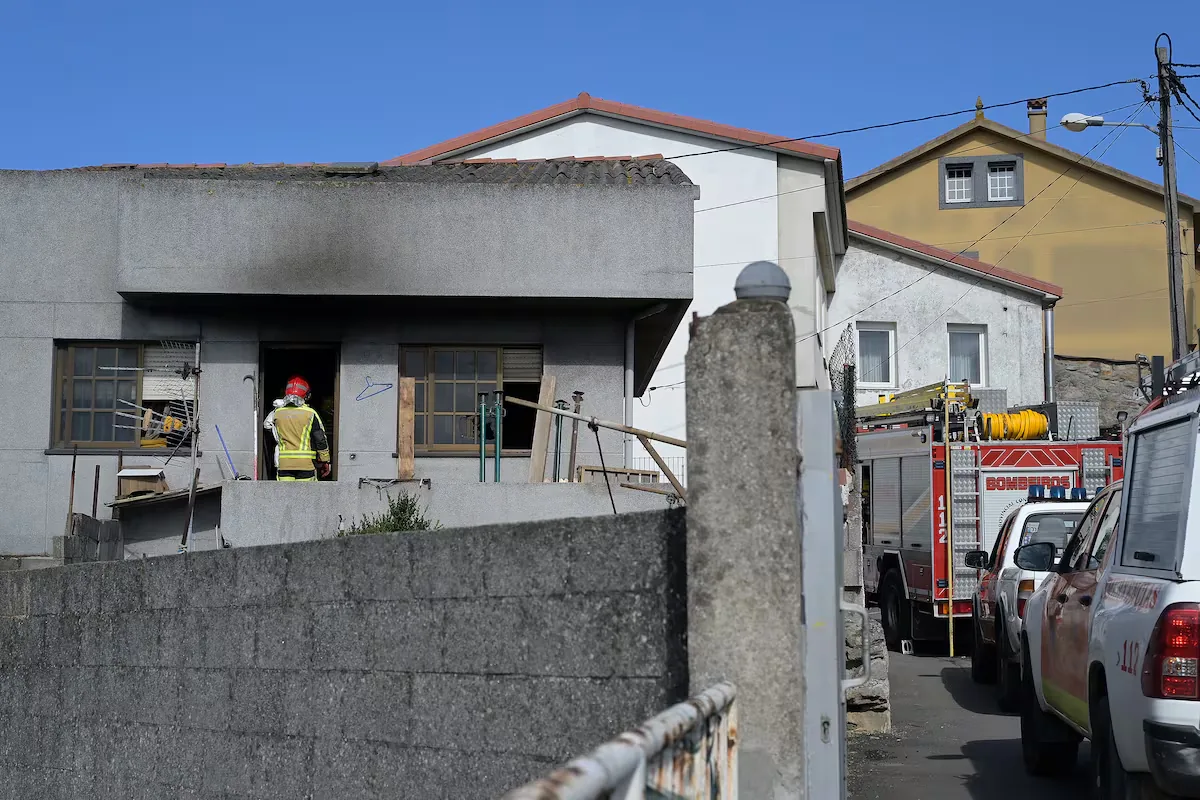
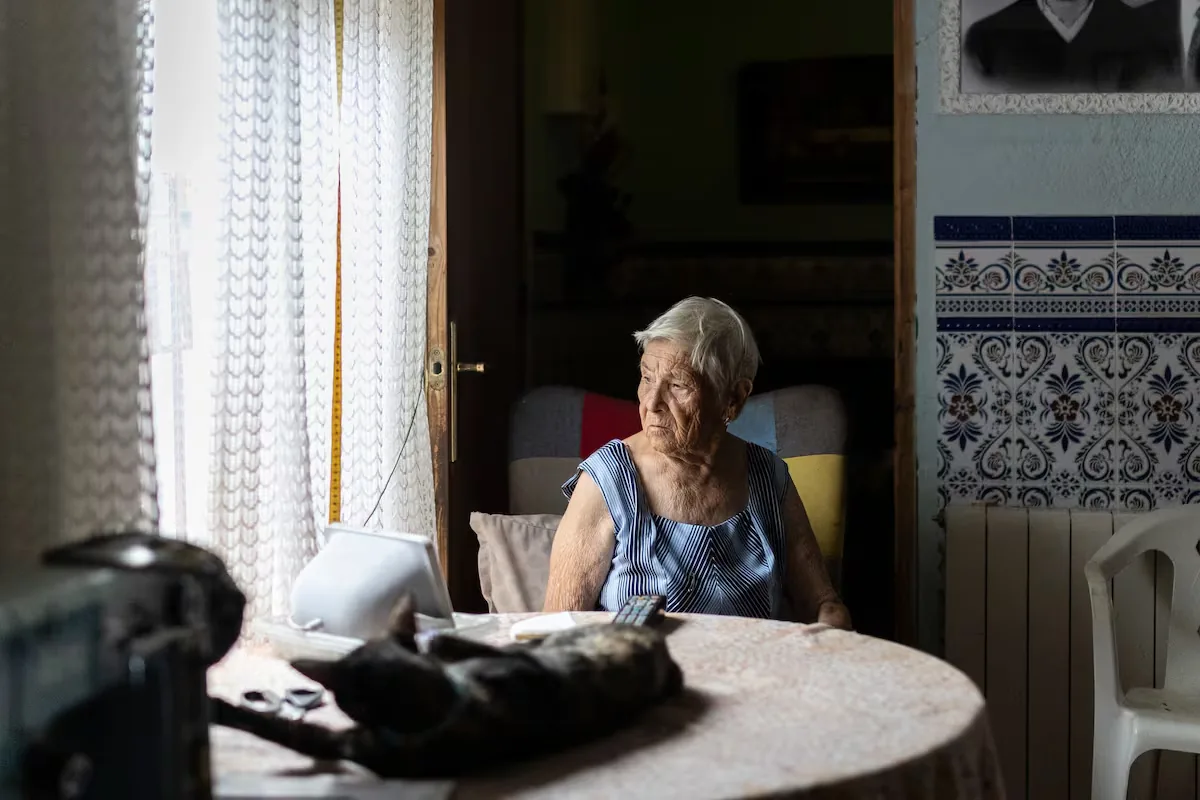
His colleagues say that on that flank “an enormous job was done” and that the fire was anchored, but Echave denies the credit: “The fire didn’t advance further because ultimately it’s currently controlled by the wind.” And there was less of it. Once the fire overtook them and headed towards Zarzalejo, his team focused on limiting material and personal damage. “We had to deal with everything the fire’s passage through Chapinería generated, with houses burning, and we had to evacuate animals and some people we had to drag out because they didn’t want to leave their homes. I understand them, they are people who lose everything, but life is worth more in those moments,” recalls the head of the brigade. The residents, including a farm school with 100 children, had received the evacuation order at 12:00 and the flames arrived at 19:00.
“The rest of the brigades retreated towards Fresnadillas while we stayed protecting and trying to ensure that material and house damages were as minimal as possible.” And now that he has just left there, how does the fire look? “The wind is from the southeast and what was previously the right flank, the area of Navalagamella and Valdemorillo and everything to its right, it seems that it could become the head. Right now, the head is the area going towards El Escorial,” he details.
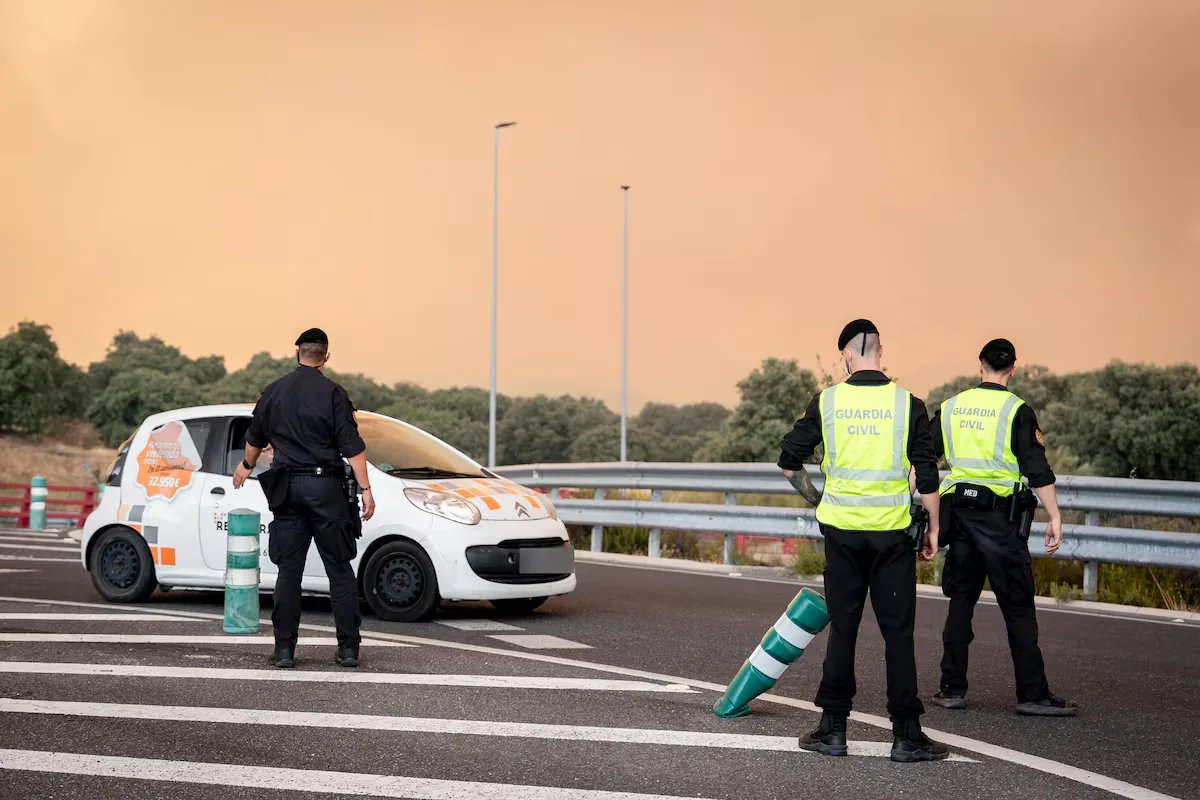
Amidst such a rescue operation and with a raging fire, it’s a miracle that no one has died. “It’s due to the effort being made by the Civil Guard, the Local Police, security forces and bodies, the firefighters… We have all understood that the first, first, first priority is lives, and then, if houses need to be saved, they are saved. We haven’t hesitated. As soon as things looked complicated, entire populations were confined and evacuated, anticipating the situation well in advance. Chapinería, long before the fire arrived, with the prediction that it could reach, was completely evacuated,” the professional explains.
In his opinion, the work of the Civil Guard and Police “is crazy.” “They were looking for burning houses for us on all the streets and guiding us. They are without protective equipment in the thick of it, looking for situations for us to extinguish and save houses that would otherwise be razed right now,” he comments.
His feeling about what he leaves behind is one of absolute desolation and helplessness: “In the end, you leave a fire that is still not controlled, despite all the strategies and the operational plan and the forecasts and the practical attack points, we have done an immense amount of work.” Nevertheless, he is optimistic. “This weekend temperatures are dropping, that always helps, we have a window. The work done this weekend will be critical, because on Monday they will rise again, so we hope that this weekend it can be controlled to some extent.” Ahead, “there is the work of stopping the flame front and stopping the fire, then there will be weeks and weeks of finishing off and monitoring because at any moment this can reactivate.”
Read more From ‘Berlin’ to ‘Clans’: the most (and least) watched Spanish series on Netflix so far this year