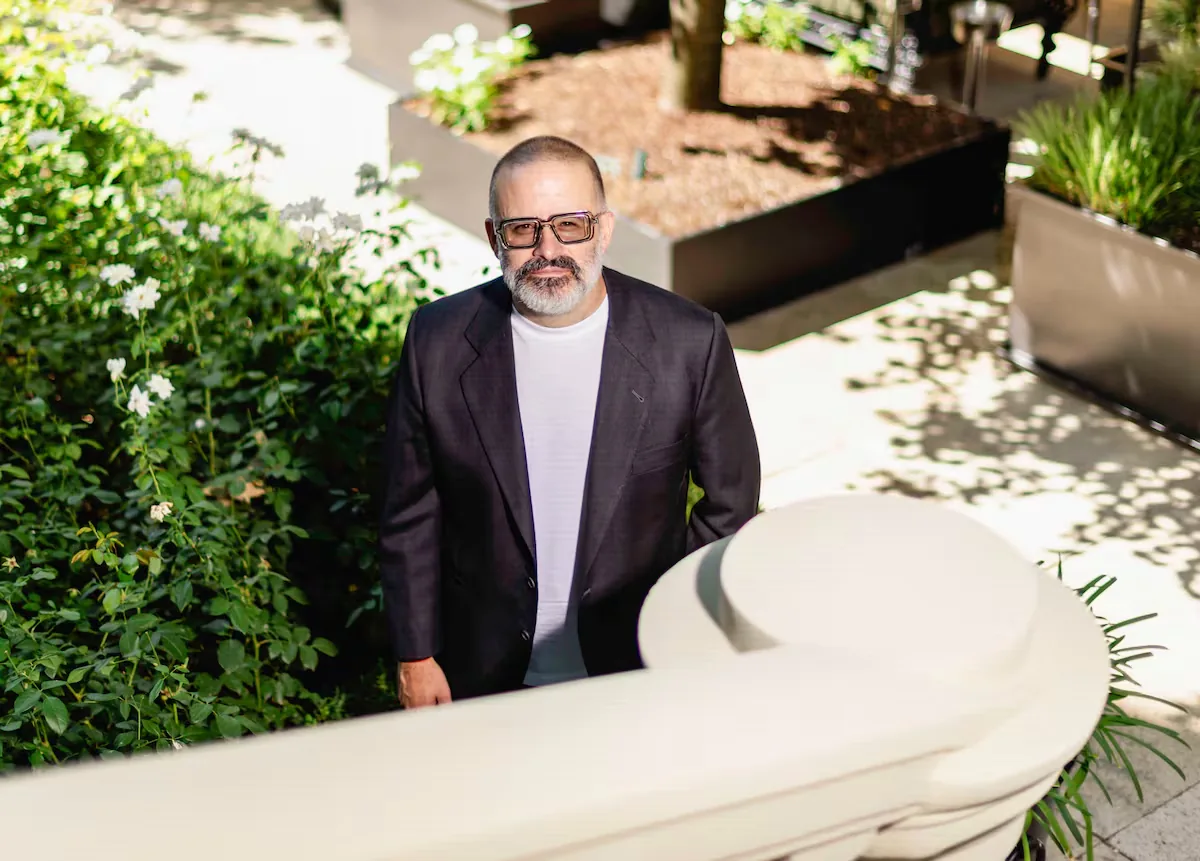







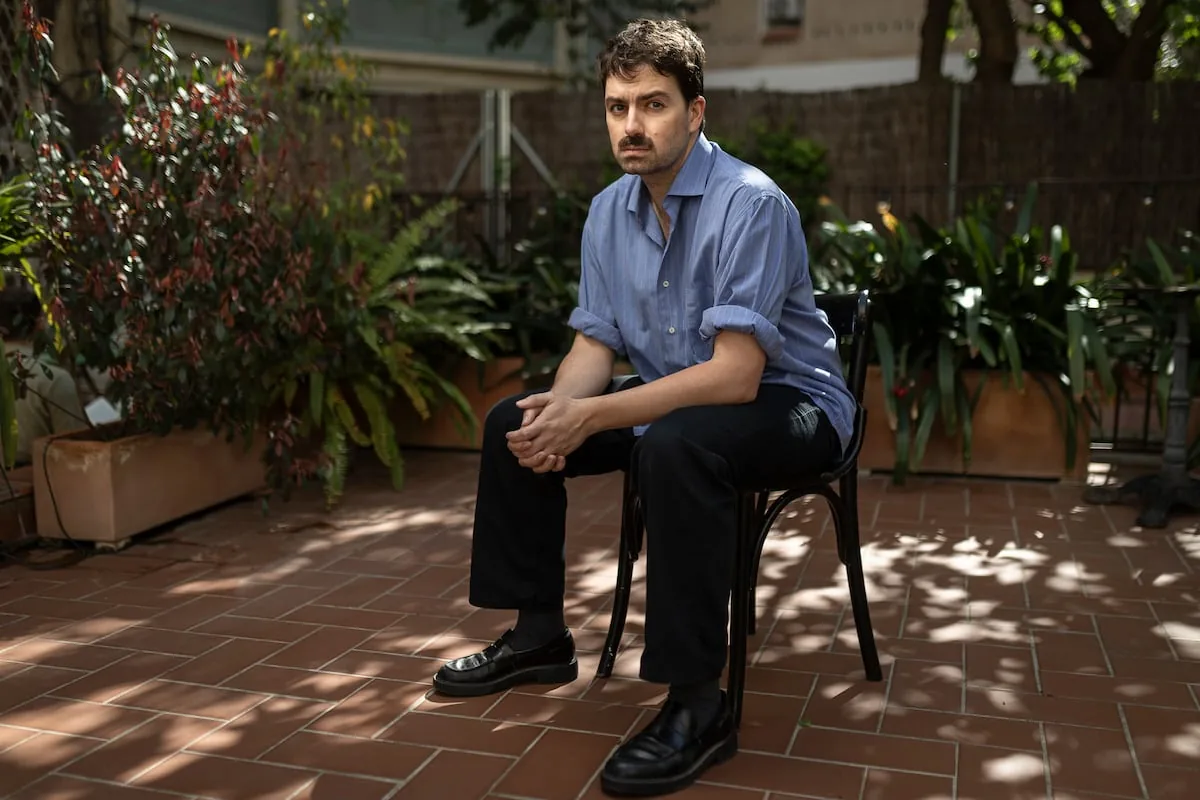
Although he had some intuition, Eudald Espluga (Girona, 36 years old) never thought his book would be published at such a fatalistic peak as the one we are living through. “The day it went on sale was the day Trump threatened to destroy an entire civilization while it slept,” he says about his timely Imagining the End (Paidós/ Raig Verd), the essay where he analyzes how the threat of imminent catastrophe has been instrumentalized, from the micro to the macro level. “It’s not that it’s easier to imagine the end of the world than the end of capitalism, it’s that the end of the world has become much closer and we must radically take the idea that another end of the world is possible,” he warns, updating Fredric Jameson’s most repeated phrase.
Read more Pretending to be happy
After attacking the self-exploitation discourses of the entrepreneurial culture in Don’t Be Yourself, the essayist and cultural researcher again combines the best of critical theory with internet subcultures and cultural analysis to map progressive alternatives to the collapseist reaction; point out the sectarianism of the dark enlightenment preached by millionaires like Peter Thiel; or blame series and movies for having inoculated us with that absurd idea that, in case of emergency, we would run out of toilet paper.
Question. Disaster movies have done a lot of damage. They have made us believe that man is a wolf to man.
Answer. Yes, it’s curious because thinkers like Rebecca Solnit have proven that in the face of real major disasters, like Katrina or 9/11, unlike in fiction, people tend to help each other. Now, in fiction, we are in a new phase, there is no longer a great external threat, the problem will be us, turned into spectators of great conspiracies induced by liberal elites. This has been seen in a way in series like Pluribus or Alien: Planet Earth.
Q. Actually, the end will not come from a meteorite. The collapse, you say, is monotonous.
A. I’m going to answer by paraphrasing the title of a movie: don’t expect much from the end of the world. The collapse is happening at every moment, it is diffuse, slow, and unspectacular.
Q. At what point of the end of the world are we?
A. I agree with the ecological theses that speak of a post-apocalyptic situation. Talking about a collapse to come when there are already entire countries that have had to be evacuated, like Tuvalu, when there are climate refugees, brutal droughts, and millions of deaths due to temperature changes, is not only privileged but dangerous.
Q. You state that we are living in a cosmological crisis, how would you define it?
A. Besides the polycrises we are immersed in, such as droughts, food shortages, or price increases, the cosmological crisis is not just another crisis, but a radical change in how we understand the world and our place in it. Until now, it seemed that in public debate we only discussed political considerations, whether the state should be bigger or smaller or how far public aid should go. Now, precisely because of the existential threats we face, we have experienced a turn towards realism from ontology and metaphysics, directly asking what reality is.
Q. Hence the rise of conspiracy theories. You analyze how the delusion of the Great Replacement has resonated best in the Global North.
A. Waking up every morning with the fear that a civilization has disappeared, that buzz of imminent disaster, makes those racist and antifeminist theories permeate that tell you: “Look, since the world is in constant crisis, whether due to climatic, technological, or economic issues; our survival as the white race is threatened and we must protect ourselves.”
Q. You respond to those who say the left should address these issues because it doesn’t “call things as they are.”
Read more Progressive forces seek new global momentum in Barcelona
A. Any discussion about gender, urban transformations, or sociopolitical organization implies a consideration of how the world is. It is said that the far right gains ground because it cares about material issues, about taboos that people do not dare to discuss publicly, like migration or changes in gender roles. In reality, it is exactly the opposite. What they have is a neoconservative retreat towards a way of seeing reality. All that discourse is identity-based and it is about how some privileges and ways of life can disappear.
Q. You analyze how we have brought apocalyptic delirium to the implementation of AI. Do you see people worried beyond the media debate?
A. Among AI users, I see concern about the future of their jobs, but I don’t think they are fearful. The delirium does exist in the vision of oligarchs and techno-feudal lords who develop these technologies. Besides making money, they are driven by neo-reactionary apocalyptic fantasies.
Q. In the essay, you analyze it in depth: how the dark enlightenment theory fascinates entrepreneurs like Peter Thiel, Elon Musk, or politicians like J. D. Vance. What is it about?
A. All these figures have become obsessed with the texts from the nineties by Nick Land, whom they see as a prophet of technological transformation and how non-human entities, cyborgs, will surpass humans because they will be smarter and better. They believe in the idea of accelerating capitalism to its ultimate consequences, including dismantling democracy and creating an authoritarian technocracy.
The idea of the luxury bunker monetizes our fear. Faced with the possibility of a new terrible existence, they promise to maintain your lifestyle as if the world had not ended. That anthropological pessimism leads to survivalist politics
Q. You can make a lot of money with that idea of the end of the world. Peter Thiel, precisely, is one of the entrepreneurs who has profited the most from the new wars and tried to build a luxury bunker complex in New Zealand.
A. It seems there are no non-luxury bunker companies, right? If they don’t offer you a zen garden or natural light reproduction, they have no business. That industry monetizes our fear. Faced with the possibility of a new terrible existence, they promise to maintain your lifestyle as if the world had not ended. That anthropological pessimism leads to survivalist or prepper politics. You must save yourself, but without giving up your way of life. And that goes from the individual to the national, because what we are seeing the United States doing with Iran is preparationism and what it does at the borders with ICE agents is national preparationism.
Q. Why hasn’t the left been able to seduce us in these debates?
A. On the one hand, part of the left bought a collapseist narrative in which the only way to survive was renunciation and the only promise was a world in which we would live worse. That is not very marketable. On the other hand, when there were attempts to generate a positive response, it always went the other way, which was a pure and hard utopia.
Q. And what do we do if we don’t want to be like those white men locked up with rifles in their bunkers?
A. In the book, I talk about successes without victories. Achieving small day-to-day successes that are elements of real transformation. Let’s take as an example the superblock of Barcelona, which with all the problems it may have brought, like gentrification, you now walk around there and notice the change it has meant, the atmosphere is closer and fresher. We must fight for every housing cooperative project or public canteen and local food. It’s not about going back to local thinking to act globally. No. It’s about thinking that we must dispute every inch of the street.
Read more El Roto: back to the Moon