







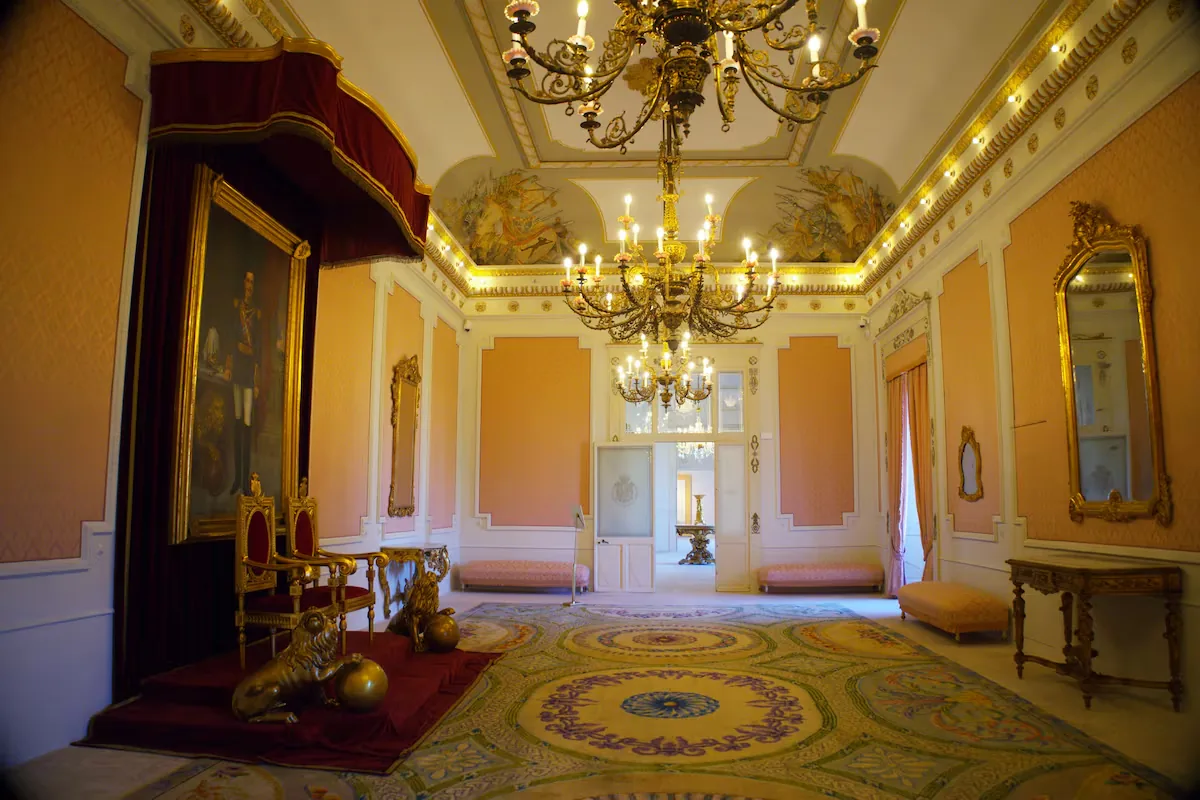
With enviable views of Palma Bay, the throne room of the Royal Palace of La Almudaina lets the sun in through heavy pink curtains. The wooden frames of the huge windows are white and the wall upholstery is a pale pink tone. The stone floors show no trace of footsteps yet and a huge carpet covers the entire room. In the center of the room, two thrones preside over the space under a red velvet canopy that could appear as a location in any period drama. The throne room of the Queen’s Palace, one of the buildings that are part of the La Almudaina palace in Palma, was opened to the public for the first time this Monday.
Read more Sánchez cools support for Zapatero: “I am not his spokesperson”
Patrimonio Nacional has completed the comprehensive rehabilitation of the official residence of the Kings of Spain in Mallorca, allowing the public to access spaces that until now remained closed. Four rooms and a gallery that have always been hidden from visitors’ eyes and now aim to evoke the atmosphere that Queen Isabel II could have experienced during her four-day visit to the city in September 1860.
“The work has allowed us to adapt the visiting spaces and provide them with new museography and a change of decoration,” explains Luis Pérez de Prada, director of Properties and Natural Environment of Patrimonio Nacional, which has invested 2,573,000 euros from the Recovery, Transformation and Resilience Plan in the comprehensive renovation of the palace. The new guided tour allows immersion in the history of the palace in chronological order: from its Roman origins to the Bourbon era. In the first rooms, architecture is the protagonist and the spaces are “bare,” barely completed by small collections related to the castle itself or the island, with elements found in archaeological excavations such as vessels, coins, or oil lamps, according to Víctor Cageao, director of the Royal Collections.
These first rooms on the ground floor trace the history of the fortification from the Roman era to the splendor of Madina Mayurca. The city of Palma was taken in the year 903 and incorporated into the Umayyad Emirate of Córdoba and for the next three centuries remained, along with the rest of the islands, under Muslim rule, with the archipelago known as the Eastern Islands of Al-Andalus. What had been until then a Byzantine castle was converted into an alcazaba, receiving the original name Al-Mudayna, which has evolved into the current Almudaina.
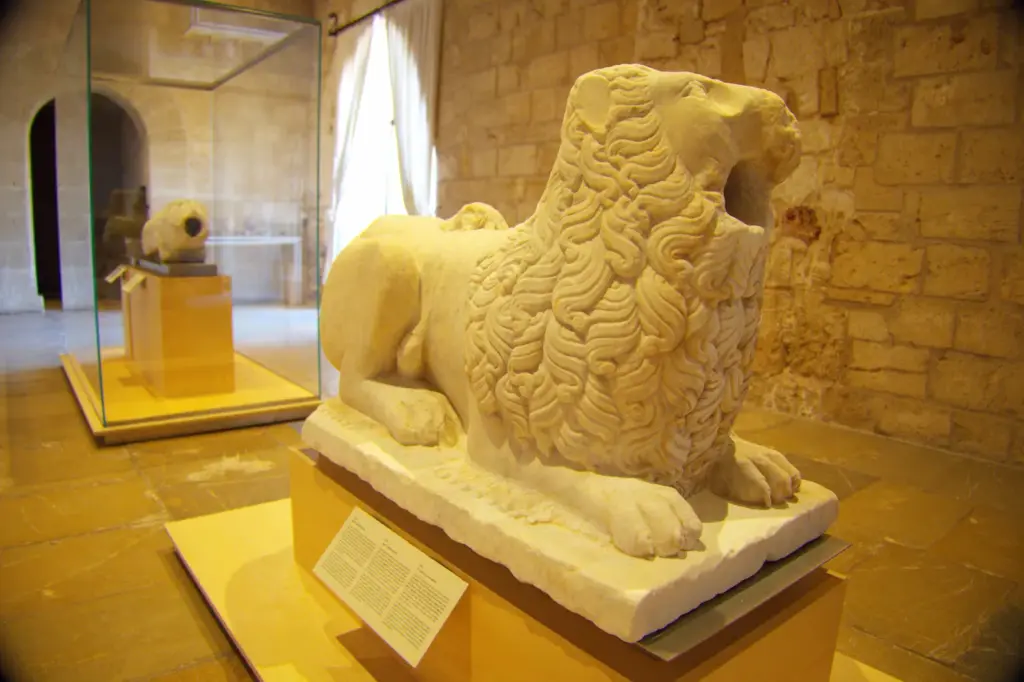
The city then became an important center for trade, crafts, textiles, and spices due to its privileged location in the Mediterranean. “In this place, a fortress was built of which we know little, except that it was regarded as a paradise and orchard, with irrigation channels and fountains,” says Cageao. Proof of this is the sculpture of a marble lion carved that was used as a water fountain in the Queen’s garden pool, a unique piece constantly present in Andalusian residences and palaces.
The palace as it is known now was built under the Kingdom of Mallorca, at the end of the 13th century, for Jaume II and his wife Esclaramunda de Foix, who used it as their main residence on the island. From the King’s Tower, a series of spaces were created that gave rise to what was usual in castles of the time: the King’s Palace, the Queen’s Palace, the chapels, and the gardens.
Very close to the King’s Tower was the chapel of Santa Ana, of which a set of Romanesque-inspired archivolts that were part of the original chapel portal are preserved, depicting the coronation of the Virgin. “The kings and queens of the time, as was tradition, had their own separate quarters. Perhaps there was not always such a defined volumetric differentiation as in a medieval palace, but each always had their court and spaces,” says Pérez de Prada.
Royal visit
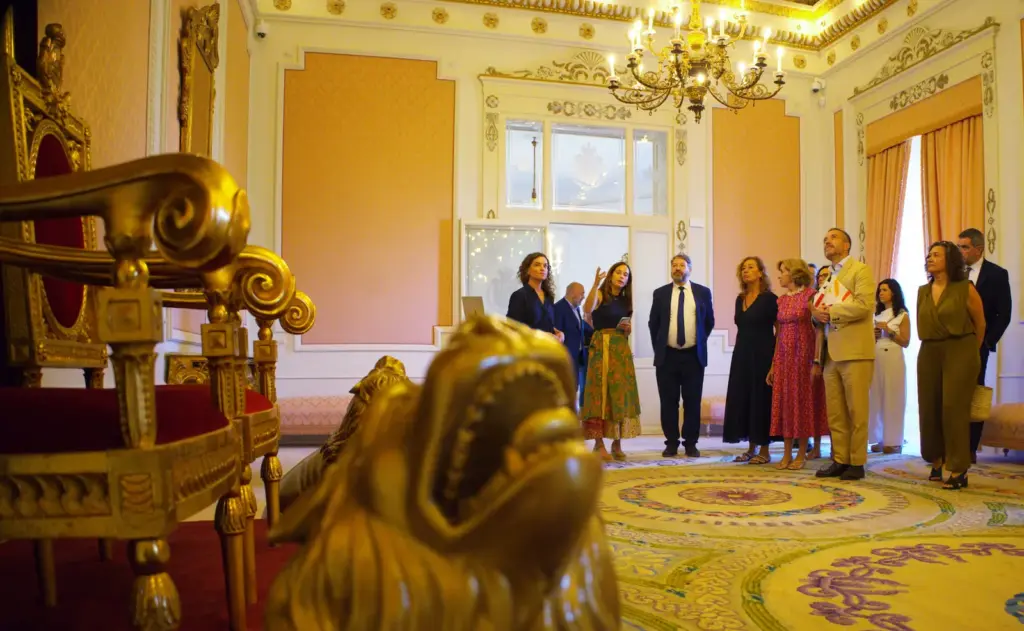
The Queen’s Palace dates from this period and is now open to the public for the first time. The elongated building took advantage of the old western wall towards the city, was connected to the King’s Palace by a spiral staircase, and housed the rooms of the Queen of Mallorca, the princes, and their ladies-in-waiting, as well as the patio area, garden, and the area used for religious services. It has four distinct rooms in which a complete floor remodeling has been done, using stone from the Mallorcan town of Santanyí; the walls have been scraped and lime plaster applied, and all the carpentry has been integrated. “This allows for a homogeneous reading of the entire space and for all the works inside, which are not many because we did not want an excess, to also have their importance and space,” emphasizes Pérez de la Prada.
“In all royal palaces, there is an overlap of uses and each king introduces their tastes,” says the director of the Royal Collections, who details that originally these rooms had a different layout and ended up transformed into what can now be seen and which Isabel II used during her visit to the island. The presence of the queen and her stay of barely four days in Palma is reflected in the form of paintings and portraits, which have been hung on the walls of the two chambers preceding the throne room and allow telling all these details of history “conveying how she was received on the islands.” The throne room, where Isabel II presided over a hand-kissing ceremony, takes a decorative leap to the era of Alfonso XIII, whose portrait with Bellver Castle in the background presides over the room. “Alfonso XII and Alfonso XIII held receptions here.”
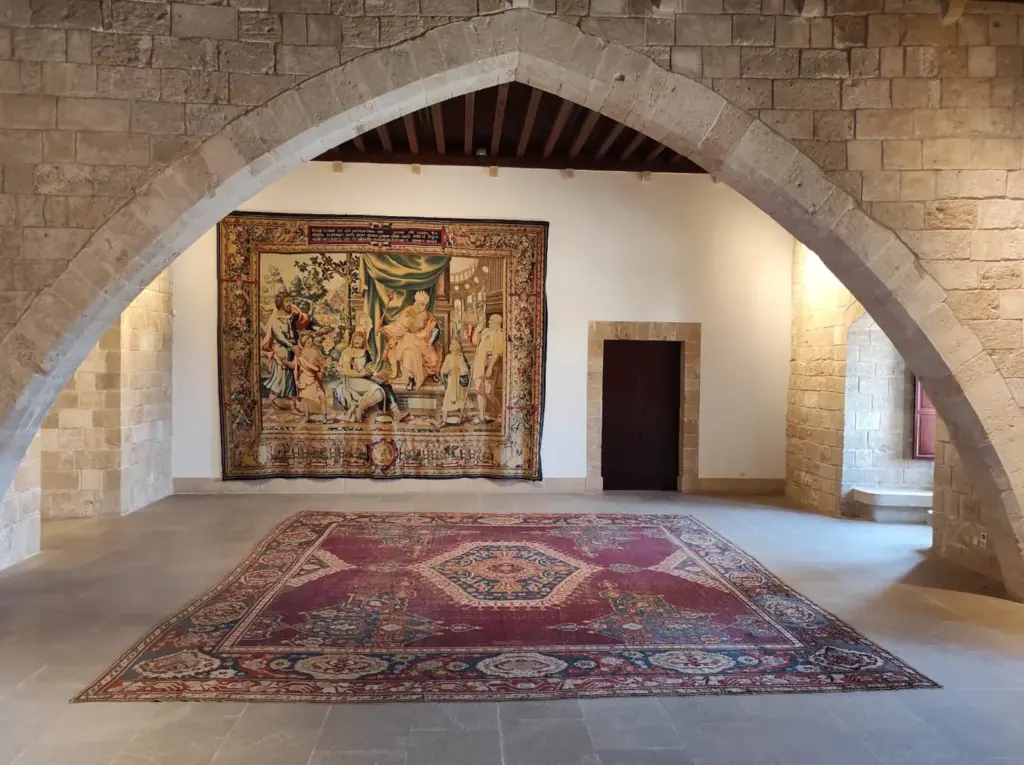
La Almudaina has also hosted receptions and hand-kissing ceremonies in the current era. Until the arrival of the pandemic, Felipe VI and Letizia held the traditional summer reception for the main representatives of civil society of the islands in this palace, which began with a hand-kissing ceremony by the guests. In the Tinell Hall, presided over by an impressive tapestry, the Kings offered the dinner following this social reception and it is also the place where each year the monarch receives the main authorities of the islands. The most curious can also take a look at the King’s and Queen’s office, where the current monarchs meet with authorities during the summer days they spend on the island each year.