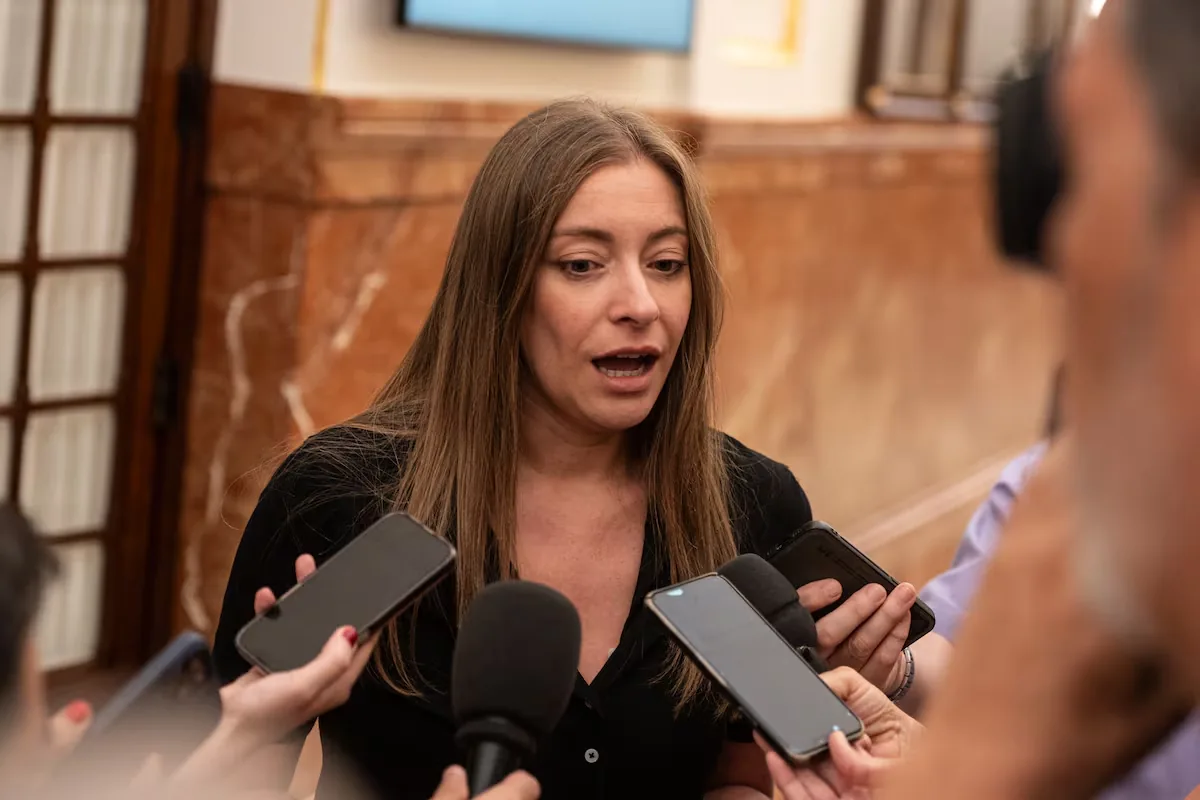





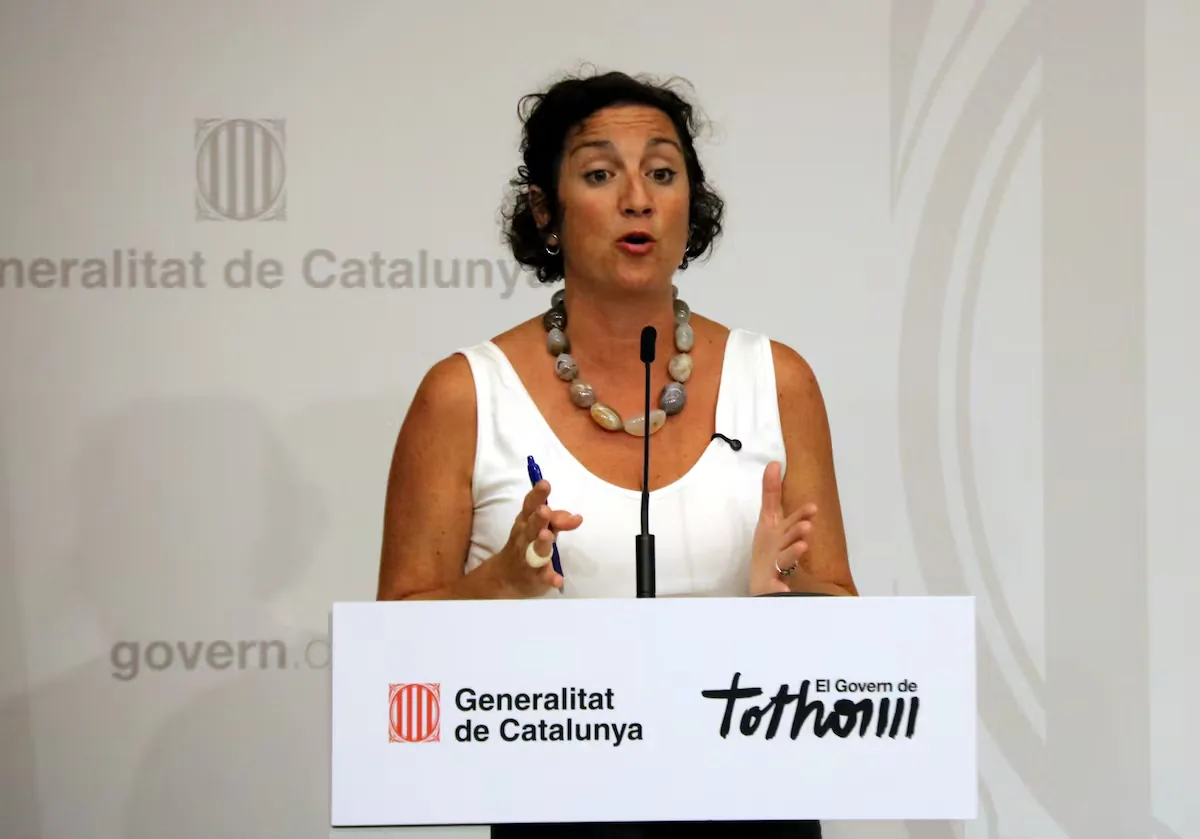
The Catalan Government was eager to go on vacation with the green light from the Council of Fiscal and Financial Policy (CPFF) for a reform of regional financing on which much of its stability in the second half of Salvador Illa’s term depends. The Minister of Economy and Finance, Alícia Romero, accepted this Tuesday that a new opportunity be given to the PP communities to sit at the table, although she appealed to the “responsibility” of their ministers not to delay negotiations in Congress and its entry into force. “We need it to be approved in 2026 so that it is in effect in 2027,” she said this afternoon at a press conference at the ministry headquarters.
Read more The return of the flames to Casavieja 21 years after the death of firefighter Javier Tirado
The reform of regional financing is key for Illa’s government. The new model will inject 4.686 billion euros annually into Catalan coffers, which means that in the next fiscal year the Generalitat will be able to count on the most expansive budget in its history, with an increase in spending of more than 10%, at a time of protests by public service professionals, especially teachers, or discontent over difficult access to housing. At the same time, financing is Illa’s great asset to keep ERC supporting him on the eve of municipal elections in which, in a way, they will be able to see the citizen approval of their parliamentary alliance.
Left-wing parties doubt the intentions of the PP, although at the same time they believe that the change of position by the Canary Islands may have generated movements in the more negotiation-inclined popular communities, such as the Balearic Islands. Romero did not want to speculate on whether Alberto Núñez Feijóo’s party only wants to buy time, but she supported the decision of the Minister of Finance, Arcadi España, to give the PP autonomies five weeks to present their proposals and sit down to negotiate. “They ask for more time even though they did not attend bilateral meetings with Finance. Even so, we support giving it to them so they cannot say they did not have it. We will exhaust the last possibilities and thus we will know the PP’s financing model, because we still do not know what it is,” Romero added.
The Government also believes that this move does not delay the schedule too much, since the modifications that would have been approved tomorrow could not have been taken to Congress until September due to the summer break. The president of ERC, Oriol Junqueras, has been less patient than Romero with the PP communities, whom he accuses of aspiring to the resources provided by the reform without having to accept it publicly.
In any case, Junqueras agreed with Romero that what matters is that “the model is approved in Congress before the end of the year so that it comes into effect on January 1.” And in that process, more than the PP votes, he will need the votes of seven Junts deputies, who also disagree with the reform that the Ministry of Finance has sent to all common regime communities.
However, the option that the PP wants to negotiate the model still exists. Romero admitted that a dialogue about the reform could change the numbers, although she considers it complicated. Asked whether those extra 4.686 billion euros are guaranteed, the minister said: “The figures can change, but key figures for the model such as the adjusted population should change. And I think that is difficult.” In any case, she added, any eventual modification agreed with the PP must then also be addressed with Catalonia and the Canary Islands.
Read more Sánchez cools support for Zapatero: “I am not his spokesperson”