




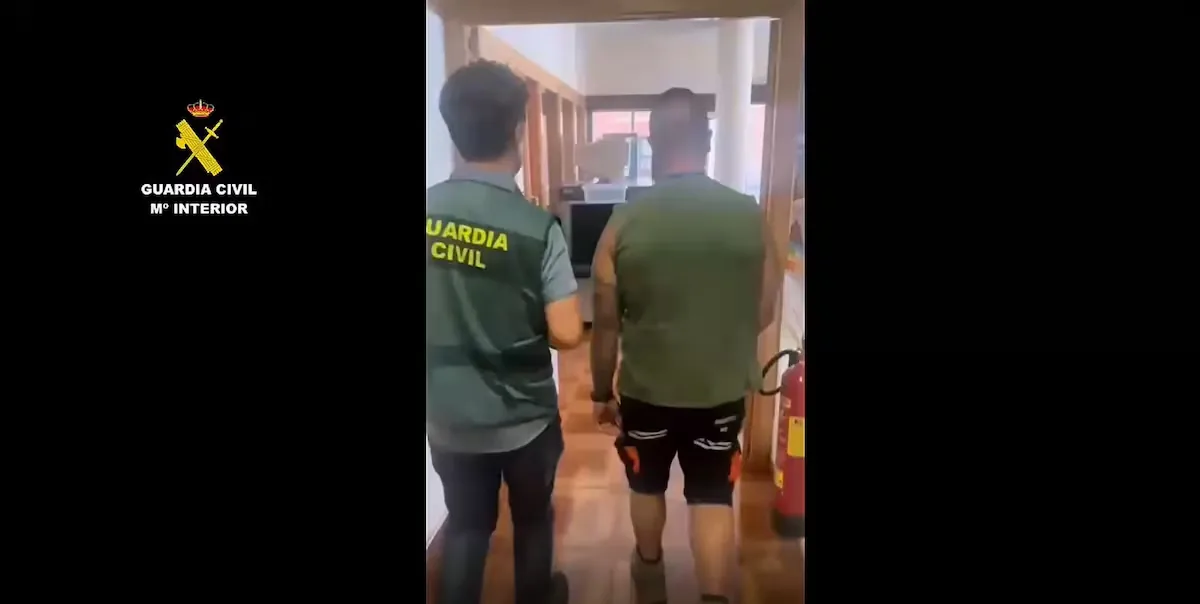
Research into what has already been classified as the largest fire in recent Spanish history, affecting 50,000 hectares, points with certainty to the use of heavy machinery in the municipality of Burgohondo (Ávila) as its origin, when it was precisely prohibited due to the high risk of fire. The investigation by the Nature Protection Service (Seprona) of the Civil Guard led last Friday to the arrest of the owner of the excavator, known as El Perejil, and the questioning of its operator as a suspect, both as alleged responsible parties for the devastating fire that forced the Government to declare a national emergency of interest.
Read more Found dead Kavinsky, the French DJ behind the international hit ‘Nightcall’
El Perejil was released shortly after by the armed institute ― at that time the fire had affected 9,000 hectares and was not expected to reach the proportions it eventually did ― at the request of the Prosecutor’s Office while investigations continued. At that moment, the priority was to extinguish it, sources from the armed institute emphasize. According to sources close to the investigations, the owner of the machinery refused to testify before the agents, while his employee claimed that the fire started from sparks caused by the vehicle’s chains, but not while they were working, rather when they were removing it from the site. The operator stated that they were leaving precisely because the Junta of Castilla and León had decreed the prohibition of using machinery in the forest whose operation could cause fire.
These same sources detail that the statements of several witnesses have contradicted this worker’s version by affirming that, although it was not allowed to carry out this type of work, they saw the two suspects with the excavator in operation when the fire started. The sparks caused during these tasks ignited the nearby vegetation, mainly composed of very dry low scrub due to the high temperatures recorded in the area during this summer.
Read more Begoña Gómez changes lawyer ahead of the jury trial
The “clear indications” collected by the Civil Guard on the ground confirm this hypothesis, as recent tracks and traces of the hydraulic hammer being used were found in the moments before the fire started. According to El Mundo and confirmed by EL PAÍS from sources close to the investigations, the machinery was breaking rock to open a forest path through the Sierra de Gredos to connect Burgohondo with the municipality of Navarrevisca, allowing cattle to pass. The work had been contracted to the Ávila-based company Reforestaciones El Fresno by a local livestock association.
The investigation has revealed that, besides working when it was strictly prohibited due to the high fire risk, the excavator lacked administrative authorization to carry out these works and violated the order regulating the extinguishing means that all machinery whose operation can cause sparks must carry, as is the case with excavators. The investigators focus on El Perejil as the main alleged responsible party for what happened, since, as the owner of the machinery, he supposedly gave the order to his employee to continue the work despite the prohibition by the Junta of Castilla and León. Both he and the operator are accused of forest fire and environmental crimes, with the aggravating factors of having affected areas close to inhabited places and severely damaging the balance of natural systems.