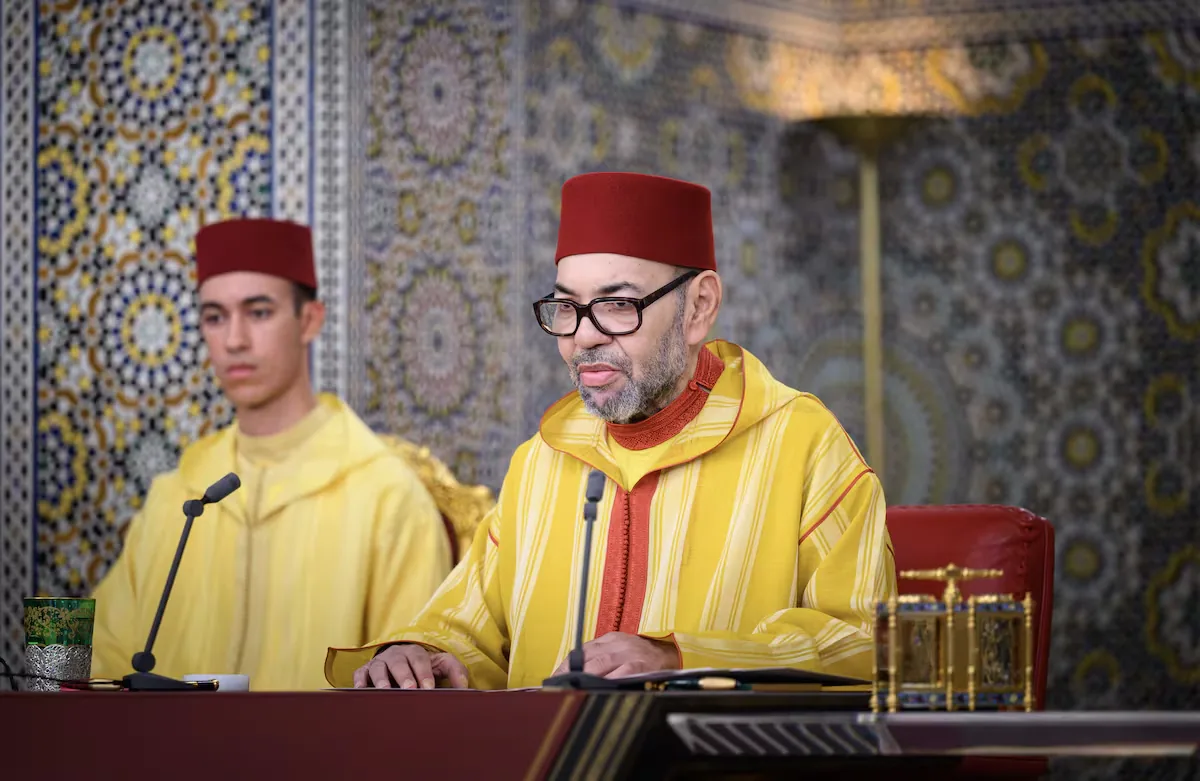
In a context of global instability, Mohamed VI has appealed to stability as Morocco’s “strategic strength” in a message addressed to the nation on television on Wednesday night, with barely two months left until the legislative elections. On the eve of the 27th anniversary of his accession to the throne, which is commemorated this Thursday with official and festive events, the monarch of the Alaouite dynasty, soon to turn 63, wanted to review more than a quarter of a century of reign.
Read more A Texas court charges an American with conspiracy for supplying weapons to the Sinaloa Cartel
“Looking back on the path we have traveled together, I feel pride in the achievements reached and optimism for the future,” he said in his speech. “It is not a matter of personal satisfaction, but a feeling of confidence and serenity that gives us the strength and motivation to continue our efforts,” he explained in an intervention in which he emphasized that he had not sought “glory” nor “international leadership,” but “to serve the people” and “to ensure that all citizens live with dignity.” The sovereign appealed to strategy, governance work, and a “constructive self-criticism” to prepare for the future.
This year’s speech was delivered just weeks before the legislative elections on September 23, in a campaign atmosphere of apathy during the summer holidays. After the resignation of the current prime minister, Aziz Ajanuch, from leading the government coalition again, the Minister of Budgets and president of the Moroccan Football Federation, Fouzi Lekjaa, a technocrat newly arrived in politics, is emerging as the best-positioned candidate to lead the Executive responsible for organizing the 2030 Football World Cup (together with Portugal and Spain), according to political analysts from the Moroccan press.
The king mentioned in his speech the good organization in his country of international events, such as the last Africa Cup of Nations, and boasted of the economic growth driven by industry, which places Morocco as the leading car exporter in Africa, and the good prospects for agriculture after the end of the drought.
In an apparently protocolary message, Mohamed VI also urged the financial entities of his country to support investment and major national projects. “[It is necessary] to have a more open and innovative financial sector that guarantees the optimal mobilization of national savings, and that revitalizes markets to boost the development of an emerging Morocco,” he addressed the business and financial world of the Maghreb country.
As is tradition in religious and official festivities, 1,788 convicts have been pardoned by the king, including one with a death sentence (under moratorium for decades in Morocco) and another with a life sentence. Last year, nearly 20,000 were granted royal clemency.
Support from the Crown Prince
The king appeared apparently tired in his 15-minute intervention, read from the royal palace of Tetouan in a monotone tone, with a somewhat hoarse and weak voice. His son, Crown Prince Moulay Hassan, helped him stand up when the national anthem sounded at the end of the speech.
Read more A judge sentences Carlos Caicedo to 10 years in prison for a corruption scheme in Santa Marta
Recently, Mohamed VI has been reducing his public presence. The sovereign walked on the 20th through the streets near the royal palace of Tetouan, a Mediterranean province where he spends his summer holidays, and greeted citizens who stopped as he passed. Last month he also repeatedly toured the streets of Tangier in a vehicle.
The monarch of the Alaouite dynasty has also reduced his public interventions. Of the four speeches he traditionally addressed each year to the nation, this year he will only deliver two: the Throne speech and the solemn opening of the parliamentary sessions, in October.
After the recognition by the UN Security Council, in October last year, of the Moroccan autonomy plan as a basis for a political solution to the Western Sahara conflict, Mohamed VI also decided to suspend the Green March speech, which is commemorated in Morocco every November 6. In his address this Wednesday, he made no mention of the Sahara.
A “two-speed” country
A year ago, Mohamed VI called in his message to the nation to avoid an economic territorial rupture and to fight inequalities by stating that there is no room for a “two-speed” Morocco, and that public policies must contribute to improving the situation of citizens. The sovereign thus urged the Government to develop “inclusive public policies” for employment and to improve social services, health, and education.
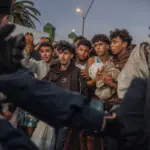
Just two months after his previous Throne speech, in September last year, the broadest social uprising in two decades broke out in the Maghreb country: the Generation Z protest. Tens of thousands of young people between 15 and 30 years old took to the streets against corruption under the slogan “Less stadiums, more hospitals and universities” called by the GenZ212 movement on social networks. Nearly 6,000 protesters were arrested and around 2,000 have been tried and imprisoned, according to records from the Moroccan Association for Human Rights (AMDH), for their participation in the protests. There was also no mention of this issue in his message to the nation for the Throne Day.
Read more ICE releases one of the key witnesses in the death of Mexican immigrant Lorenzo Salgado