









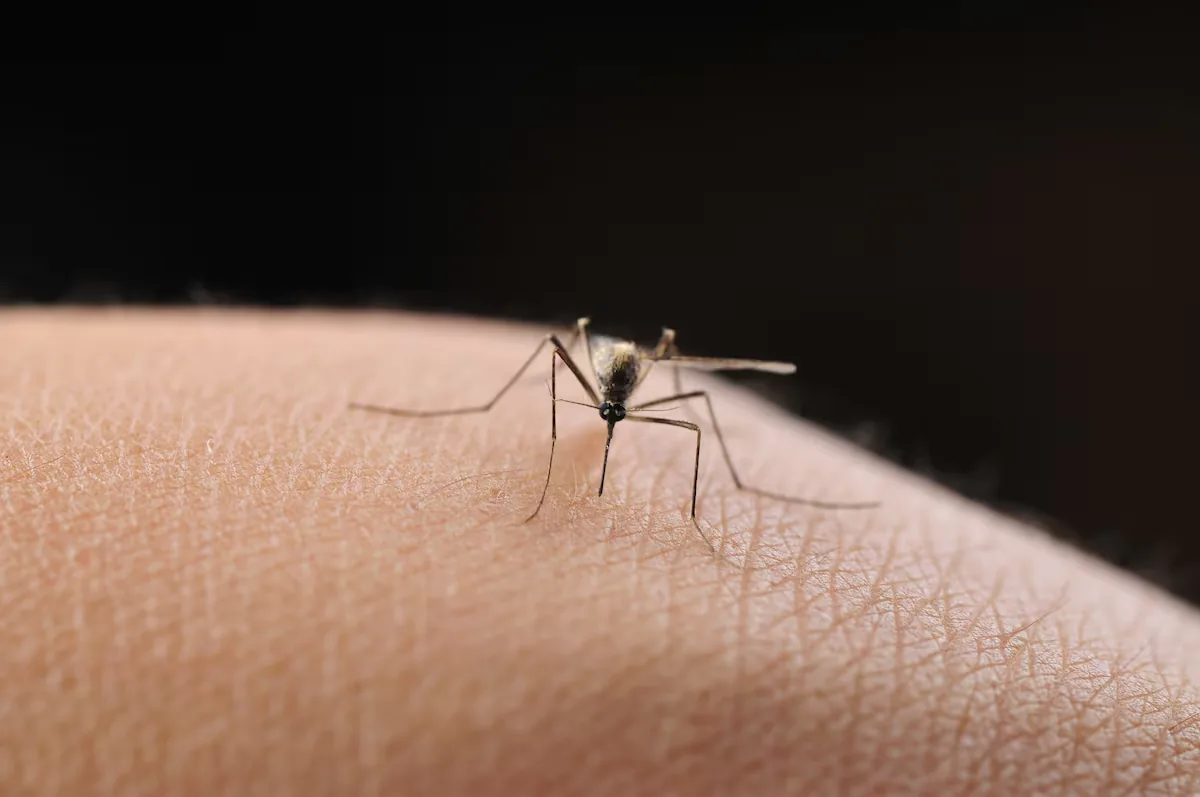
Humans have been fighting against a small animal for more than a century, in an arms race that we were winning. But things took a turn a decade ago. In 2015, the historic low in malaria cases, one of the diseases transmitted by mosquitoes, was recorded. But since then, the numbers have remained stable. Part of this inflection is explained by climate change, which has brought virus-carrying mosquitoes to places where they had never been found before. But an unexpected advantage has also been consolidated. The insecticides used since the seventies for mosquito control have become less effective. These insects are evolving to evade them. Two recent studies explain how.
Read more Critics laugh at Adrien Brody’s artwork: dogs with bandanas, fried chicken, and a Warhol-style mural
Researchers from India have examined the resistance mechanisms to α-cypermethrin, a common insecticide worldwide. In the area, mosquitoes showed a mortality rate of 97.9% against the insecticides, right at the limit set by the World Health Organization (WHO), below 98%, to study if resistance is developing. This is what a team led by Sarita Kumar, professor in the Department of Zoology at the University of New Delhi, did. “Mosquitoes that survived exposure to the insecticide showed an increase in detoxification enzyme activity,” Kumar explains in a message exchange. Her analysis, published this week in the journal Frontiers in Tropical Diseases, uncovers the mechanism by which mosquitoes are developing their immunity.
“When an insecticide enters a mosquito’s body, it activates a cellular alarm system. This triggers a cascade of responses in the insect’s cells and intensifies the production of defensive proteins,” Kumar explains. The problem with using the same type of insecticide every year is that the most resistant specimens survive, and they are the ones that reproduce and transfer that ability to new generations. A survival rate of 3% can increase exponentially in just a few years. And this is happening not only in India but worldwide. Previous studies conducted in countries such as Mexico, Ecuador, Peru, and Colombia have reported different levels of resistance to α-cypermethrin. Mosquitoes are adapting to our insecticides, learning to evade them. And only now are we beginning to understand how.
“Mosquitoes have short life cycles and large populations, which allows beneficial traits to spread quickly when the same insecticides are always used,” Kumar explains. They have an astonishing capacity to adapt and, depending on humans for their survival, they quickly adapt to our changes. The most striking example of this ability is found underground. In the little more than 160 years that the London Underground has existed, a new species of blood-feeding mosquito has emerged. The new species was named Culex pipiens molestus. Its closest relatives, the common mosquitoes or culex pipiens, hibernate in the cold and prefer bird blood to human blood. But the molestus reproduce year-round, as it is always warm underground, and have specialized in human blood. A similar process has been observed in the New York and Moscow subways.
The mosquito mutates to adapt to our habits, and the next change is happening before our eyes, in our gardens. Another recent study, from the University of North Carolina, monitored the local population of the tiger mosquito from 2016 to 2024. It saw how they began to develop mutations that made them resistant to pyrethroids, another type of insecticide. The first resistant specimens did not appear until 2018. In 2024, 39% of the population contained a genetic mutation that helped them nullify the insecticide’s effects. One of the most curious details of the study is the difference in that percentage between mosquitoes collected in wealthy neighborhoods and those in poorer neighborhoods. In the wealthier areas (which presumably could more easily afford garden fumigation), resistance was much more pronounced than in the poorer ones. “What is truly striking about this study is not so much the speed of evolution but the mosaic pattern observed,” explains Martha Burford Reiskind, a biologist at the University of California and lead author of the study, in a message exchange.
Read more Latest news on wildfires, live | The Zamora fire forces the evacuation of two more towns
Burford explains that with this information we should start being more cautious with the use we give to insecticides. “One of the main implications of this study is that homeowners who spray to enjoy their gardens and reduce biting insects during the day could be contributing to the development of resistance,” she notes. “The problem is that we need populations of mosquitoes susceptible to insecticides in case of a disease outbreak.”
Not only are insecticides starting to fail, but there are also signs that repellents could lose their effectiveness against this annoying insect. A study, published in May in the Journal of Experimental Biology, suggests that, just as Pavlov’s dogs learned to associate the sound of a bell with food, mosquitoes can learn that the presence of mosquito repellents indicates the possibility of blood feeding.
In the experiment, more than 60% of trained insects preferred skin treated with DEET, a type of repellent, over clean skin. The bugs based this on previous experiences, remembering that this smell means fresh blood. The study’s authors emphasized that these results only occur under specific laboratory conditions. It is unlikely that wild mosquitoes modify their response based on previous experiences, because the same insect usually encounters different repellents during its short life.
However, the experiment serves to explain the astonishing capacity for adaptation and learning that these insects have. To understand the powerful weapons they can develop to continue this silent interspecies war we have been waging for centuries.