









The European Central Bank (ECB) published this Friday the results of the geopolitical stress tests it subjected 110 banks in the euro area to. The results — which have not been published in detail by entity, but only the general conclusions for all entities — have shown the effects and the response of the entities to a worsening of political tensions. While it acknowledges that the entities have improved in their ability to identify and model geopolitical risks, the supervisor has published a series of recommendations to the entities that include improving the analysis of these risks, more consistency in calculating their effects on capital and liquidity, and fundamentally, criticizes the excessive optimism both in the analysis and in the measures to be taken in the different scenarios presented.
These stress tests have certainly been particular. Normally it is the EBA (the European Banking Authority) that every two years analyzes the impact on European banks of a possible financial crisis. For its part, for some time now, the ECB has been conducting its own stress tests in the year when the EBA does not carry out its analysis. Usually, they tend to be thematic (focused on an issue that concerns this body, as in this case geopolitics) and inverse (starting from the failure situation to analyze how it could have been reached). Thus, the ECB has asked banks to estimate under what geopolitical circumstances they could lose 300 basis points of capital, what effects it would have on the entities, and what measures they would take to mitigate it.
The ECB launched these exams at the beginning of the year. It sent a draft of its first conclusions to the financial entities in April and in June did the same with its final analysis. It sent letters to each bank summarizing the conclusions of its analysis and containing comments on aspects to improve. As for Spanish banks, their distance from conflict zones, their geographical diversity in Latin American countries, or the work previously done to prepare for geopolitical problems has allowed them to obtain higher scores than other foreign competitors, according to financial sources.
The ECB is clear that this will not imply an automatic increase in the minimum capital requirements for banks, but it will be part of the dialogue they have with the supervisor and will be used in the annual supervisory exercise to which the entities are subjected. As a result of this exercise, known in jargon as SREP, the ECB can indeed tighten the minimum capital thresholds.
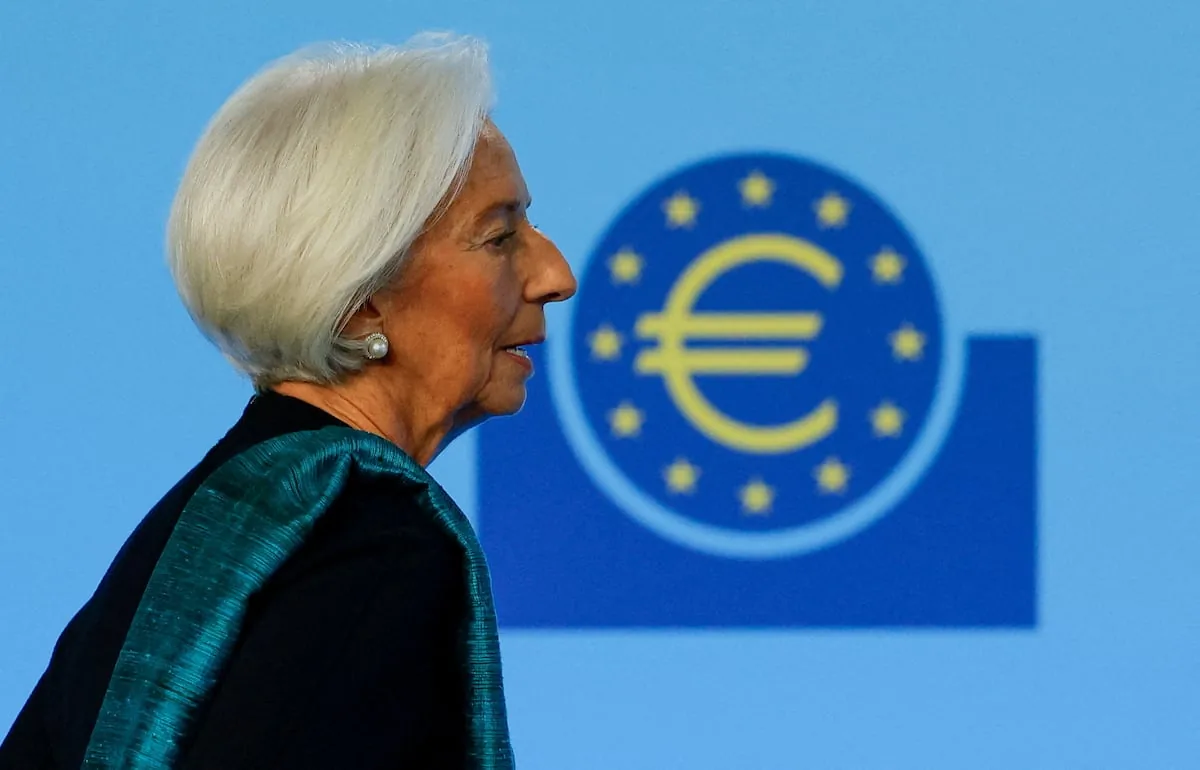
The organization led by Christine Lagarde has identified seven areas that need work. The first is to improve the assessment of these risks; specifically, it criticizes that some banks used methods that were too simple to calibrate scenarios and transform them into risk factors, which might not adequately reflect their effects on the capital and liquidity of the entities. It also points to the importance of managing multiple possible geopolitical scenarios, as well as greater consistency between the economic effects of these scenarios and their effect on the banks’ accounts. Likewise, it emphasizes the relationship between solvency and liquidity of the entities in the face of worsening geopolitical tensions.
One of the main criticisms of the ECB towards banks is that they are overly optimistic. On one hand, it highlights that some entities were too positive in calculating the effects on their balance sheets. On the other hand, it makes the same criticism about the measures proposed to respond to the geopolitical scenarios presented (such as capital increases or business sales), which do not take into account the difficulties of carrying them out in scenarios of severe economic deterioration and in which several banks would try to make similar moves at the same time. Additionally, it recommends simplifying supervisory processes.
Very disparate scenarios
One of the first conclusions drawn by the ECB is the divergence in the scenarios presented. Among them, banks highlighted the possibility of military conflicts breaking out, supply chain disruptions, economic sanctions, macroeconomic deterioration, political instability, and cyberattacks. Specifically, one of the geopolitical events most feared by the entities is a prolonged blockade of the Strait of Hormuz, an escalation of the war in Ukraine, trade disruptions between China and the United States, and increased tensions in Taiwan.
Banks point out that these conflicts could damage their accounts mainly due to a downturn in the economy, which would increase losses in their credit portfolios — mainly in sectors such as agriculture, tourism, or hospitality — as well as lower income due to possible interest rate hikes. They would affect retail banking and corporate banking more. For large banks, another source of problems could be their large portfolios of financial assets for trading in the markets, exposed to losses if these mentioned geopolitical tension events caused abrupt stock market drops.
In this regard, the ECB has detected several inconsistencies in the analysis prepared by the banks. In particular, it highlights the inconsistency between the estimated effects and the risks mentioned, an excessively high or low sensitivity, depending on the case, to GDP drops or some calculations that point “in unexpected directions,” such as recording gains in clearly adverse scenarios.
Another conflict between the banks’ analysis and the ECB’s view is the effect on liquidity, which would generally remain above regulatory minimums. The ECB considers that the sector must conduct a much more rigorous analysis of this parameter and the connections with the effects on capital. It demands that the effects on capital and liquidity, funding tensions, and liquidity loss be modified jointly.
The examination of the geopolitical stress tests has not only affected financial magnitudes, but the ECB has also wanted it to cover non-financial risks. In this aspect, it has highlighted above all cyberattacks.
Finally, the banks prepared a list of measures to take to address a geopolitical crisis. They mentioned capital increases, sale of business lines or portfolios, cost reduction, decrease in credit exposures, tightening of loan granting criteria, modification of dividend policy, and an increase in margins applied to loans and deposits. For the ECB, these measures are “reasonable and consistent,” but it insists that they must be evaluated within the context of a systemic geopolitical crisis. And that many of these measures would not work if all banks try to execute them at the same time.
Read more “He have slept in the mountains, because people threw stones and pistols at us”