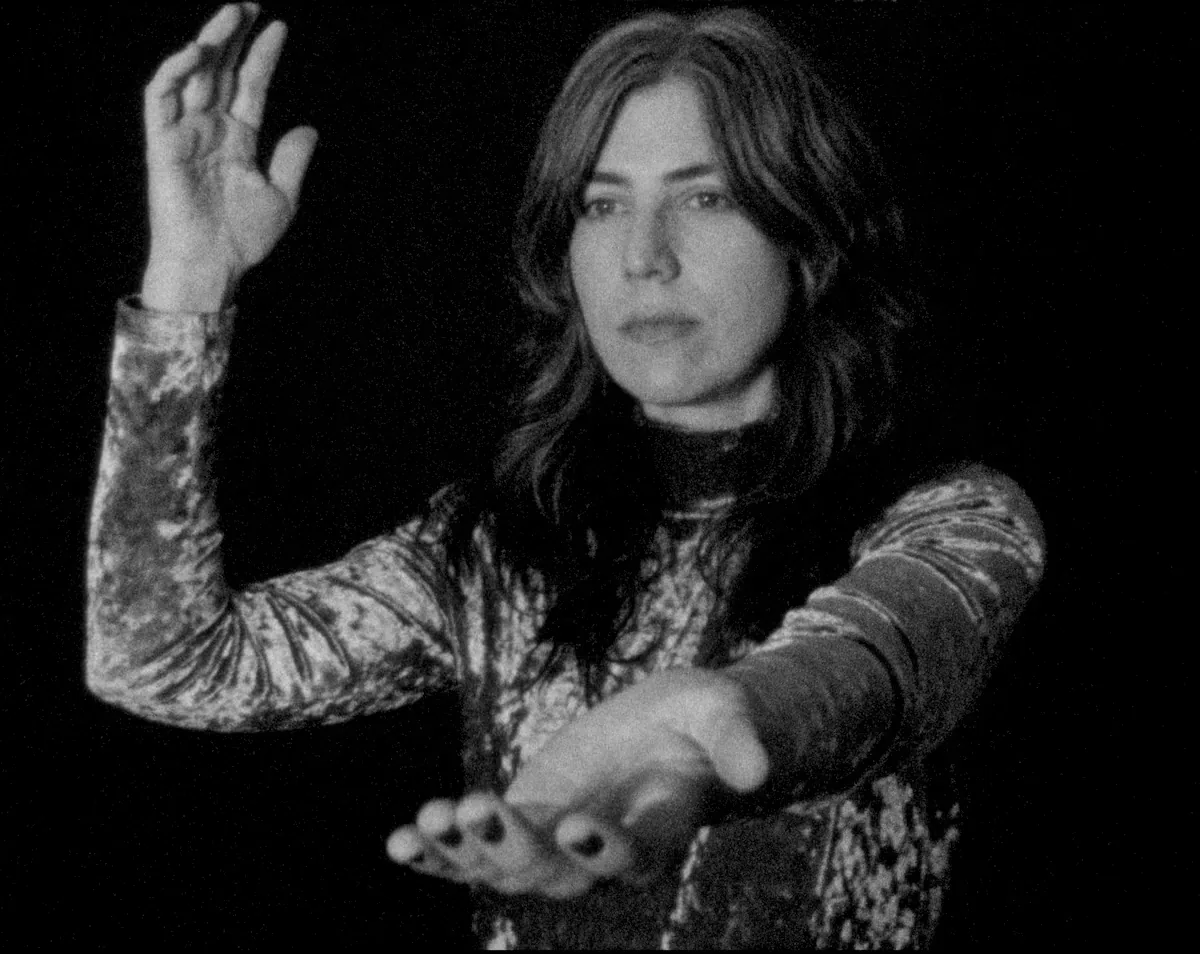







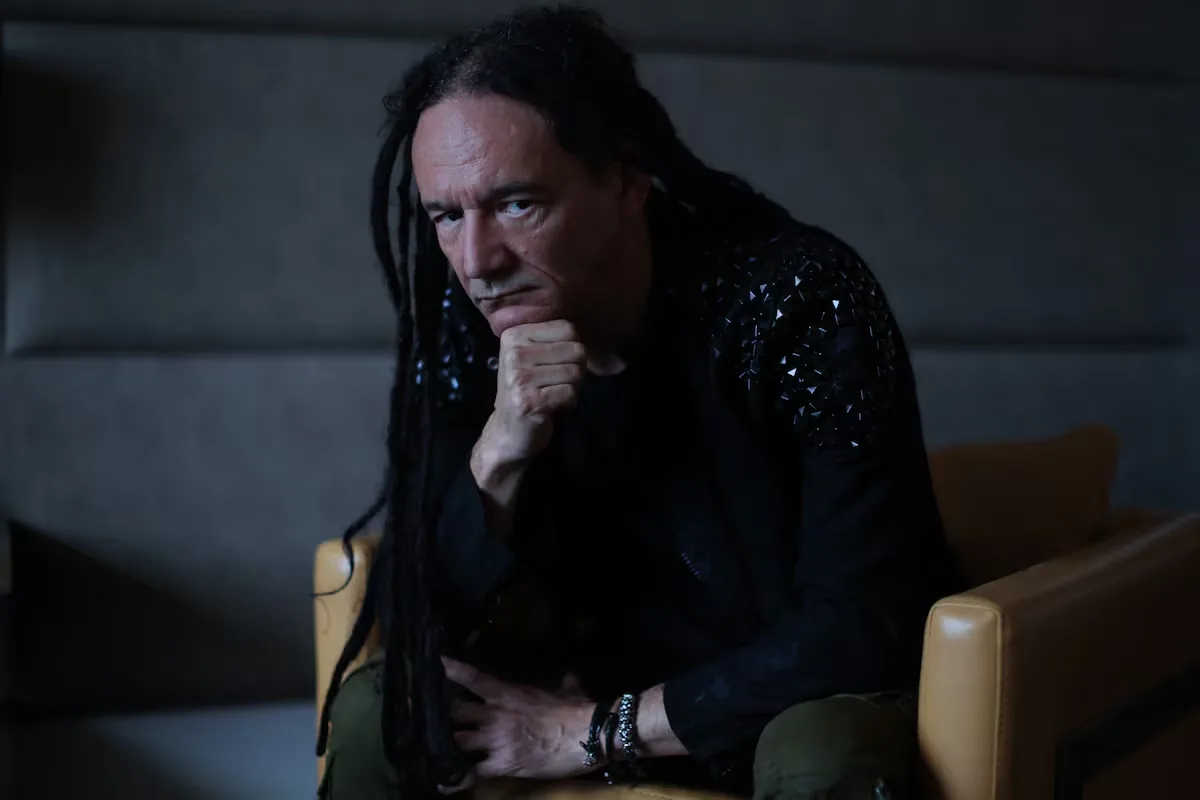
Dilson Díaz (Medellín, 56 years old) does not write opinion columns nor make documentaries, but he has four decades as a chronicler of Colombia. Over nearly half a century, he has written songs with which he has persistently narrated the fractures of a country that went through drug trafficking, war, displacement, corruption, fear, and inequality. His lyrics build a defiant, angry, uncomfortable, and deeply political chronicle.
Read more The 205 million dollars in Zhenli Ye Gon’s bills come before Justice 19 years later
The man who with nihilistic echo sang “there will never be a future, there never has been a future” and who turned indignation into an anthem with his song Mutilated Soldier “with the medals of your country, mutilated soldier! You have been decorated, without an arm you are deformed, the nation blesses you,” prepares for the last pogo, as he has called the farewell concert of his legendary band, La Pestilencia, on November 28 with the participation of the Bogotá Philharmonic Orchestra.
His retirement leads to reflection on the meaning of stopping singing when many of the wounds that inspired his songs remain open, many questions still relevant. Dilson Díaz’s voice is essential in contemporary urban Colombia, the one that found in punk a form of resistance and a way to portray its own reality.
Question. How do you realize that the time has come to step aside after 40 years on stage?
Answer. I think La Pestilencia has already said everything. With our lyrics, we have said what Colombia did not see, what fell, and sadly we are still in the same place. It is a Colombia that does not want to change, that does not want to move forward, that does not understand that the problem was very serious, with many deaths, loss of values.
Q. Is there some frustration in discovering that many of those songs are still relevant?
A. There is one that talks about hopelessness and fear, What a good citizen I am. More than frustration, it is hopelessness, an even sadder emotion. I don’t know if you remember that from around 1995 to 2010 people left the country, they had to because hopelessness was unbearable. We also left with La Pestilencia. I don’t feel we lost a battle, but that we planted a very big seed that resonated with many people.
Q. You grew up in the Campo Valdés neighborhood in Medellín, where drug trafficking and violence were daily. Did that experience shape your way of seeing the world?
A. Yes, a lot. Almost all the friends I grew up with were murdered for different reasons: one because he wanted to become a hitman, another because he wanted easy money… there were no opportunities. In the neighborhood, I saw a 14 or 15-year-old boy who became the leader of the hitmen gang. Then they killed him, and what was left of them? Not even the memory. There were scars, pain, many experiences that led me to say that was not my path. I liked music.
Q. Why punk? What did you find in its language?
A. Because finally, brother, punk has always been an aggressive sound genre, that doesn’t sleep, that stays awake, and somehow I felt the need to be playing and making awake music. Punk has been rebellious, it doesn’t stay silent, it hasn’t been conformist.
Q. In the eighties, Colombian punk was a very small movement. What musical references made you think that was the language? Were there bands or albums that inspired you?
A. Well, as for albums or bands, several, Ratos de Porão (Basement Rats) from Brazil for example, at that time they were very avant-garde in many things, in sound, in force, in breaking with the social establishments and just doing punk and to hell with the rest; or Dead Kennedys, who are Californians. Another thing, the riffs are more rhythmic. In metal, you have to structure more, songs are longer, while punk is very “straight to the point”… many musical influences, from heavy metal to grindcore.
Q. Do you think the audience values that “simplicity” of punk, does it make the message connect more?
A. Of course, that has been vital. We had a stance of no alcohol, defense of animals and the environment. Another strong influence was La Polla Records, which had a very real and anarchic philosophy, which I think is one of the foundations of punk. From there come songs like Olé and Verde Paz, which talk about the environment, nature, and multinationals and great powers who don’t care at all, because they only care about getting rich.
Q. When La Pestilencia was born, did you feel you were forming a band or finding a way to respond to the country you had to live in?
A. At that time we started like “how cool to do punk, let’s put lyrics that will talk about the country,” but we didn’t project it into the future. When the second album arrived and we started to see growth, we felt we were saying very relevant things, that the music transcended, that it carried information.
Q. Your first three albums, from 1989, 1993, and 1997, were marked by urgency, with sharp and forceful music and very austere production. After Balística (2001) the sound began to sophisticate, but you kept the spirit of denunciation. Was it an aesthetic decision or an adaptation of the language to a new moment?
A. It has been an evolutionary process. On the first album everything was new and then the paths appeared, we understood how we wanted to sound, how to make the songs more complete, how to make the choruses better. On El Amarillista (1997) I was the recording and mixing engineer, I started from scratch. For Balística we were able to travel to the United States to a studio that at the time was legendary, where groups like Sepultura recorded, and we signed with the Mercury record label, and it was a big leap. Productos Desaparecidos (2005) was a bet on evolution and ended up being a very strong album that achieved gold record sales, Latin Grammy nominations, and took us to MTV for the first time…
Q. Balística was a turning point, it took you from being an underground cult band to having international tours and working in studios where figures like Rick Rubin had been. How do you enter that industry without losing the defiant spirit?
A. Although we entered the global industry, in Colombia we rather incorporated the label into our style, because they had never signed a group like that. We told them where we sold the records, where to advertise the concerts, I even had to go with them. Since it was a process between the band and the label, there was no censorship.
Q. When did you feel that what started as a personal need had become a project with continental impact?
A. We always thought we wanted to make music because we liked it, we never projected what La Pestilencia is today, but we have one of the attendance records at Rock al Parque, in 2006 or 2007 we closed a day before about 120,000 people, a record for a local band. We did it as a way of life, without thinking if it would last long or short, and now it’s been 40 years… that’s why we feel it’s time to close, for the last pogo at a farewell concert we will do in Bogotá on November 28. We will play with the Bogotá Philharmonic Orchestra, a gift to the city of only six beautiful songs. People will feel like they are at a concert with ties, but after the six songs there will be 55 of punk, from all the albums. It will be a concert of about four hours.
Read more We discovered the all-in-one anti-aging serum: it contains pure retinol and vitamin B3
Q. Why do you think La Pestilencia ended up becoming an emotional chronicle of contemporary history?
A. We have been touched by all the violent and sad aspects of the country. In Campo Valdés, when I had nothing, I saw the scourge of drug trafficking, the hitmen. Then the guerrilla intensified, very strongly. It happened during the government of Belisario Betancur, when Justice Minister Rodrigo Lara Bonilla was killed and the war with drug trafficking intensified, the whole paramilitary wave was created… so, on the first album we said “dirty candidates spending millions, on billboards and banners, while people die”.
Q. Your songs have always had a huge weight in the word, they seem written by someone who observes very carefully. Who fed that way of writing: writers, journalists, filmmakers, or was personal experience, walking the streets more important?
A. Definitely it has been more of a walk that we all citizens in Colombia have had to take, from there the lyrics come… from what the neighborhood touched. I am not a spiritual guide, but I have been a person who speaks from coherence, because we have reached a cycle that has led us to what we have seen: wars, hunger, genocides that continue today. It is impossible not to say anything about what Israel is doing right now, what it has been doing against the entire Palestinian people and how people and the planet remain so comfortable.
Q. In Fango you wrote: “Rot and corruption, everything is chaos in the nation; bureaucracy and ambition, anarchy is the solution”. More than 40 years have passed since that song and distrust towards institutions seems even greater. Was anarchy a provocation, a utopia, a way of saying the system had stopped offering answers?
A. It was to say that this system is useless, that it is completely illogical.
Q. How long have we been in that? It’s not even 40 years, it goes way back.
A. I insist, Colombia always comfortably chooses its favorite violence.
Q. In Hasta cuándo, hasta siempre, inspired by the murder of Andrés Escobar, you questioned violence around football. Major sporting events are stages for political and cultural disputes. Why do you think sport remains a platform where our contradictions as a society are exposed?
A. Andrés Escobar’s case is sad. Sport should be for healing, cleansing, strengthening, not a communication channel to brainwash. Obviously, I still watch matches, but I have always seen them with a political-social vision.
Q. Have you watched the World Cup? Does it conflict you?
A. Of course… the Qatar World Cup was very cool, but if we think that the host is a country with human rights and gender issues, I ask myself “why, with what intention?”. With the sole intention of making money. And now, in the United States, which, as long as I can remember, has been the instigator of conflicts on the planet.
Q. You belong to a Latin American generation that grew up amid internal wars, economic crises, and broken promises. What is the open wound that Latin America still cannot heal?
A. The colonial era marked us a lot. Before the colony, there was a more unified thought that allowed us to still have natural resources; although obviously, there were also conflicts.
Q. You talk about colonization, La Pestilencia has a song called Colonia U.S.A. Do you think we are a U.S. Colony?
A. Yes, Colombia has not stopped being a U.S. Colony. It had a break, we freed ourselves for a small stage, but not completely. We continue being that and now we will be a U.S. puppet.
Q. Does rage disappear with age or do you learn to live with it?
A. No, rage has not gone away, rage transforms.
Q. La Pestilencia’s music also transformed over time. How did that disgust evolve in your albums? Did you feel that over the years you started writing less from rage and more from reflection?
A. We have always been reflective, we have never said things just to say them or because they sound cool. When we have the written reflection and the composed music, then comes the moment of interpretation, of rage.
Q. For years the adversary seemed recognizable: war, corruption, authoritarianism. Today many feel the adversary is more diffuse: the algorithm, misinformation, constant consumption, anxiety. Do you think rebellion needs to find a new language for this era?
A. Nowadays social networks are a channel where things are said, but it is a rebellion that doesn’t go beyond that and that will have very strong consequences.
Q. When in 30 or 40 years someone listens to La Pestilencia for the first time, what would you like them to find in those songs?
A. Well, it’s 40 years, we started in 1986. What would I want? That they understand that what we have told Colombia is to learn from the mistakes of history and the present, that they understand that this has led us nowhere, that Colombia has never had a messiah to lead us to salvation because everything that has been proposed as a political solution has not worked. I feel there is a part of the country that is not interested in that change. I would like to tell young people that they themselves can build the country, from their point of view, with criteria, but with respect for what each one thinks. That way we could achieve much more important progress than threatening, displacing, and killing each other.
Q. After four decades denouncing the fractures of the country and without seeing changes, where do you place your hope today?
A. In the young people, in them I have hope that change will happen. Colombia had a unique voter turnout in history and young people were thinking of a country to build, to understand each other, I see the future there.
Read more 41,000 ‘reviews’ can’t be wrong: Biodance’s best-selling face mask on Amazon